
According to a new study, substances that are said to boost athletic performance can also activate a receptor that speeds up the development of pancreatic cancer in mice.
The progression of precancerous pancreatic lesions into pancreatic cancer is fueled by a cell nuclear receptor that is activated by high-fat diets and synthetic compounds found in unregulated sports performance enhancers, according to research from the University of Michigan Rogel Cancer Center.
Strategies to prevent and treat pancreatic ductal adenocarcinoma, a particularly fatal type of cancer with an increasing incidence, are urgently required. About 55 to 80 percent of individuals over 40 are thought to have these low-grade pre-cancerous silent pancreatic lesions, which are the primary cause of the majority of occurrences of pancreatic cancer.
PPARδ Activation and Its Role in Cancer Development
Pre-cancerous pancreatic lesions in mice that are similar to those found in people contained greater levels of the transcriptional receptor peroxisome proliferator-activated receptor-delta (PPARδ), according to research conducted by Imad Shureiqi, M.D. The research was published in the journal Nature Communications.
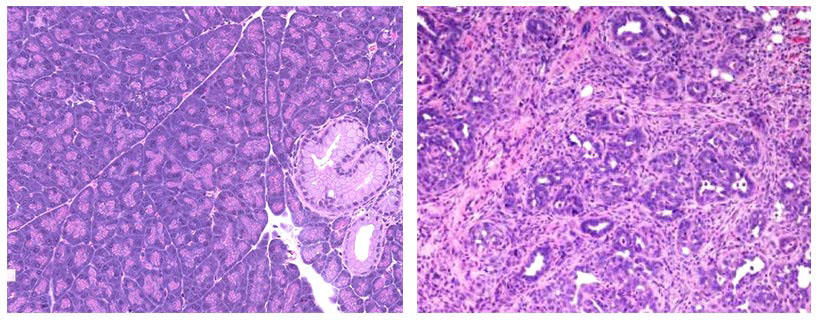
PPARδ controls the expression of several important genes that affect biological processes including lipid metabolism and the development of cancer. Pancreatic cancer develops from precancerous lesions much more quickly when PPARδ is activated. Prior to shifting his research to the cancer center in 2020, Shureiqi worked at the University of Texas’ MD Anderson Cancer Center where he completed the majority of this study, specifically in collaboration with Xiangsheng Zuo, M.D., Ph.D.
“We became interested in studying the effects of PPARδ on pancreatic carcinogenesis because our prior observations showed that PPARδ strongly promoted other gastrointestinal cancers. But there’s very limited information about PPARδ’s role in pancreatic cancer’s development,” said Shureiqi.
Diet and Synthetic Compounds in Activating PPARδ
Activation of PPARδ correlates with excessive exposure to certain ligands, both natural and synthetic. Some ligands naturally occur in high-fat diets, which have been associated with increased risk for pancreatic cancer in humans and animal models. High-fat diets are enriched with fatty acids that are natural ligands of PPARδ.
Other synthetic forms of PPARδ ligands, like Cardarine (GW501516), are found in exercise supplements, aimed to boost physical performance and endurance. GW501516 was originally designed by pharmaceutical companies to encourage the body to use more fat and treat noncancerous conditions like obesity and hyperlipemia.
The pharmaceutical development of GW501516 and other similar potent PPARδ agonists for medical use has long been discontinued given their potential procancerous side effects. Though studies on how PPARδ affects colorectal cancer date back to 1999, and pharmaceutical companies have halted synthetic PPARδ ligand development, unregulated internet outlets still sell substances like Cardarine. Ads are largely marketed to young people, claiming it will help them build muscle endurance and burn fat.
The “Dark Side” of PPARδ: Enhancing Cancer Cell Energy
Shureiqi explains that, initially, researchers found that these synthetic ligands reduced fatigue in mice. This news made its way to major media outlets, who nicknamed it “exercise in a pill.” “Unfortunately, what the media didn’t address was the dark side of PPARδ. Like muscle cells, synthetic PPARδ ligands also help cancer cells get more energy from fats as a fuel source,” he said.
“It’s shocking to me,” Shureiqi continued. “Animal models repeatedly show the strong relationship between PPARδ and cancer promotion in the case of colorectal cancer and stomach cancer. Now we’re gaining more information about how it affects pancreatic cancer.”
Critical factors that promote the progression of silent pancreatic precancerous lesions to pancreatic cancer remain poorly defined, especially those that are easy to target. While most of these pre-cancerous lesions don’t develop into cancer, understanding how they progress is still crucial to finding interventions to address the rising rate of pancreatic cancer. Findings from this study indicate that people who have silent precancerous lesions, even those that are low grade, could increase their risk of developing pancreatic cancer by consuming PPARδ natural activators, like in high-fat diets, or synthetic ones, like Cardarine.
Future development of effective agents to block PPARδ activation could be a new approach to prevent the progression of precancerous lesions into pancreatic cancer. Limiting exposure to high-fat diets could also be considered for those with a high prevalence of pre-cancerous pancreatic lesions. But for now, the prevalent sales and use of those athletic boosting synthetic PPARδ activating substances cause the most pressing concern.
“This new information should alert individuals to the potential serious health risks from using synthetic PPARδ agonists,” Shureiqi said. “We’re trying to spread the message that using those substances is not a good idea. It might enhance muscle endurance, but it also enhances cancer’s ability to use energy and grow.”
Reference: “Rapid acceleration of KRAS-mutant pancreatic carcinogenesis via remodeling of tumor immune microenvironment by PPARδ” by Yi Liu, Yasunori Deguchi, Daoyan Wei, Fuyao Liu, Micheline J. Moussalli, Eriko Deguchi, Donghui Li, Huamin Wang, Lovie Ann Valentin, Jennifer K. Colby, Jing Wang, Xiaofeng Zheng, Haoqiang Ying, Mihai Gagea, Baoan Ji, Jiaqi Shi, James C. Yao, Xiangsheng Zuo and Imad Shureiqi, 13 May 2022, Nature Communications.
DOI: 10.1038/s41467-022-30392-7
The study was funded by the NIH/National Cancer Institute, the Cancer Prevention and Research Institute of Texas, the DDC seed fund, the Cancer Center Support, and the CPRIT Core Facility Support.
Never miss a breakthrough: Join the SciTechDaily newsletter.
Follow us on Google and Google News.