
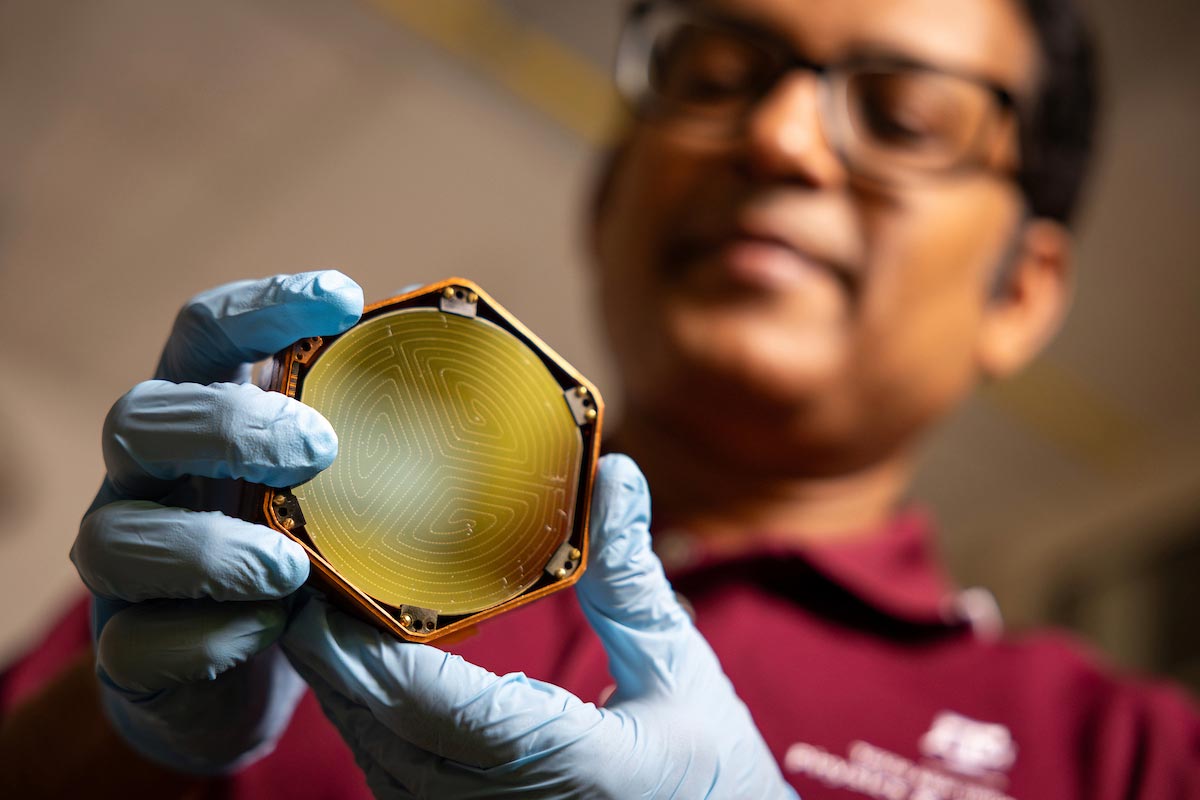
Most of the universe is made of dark matter and dark energy, yet scientists still don’t know what either one is. New ultra-sensitive detectors are being built to spot incredibly rare particle interactions that could finally reveal their nature.
Scientists have made remarkable progress in understanding the universe, yet most of it remains unexplained. About 95% of everything that exists is made up of dark matter and dark energy, leaving just 5% as the familiar matter we can see and touch. Dr. Rupak Mahapatra, an experimental particle physicist at Texas A&M University, is working to explore this unseen majority by creating highly sophisticated semiconductor detectors that rely on cryogenic quantum sensors. These instruments are used in experiments around the world and are designed to probe one of the deepest questions in modern physics.
Mahapatra often describes the challenge using a familiar metaphor. He compares humanity’s limited grasp of the universe — or lack thereof — to a parable. “It’s like trying to describe an elephant by only touching its tail. We sense something massive and complex, but we’re only grasping a tiny part of it.”
Mahapatra and his collaborators recently published their work in the respected journal Applied Physics Letters.
Understanding Dark Matter and Dark Energy
Dark matter and dark energy get their names from the fact that scientists still do not know what they are made of. Dark matter accounts for most of the mass in galaxies and galaxy clusters, playing a central role in shaping their structure across enormous distances. Dark energy refers to the phenomenon responsible for the universe’s accelerating expansion. In simple terms, dark matter acts to hold cosmic structures together, while dark energy drives them apart.
Even though they dominate the universe, neither dark matter nor dark energy gives off, absorbs, or reflects light. This makes them extremely difficult to observe directly. Researchers instead study their influence through gravity, which affects how galaxies form and move. Dark energy is the largest component, representing about 68% of the universe’s total energy, while dark matter makes up roughly 27%.
Detecting Whispers in a Hurricane
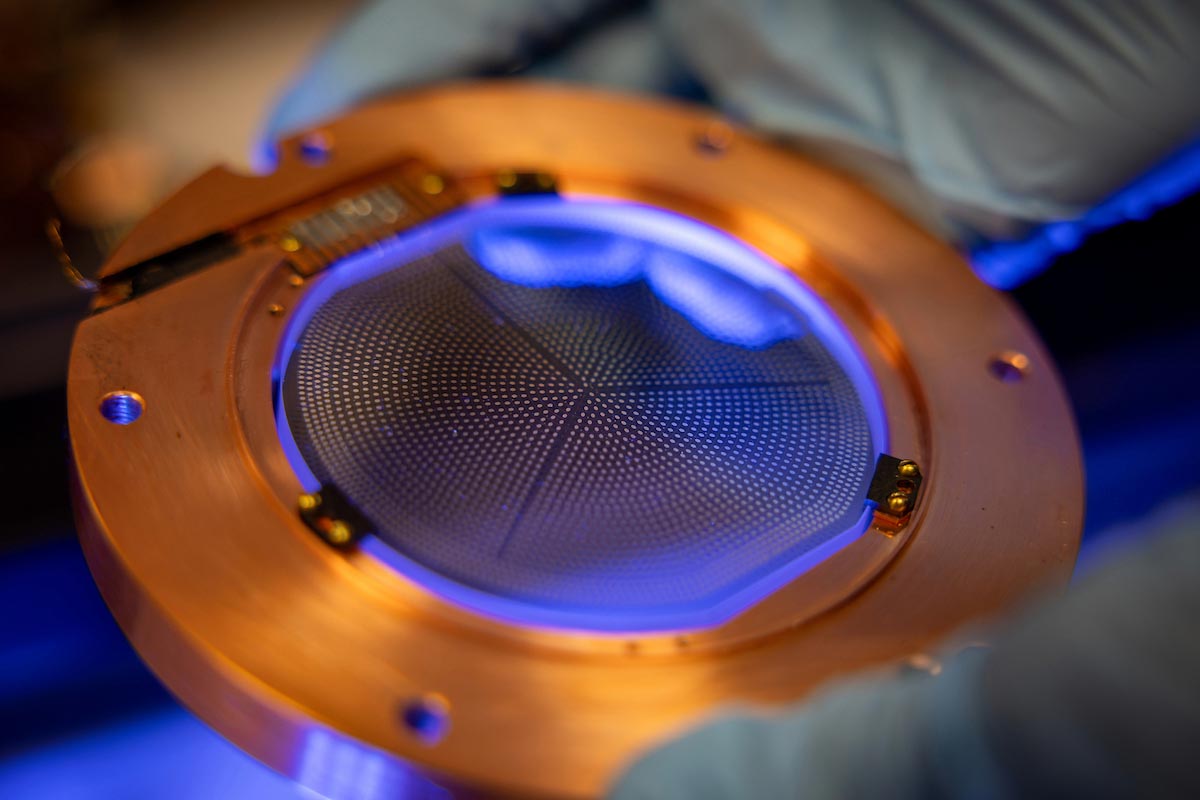
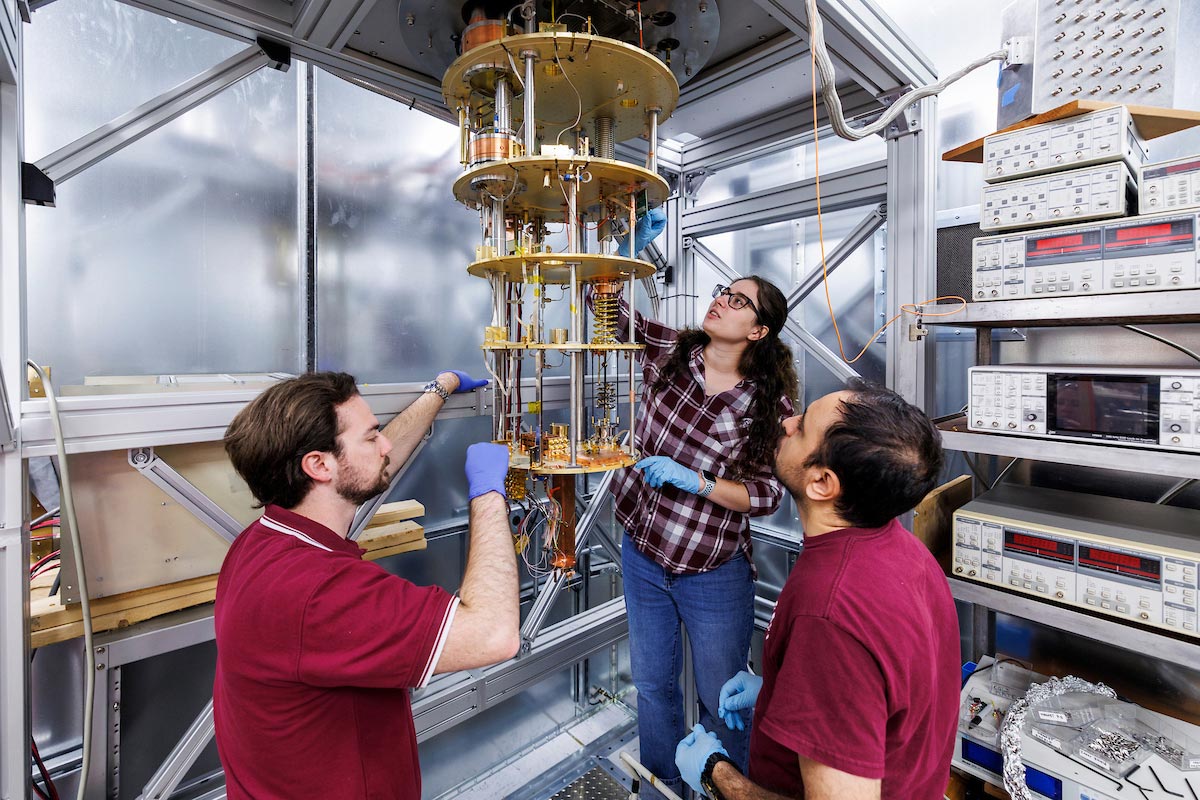
At Texas A&M, Mahapatra’s team is developing detectors with extraordinary sensitivity. These devices are designed to register interactions from particles that rarely interact with ordinary matter, interactions that could provide vital clues about the nature of dark matter.
“The challenge is that dark matter interacts so weakly that we need detectors capable of seeing events that might happen once in a year, or even once in a decade,” Mahapatra said.
His group has contributed to a leading global search for dark matter using a detector known as TESSERACT. “It’s about innovation,” he said. “We’re finding ways to amplify signals that were previously buried in noise.”
Texas A&M is one of only a small number of institutions participating in the TESSERACT experiments.

Pushing the Limits of Detection Technology
Mahapatra’s current work builds on decades of experience advancing particle detection methods. For the past 25 years, he has been involved with the SuperCDMS experiment, which has carried out some of the most sensitive dark matter searches to date.
In a landmark 2014 paper published in Physical Review Letters, Mahapatra and his colleagues introduced voltage-assisted calorimetric ionization detection in the SuperCDMS experiment — a breakthrough that allowed scientists to investigate low-mass WIMPs, a leading dark matter candidate. This innovation greatly expanded the range of particles that experiments could detect.

In 2022, Mahapatra co-authored another study that examined multiple approaches to finding a WIMP, including direct detection, indirect detection, and collider searches. The research highlights the importance of combining different methods to address the dark matter problem.
“No single experiment will give us all the answers,” Mahapatra notes. “We need synergy between different methods to piece together the full picture.”
Understanding dark matter goes beyond academic curiosity. It may be essential to uncovering the fundamental laws that govern the universe. “If we can detect dark matter, we’ll open a new chapter in physics,” Mahapatra said. “The search needs extremely sensitive sensing technologies and it could lead to technologies we can’t even imagine today.”

What Are WIMPs?
WIMPs (Weakly Interacting Massive Particles) are among the most promising theoretical candidates for dark matter. These hypothetical particles would interact through gravity and the weak nuclear force, which explains why detecting them is so difficult.
- Why they matter: If WIMPs exist, they could account for the missing mass in the universe.
- How we search: Experiments such as SuperCDMS and TESSERACT use ultra-sensitive detectors cooled to near absolute zero to capture rare interactions between WIMPs and ordinary matter.
- The challenge: A WIMP could pass through Earth without leaving any detectable signal, meaning scientists may need years of observations to identify even a single event.
Reference: “Spontaneous generation of athermal phonon bursts within bulk silicon causing excess noise, low energy background events, and quasiparticle poisoning in superconducting sensors” by C. L. Chang, Y.-Y. Chang, M. Garcia-Sciveres, W. Guo, S. A. Hertel, X. Li, J. Lin, M. Lisovenko, R. Mahapatra, W. Matava, D. N. McKinsey, P. K. Patel, B. Penning, H. D. Pinckney, M. Platt, M. Pyle, Y. Qi, M. Reed, I. Rydstrom, R. K. Romani, B. Sadoulet, B. Serfass, P. Sorensen, B. Suerfu, V. Velan, G. Wang, Y. Wang, M. R. Williams, V. G. Yefremenko and TESSERACT Collaboration, 30 December 2025, Applied Physics Letters.
DOI: 10.1063/5.0281876
Never miss a breakthrough: Join the SciTechDaily newsletter.
Follow us on Google and Google News.
10 Comments
In 2012 I uploaded a first low budget video demonstration of the radiant pulsing angular lines of gravity force online to prove what I personally discovered. Since then I’ve added three more, with the latest being just last June (https://odysee.com/@charlesgshaver:d/5Gravity:c). To explain the discrepancy between my lay findings and volumes of professional findings, I find that in 1801 Thomas Young mistakenly concluded
it was a duality of particles and waves that caused the scattered dot patterns in his double-slit experiments. Since then, like a live virus, his mistake has multiplied, mutated and evolved into an ‘imaginative,’ as opposed to an “innovative,” approach to physics; a ‘glitch’ which is surely now causing brain damage to AIs everywhere. Simply put, again, some still unidentified higher force induces gravity to radiate from all matter and rotation intensifies the effects. And, the ‘glitch’ has overlapped onto misinterpreting the speed of light from distant sources and, therefore, the age and size of the universe still need to be determined. I’m sure there’s still plenty for qualified physicists to research beside imaginary particles.
Please ask researchers to think deeply:
Has your measurement been consistently interfering with the measurement results. The key to success or failure lies in how you interpret measurement results based on measurement methods.
Professor Zhang, while I can appreciate your concern for researchers being meticulous in their methods, I’d like to assure you that I endeavor to use as down to earth methods and common and readily available materials as possible, to allow my experiments to be easily reproduced by any reasonably prudent adult, and for the results to speak for themselves; successfully, I believe.
Thank you for browsing and commenting.
The value of scientific experiments lies not only in their reproducibility and applicability, but more importantly, in discovering universal natural laws through induction and summarization.
Everyone who has a reverence for natural laws and regulations deserves respect.
thanks for
They should measure if there is a relation between dying or being born with black energy, they should check if the expansion speed of the Universe decreased during wars or when a lot of people died and if the expansion speed increased during times of a lot of births the human souls might be what scientists call dark energy.
Thanks Mr. Martinez for a sensible answer after so much beating around the bush that goes on these days. But I notice that as humans proliferate, the megafauna like elephants and rhinoceroses are decreasing along with their parasites which suggests the possibility of a balance being created in terrestrial dark energy production hence universal expansion co-efficients, Unless we and our undetectable mortal souls might be too small to matter.
If you allow for variable gravitational force you don’t need the convoluted theory of dark matter / dark energy.
Scientists Are Building Detectors to Reveal the Invisible Universe.
VERY GOOD!
Please ask researchers to think deeply:
Is the Invisible Universe the same as what you cannot perceive?
It’s shameful to delete the previous comment.
Please ask researchers to think deeply:
Is your interpretation of your experiment scientific? Why imprison one’s own thoughts and adhere to dogma? Is science like this? What is the value of scientific theory?
Are these science?
Example 1
Two sets of cobalt-60 are manually rotated in opposite directions, and even without detection, people around the world know that they will not be symmetrical because these two objects are not mirror images of each other at all. However, a group of so-called physicists and so-called academic publications do not believe it. They conducted experiments and the results were indeed asymmetric, but they still firmly believed that these two objects were mirror images of each other, and the asymmetry was due to a violation of the previous natural laws (CP violation). In the history of science, there can never be a dirtier and uglier operation and explanation than this.
—— Excerpted from https://scitechdaily.com/what-happens-when-light-gains-extra-dimensions/#comment-947619.
Example 2
Please see how the so-called “mystery of θ – τ” is explained: θ and τ are completely identical in all measurable physical properties such as mass, lifetime, charge, spin, etc. However, experimental observations have shown that the θ meson decays into two π mesons, while the τ meson decays into three π mesons, making it difficult for physicists to explain why they are so similar. Physicist Martin Block proposed a highly challenging idea: θ and τ are the same particle, but in weak interactions, parity is not conserved. An easy to understand explanation is the following analogy:: There are two boxes of apples with identical weight, color, and taste. However, when one box is opened, there are two apples, while when the other box is opened, there are three apples. This confuses the old farmer who buys apples. He circled around the orchard and came up with a highly challenging idea: these two boxes of apples are not from the same tree, so they are the same.
—— Excerpted from https://scitechdaily.com/what-happens-when-light-gains-extra-dimensions/#comment-947686.