
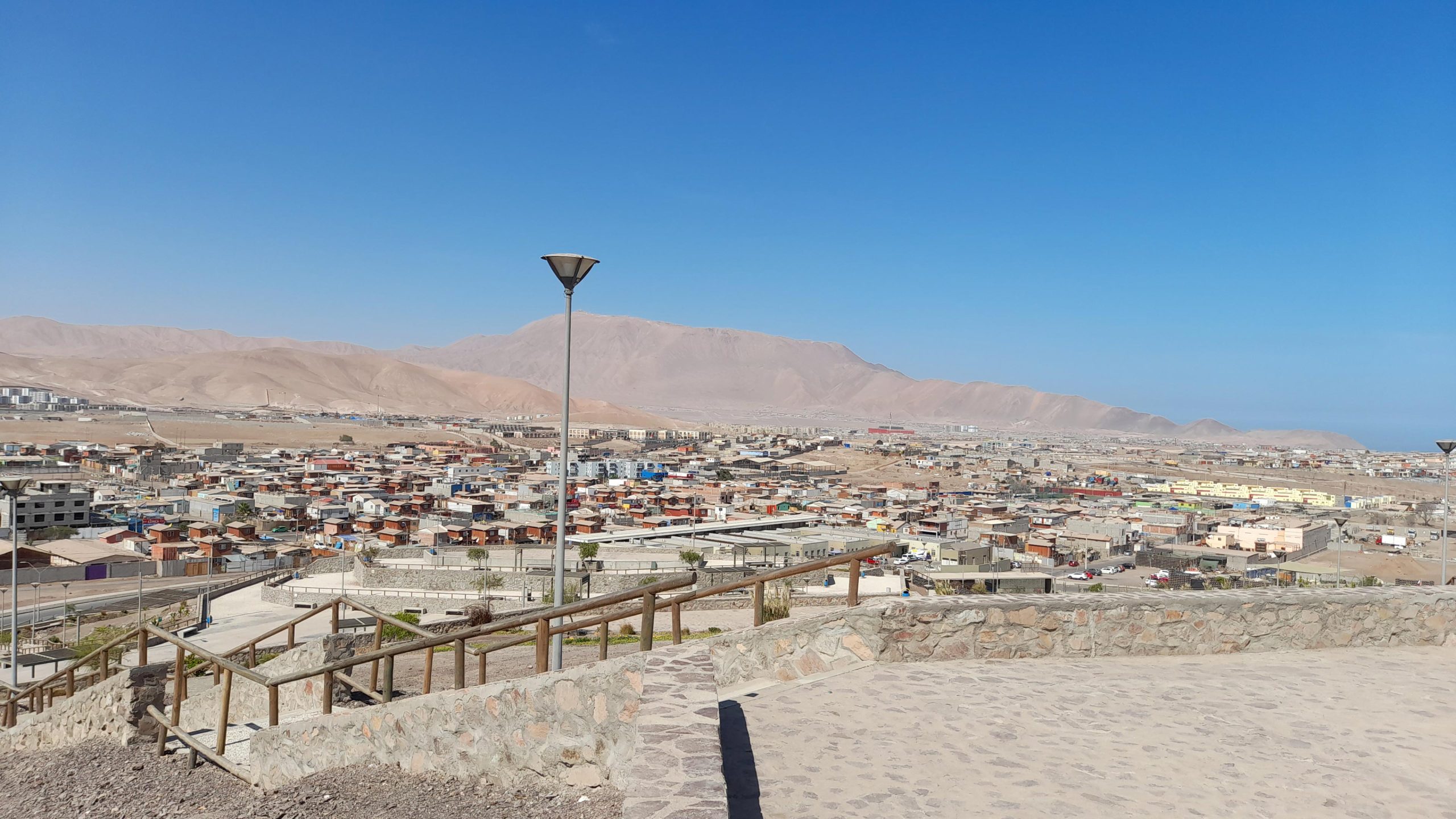
Scientists in Chile are proving that even in the driest desert, water can be captured from the air.
By setting up mesh collectors, they successfully harvested fog water in Alto Hospicio, where many residents struggle with water access. This method could serve as a supplementary water source for drinking, irrigation, and even urban farming.
The Atacama Desert’s Water Crisis
Chile’s Atacama Desert, one of the driest places on Earth, receives less than 1 millimeter of rainfall per year. Cities in the region rely on underground rock layers, known as aquifers, which store water in tiny pore spaces. However, these water reserves were last replenished between 17,000 and 10,000 years ago.
Now, local researchers are exploring whether ‘fog harvesting’ — a technique that captures and collects moisture from fog — could provide much-needed water for residents of informal settlements.
“This research represents a notable shift in the perception of fog water use—from a rural, rather small-scale solution to a practical water resource for cities,” said Dr. Virginia Carter Gamberini, an assistant professor at Universidad Mayor and first co-author of the Frontiers in Environmental Science study. “Our findings demonstrate that fog can serve as a complementary urban water supply in drylands where climate change exacerbates water shortages.”

Catching Moisture
Fog collectors typically consist of a mesh suspended between two posts. The mesh serves as an interception surface to catch moisture. Droplets collate on the mesh and fall into a gutter leading to water storage tanks. It’s a passive system that requires no external energy.
The researchers conducted a year-long field study in Alto Hospicio, a fast-growing municipality located in the hyper-arid Atacama Desert. Because of the city’s rapid growth, approximately 10,000 people live in informal settlements. Only 1.6% of these settlements are connected to water distribution networks and most inhabitants receive water via trucks. “The collection and use of water, especially from non-conventional sources such as fog water, represents a key opportunity to improve the quality of life of inhabitants,” Carter said.

How Much Water Can Be Collected?
The researchers found that in a 100 square kilometer area surrounding Alto Hospicio, between 0.2 and 5 liters of fog water could be harvested per square meter each day. This potential, however, is confined to the higher-lying altitudes outside of the city’s limits. During the study’s peak season, in August and September of 2024, collection potential reached up to 10 liters per square meter and day.
“By showcasing its potential in Alto Hospicio, one of Chile’s most stigmatized yet rapidly urbanizing cities, this study lays the groundwork for broader adoption in other water-scarce urban areas,” said Nathalie Verbrugghe, a researcher at Université libre de Bruxelles and first co-author of the article. Fog harvesting, however, should not be seen as the sole solution to water scarcity but as part of a broader urban water management strategy, the researchers said.

Easing Water Shortages in Urban Areas
The collected water could be used for drinking, irrigation of green spaces, and local food production. However, large storage systems, piping infrastructure, and ways of distribution would be necessary, the researchers said.
Based on an annual average water collection rate of 2.5 liters per square meter per day, the researchers said that 17,000 square meters of mesh could produce enough water to meet the weekly water demand (300,000 liters) for urban slums. 110 square meters could meet the annual demand for the irrigation of the city’s green spaces (100,000 liters). Similarly, fog water could be used for soil-free agriculture, with yields of 15 to 20kg of leafy green vegetables in a month.
Scaling Up for Future Use
For the same to work in other places, the geographic and atmospheric conditions need to be just right. “Key prerequisites include fog density, suitable wind patterns, and well-oriented elevated landforms. Additionally, since fog is seasonal in many regions, this variability should be considered,” said Verbrugghe. Future research will also need to evaluate the feasibility of fog harvesting in larger settlements.
“We hope to encourage policymakers to integrate this renewable source into national water strategies,” concluded Carter. “This could enhance urban resilience to climate change and rapid urbanization while improving access to clean water.”
Reference: “Unlocking the fog: assessing fog collection potential and need as a complementary water resource in arid urban lands–the Alto Hospicio, Chile case” by Virginia Carter, Nathalie Verbrugghe, Felipe Lobos-Roco, Camilo del Río, Francisco Albornoz and Ahmed Z. Khan, 3 January 2025, Frontiers in Environmental Science.
DOI: 10.3389/fenvs.2025.1537058
Never miss a breakthrough: Join the SciTechDaily newsletter.
Follow us on Google and Google News.