
Close Menu
    Facebook X (Twitter) Instagram
    SciTechDaily
    • Biology
    • Chemistry
    • Earth
    • Health
    • Physics
    • Science
    • Space
    • Technology
    Facebook X (Twitter) Pinterest YouTube RSS
    SciTechDaily
    Home»Biology»Scientists Capture Elusive Sodium Pump in Action, Solving a Long-Standing Biological Mystery
    Biology

    Scientists Capture Elusive Sodium Pump in Action, Solving a Long-Standing Biological Mystery

    By Kyoto UniversityMarch 29, 2026No Comments3 Mins Read
    Facebook Twitter Pinterest Telegram LinkedIn WhatsApp Email Reddit
    Share
    Facebook Twitter LinkedIn Pinterest Telegram Email Reddit
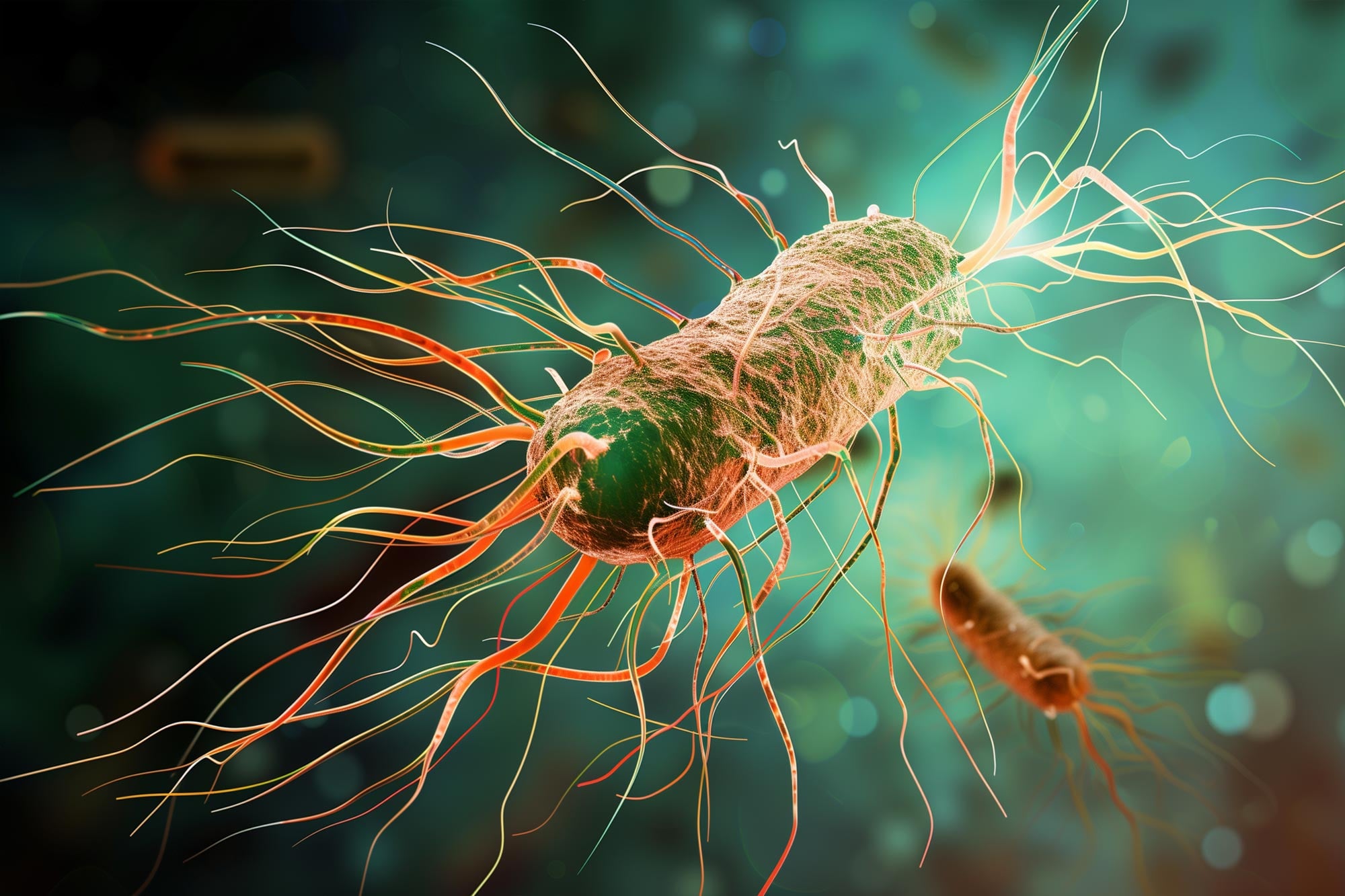
    E coli Superbug Bacteria Art Concept
    Scientists uncover how a bacterial sodium pump converts electron flow into motion, revealing a hidden mechanism that could inspire new antimicrobial strategies. Credit: SciTechDaily.com

    A long-standing mystery in bacterial bioenergetics is beginning to unravel as researchers capture fleeting structural states of a sodium-pumping enzyme in action.

    The enzyme Na⁺-NQR acts as a sodium pump that fuels respiration in many marine and disease-causing bacteria. It relies on redox reactions, which involve the transfer of electrons between molecules, to move sodium ions across the cell membrane. This process helps sustain bacterial growth.

    Despite its importance, the exact mechanism has remained unclear. Researchers have struggled to determine how electron transfer is directly connected to sodium transport. A major obstacle has been the lack of detailed structural data on the short-lived intermediate states that appear while the enzyme is active. Without this information, it has been difficult to fully explain how the pump operates.

    To address this, a research team at Kyoto University set out to investigate the system in greater detail. Using cryo-electron microscopy, co-first author Moe Ishikawa-Fukuda captured a series of intermediate structures as the enzyme changed shape during activity. These images were then paired with molecular dynamics simulations conducted by co-first author Takehito Seki, allowing the team to analyze both structure and motion.

    Linking Electron Transfer to Ion Transport

    The simulations showed that electron transfer within the protein triggers structural shifts in the enzyme. These changes control a gate embedded in the membrane, which opens and closes to allow sodium ions to pass through the cell membrane.
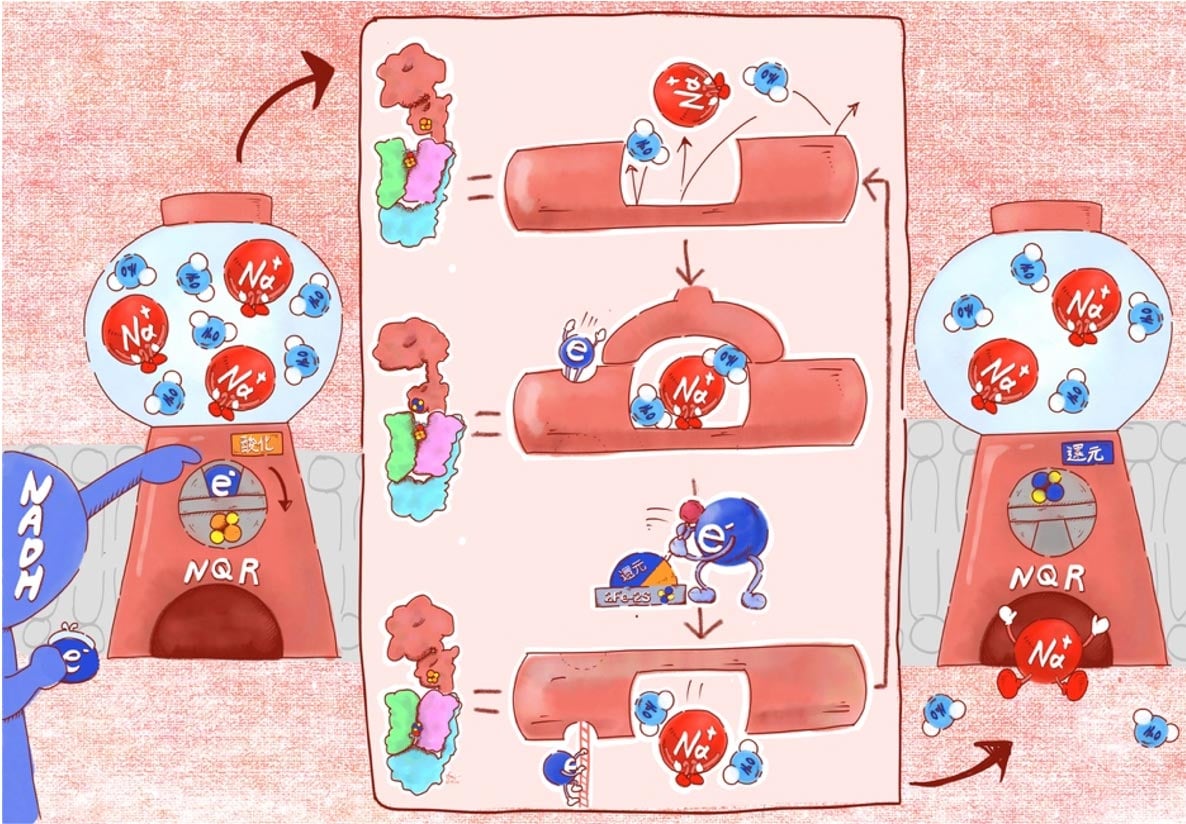
    How Redox Reactions Drive Bacterial Sodium Pump Mechanism
    Overall image summarizing the findings of this study. Credit: Moe Ishikawa-Fukuda

    “Our study is the first to clearly explain how redox reactions directly drive sodium ion transport at the molecular level, providing a new framework for understanding energy conversion in bacteria,” says Ishikawa-Fukuda.

    The team also identified an unexpected contributor to their findings: a compound called korormicin, previously studied by the group. This inhibitor proved essential for stabilizing and capturing key intermediate states that are normally too fleeting to observe.

    “Understanding redox-driven sodium pumping addresses a long-standing question in bioenergetics, revealing a strategy that is fundamentally different from the proton pump found in mammalian mitochondria,” says Seki.

    Toward Future Applications

    Looking ahead, the researchers plan to explore whether these newly identified structural states can be targeted to shut down the sodium pump. Such an approach could lead to new types of antibiotics that act on previously untapped biological systems.

    “Our goal was to understand how this sodium pump works at a fundamental level,” says team leader Masatoshi Murai. “Although this is basic research, we hope that clarifying these mechanisms will eventually contribute to the development of new strategies to combat pathogenic bacteria.”

    Reference: “The redox driven Na+-pumping mechanism in Vibrio cholerae NADH-quinone oxidoreductase relies on dynamic conformational changes” by Moe Ishikawa-Fukuda, Takehito Seki, Jun-ichi Kishikawa, Takahiro Masuya, Kei-ichi Okazaki, Takayuki Kato, Blanca Barquera, Hideto Miyoshi and Masatoshi Murai, 12 February 2026, Nature Communications.
    DOI: 10.1038/s41467-026-69182-w

    This work is a collaboration with Rensselaer Polytechnic Institute researchers and is supported by an NIH grant. Team members also include researchers from the Kyoto Institute of Technology and the Institute for Molecular Science.

    Never miss a breakthrough: Join the SciTechDaily newsletter.
    Follow us on Google and Google News.

    Bacteria Biochemistry Kyoto University Microbiology
    Share. Facebook Twitter Pinterest LinkedIn Email Reddit

    Related Articles

    Bacteria Can Tell the Time With Internal Biological Clocks

    Fat Bacteria? Skinny Bacteria? There’s a Reason Microbes Stay in Shape

    Evolutionary Insight: New Connection Discovered Between Primordial Organisms and Complex Life

    Alien Microorganism Research Shows Humans and Other Mammals Could Struggle to Fight Space Germs

    Researchers Have Found a Way to Control Bacteria to Transport Microscopic Cargo

    A Small Answer to One of the Biggest Problems on the Planet

    Incredible Images Reveal How Bacteria Form Communities on the Human Tongue

    Bioluminescent Bacteria Kill Rivals and Establish Symbiosis in Squid Using Genetic Regulatory Factors

    ‘Poison Arrows’ Launched by Warring Bacteria Could Lead to New Antibiotics

    Leave A Reply Cancel Reply

    • Facebook
    • Twitter
    • Pinterest
    • YouTube

    Don't Miss a Discovery

    Subscribe for the Latest in Science & Tech!

    Trending News

    Why Popular Diabetes Drugs Like Ozempic Don’t Work for Everyone: The “Genetic Glitch”

    Scientists Stunned After Finding Plant Thought Extinct for 60 Years

    Scientists Discover Tiny New Spider That Hunts Prey 6x Its Size

    Natural Component From Licorice Shows Promise for Treating Inflammatory Bowel Disease

    Scientists Warn: Popular Sweetener Linked to Dangerous Metabolic Effects

    Monster Storms on Jupiter Unleash Lightning Beyond Anything on Earth

    Scientists Create “Liquid Gears” That Spin Without Touching

    The Simple Habit That Could Help Prevent Cancer

    Follow SciTechDaily
    • Facebook
    • Twitter
    • YouTube
    • Pinterest
    • Newsletter
    • RSS
    SciTech News
    • Biology News
    • Chemistry News
    • Earth News
    • Health News
    • Physics News
    • Science News
    • Space News
    • Technology News
    Recent Posts
    • 100,000-Year-Old Neanderthal Fossils in Poland Reveal Unexpected Genetic Connections
    • Unexpected Hormone Discovery Could Change How We Treat Arthritis
    • Scientists Supercharge “Natural Killer” Cells To Break Through Cancer’s Defenses
    • Simple “Gut Reset” May Prevent Weight Gain After Ozempic or Wegovy
    • 2.8 Days to Disaster: Scientists Warn Low Earth Orbit Could Suddenly Collapse
    Copyright © 1998 - 2026 SciTechDaily. All Rights Reserved.
    • Science News
    • About
    • Contact
    • Editorial Board
    • Privacy Policy
    • Terms of Use

    Type above and press Enter to search. Press Esc to cancel.