
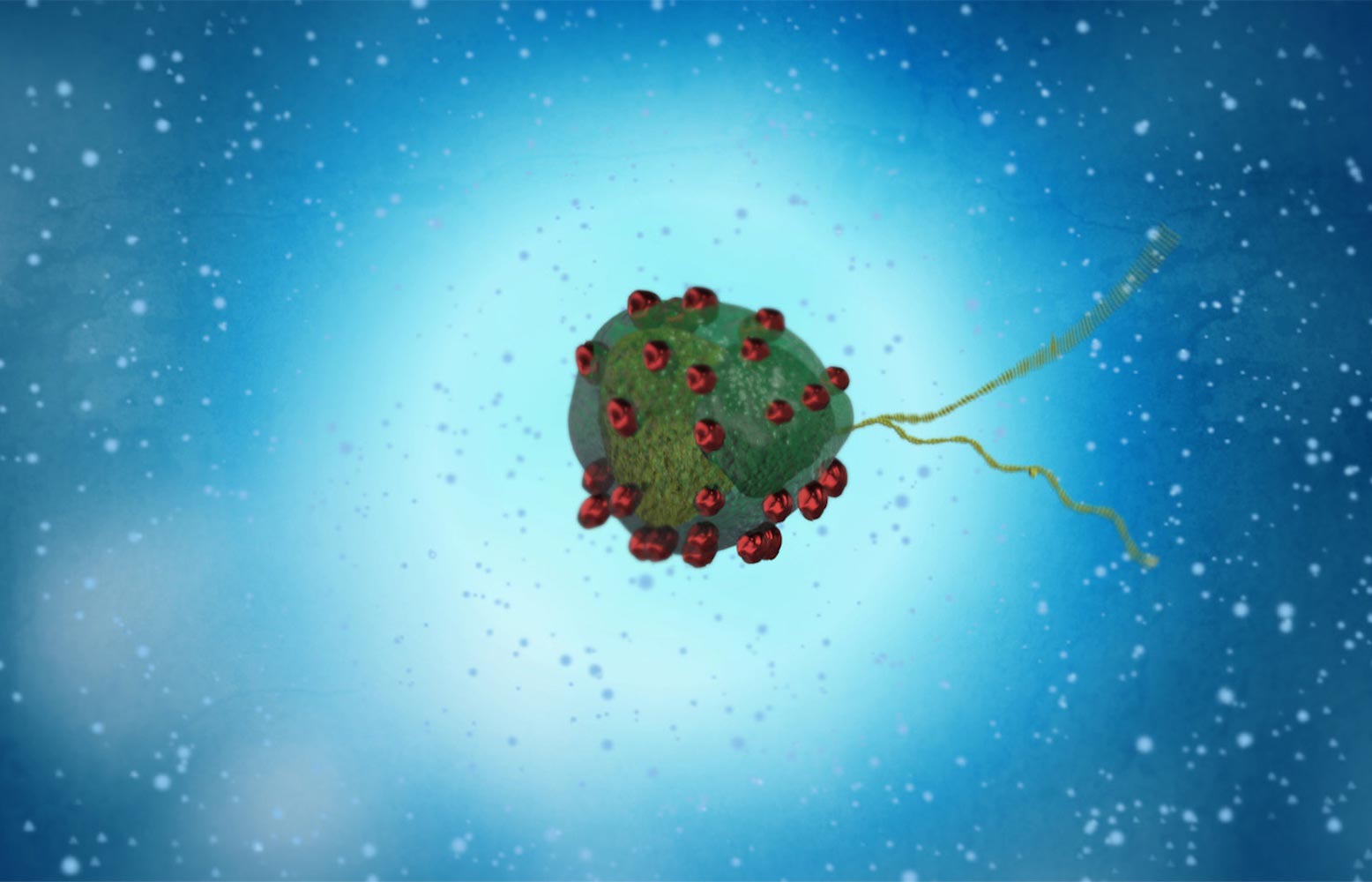
Magnetized algae micro swimmers retain speed and maneuverability, showing promise for targeted drug delivery in confined biological environments.
A team of researchers at the Max Planck Institute for Intelligent Systems (MPI-IS) in Stuttgart has developed a biohybrid microswimmer coated with magnetic material, whose swimming ability remains largely unaffected by the coating. The team from the Physical Intelligence Department at MPI-IS published their work in the journal Matter, which covers a broad range of materials science research.
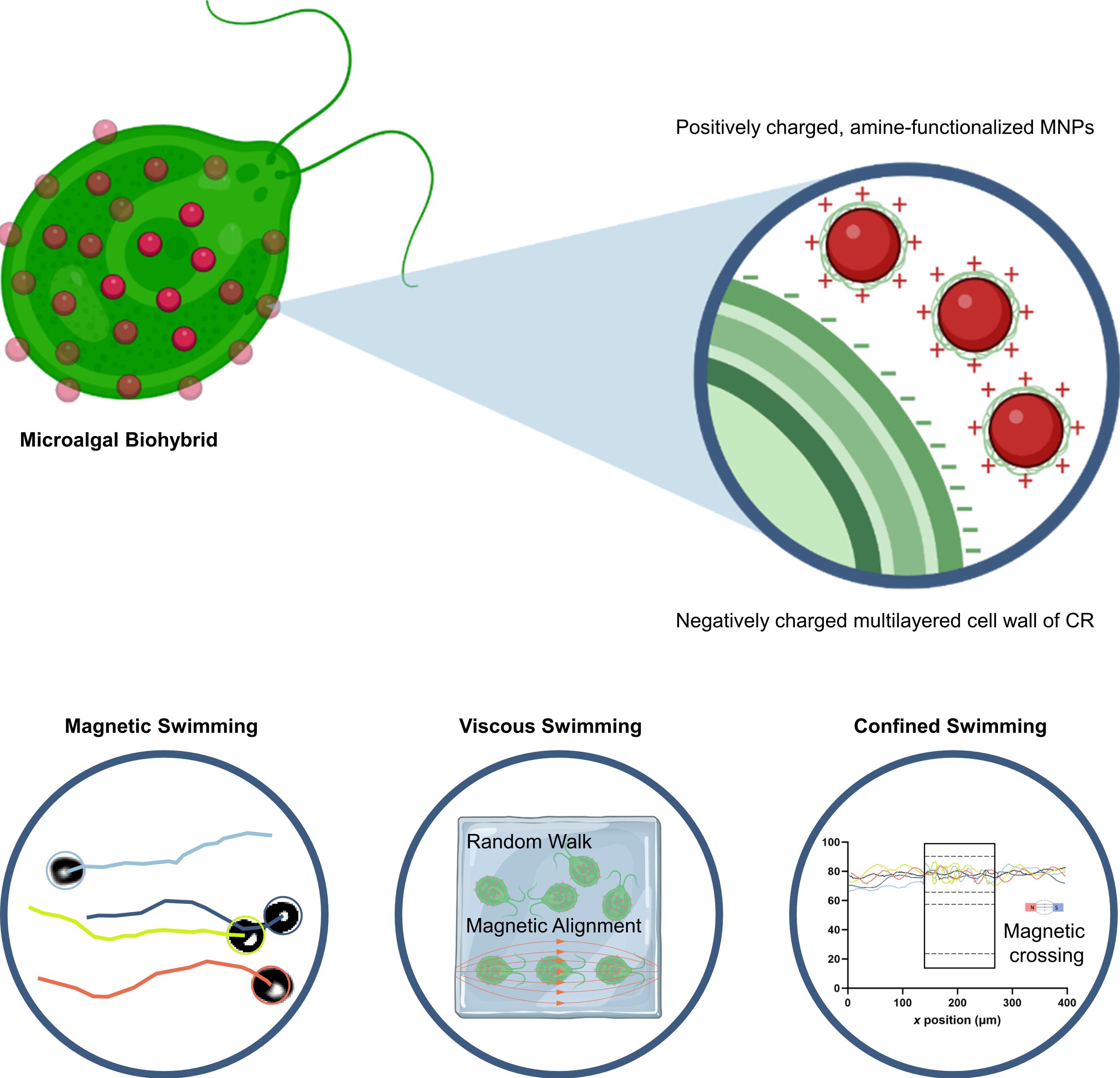
In nature, single-cell microalgae, just ten microns in size, are exceptional swimmers, propelled by two whip-like flagella at the front. However, it was unclear how they would perform if coated with a thin layer of the natural polymer chitosan (for better adhesion) mixed with magnetic nanoparticles. Would these tiny swimmers still be able to navigate through tight spaces—and, if that weren’t challenging enough, propel themselves through a viscous liquid with a density similar to mucus?
Micro Swimmers Maintain High-Speed Mobility
The scientists found that their green algae-based micro swimmers were barely affected by the extra load. With their flagella, which perform a breast-stroke movement, the algae catapulted themselves forward like a speeding bullet. Despite the coating, they maintained their swimming speed after magnetization, demonstrating an average swimming speed of 115 micrometers per second (about 12 body lengths per second). By comparison: an Olympic swimmer like Michael Phelps can reach a speed of 1.4 body lengths per second. Note that the algae is just a cell without legs and feet.
Birgül Akolpoglu and Saadet Fatma Baltaci, who co-led the study, are scientists from the Physical Intelligence Department at MPI-IS. A few years ago, they investigated how bacteria-based micro swimmers could be magnetically controlled in fluidic spaces for drug delivery applications. Now they have turned their attention to microalgae. Their aim was to functionalize the surface of the unicellular organisms with a magnetic material so that they could be steered in any desired direction – turning the microalgae into a microrobot.
Steering Magnetic Micro Swimmers in Confined Spaces
Coating the cells took only a few minutes, with – in the end – nine out of ten algae successfully covered with the magnetic nanoparticles. The team first tested their biohybrid robot swimming in a liquid as thin as water. Using external magnetic fields, they were able to control the direction in which the microalgae swam. The researchers then steered their robot along miniature 3D-printed cylinders, creating a highly confined environment where the largest dimension was just three times the size of the tiny microalgae. To see if the steering was successful, the team set up two different systems: one with magnetic coils and another with permanent magnets around their microscope. They created a uniform magnetic field and repeatedly changed its direction.
“We found that microalgal biohybrids navigate 3D-printed microchannels in three ways: backtracking, crossing, and magnetic crossing. Without magnetic guidance, the algae often got stuck and backtracked to the start. But with magnetic control, they moved more smoothly, avoiding boundaries,” says the co-first author of the publication, Birgül Akolpoglu about their proof-of-concept study. “Magnetic guidance helped the biohybrids align with the direction of the field, showing real potential for navigating in confined spaces – kind of like giving them a tiny GPS!”
Testing in Viscous Environments
In the next step, the team increased the viscosity of the fluid and sent their microrobots through the narrow channels again.
“We wanted to test how our swimmers would perform in something that is similar to mucus. We found that viscosity affects how the microalgal biohybrids swim. Higher viscosity slows them down and changes the way they swim forward. When we applied the magnetic field, the swimmers oscillated, moving forward in a zigzag pattern. This highlights how fine-tuning viscosity and magnetic alignment can optimize the navigation of microrobots in complex environments,” adds Baltaci.
“Our vision is to use the microrobots in complex and small environments that are highly confined, such as those found in our tissues. Our findings open doors to applications such as targeted drug delivery, providing a biocompatible solution for medical treatments with exciting potential for future innovations in biomedicine and beyond,” the team concludes.
Reference: “Navigating microalgal biohybrids through confinements with magnetic guidance” by Mukrime Birgul Akolpoglu, Saadet Fatma Baltaci, Ugur Bozuyuk, Selcan Karaz and Metin Sitti, 17 March 2025, Matter.
DOI: 10.1016/j.matt.2025.102052
Never miss a breakthrough: Join the SciTechDaily newsletter.
Follow us on Google and Google News.