
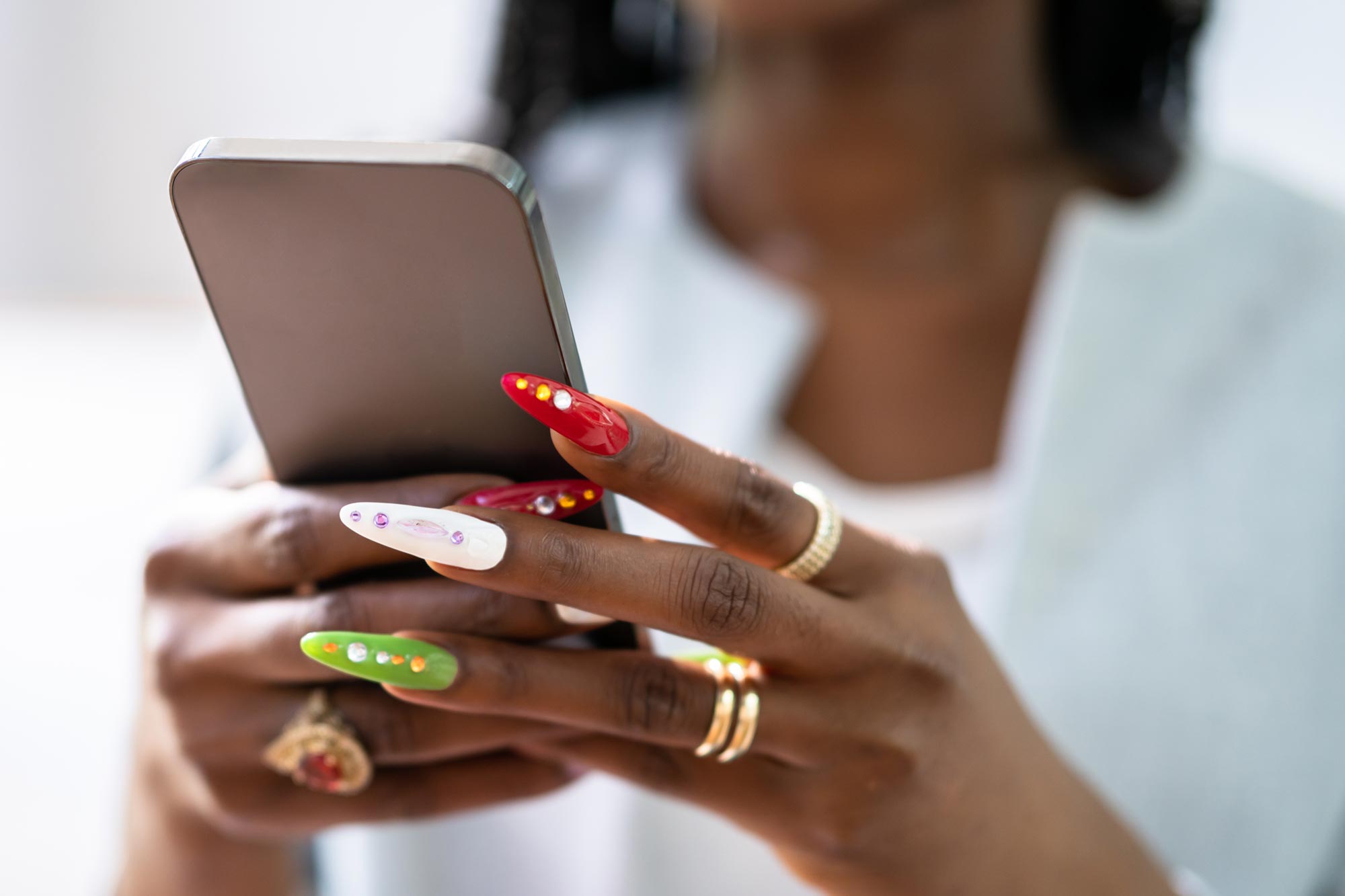
This futuristic, clear nail polish could finally make long nails touchscreen-friendly.
Anyone who has tried using a smartphone or tablet with long nails knows it is not as simple as it should be. Instead of tapping naturally with your fingertips, you often have to angle your fingers awkwardly just to get the screen to respond. Imagine being able to tap and type using your nails instead. Researchers are now working on a clear nail polish designed to make that possible by turning long fingernails into touchscreen-friendly styluses.
A research team from Centenary College of Louisiana will present its findings at the spring meeting of the American Chemical Society (ACS). ACS Spring 2026 is taking place March 22-26 and includes nearly 11,000 presentations covering a wide range of scientific topics.
The Idea Behind Touchscreen-Compatible Nails
The project began when undergraduate student Manasi Desai, who is interested in cosmetic chemistry, approached her research advisor, Joshua Lawrence, in search of a project. Lawrence, an organometallic chemist, says, “chemists are here to solve problems and to try to make your world better.” Together, they looked for a practical issue to tackle.
They noticed how difficult it can be for people with long nails to use smartphones, including a phlebotomist they encountered during a bloodwork appointment. When asked whether a solution would be useful, the response was clear: “yes, please!” That moment sparked the idea for the project.
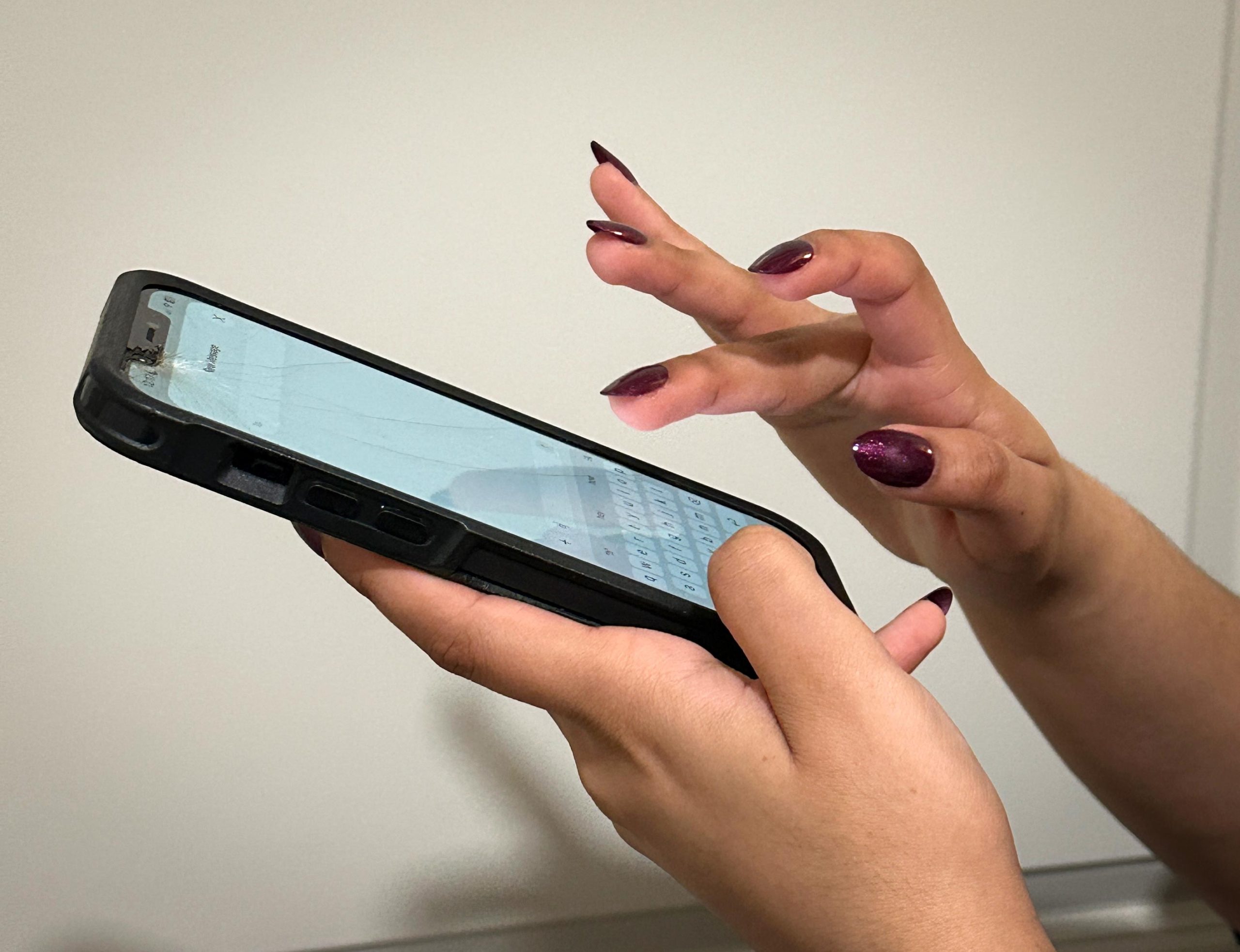
How Touchscreens Work and Why Nails Fail
Most smartphones and tablets use capacitive touchscreens. These screens create a small electric field across the surface. When a conductive material, such as a fingertip or even a drop of water, interacts with that field, it changes the screen’s capacitance. The device detects that change and registers it as a touch.
However, materials that do not conduct electricity, like fingernails or a pencil eraser, do not affect the electric field. As a result, the screen does not recognize any input. For nails to work on a touchscreen, they must be able to carry a small electrical charge.
Moving Beyond Dark and Hazardous Materials
Earlier attempts to solve this problem involved adding conductive materials such as carbon nanotubes or metal particles to nail polish. While effective, these substances can be unsafe during manufacturing because they are hazardous if inhaled. They also produce dark or metallic finishes, limiting cosmetic appeal.
Desai and Lawrence set out to create a safer, clear alternative that could be used by anyone without changing the look of their manicure.
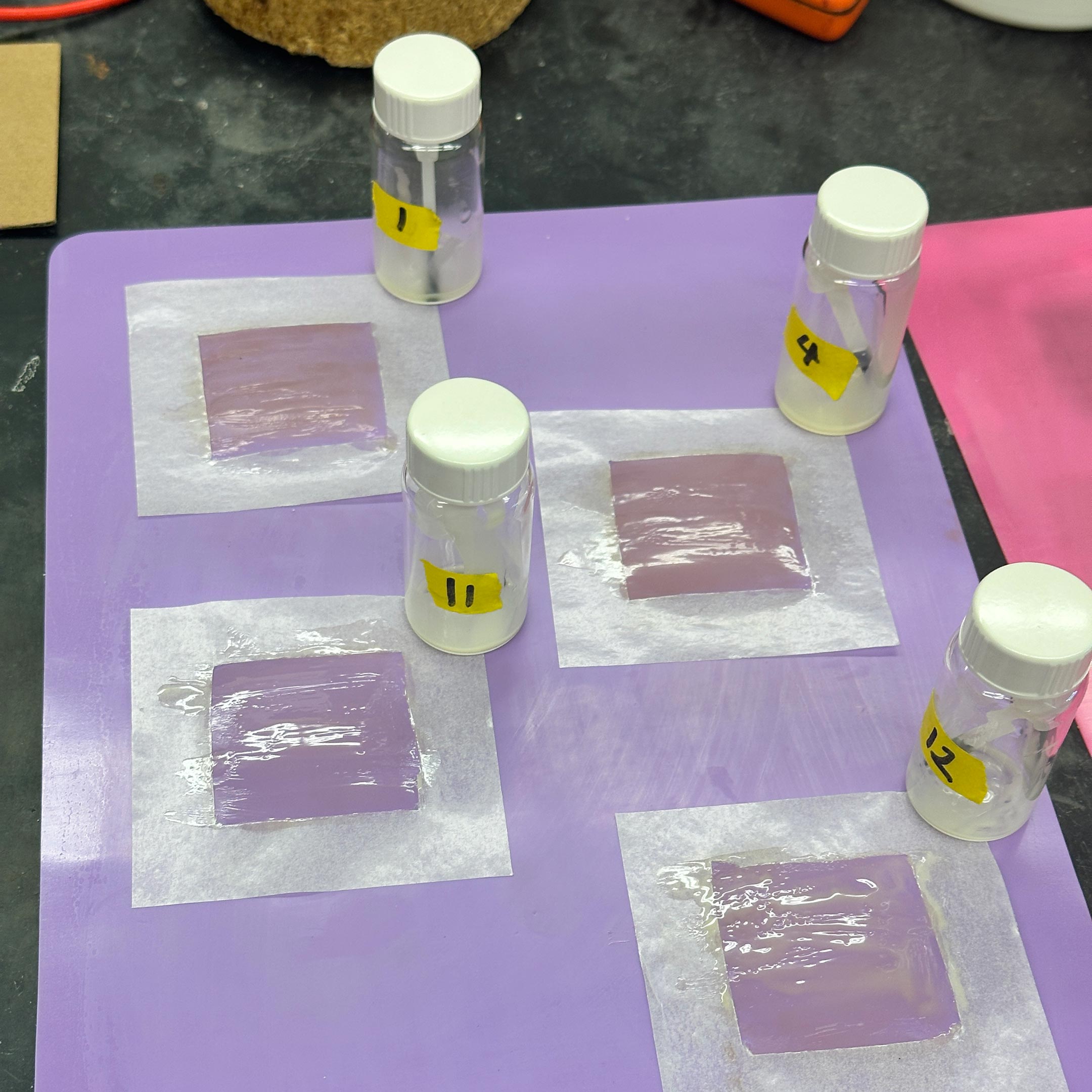
Testing Ingredients for Clear and Conductive Polish
To achieve both clarity and conductivity, Desai tested a wide range of combinations using trial and error. She experimented with 13 commercially available clear coats and more than 50 additives. Through this process, she identified two promising ingredients: forms of taurine, a compound often used in dietary supplements, and ethanolamine, a simple organic molecule.
Ethanolamine helped deliver the electrical properties needed and worked well with the polish, but it comes with some toxicity concerns. Modified taurine is nontoxic, though it creates a slightly cloudy appearance. When combined, however, the two produced a formula that allowed a smartphone to detect a touch from a fingernail.
“Our final, clear polish could be put over any manicure or even bare nails, which could help people with calluses on their fingertips, too. So, it has both a cosmetic and lifestyle benefit,” explains Desai.
A New Chemistry Approach to Touchscreen Interaction
Unlike previous approaches that rely on inherently conductive materials, the researchers believe their formula works through acid-base chemistry. Their reasoning comes from the strong performance of ethanolamine-based mixtures, which can release protons that help move electrical charge.
They propose that when the polish comes into contact with a touchscreen’s electric field, these protons shift between molecules. This movement slightly changes the capacitance of the surface, just enough for the device to register a touch.
Promising Results With Challenges Still Ahead
Although the early findings are encouraging, the polish is not ready for everyday use yet. Even the best-performing ethanolamine-taurine mixture does not work reliably when applied to nails. Another issue is that ethanolamine evaporates quickly, meaning the polish only remains effective for a few hours after application. The team also hopes to identify a fully nontoxic alternative.
Despite these challenges, the researchers now have a clearer understanding of how the formula works. They are continuing to test new compounds and refine their approach to find a more stable and effective solution.
“We’re doing the hard work of finding things that don’t work, and eventually, if you do that long enough, you find something that does,” concludes Lawrence.
The research was funded by the Centenary College of Louisiana, the Albert Sklar Family and the Sklar Chair in Chemistry. The researchers have submitted a provisional patent on this research.
Never miss a breakthrough: Join the SciTechDaily newsletter.
Follow us on Google and Google News.
1 Comment
Don’t they hand out awards for stupid things like this? (I’m personally embarrassed to have clicked on the story.)