
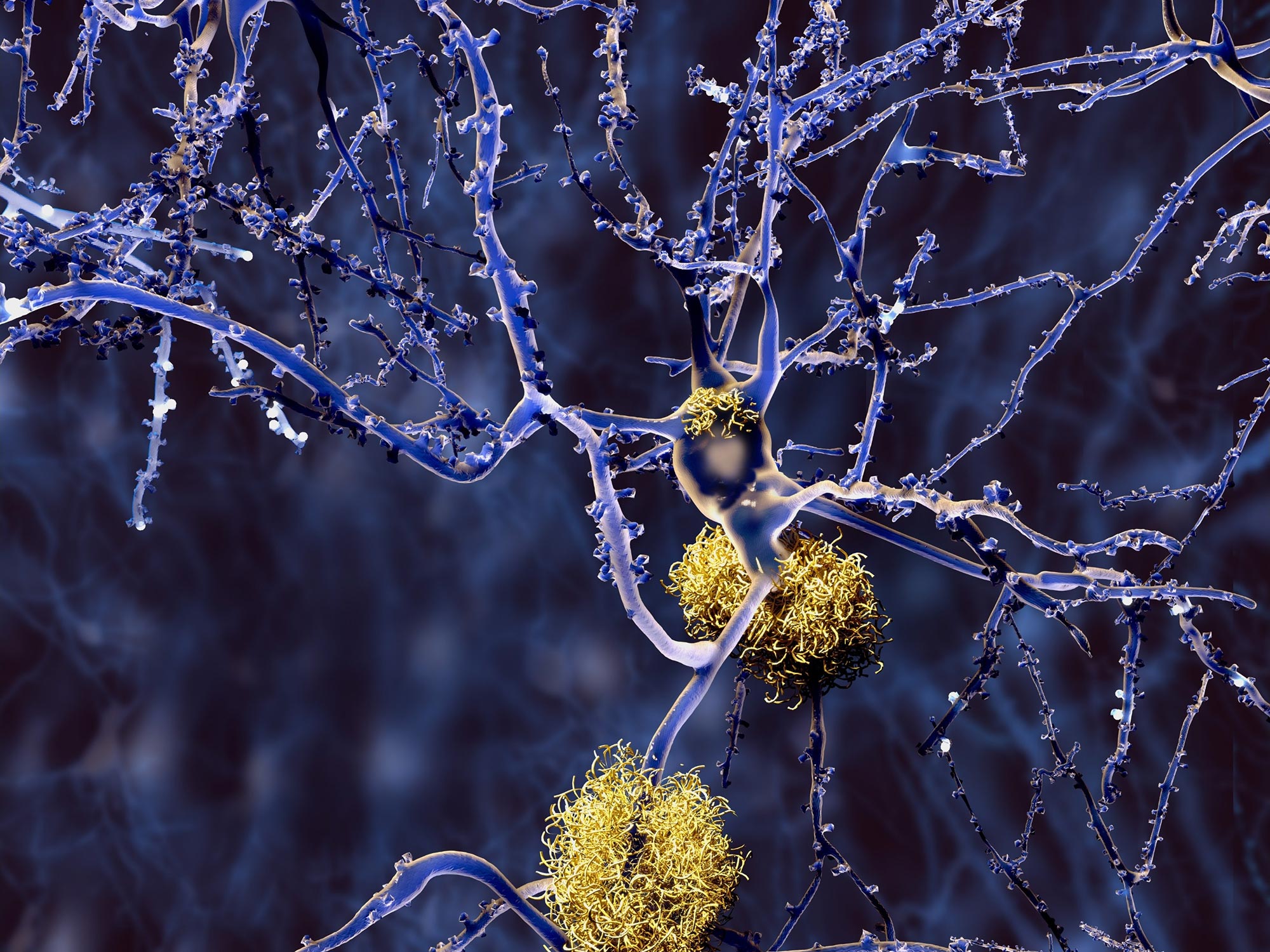
A new biomarker test can detect early-stage tau protein clumping up to a decade before it appears on brain scans, improving early Alzheimer’s diagnosis. Unlike amyloid-beta, tau neurofibrillary tangles are directly linked to cognitive decline.
Years before tau tangles appear in brain scans of Alzheimer’s patients, a biomarker test developed by the University of Pittsburgh School of Medicine can detect small amounts of tau protein prone to clumping, along with its misfolded pathological forms in the brain, cerebrospinal fluid, and possibly blood, according to new research published in Nature Medicine.
This cerebrospinal fluid test correlates with cognitive decline severity, independent of factors such as brain amyloid deposition, offering a potential pathway for early diagnosis and intervention.
Since amyloid-beta abnormalities typically emerge before tau pathology in Alzheimer’s disease, most biomarker research has prioritized detecting amyloid-beta changes. However, the clumping of tau protein into well-ordered structures referred to by pathologists as “neurofibrillary tangles” is a more defining event for Alzheimer’s disease as it is more strongly associated with the cognitive changes seen in affected people.
“Our test identifies very early stages of tau tangle formation – up to a decade before any tau clumps can show up on a brain scan,” said senior author Thomas Karikari, Ph.D., assistant professor of psychiatry at Pitt. “Early detection is key to more successful therapies for Alzheimer’s disease since trials show that patients with little-to-no quantifiable insoluble tau tangles are more likely to benefit from new treatments than those with a significant degree of tau brain deposits.”

The Need for a More Reliable Tau Biomarker
Since many elderly people who have amyloid-beta plaques in their brains will never go on to develop cognitive symptoms of Alzheimer’s disease during their lifetime, the widely adopted diagnostics framework developed by the Alzheimer’s Association specifies the three neuropathological pillars necessary to diagnose the disease – combined presence of tau and amyloid-beta pathology and neurodegeneration.
In a quest for early and accessible biomarkers for Alzheimer’s disease, Karikari’s earlier work showed that a brain-specific form of tau, called BD-tau, can be measured in blood and reliably indicate the presence of Alzheimer’s disease-specific neurodegeneration. Several years prior, Karikari showed that specific forms of phosphorylated tau, p-tau181, p-tau217, and p-tau212, in the blood can predict the presence of brain amyloid-beta without the need for costly and time-consuming brain imaging.
But these tools largely detect amyloid pathology, so the issue of early detection of tau still looms large. While tau-PET remains a reliable and accurate predictor of tau burden in the brain, the test’s utility is limited by availability, low resolution, high cost, labor, and sensitivity. At present, tau-PET scans can pick up the signal from neurofibrillary tangles only when a large number are present in the brain, at which point the degree of brain pathology has become pronounced and is not easily reversible.
A Breakthrough in Early Tau Detection
In this latest research, using the tools of biochemistry and molecular biology, Karikari and team identified a core region of the tau protein that is necessary for neurofibrillary tangle formation. Detecting sites within that core region of 111 amino acids, a sequence they call tau258-368, can identify clumping-prone tau proteins and help initiate further diagnostics and early treatment. In particular, the two new phosphorylation sites, p-tau-262 and p-tau-356, can accurately inform the status of early-stage tau aggregation that, with an appropriate intervention, could potentially be reversed.
“Amyloid-beta is a kindling, and tau is a matchstick. A large percentage of people who have brain amyloid-beta deposits will never develop dementia. But once the tau tangles light up on a brain scan, it may be too late to put out the fire and their cognitive health can quickly deteriorate,” said Karikari. “Early detection of tangle-prone tau could identify the individuals who are likely to develop Alzheimer’s-associated cognitive decline and could be helped with new generation therapies.”
Reference: “Phospho-tau serine-262 and serine-356 as biomarkers of pre-tangle soluble tau assemblies in Alzheimer’s disease” by Tohidul Islam, Emily Hill, Eric E. Abrahamson, Stijn Servaes, Denis S. Smirnov, Xuemei Zeng, Anuradha Sehrawat, Yijun Chen, Przemysław R. Kac, Hlin Kvartsberg, Maria Olsson, Emma Sjons, Fernando Gonzalez-Ortiz, Joseph Therriault, Cécile Tissot, Ivana Del Popolo, Nesrine Rahmouni, Abbie Richardson, Victoria Mitchell, Henrik Zetterberg, Tharick A. Pascoal, Tammaryn Lashley, Mark J. Wall, Douglas Galasko, Pedro Rosa-Neto, Milos D. Ikonomovic, Kaj Blennow and Thomas K. Karikari, 10 February 2025, Nature Medicine.
DOI: 10.1038/s41591-024-03400-0
This study was supported by, among others, the National Institute on Aging (grants R01AG083874, U24AG082930, P30AG066468, RF1AG052525-01A1, R01AG053952, R37AG023651, RF1AG025516, R01AG073267, R01AG075336, R01AG072641, P01AG14449, and P01AG025204, among others), the Swedish Research Council (grant 2021-03244), the Alzheimer’s Association (grant AARF-21-850325), the Swedish Alzheimer Foundation, the Aina (Ann) Wallströms and Mary-Ann Sjöbloms Foundation, the Emil and Wera Cornells Foundation and a professorial endowment fund from the Department of Psychiatry, University of Pittsburgh.
Never miss a breakthrough: Join the SciTechDaily newsletter.
Follow us on Google and Google News.
6 Comments
With a family history of food allergies and dementia and a personal history of allergy related nutritional deficiencies resulting in temporary short-term memory problems, I postulate that chronic mild inflammation related hyperuricemia may be the underlying cause of Alzheimer’s Disease (AD) and it may be sufficient to test for serum uric acid and ionic calcium to predict the likelihood of AD long before any real damage is done. However, as mainstream medicine still fails to recognize and research our kind of food allergy reactions as true allergies, it may be necessary to test all for my kind of food allergies and reassess the “normal” ranges of ionic calcium and serum uric acid. More: https://odysee.com/@charlesgshaver:d?view=about
Bender…
I humbly assume there’s understandable fear and anger fueling your question. I’m a PhD, 3 MA degrees, U of Mich.and Mensa ( I share, hoping you’ll listen).I’m a Dr of Psychology,( not medicine) 40 yrs treating patients. When head oncologist U of M told my husband,”your grade 4 brain tumor is in-curable. You’ll die in 3mos.9mos later,his call,”tumor gone!.”I Tried everything,daily claimed,”you’re healing. 💕
Charles,
Thank you.
What good is a detection test if we cannot effectively treat the disease? “Hey! You’re gonna get Alzheimers! We can’t do anything about it, but enjoy ruminating on that!”
When will this be available?
To the Author: When you refer to the “new therapies” for Alzheimer’s, which medications are you referring to: Aduhelm–which was pulled from the market by the drug manufacturer, or Kinsula or Leqembi, which has killed people years before they were going to die from Alzheimer’s?
Please don’t be disingenuous. This is a far too deadly subject,