
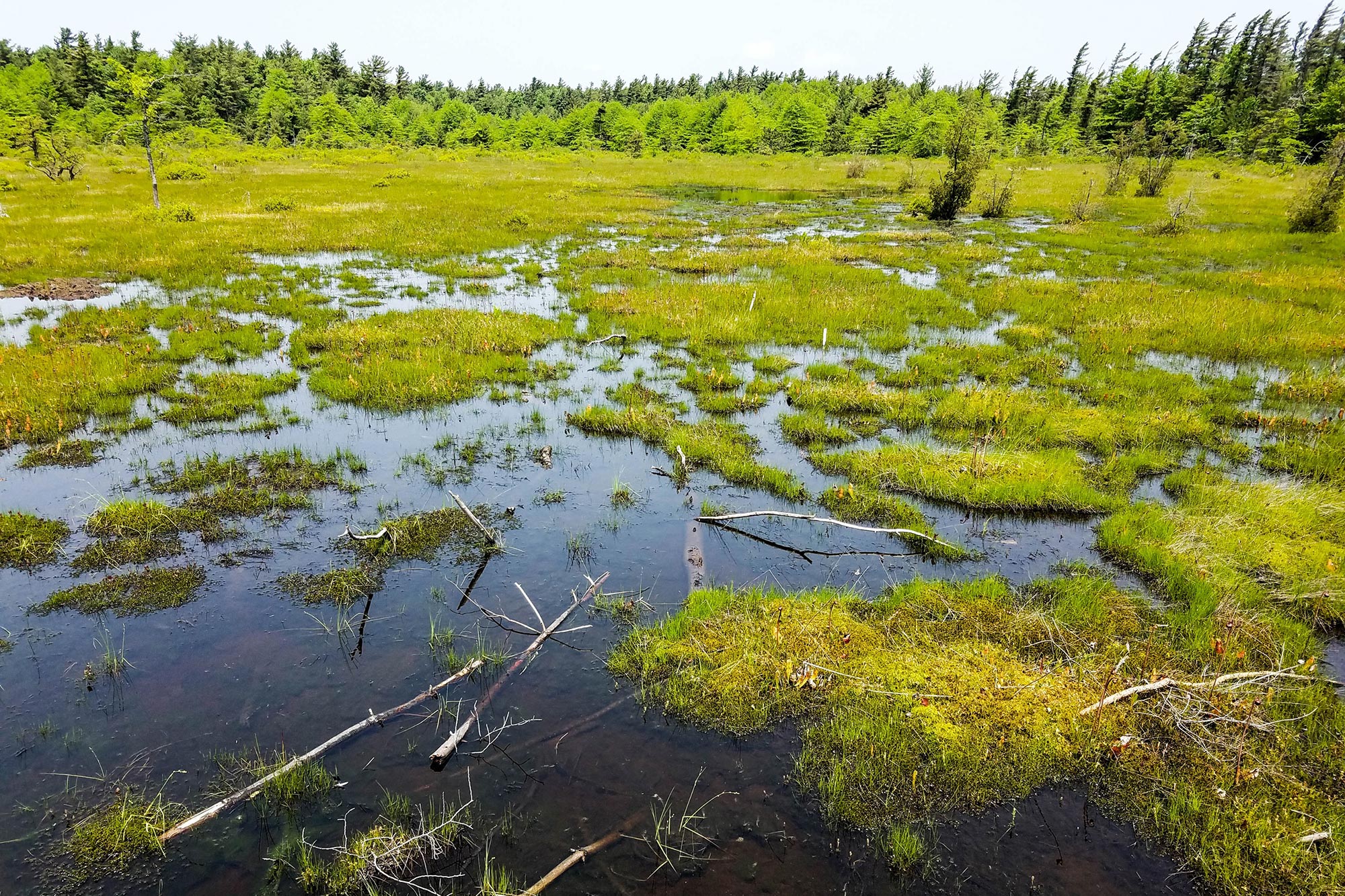
Fungi from peat bogs produce substances toxic to tuberculosis bacteria, potentially guiding new treatment development.
Researchers identified three fungal compounds that disrupt thiol levels in bacteria, a key survival mechanism. These findings suggest targeting similar processes could lead to better drugs.
Fungi From Peat Bogs and Tuberculosis Treatment
An analysis of fungi collected from peat bogs has identified several species that produce substances toxic to the bacterium that causes the human disease tuberculosis. The findings suggest that one promising direction for development of better treatments might be to target biological processes in the bacterium that help maintain levels of compounds known as thiols. Neha Malhotra of the National Institutes of Health, U.S., and colleagues present these findings on December 3rd in the open-access journal PLOS Biology.
Every year, millions of people around the world fall ill from tuberculosis and more than 1 million people die, despite the disease being preventable and curable. However, treatment requires taking daily antibiotics for months, which can pose significant challenges, so new treatments that shorten the treatment period are urgently needed.
To explore potential targets for treatment-shortening strategies, Malhotra and colleagues turned to sphagnum peat bogs. These freshwater wetlands harbor abundant species of bacteria in the Mycobacterium genus—the same genus as the tuberculosis-causing bacterium Mycobacterium tuberculosis. In these bogs, fungi compete with mycobacteria to grow within a decomposing “gray layer” that, similarly to lesions found in the lungs of tuberculosis patients, is acidic, nutrient-poor, and oxygen-poor.

Identifying Toxic Fungi Compounds
In the lab, the researchers grew Mycobacterium tuberculosis alongside each of about 1,500 species of fungi collected from the gray layer of several peat bogs in the northeastern U.S. They identified five fungi that had toxic effects against the bacterium. Further laboratory experiments narrowed these effects down to three different substances produced by the different fungi: patulin, citrinin, and nidulalin A.
Each of the three compounds appears to exert its toxic effects on the tuberculosis bacterium by severely disrupting cellular levels of a class of compounds known as thiols—several of which play essential roles in the molecular processes that help keep bacterial cells alive and functional.
Implications for Drug Development
The researchers note that these three compounds themselves are unlikely to be good drug candidates. However, especially given the similarity between the peat-bog environment and tuberculosis lesions, the findings provide support for a particular strategy for development of treatment-shortening drugs: targeting the biological processes that maintain thiol levels in the tuberculosis bacterium.
The authors add, “Pathogenic mycobacteria, like those causing the human diseases leprosy and tuberculosis, are found in abundance in sphagnum peat bogs where the acidic, hypoxic and nutrient-poor environment gives rise to fierce microbial competition. We isolated fungi from such bogs and screened for those that competed directly with mycobacteria by co-culture and discovered that these fungi all target the same physiological process in mycobacteria using several chemically distinct mechanisms.”
Reference: “Environmental fungi target thiol homeostasis to compete with Mycobacterium tuberculosis” by Neha Malhotra, Sangmi Oh, Peter Finin, Jessica Medrano, Jenna Andrews, Michael Goodwin, Tovah E. Markowitz, Justin Lack, Helena I. M. Boshoff and Clifton Earl Barry III, 3 December 2024, PLOS Biology.
DOI: 10.1371/journal.pbio.3002852
This work was supported by the Division of Intramural Research NIAID, NIH (ZIA AI000693 to CEB). The funders had no role in study design, data collection and analysis, decision to publish, or preparation of the manuscript.
Never miss a breakthrough: Join the SciTechDaily newsletter.
Follow us on Google and Google News.