
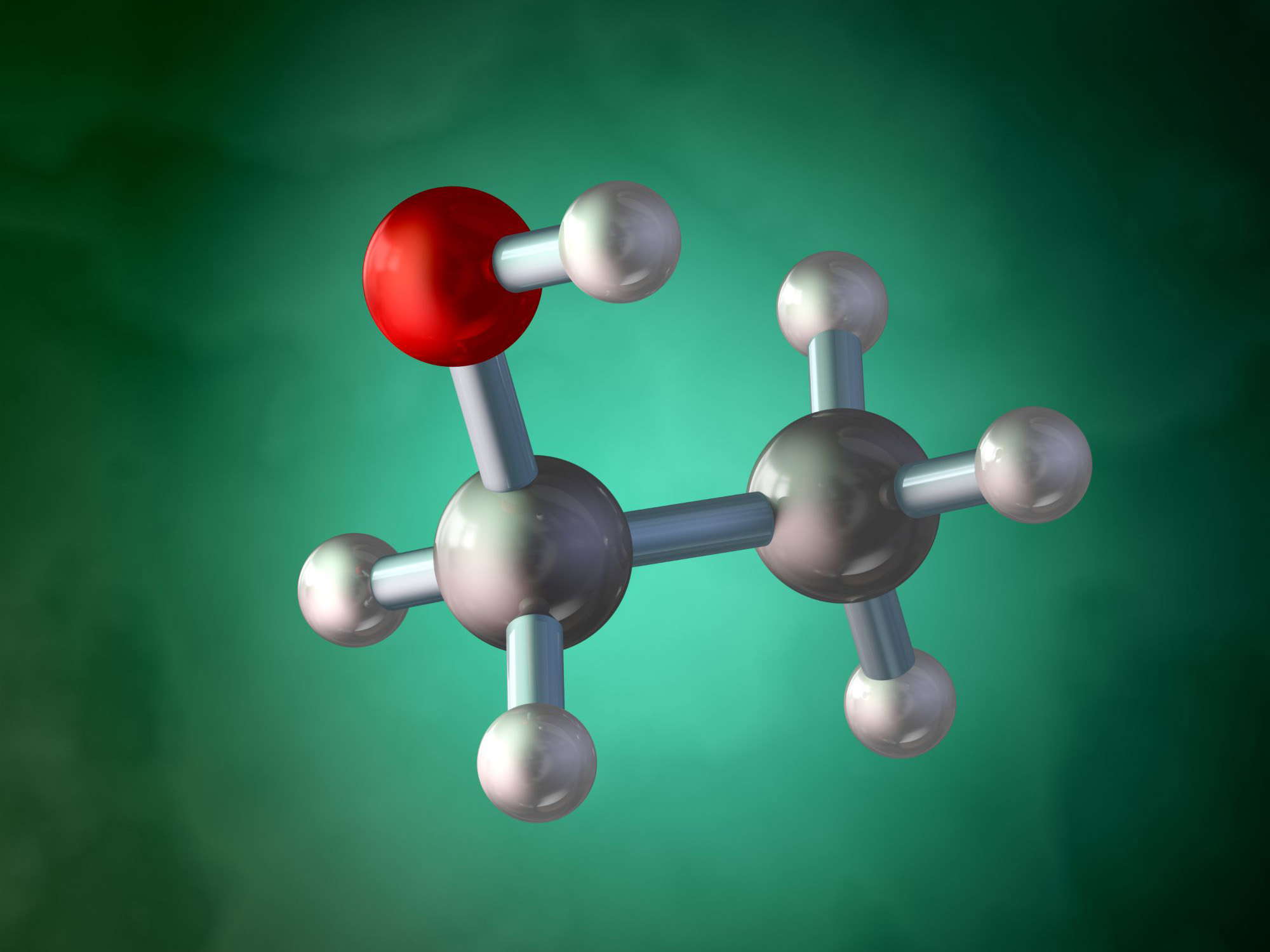
Scientists have enhanced CO2 reduction to ethanol by using copper nanocubes coated with zinc oxide, improving efficiency and stability. This innovative method offers a sustainable, cost-effective way to produce ethanol from CO2.
A new study reveals that scientists have successfully utilized a combination of copper and zinc oxide to enhance the catalytic reduction of CO2 into ethanol. Traditionally, this process has relied solely on copper-based catalysts under stationary reaction conditions, which do not guarantee optimal ethanol selectivity. Pulsed CO2RR offers a promising alternative by altering these conditions, but the catalyst’s stability can be compromised by the more demanding reaction environment, negatively impacting its performance.
This new research highlights the benefits of using pulsed electrochemical CO2 reduction (CO2RR) techniques. Moreover, the team discovered that by adding a zinc oxide shell to the copper oxide nanocubes, it is possible to increase the production of ethanol while minimizing unwanted by-products such as hydrogen.

Especially it was possible to achieve similar, if not superior, results in ethanol production with respect to pure Cu catalysts, but with significantly less demanding reaction conditions. In the past, the oxidation process of the catalyst involved in pulsed CO2 reduction was found to lead to the loss of Cu atoms via oxidative dissolution in the liquid medium (electrolyte), reducing its effectiveness over time.
Enhancing Catalyst Stability
On the contrary, the present study unveiled that a more durable electrocatalyst can be created by design through the deposition of a zinc oxide-coating on the copper nanocubes. Using the new catalysts, it is then the zinc component that primarily oxidizes, sparing the copper and thereby maintaining the catalyst’s integrity and efficiency.
This innovative approach therefore enhances the lifetime of the catalysts themselves under the dynamic reaction conditions optimized for the generation of alcohol products. The detailed information on the structure and composition of the catalytic material required for its optimization was obtained via operando Raman spectroscopy, a method with excellent sensitivity for the detection of adsorbed reaction intermediates.
This discovery not only supports the hypothesis that the metal oxidation state plays a crucial role in the reaction and that the active reaction species are created during the catalytic process, but also demonstrates a potential way to enhance the selectivity and efficiency of CO2 reduction to ethanol. It represents a significant step forward in understanding in the quest for sustainable energy solutions, offering a promising route for a green and cost-effective production of ethanol and other fuels from CO2.
Reference: “Time-resolved operando insights into the tunable selectivity of Cu–Zn nanocubes during pulsed CO2 electroreduction” by Antonia Herzog, Martina Rüscher, Hyo Sang Jeon, Janis Timoshenko, Clara Rettenmaier, Uta Hejral, Earl M. Davis, F. T. Haase, David Kordus, Stefanie Kühl, Wiebke Frandsen, Arno Bergmann and Beatriz Roldan Cuenya, 26 August 2024, Energy & Environmental Science.
DOI: 10.1039/D4EE02308K
Never miss a breakthrough: Join the SciTechDaily newsletter.
Follow us on Google and Google News.