
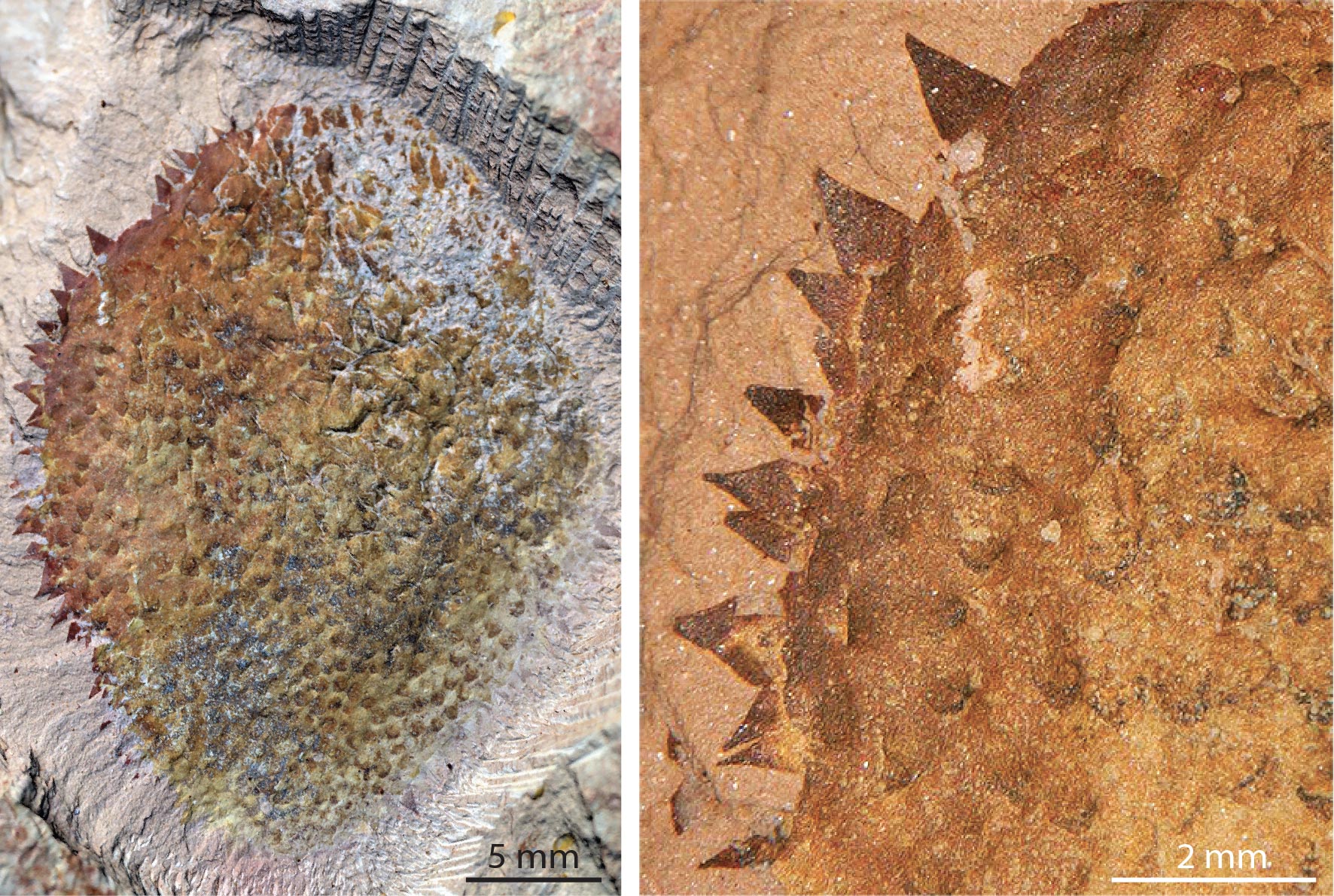
covering the body of Shishania aculeata (right). Credit: G Zhang/L Parry
The discovery of Shishania aculeata, a shell-less early Cambrian mollusk, sheds light on the evolutionary development of mollusks through its primitive yet distinctive anatomical features.
Scientists have struggled to trace the early evolution of mollusks, but the newly discovered fossil of Shishania aculeata, a shell-less, soft-bodied, spiny mollusk from the early Cambrian, has provided key insights. New research suggests that Shishania aculeata is a stem mollusk – representative of an intermediate between early members of the superphylum lophotrochozoans and more derived mollusks.
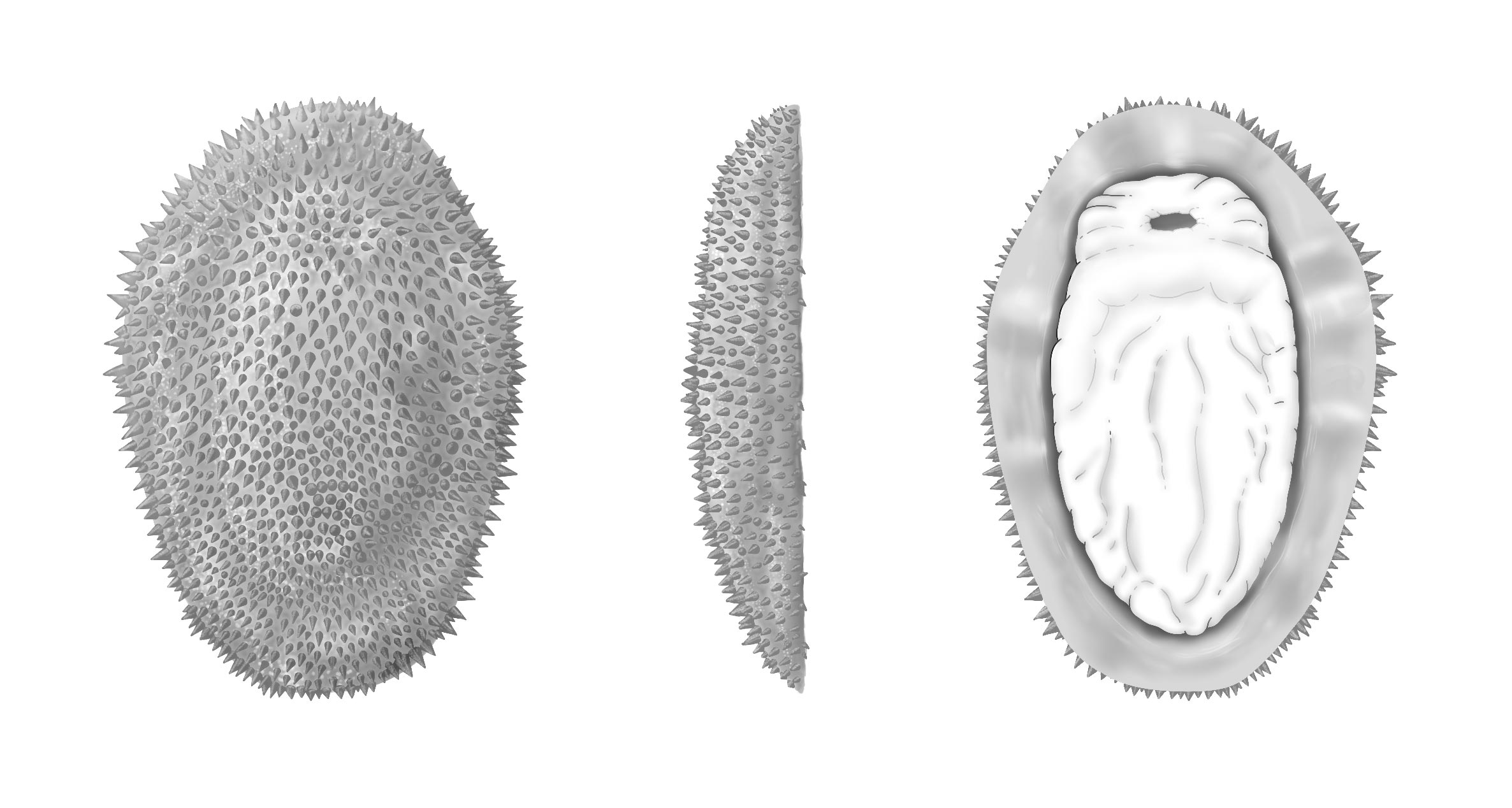
from the top, side and bottom (left to right). Credit: M. Cawthorne
Diversity and Ancestry of Mollusks
Mollusks are one of the most diverse groups of animals, encompassing various well-known forms such as clams, snails, and octopuses, as well as less familiar aculiferans (i.e., chitons and vermiform aplacophorans). Despite this impressive diversity, understanding the ancestorial traits of mollusks has been difficult due to the limited view provided by existing fossils and currently living forms. Although early mollusk fossils from the Cambrian period have offered some insights, revealing forms that exhibit a combination of biomineralized shells and sclerites, few stem lineage taxa have been described, leaving gaps in the understanding of early molluscan evolution.
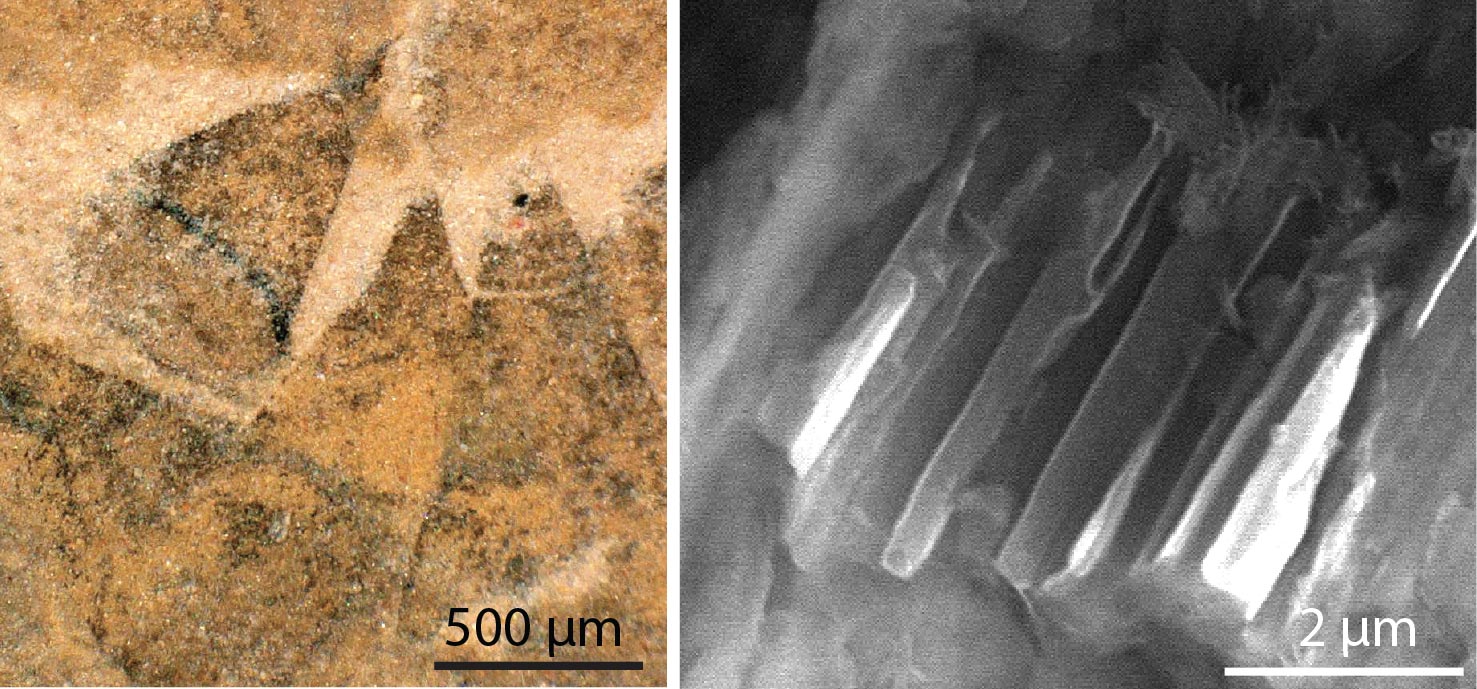
of a conical spine showing the microscopic channels preserved inside (right). Credit: G Zhang/L Parry
Characteristics of Shishania aculeata
Guangxu Zhang and colleagues describe S. aculeata, an early Cambrian-age mollusk that displays a combination of features, including a broad foot, mantle cavity, and a back covered in hollow chitinous sclerites, giving it the appearance of a bristly durian fruit. Unlike the biomineralized sclerites of modern aculiferan mollusks, Shishania sclerites are non-mineralized, suggesting a position outside the molluscan crown group.
Evolutionary Significance of New Findings
Electron microscopy revealed that the sclerites have a narrow tubular microstructure, similar to the bristles of annelid worms and brachiopods. The findings shed light on the evolutionary transition from simple chitinous bristles to the more complex biomineralized skeletal forms in mollusks.
For more on this discovery, see Discovery of Strange 514-Million-Year-Old Slug Rewrites Our Understanding of Sea Creatures.
Reference: “A Cambrian spiny stem mollusk and the deep homology of lophotrochozoan scleritomes” by Guangxu Zhang, Luke A. Parry, Jakob Vinther and Xiaoya Ma, 1 August 2024, Science.
DOI: 10.1126/science.ado0059
Never miss a breakthrough: Join the SciTechDaily newsletter.
Follow us on Google and Google News.