
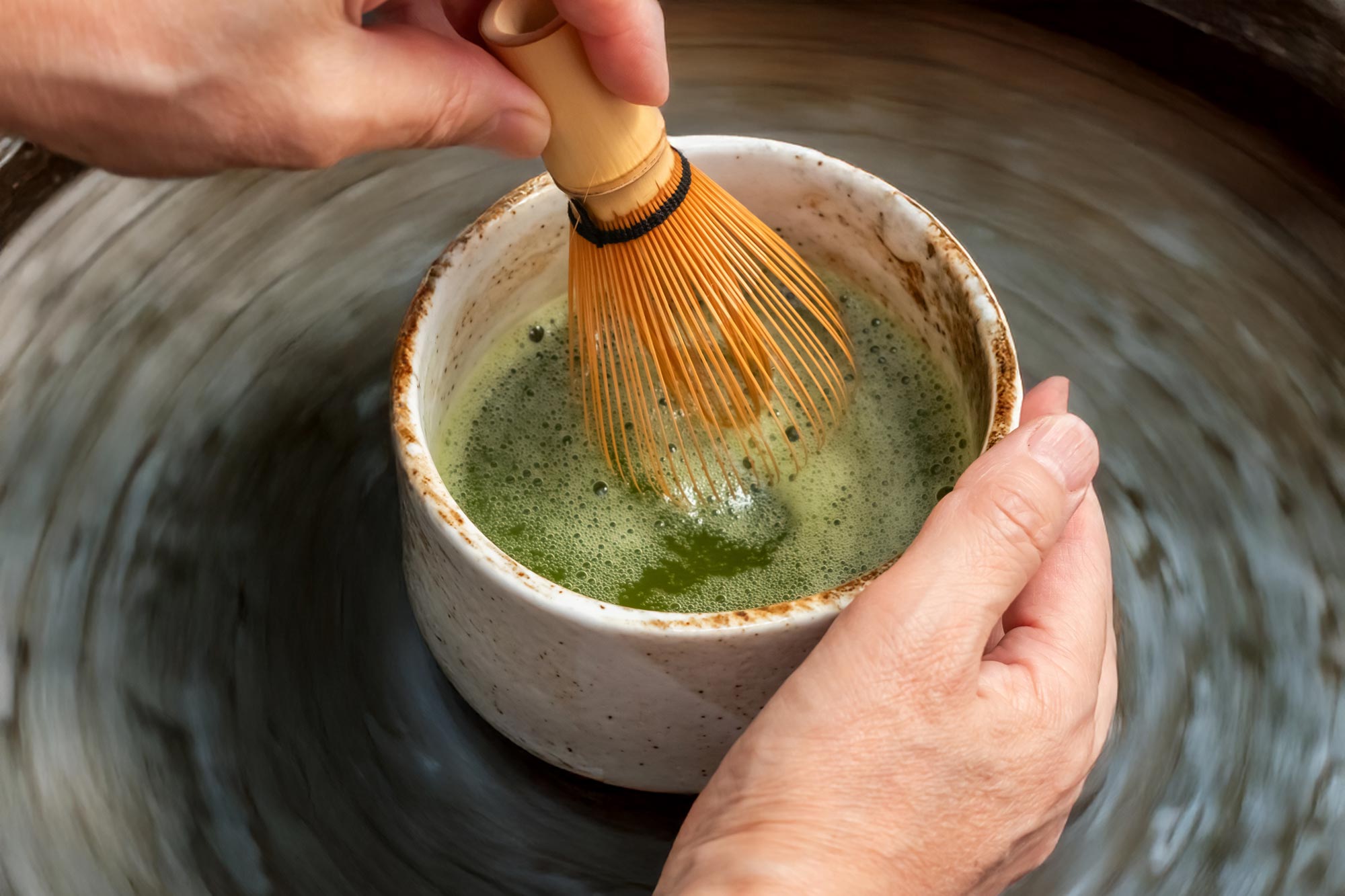
A new study suggests that matcha, the finely ground green tea powder widely used in Japanese cuisine, may influence allergic symptoms in an unexpected way.
Japan’s famous matcha may offer another surprising benefit. A new study in mice suggests the powdered green tea could help reduce sneezing linked to nasal allergies.
Matcha is a vivid green powder produced from specially grown green tea leaves that are dried and finely ground. It is commonly prepared as a beverage but is also used to flavor many foods and drinks. Earlier studies have shown that matcha contains abundant biologically active compounds, including antioxidants and amino acids. Researchers have linked these compounds to several potential health benefits, such as better heart and brain function and lower inflammation.
Professor Osamu Kaminuma of the Research Institute for Radiation Biology and Medicine at Hiroshima University in Japan has been studying whether matcha could influence allergic rhinitis, often called hay fever. “Human studies suggest green tea may relieve allergic rhinitis, but how it works is unclear,” Kaminuma said.
In an early access paper published in npj Science of Food, Kaminuma and his colleagues tested matcha in mice engineered to develop hay fever-like symptoms. The mice received matcha tea two to three times per week for more than five weeks. They were also given an additional dose 30 minutes before exposure to an allergen that would normally trigger their symptoms.
Reduced Sneezing Without Typical Immune Changes
The researchers observed that mice treated with matcha sneezed far less than expected. However, the results also revealed something unexpected. The matcha treatment did not appear to alter key allergic responses involving immunoglobulin E (IgE), mast cells, or T cells.
IgE antibodies attach to mast cells and play a major role in allergic reactions by triggering the release of histamine and other inflammatory chemicals. Mast cells drive the early phase of an allergic reaction, while T cells regulate longer-term immune activity, including the production of IgE.
“Oral matcha reduced sneezing without clearly changing major immune markers. Instead, it strongly suppressed brainstem neuronal activation linked to the sneezing reflex,” Kaminuma explained.
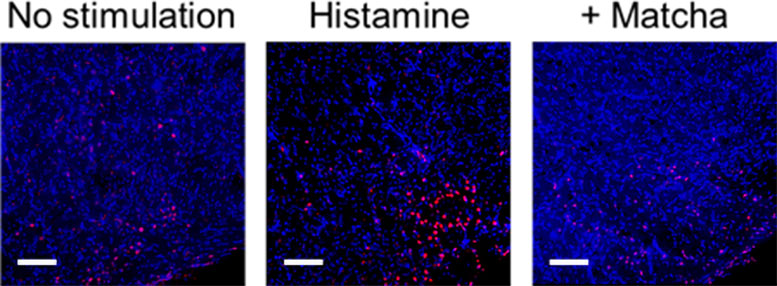
To investigate this further, the researchers examined the activity of a gene called c-Fos, which signals neurological and behavioral responses to strong stimuli such as allergen exposure. They focused on the ventral spinal trigeminal nucleus caudali, a brain region involved in controlling sneezing.
When mice experienced hay fever symptoms, activity of the c-Fos gene rose sharply in this brain region. Treatment with matcha lowered c-Fos expression to nearly normal levels.
The researchers say the next step is to determine whether the same effect occurs in people. “The goal is an evidence-backed, food-based option that complements standard care for allergic rhinitis symptoms,” Kaminuma said.
Reference: “Matcha alleviates sneezing response in a murine model of allergic rhinitis” by Sawako Ogata, Naoto Uda, Kento Miura, Uyanga Enkhbaatar, Norimasa Yamasaki, Naohisa Hosomi, Akio Mori, Ryo Hasebe, Naoaki Matsuda, Fumiko Higashikawa, Maribet Gamboa, Shotaro Nakajima, Noriko Kitamura, Minoru Gotoh, Shin-Ichi Sekizawa and Osamu Kaminuma, 5 March 2026, npj Science of Food.
DOI: 10.1038/s41538-026-00777-9
Funding: JSPS Program for Forming Japan’s Peak Research Universities, Japan Society for the Promotion of Science, Matcha and Health Research, Hachiro Honjo Ocha Foundation, Food Science Institute Foundation, Institute for Fermentation, Osaka, Japan Food Chemical Research Foundation, Kieikai Research Foundation, Tojuro Iijima Foundation for Food Science and Technology, Triangle Project Grant, Research Center for Radiation Disaster Medical Science
Never miss a breakthrough: Join the SciTechDaily newsletter.
Follow us on Google and Google News.
1 Comment
This is really interesting. Though it hasn’t been tested on mice, Matcha is commonly available in capsule form as an antioxidant. I wondered if the capsule preparation would yield similar results. Good for people who do not like the taste of matcha tea.