
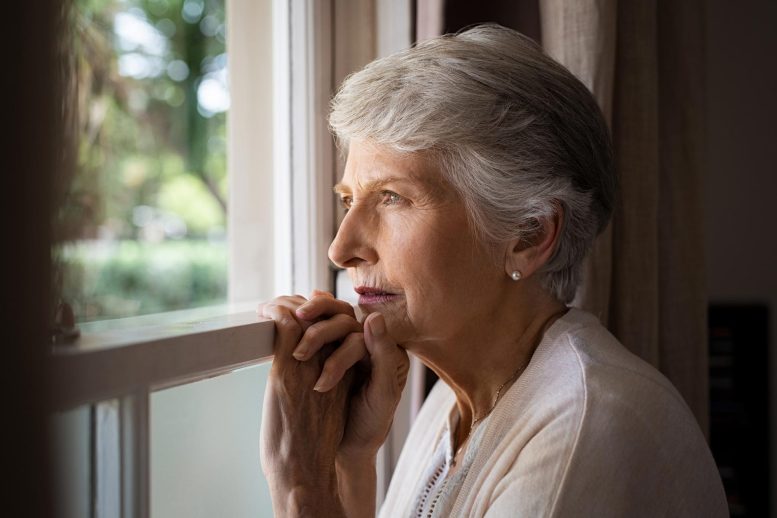
A randomized controlled study demonstrates substantial gains in social isolation, well-being, quality of life, and frailty evaluations.
Scientists have known for a long time that social isolation is linked to a variety of health issues, such as an increased risk for heart disease and stroke, as well as mental deterioration and even early mortality. Because they are more prone to be socially isolated and lonely, older adults are particularly vulnerable. The coronavirus pandemic worsened the situation by requiring social distancing, particularly to preserve the health of the world’s senior population.
However, when paired with interactive art-based activities, the same digital technology that let workers connect remotely might help older adults become more physically, mentally, and socially healthy. This is the conclusion of a recent study, which is the first to show how trips to virtual museums may considerably improve the quality of life for elderly people who are confined to their homes. The researchers’ findings were published in the journal Frontiers in Medicine.
Researchers from Canada and the Montreal Museum of Fine Arts (MMFA) collaborated to look at the advantages of conducting weekly virtual visits over the course of three months. 106 Montreal metro area residents 65 and older were recruited for the research. One guided tour each week was attended by half of the participants, whereas no cultural activities were taken part in by the control group over the same time period.
Art Improves Life
The intervention group showed significant improvements in their social isolation, well-being, quality of life, and frailty assessment scores when compared to the control group, according to the paper.
“Our study showed that art-based activity may be an effective intervention,” said lead author Dr. Olivier Beauchet, a professor at the University of Montreal. “On a global scale, this participatory art-based activity could become a model that could be offered in museums and art institutions worldwide to promote active and healthy aging.”
The biggest benefit of the 45-minute virtual museum tours, which also included a 15-minute Q&A at the end with a museum guide, was an improvement in frailty.
Frailty refers to a “vulnerable condition exposing individuals to incident adverse health events and disabilities that negatively impact their quality of life and increase health and social costs,” Beauchet explained. “Health and social systems need to address the challenge of limiting frailty and its related adverse consequences in the aging population.”
A Creative Way to Improve Health
The new study is an extension of previous research that investigated the potential health benefits of an ongoing MMFA program for seniors called “Thursdays at the Museum.” Findings from the single-arm pilot study in 2018 indicated that art-based activities hosted by the museum can improve well-being, quality of life, and health in older adults.
In fact, the success of the pilot study led to a three-year multinational study to test the effectiveness of such art-based interventions across societies and cultures. In addition, the Research Centre of the Geriatric University Institute of Montreal, in collaboration with MMFA and the University of Montreal, is developing a new program marrying art and health called the Arts & Longevity Lab. The purpose of the lab is to develop, validate and promote art-based interventions for older adults.
These initiatives reflect approaches advocated by the World Health Organization (WHO) to manage chronic diseases, according to Beauchet. For instance, the WHO launched the Aging and Health Program in 2015 which included using community-based organizations to promote culture as a key component of improving health. Traditionally, these sorts of preventive health activities have taken place in schools, community centers, and workplaces.
“While these are suitable locations that reach a great number of people, there are additional organizations and sectors that could become partners in public health research and practice development,” Beauchet said. “Museums are among such potential partners. They are aware of the needs of their communities and are consequently expanding the types of activities they offer.”
Reference: “Benefits of a 3-month cycle of weekly virtual museum tours in community dwelling older adults: Results of a randomized controlled trial” by Olivier Beauchet, Jacqueline Matskiv, Kevin Galery, Linda Goossens, Constance Lafontaine and Kim Sawchuk, 16 August 2022, Frontiers in Medicine.
DOI: 10.3389/fmed.2022.969122
The study was funded by the Fonds de recherche du Québec-Société et culture and the Montreal Museum of Fine Arts.
Never miss a breakthrough: Join the SciTechDaily newsletter.
Follow us on Google and Google News.