
Close Menu
    Facebook X (Twitter) Instagram
    SciTechDaily
    • Biology
    • Chemistry
    • Earth
    • Health
    • Physics
    • Science
    • Space
    • Technology
    Facebook X (Twitter) Pinterest YouTube RSS
    SciTechDaily
    Home»Biology»Scientists Discover Two New Cave-Dwelling Snail Species Named After “The Lord of the Rings” Characters
    Biology

    Scientists Discover Two New Cave-Dwelling Snail Species Named After “The Lord of the Rings” Characters

    By Pensoft PublishersNovember 16, 2024No Comments4 Mins Read
    Facebook Twitter Pinterest Telegram LinkedIn WhatsApp Email Reddit
    Share
    Facebook Twitter LinkedIn Pinterest Telegram Email Reddit
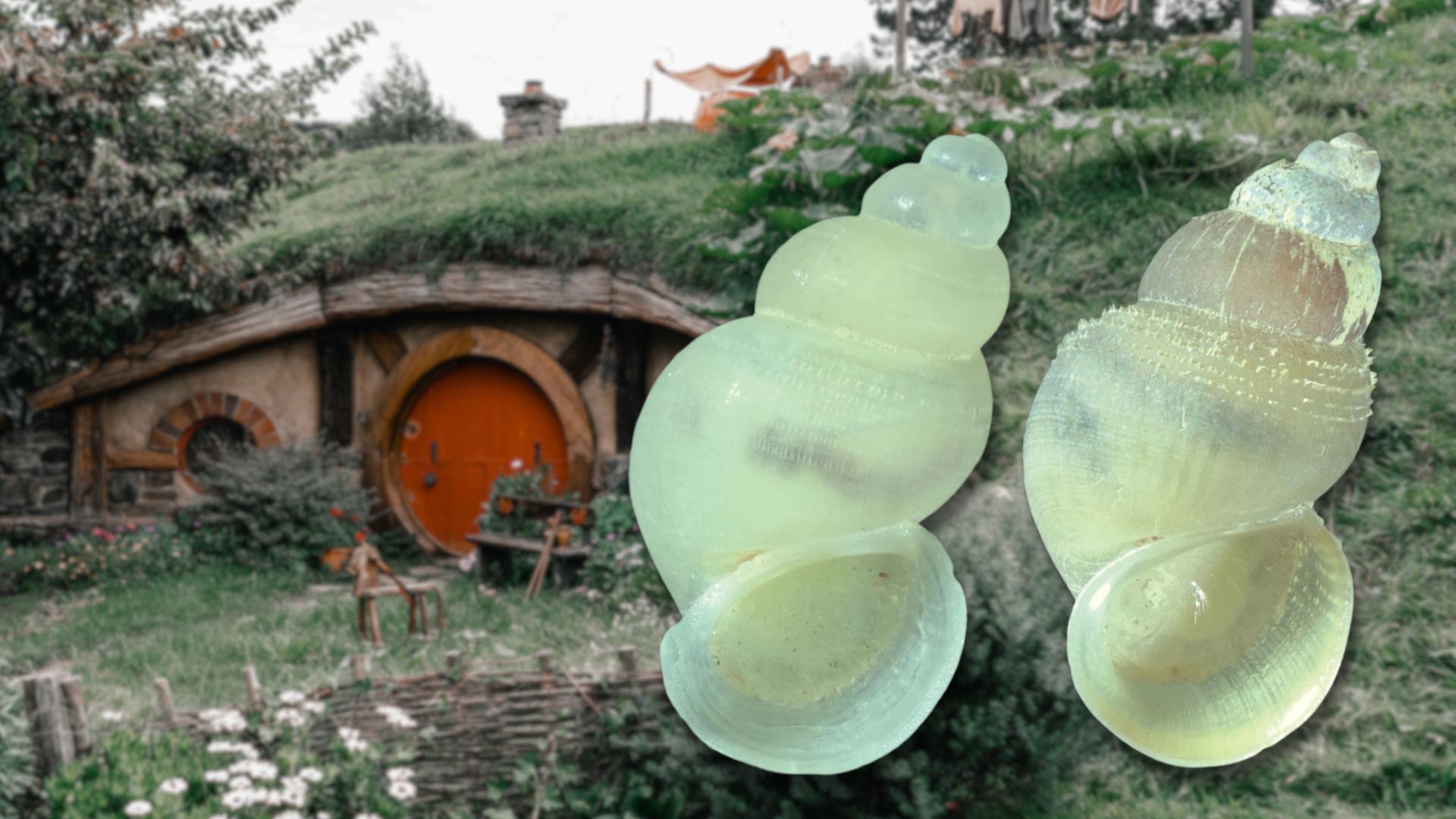
    Idiopyrgus meriadoci and Idiopyrgus eowynae
    Idiopyrgus meriadoci (left) and Idiopyrgus eowynae (right). Credit: Snails: Salvador RB and Bichuette ME. Background: Envanto

    New snail species named after “The Lord of the Rings” characters have been found in Brazil. These troglobitic snails, adapted to cave environments, face threats from environmental degradation.

    Scientists have named two newly discovered freshwater snail species from Brazil after characters from The Lord of the Rings.

    The species, described in the open-access journal Zoosystematics and Evolution, were named Idiopyrgus eowynae and Idiopyrgus meriadoci in honor of Éowyn and Meriadoc Brandybuck from J.R.R. Tolkien’s iconic series.
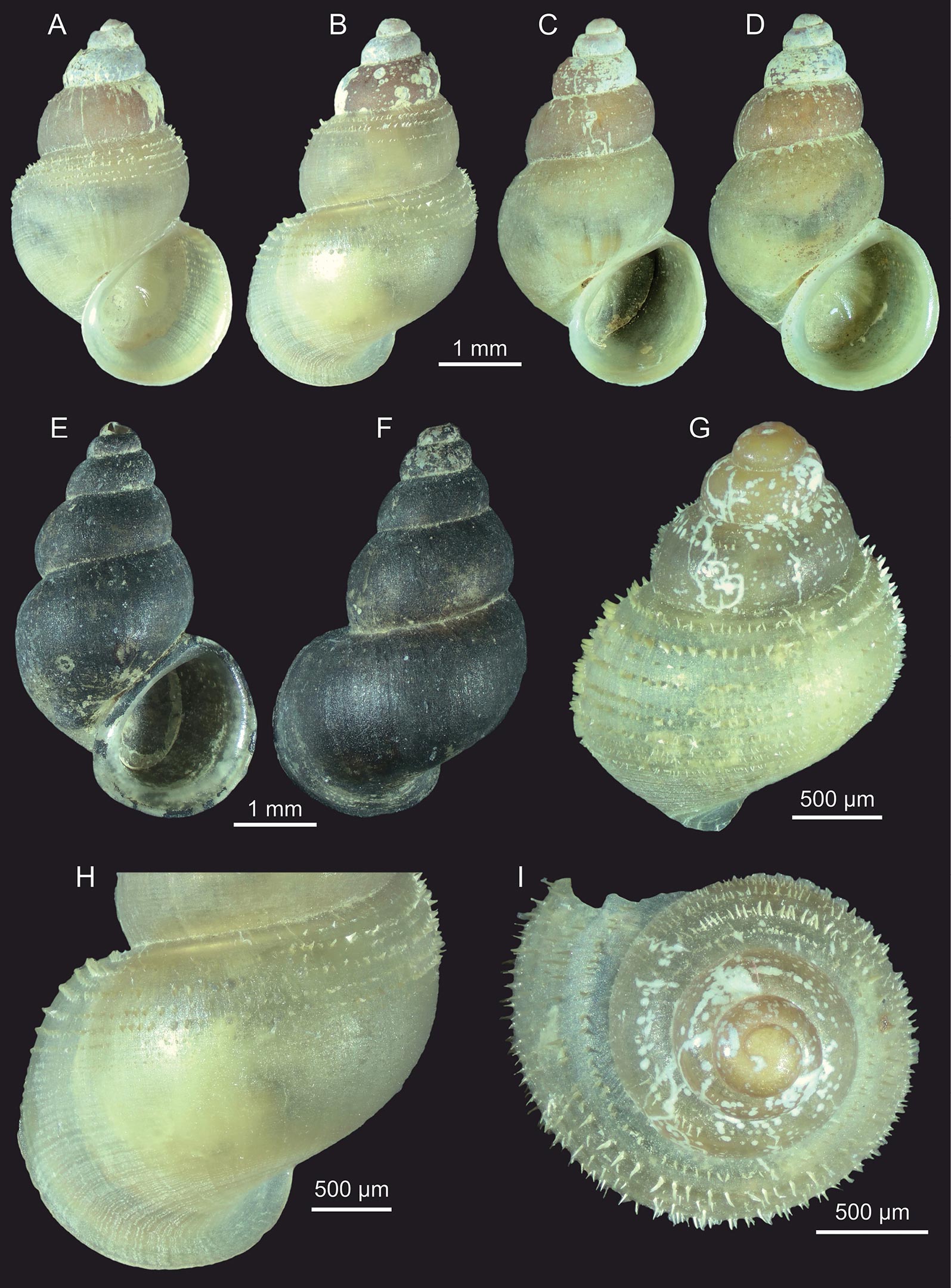
    Idiopyrgus eowynae
    Idiopyrgus eowynae sp. nov. A, B. Holotype LES 29795;. C. Paratype (typical morph) #1 LES 29796; D. Paratype (typical morph) #2 LES 29796; E, F. Paratype (dark morph) LES 29797; G. Paratype (typical morph) #3 LES 29796, juvenile, showing the protoconch in greater detail as well as the sculpture of the first teleoconch whorls; H. Detail of the body whorl of holotype in dorsal view, showing the teleoconch sculpture, in particular the multitude of spiral lines; I. Paratype #3 in apical view, showing the protoconch. Credit: Salvador RB and Bichuette ME

    In their research paper, the authors explain the name Idiopyrgus eowynae, stating, “Éowyn exemplifies courage, resilience, and resistance against darkness, both internal and external, standing against Gríma Wormtongue and the Witch-king of Angmar.”

    As for Idiopyrgus meriadoci, they write, “Besides standing with Éowyn against the Witch-king in the Battle of the Pelennor Fields, Merry is also an example of the fight for nature conservation in Middle-earth, pushing the Ents into action and ultimately ending Saruman’s threat to Fangorn Forest.”
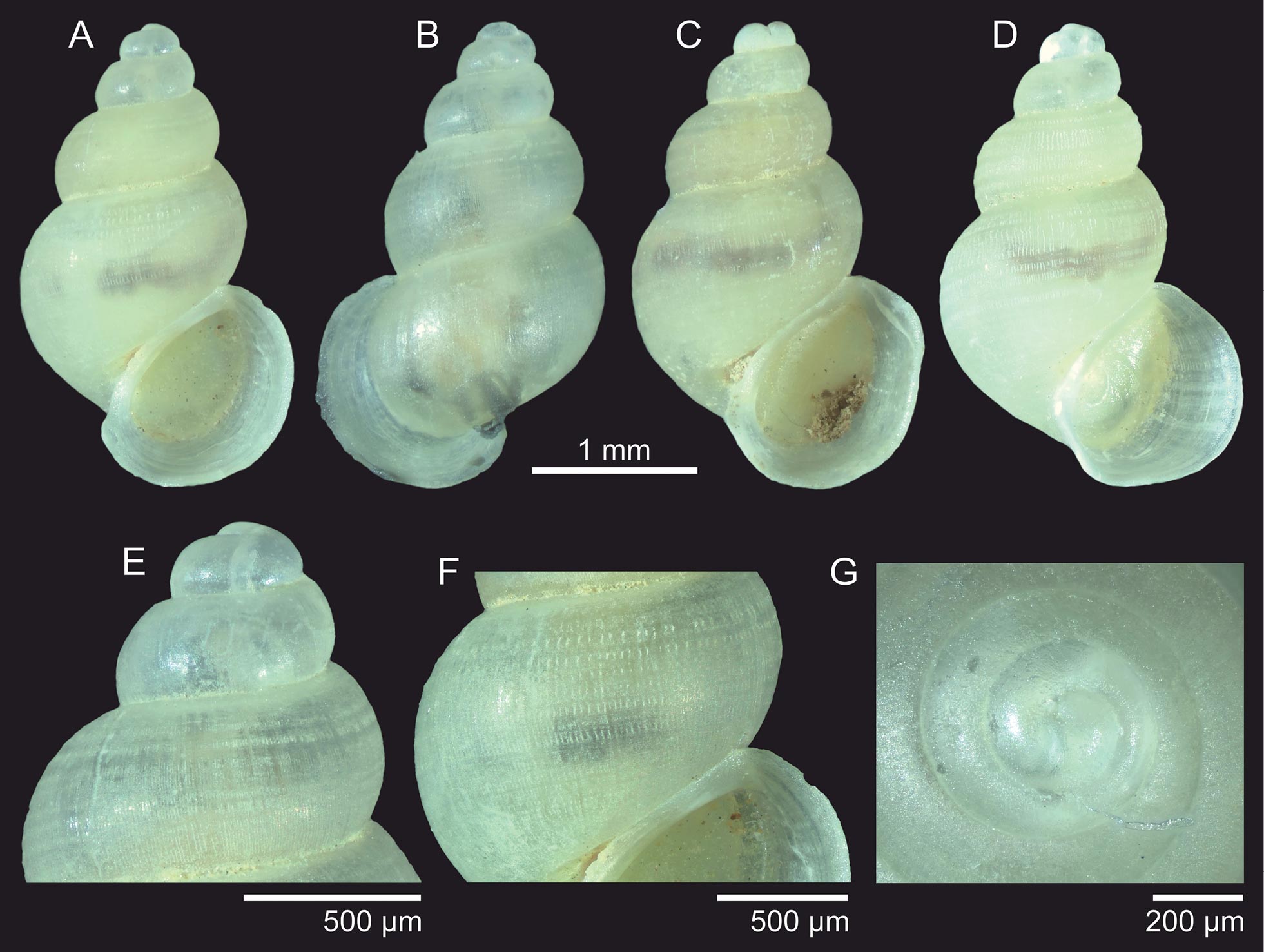
    Idiopyrgus meriadoci
    Idiopyrgus meriadoci sp. nov. A, B. Holotype LES 29798; C. Paratype #1 LES 29820; D. Paratype #2 LES 29820; E. Detail of the spire of the holotype in apertural view, showing the teleoconch sculpture in the early whorls; F. Detail of the body whorl of holotype in apertural view, showing the teleoconch sculpture; F. Detail of the protoconch of the holotype. Credit: Salvador RB and Bichuette ME

    Habitat and Unique Characteristics of the Newly Discovered Species

    The discovered species are troglobitic and were found in a single limestone cave in the Serra do Ramalho karst area of Bahia state, northeastern Brazil. The gastropods belong to the family Tomichiidae, a group previously known for inhabiting surface freshwater environments but now shown to have adapted to subterranean ecosystems.

    Both snails have unique periostracal hairs—thorn-like structures—on their shells, a feature uncommon among Brazilian freshwater snails. Their cave-specific adaptations include reduced pigmentation, fragile shells, and small size.
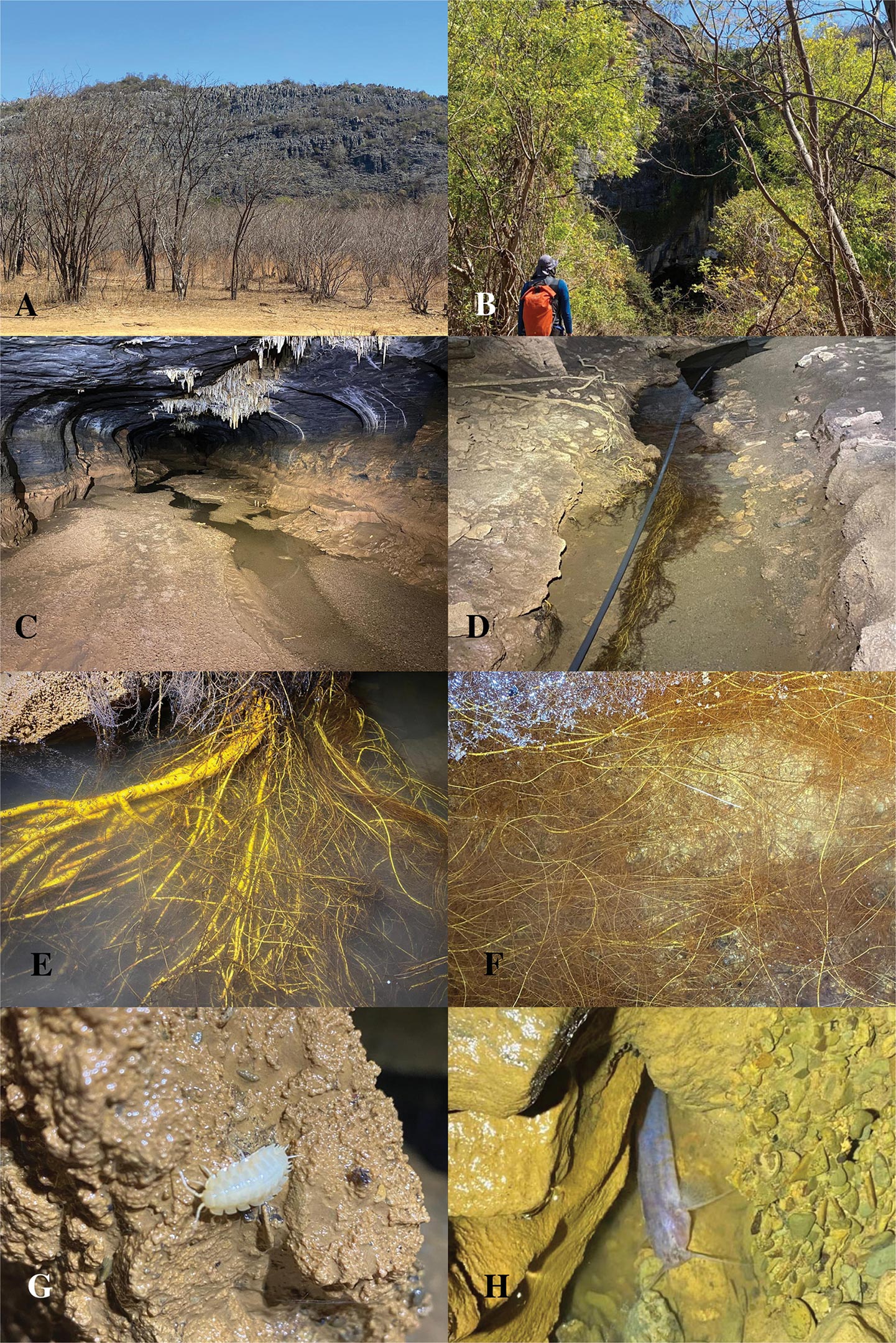
    Pedro Cassiano Cave
    Gruna do Pedro Cassiano (“Pedro Cassiano cave”), Serra do Ramalho karst area, Carinhanha municipality, Bahia state, Brazil; A. Cave surroundings showing the limestone outcrops and the dried vegetation, sparse and altered by human impacts; B. Cave entrance.; C. Cave gallery showing the small subterranean drainage; D. Detail of the drainage with the apparatus of water extraction; E. Submerged roots, microhabitat of Idiopyrgus spp.; F. Detail of the microhabitat of Idiopyrgus spp., showing thinner roots; G. Xangoniscus aff. aganju, an amphibious troglobitic isopod that co-exists with Idiopyrgus spp.; H. Trichomycterus rubbioli, a cave catfish that co-exists with Idiopyrgus spp. Credit: Salvador RB and Bichuette ME

    Conservation Challenges and Cultural Influence in Taxonomy

    The Gruna do Pedro Cassiano cave, where the snails were discovered, is a fragile ecosystem threatened by water extraction, deforestation, and climate change. Due to the species’ limited habitat and environmental threats to their subterranean ecosystem, the authors recommend their classification as vulnerable. The findings highlight the importance of protecting Brazil’s subterranean biodiversity and raise concerns about the impact of human activities on these delicate ecosystems.

    On his choice of Tolkien-inspired names for the new species, lead author Dr. Rodrigo B. Salvador of the Finnish Museum of Natural History said, “I tend to use lots of pop culture references in my species names—from books, comics, Dungeons & Dragons, and video games. If we think about it, there is a long-standing tradition in taxonomy of using names from mythology and literature to name species.
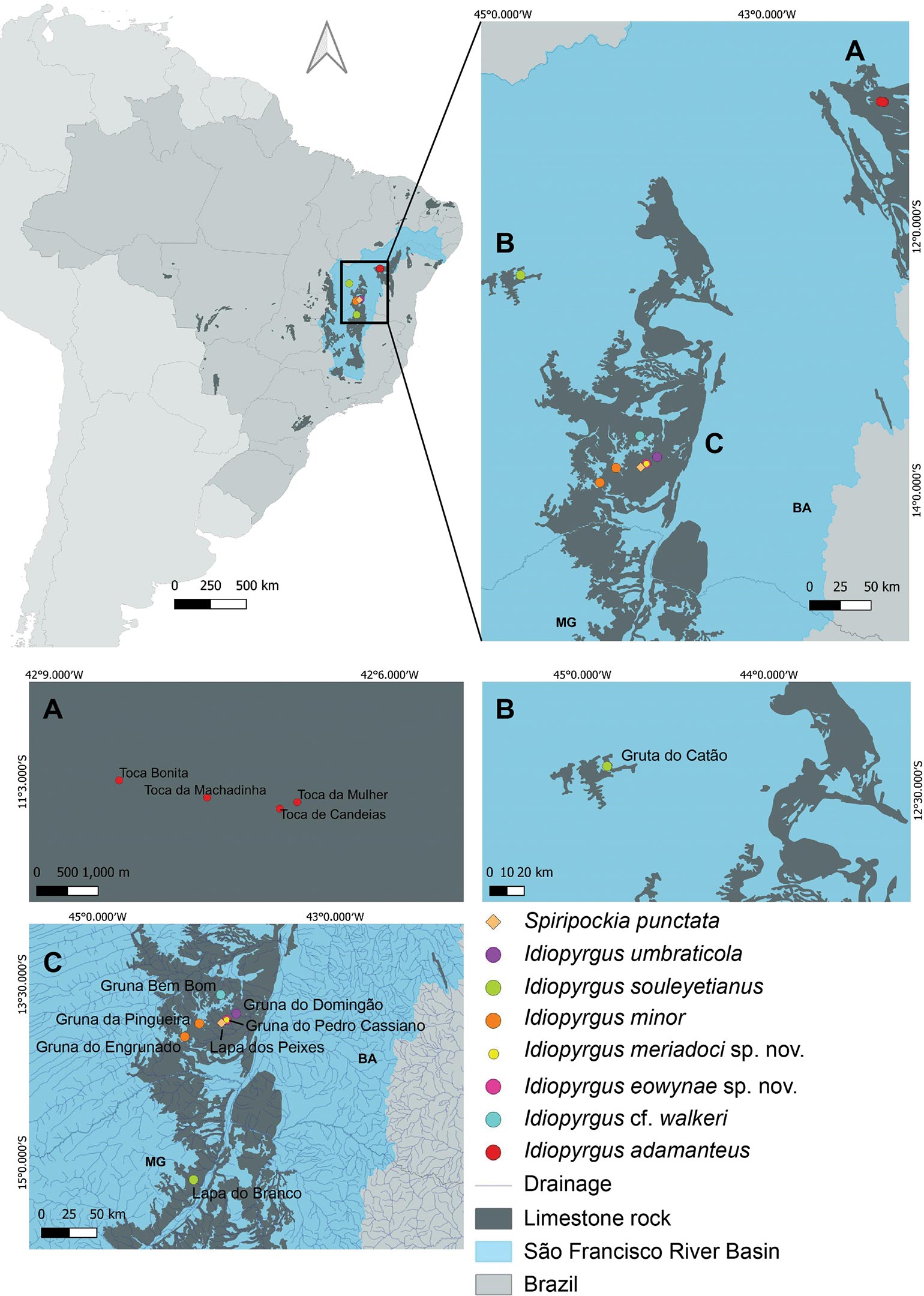
    Distribution Map of Idiopyrgus spp.
    Distribution map of Idiopyrgus spp. (and Spiripockia punctata) in caves of the state of Minas Gerais and Bahia, Brazil. Credit: Salvador RB and Bichuette ME

    “Granted, in the old days, those names mostly came from Greek and Roman myths and Shakespeare. Today, we have newer mythologies and literature classics, so in a way, we’re just continuing that tradition.”

    Reference: “Idiopyrgus Pilsbry, 1911 (Gastropoda, Tomichiidae): a relict genus radiating into subterranean environments” by Rodrigo Brincalepe Salvador and Maria Elina Bichuette, 8 November 2024, Zoosystematics and Evolution.
    DOI: 10.3897/zse.100.136428

    Never miss a breakthrough: Join the SciTechDaily newsletter.
    Follow us on Google and Google News.

    Adaptation Caves Ecosystems Evolution New Species Pensoft Publishers
    Share. Facebook Twitter Pinterest LinkedIn Email Reddit

    Related Articles

    Scientists Discover Four Chameleons Found Nowhere Else on Earth

    Scientists Just Found a Smiling “Happy-Face” Spider in the Himalayas

    New Centipede Discovered on Top of Food Chain in Hellish Ecosystem of a Sulfur-Soaked Romanian Cave

    New Species of Cretaceous Brittle Star Discovered in Stroke of Luck – Named in Honor of Nightwish Vocalist

    New Diamond Frog From Northern Madagascar – “As Soon as I Saw This Frog, I Knew It Was a New Species!”

    Some Birds Live Fast and Die Young – Scientists Study of Thousands of Species to Explain Why

    New Green Pit Viper From India Named After Salazar Slytherin From Harry Potter

    Recently Discovered Parasitic Wasp Is Enemy of Serious Alien Pest in North America

    The Last Mass Extinction Event Occurred 66 Million Years Ago – Here’s How Ocean Ecosystems Recovered

    Leave A Reply Cancel Reply

    • Facebook
    • Twitter
    • Pinterest
    • YouTube

    Don't Miss a Discovery

    Subscribe for the Latest in Science & Tech!

    Trending News

    Long COVID Brain Scans Reveal Damage to Dopamine Neurons

    Scientists Warn a Silent Oxygen Crisis Is Spreading Through Earth’s Waters

    James Webb Telescope Discovers Hidden Giant Planet in Famous Star System

    Scientists Build the First 3D Cloak That Makes Objects Invisible To Heat

    Common Food Additive Linked To Gut Inflammation

    Black Hole Collisions May Follow a Surprisingly Simple Rule

    The Eye Has a Hidden Cleanup System and Scientists Just Discovered It

    The Truth About Vikings Is More Complicated Than Museums Admit

    Follow SciTechDaily
    • Facebook
    • Twitter
    • YouTube
    • Pinterest
    • Newsletter
    • RSS
    SciTech News
    • Biology News
    • Chemistry News
    • Earth News
    • Health News
    • Physics News
    • Science News
    • Space News
    • Technology News
    Recent Posts
    • The Surprising Brain Chemistry That Turns Ants Into Caregivers
    • “Zombie Cells” Reveal a Hidden Weakness That Could Help Fight Aging
    • A Fiber Frozen at -196°C Unlocks a New Way To Store Light
    • Scientists Solve a Decades-Old Mystery Inside Atomic Nuclei
    • Alien Signals May Be Hiding in a Radio Band SETI Has Barely Explored
    Copyright © 1998 - 2026 SciTechDaily. All Rights Reserved.
    • Science News
    • About
    • Contact
    • Editorial Board
    • Privacy Policy
    • Terms of Use

    Type above and press Enter to search. Press Esc to cancel.