
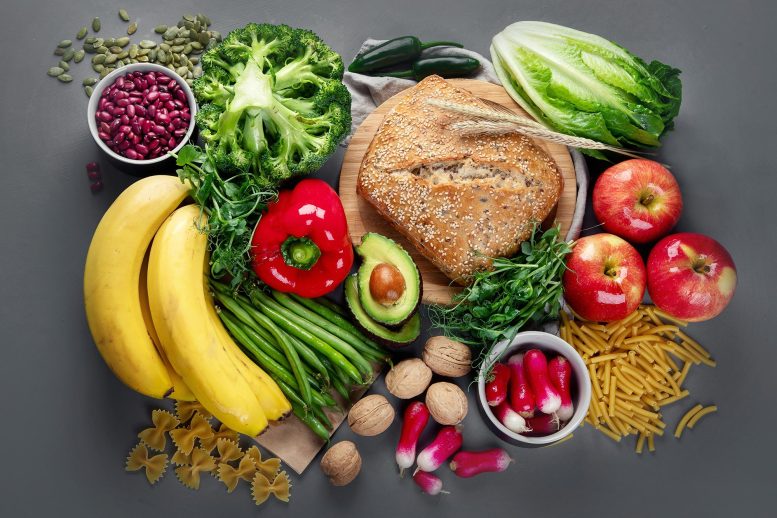
The Human Gut Evolved To Thrive on Fermentable Fibers, Not Burgers
It might be daunting for customers to choose from the vast selection of dietary fiber supplements in the pharmacy or supermarket aisle. They also offer a variety of health claims without being subject to FDA approval or review. How then can you determine which supplement is effective and best for you?
According to a detailed analysis of the gut microbes of research participants who took three different types of supplements in various orders, those who had been consuming the least amount of fiber before the study benefited most from supplements, regardless of the kind they took.
“The people who responded the best had been eating the least fiber to start with,” said study leader Lawrence David, an associate professor of molecular genetics and microbiology at Duke University.
Fiber and Gut Health: The Key Benefits
Dietary fiber has advantages beyond the advertised easier defecation. Fermentable fiber, which is composed of dietary carbohydrates that certain bacteria can digest while the human gut cannot, is a crucial source of nutrients that your gut microbes need to stay healthy.
“We’ve evolved to depend on nutrients that our microbiomes produce for us,” said Zack Holmes, former Ph.D. student in the David lab and co-author of two new papers about fiber. “But with recent shifts in diet away from fiber-rich foods, we’ve stopped feeding our microbes what they need.”
When your gut bugs eat a high-fiber diet, they make more short-chain fatty acids, which protect you from gut diseases, colorectal cancer, and even obesity. In particular, they increase the production of butyrate, a fatty acid that serves as the energy source for the intestinal cells themselves. Butyrate has been shown to increase the gut’s resistance to infections, reduce inflammation, and create happier, healthier intestinal lining cells.
David’s research group was interested in whether it might be necessary to “personalize” fiber supplements for different people in light of the wide range of supplements on the market. Different fermentable fibers have been shown to have different effects on the production of short-chain fatty acids depending on the individual.
Minimal Differences Between Fiber Types
“We didn’t see a lot of difference between the fiber supplements we tested. Rather, they looked interchangeable,” David said during a tour of his sparkling new lab in the MSRB III building, which includes a special “science toilet” for collecting samples and an array of eight “artificial gut” fermenters for growing happy gut microbes outside a body.
“Regardless of which of the test supplements you pick, it seems your microbiome will thank you with more butyrate,” David said.
The average American adult only consumes 20 to 40 percent of the daily recommended amount of fiber, which is believed to be a root cause behind a lot of our common health maladies, including obesity, cardiovascular disease, digestive disorders, and colon cancer. Instead of having to go totally vegetarian or consume pounds of kale daily, convenient fiber supplements have been created that can increase the production of short-chain fatty acids.
The Duke experiments tested three main kinds of fermentable fiber supplements: inulin, dextrin (Benefiber), and galactooligosaccharides (GOS) marketed as Bimuno. The 28 participants were separated into groups and given each of the three supplements for one week in different orders, with a week off between supplements to allow participants’ guts to return to a baseline state.
Participants who had been consuming the most fiber beforehand showed the least change in their microbiomes, and the type of supplement really didn’t matter, probably because they were already hosting a more optimal population of gut bugs, David said.
Conversely, participants who had been consuming the least fiber saw the greatest increase in butyrate with the supplements, regardless of which one was being consumed.
Rapid Response of Gut Microbes to Fiber
In a second study the David lab performed with support from the U.S. Office of Naval Research, they found that gut microbes responded to a new addition of fiber within a day, dramatically altering the populations of bugs present in the gut and changing which of their genes they were using to digest food.
Using their artificial gut fermenters, the researchers found the gut microbes were primed by the first dose to consume fiber and digested it quickly on the second dose.
“These findings are encouraging,” said graduate student Jeffrey Letourneau, lead author of the second study. “If you’re a low fiber consumer, it’s probably not worth it to stress so much about which kind of fiber to add. It’s just important that you find something that works for you in a sustainable way.”
“It doesn’t need to be a supplement either,” Holmes added. “It can just be a fiber-rich food. Folks who were already eating a lot of fiber, which comes from plants like beans, leafy greens, and citrus, already had very healthy microbiomes.”
References: “Microbiota Responses to Different Prebiotics Are Conserved Within Individuals and Associated with Habitual Fiber Intake,” Zachary Holmes, Max Villa, Heather Durand, Sharon Jiang, Eric Dallow, Brianna Petrone, Justin Silverman, Pao-Hwa Lin and Lawrence David, 29 July 2022, Microbiome.
DOI: 10.1186/s40168-022-01307-x
“Ecological Memory of Prior Nutrient Exposure in the Human Gut Microbiome,” Jeffrey Letourneau, Zachary Holmes, Eric Dallow, Heather Durand, Sharon Jiang, Verónica Carrion, Savita Gupta, Adam Mincey, Michael Muehlbauer, James Bain and Lawrence David, 23 July 2022, ISME Journal.
DOI: 10.1038/s41396-022-01292-x
The study was funded by the National Institutes of Health, Office of Naval Research, NASA Translational Research Institute, and the Damon Runyon Cancer Research Foundation.
Never miss a breakthrough: Join the SciTechDaily newsletter.
Follow us on Google and Google News.
4 Comments
The article is confusing re: the second study. Does it mean anyone, fiber-eating or not, benefits more by getting a “second dose” of fiber? Is a “second dose” basically consuming MORE fiber than one dose?
That’s not the purpose of the statement. If you read web page referenced by the second research link (an abstract for the study related to this comment), you can see that the point is simply this. Even within just a few hours of eating a new type of fiber, your gut biota will have adapted to it. So, any fiber you regularly eat will be digested by your gut biota with a standard efficiency (whatever that is for your gut). On the other hand, if you want to add a new type of fiber into your diet, your gut biota won’t digest it with normal efficiency the first time, but after that it will react as if you had been eating the fiber daily for years. Put another way, if a certain fiber seems to work with you, don’t be afraid to change. Your body will adapt to a new form of fiber within hours.
Studies are showing older people have gut biota that is not healthy compared to younger people. However, this can be remedied by transferring biota from donors with the healthy biota to those lacking it. Now, how does that relate to this study? If your gut biota are adaptable, does that really help if you’ve got the wrong kind of adaptive biota? Doing this science requires a lot of thinking ahead, or you can end up with “holes” in your research. (Of course, all thinking and no doing is not helpful either.) If the age-related “bad” biota issue turns out to be important in determining the *healthiness* of your gut’s biota adaptations, then the results of this study won’t be so helpful unless the age impact is addressed. That’s my take on this.
You want to find a gastroenterologist that specializes in the digestive system. They will probably suggest a fecal microbiota transplantation (FMT) from a healthy donor.