
Close Menu
    Facebook X (Twitter) Instagram
    SciTechDaily
    • Biology
    • Chemistry
    • Earth
    • Health
    • Physics
    • Science
    • Space
    • Technology
    Facebook X (Twitter) Pinterest YouTube RSS
    SciTechDaily
    Home»Health»Scientists Expose How Housing and Commutes Steal Sleep
    Health

    Scientists Expose How Housing and Commutes Steal Sleep

    By Osaka Metropolitan UniversityOctober 6, 2025No Comments3 Mins Read
    Facebook Twitter Pinterest Telegram LinkedIn WhatsApp Email Reddit
    Share
    Facebook Twitter LinkedIn Pinterest Telegram Email Reddit
    Frustrated Man Sitting on Bed No Sleep Insomnia
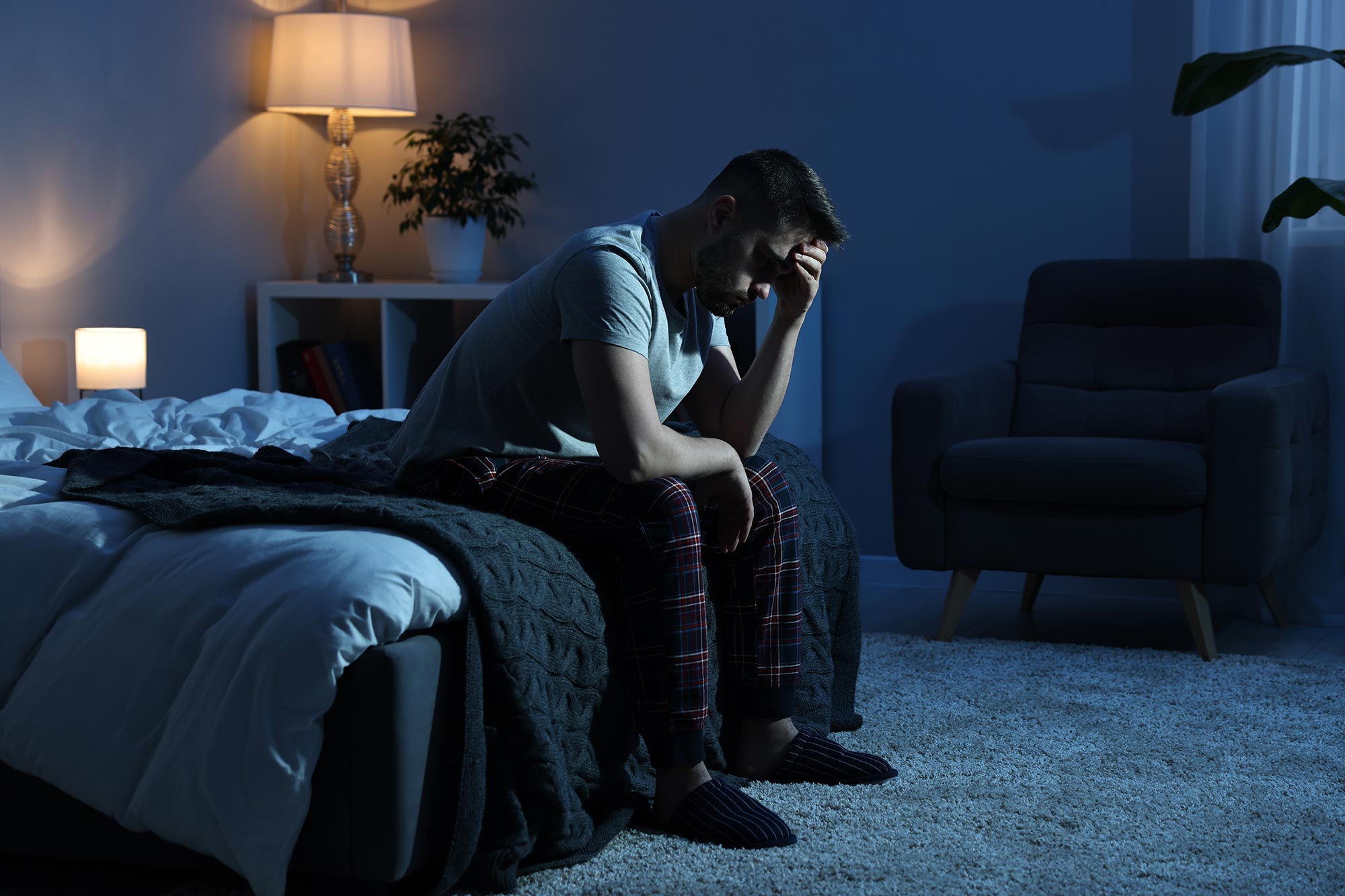
    Researchers discovered that long commutes and cramped homes in Tokyo predict higher rates of insomnia and daytime sleepiness. The findings reveal a clear urban trade-off between convenience and restorative rest. Credit: Shutterstock

    In Tokyo, scientists have found that the longer you commute and the smaller your home, the more likely you are to struggle with insomnia.

    The study highlights a powerful urban trade-off: the convenience of city living versus the deep rest our bodies need. Smarter housing and commuting solutions could be key to improving sleep health in crowded cities.

    Sleep Struggles in Modern Life

    Roughly one-third of a person’s life is spent asleep, yet between 30 and 40 percent of adults experience insomnia at some point. In Japan, the problem is especially pronounced: people there sleep the least among all member nations of the Organization for Economic Co-operation and Development (OECD), averaging about one hour less than the group’s overall average.

    Studies in public health have shown that long commuting times, along with constant noise and light pollution in densely populated areas, can interfere with healthy sleep. While living in the city often means shorter trips to work, urban housing tends to offer less comfort and quiet than suburban life. To better understand how location and home size affect rest, researchers in urban architecture are now exploring a key question: “Where and what size home should one have for better sleep?”
    Causes of Insomnia for City Workers
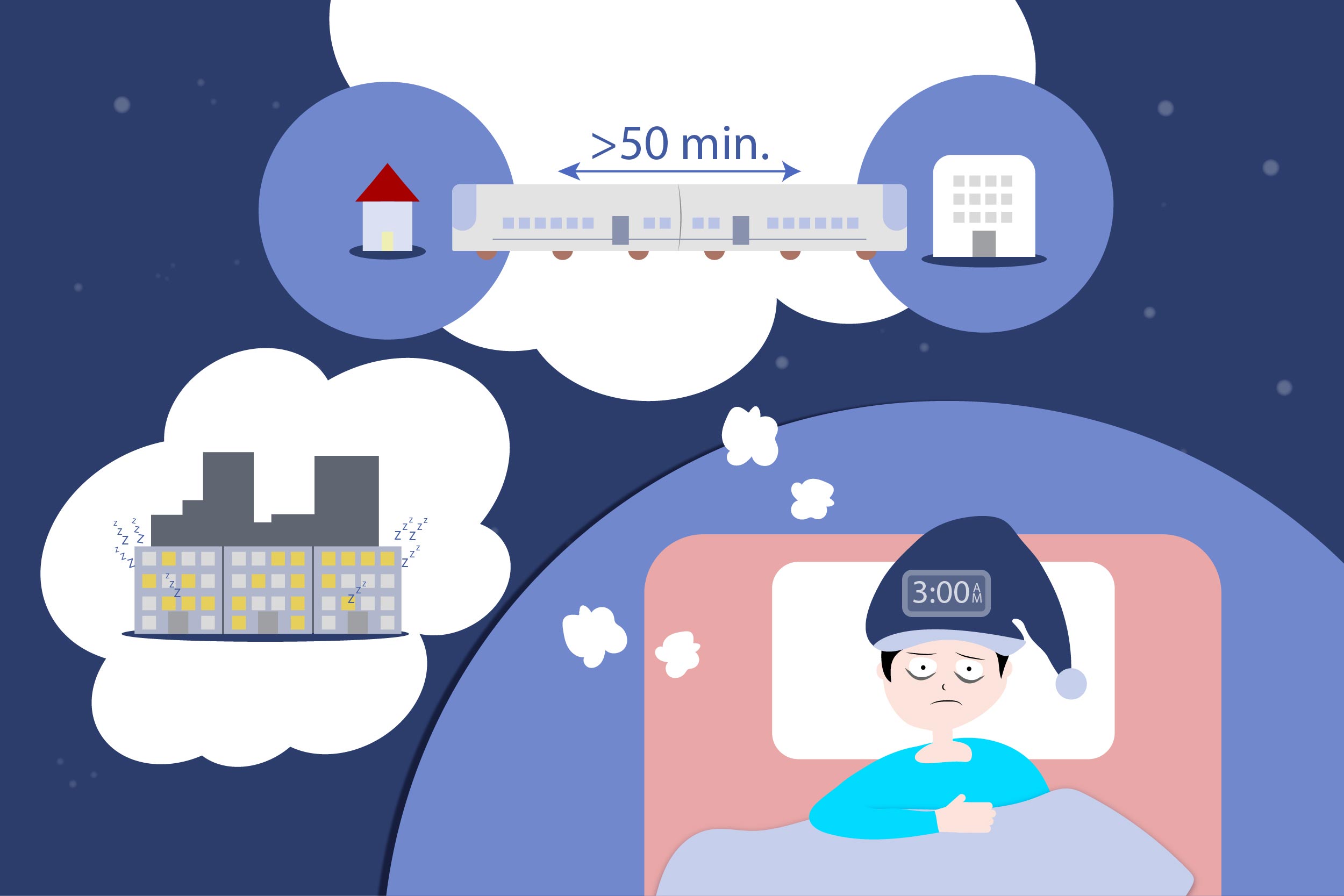
    Long commutes and cramped living contribute to poor sleep in the Tokyo metropolitan area. Credit: Osaka Metropolitan University

    Investigating Sleep and City Life

    To explore this issue, Professor Daisuke Matsushita and his team at Osaka Metropolitan University’s Graduate School of Human Life and Ecology analyzed how commuting time and housing conditions relate to insomnia and daytime fatigue among people living in the Tokyo metropolitan area.

    Using an online survey with stratified random sampling, the researchers estimated each participant’s commuting time through a route search system based on their transportation method and the postal codes of their home and workplace. Levels of insomnia and daytime sleepiness were measured using the Athens Insomnia Scale and the Epworth Sleepiness Scale. The team also determined whether these patterns held true after accounting for demographic and socioeconomic differences.

    Findings: Commute, Home Size, and Insomnia

    Data analysis revealed that even after adjusting for covariates, longer commutes predicted insomnia and daytime sleepiness, while smaller housing size predicted insomnia. Further, a trade-off was observed between commuting time and floor area in cases of insomnia. For housing units meeting the urban-oriented residential area standard of 95 m² for a four-person household, commuting times exceeding 52 minutes reached the insomnia cutoff value.

    “Housing choices and supply that consider the trade-off between location and size may help improve the sleep health of commuters and reduce sleep-related economic losses in metropolitan areas,” said Professor Matsushita.

    The findings were published in the Journal of Transport and Health.

    Reference: “Commuting time, residential floor area, and their associations with insomnia and daytime sleepiness among residents of the Tokyo metropolitan area: a cross-sectional study” by Daisuke Matsushita, Xiao Xiong and Xiaorui Wang, 29 August 2025, Journal of Transport & Health.
    DOI: 10.1016/j.jth.2025.102156

    Never miss a breakthrough: Join the SciTechDaily newsletter.
    Follow us on Google and Google News.

    Insomnia Osaka Metropolitan University Public Health Sleep Science Socioeconomics Transportation
    Share. Facebook Twitter Pinterest LinkedIn Email Reddit

    Related Articles

    New Study Warns: Your Work Habits Could Be Ruining Your Sleep

    The Unequal Night: New Research Reveals How Sleep Disparities Start in Childhood

    New Research Reveals That Junk Food May Disrupt Deep Sleep

    How Has the COVID-19 Pandemic Affected Our Sleep and Our Dreams?

    New Research Examines COVID-19 Spread on School Buses

    Allocating COVID Vaccines Based on Health and Socioeconomic Factors Could Cut Save Lives

    Where to Sit in a Car and Which Windows to Put Down to Prevent COVID-19 Transmission

    How Airflow Inside a Car May Affect COVID-19 Transmission Risk – What Works Best for Windows and Ventilation

    Suicidal Thoughts Reduced by Sleeping Pills in Patients With Severe Insomnia

    Leave A Reply Cancel Reply

    • Facebook
    • Twitter
    • Pinterest
    • YouTube

    Don't Miss a Discovery

    Subscribe for the Latest in Science & Tech!

    Trending News

    Scientists May Have Found the Key to Jupiter and Saturn’s Moon Mystery

    Scientists Uncover Brain Changes That Link Pain to Depression

    Saunas May Do More Than Raise Body Temperature – They Activate Your Immune System

    Exercise in a Pill? Metformin Shows Surprising Effects in Cancer Patients

    Hidden Oceans of Magma Could Be Protecting Alien Life

    New Study Challenges Alzheimer’s Theories: It’s Not Just About Plaques

    Artificial Sweeteners May Harm Future Generations, Study Suggests

    Splashdown! NASA Artemis II Returns From Record-Breaking Moon Mission

    Follow SciTechDaily
    • Facebook
    • Twitter
    • YouTube
    • Pinterest
    • Newsletter
    • RSS
    SciTech News
    • Biology News
    • Chemistry News
    • Earth News
    • Health News
    • Physics News
    • Science News
    • Space News
    • Technology News
    Recent Posts
    • This Strange Material Can Turn Superconductivity on and off Like a Switch
    • Scientists Discover Game-Changing New Way To Treat High Cholesterol
    • Breakthrough Drug Delays Rheumatoid Arthritis for Years After Treatment Ends
    • This Small Change to Your Exercise Routine Could Be the Secret to Living Longer
    • Physicists Discover a Strange New Kind of One-Dimensional Particle
    Copyright © 1998 - 2026 SciTechDaily. All Rights Reserved.
    • Science News
    • About
    • Contact
    • Editorial Board
    • Privacy Policy
    • Terms of Use

    Type above and press Enter to search. Press Esc to cancel.