
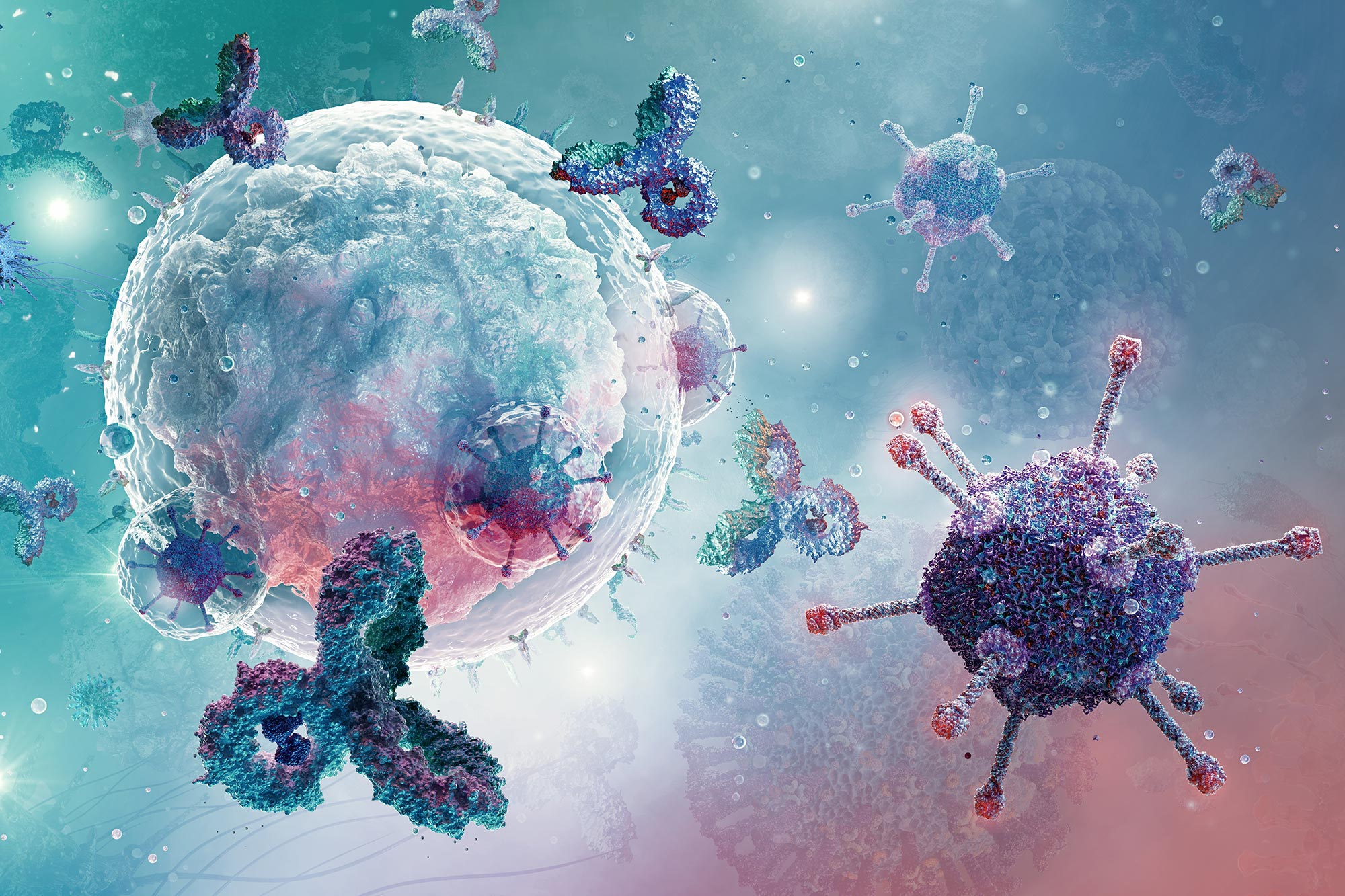
A detailed analysis of immune cells in Long COVID patients has revealed a previously unknown molecular signature linked to lingering symptoms.
In Germany, Long COVID develops in up to about one in ten people after an infection with the SARS-CoV-2 virus. For some, the illness does not end when the virus clears. Instead, a mix of problems can linger, ranging from crushing fatigue and “brain fog” to breathing difficulties and neurological symptoms. The experience is not the same for everyone, which has made Long COVID especially challenging to pin down.
“Long COVID is an extremely complex disease with various manifestations,” says Prof. Yang Li, head of the “Computational Biology for Individualised Medicine” department and director of CiiM. “How and to what extent Long COVID develops is still largely unknown. Figuratively speaking, we are unfortunately only looking at an extremely incomplete puzzle.”
A major reason that puzzle remains incomplete is that Long COVID is likely not a single condition with one cause. Researchers increasingly suspect it can arise through multiple biological pathways, such as lingering inflammation, immune misfiring, or subtle tissue stress that persists long after the initial infection.
To find clearer signals amid that complexity, Yang Li and colleagues partnered with teams led by Prof. Thomas Illig (MHH) and Prof. Jie Sun (University of Virginia, USA), as well as other collaborators, to search for measurable immune patterns that might help explain why symptoms persist.
Searching for Molecular Clues
Instead of relying only on broad blood tests, the researchers zoomed in on individual immune cells from Long COVID patients, using samples drawn from MHH’s central biobank. Looking at single cells matters because immune responses can be patchy. Two people can have similar symptoms while very different immune cell populations are driving them.
“We examined the cells using a so-called single-cell multiomics approach. This allowed us to record the molecules’ status within a cell and gain insights into its cellular relationships,” explains Dr Saumya Kumar, CiiM scientist and first author of the study.
In practical terms, this approach let the team map immune cell “states” in fine detail. That kind of resolution can reveal whether certain cells are acting unusually, even if the overall immune system looks only mildly altered when averaged across millions of cells.
The researchers also measured levels of pro-inflammatory signaling molecules known as cytokines in blood plasma. Cytokines act like biological alerts, helping immune cells communicate and coordinate responses. When those signals stay elevated, they can hint at ongoing inflammation that may track with persistent symptoms.
“The central and innovative approach of our study is to classify patient data according to the severity of the original COVID-19 disease,” says Yang Li. “This approach allowed us to capture the associated molecular differences in immune response across patients. Only in this way, clear molecular characteristics underlying the chronic symptoms of Long COVID could be identified.”
Immune Cell Changes Over Time
The study tackled questions that matter to patients and clinicians alike: Do immune cells settle into recognizable patterns during Long COVID? Are there molecular fingerprints that align with how severe fatigue feels, or how hard it is to breathe?
By applying big-data analysis across the single-cell results, the researchers homed in on a specific immune cell population: CD14+ monocytes. These cells are part of the body’s first-line immune defense, patrolling the bloodstream and helping coordinate inflammatory responses. They are also known for their ability to shift gears quickly, which makes them useful for fighting infections but also a potential trouble spot if inflammation fails to switch off.
Links to Symptoms and Inflammation
“With the help of single-cell analysis, we were able to zoom in on these cells. This revealed that monocytes with a specific molecular state (i.e. molecular profile), which we called “LC-Mo”, were particularly prevalent in Long COVID patients who had previously experienced mild to moderate COVID-19 disease,” says Saumya Kumar. “In addition, LC-Mo correlated with the severity of fatigue and respiratory symptoms and was associated with elevated cytokine levels in blood plasma, which are an indicator of inflammatory processes in the body.”
With LC-Mo, the researchers have thus found an important new piece of the puzzle. “Its exact place in the pathogenesis of Long COVID has yet to be determined, but it offers exciting starting points for further studies, for example, with regard to genetic risk factors or individualised medicine,” says Yang Li. “If we can gain a better understanding of the background to the development of Long COVID, it will also help us to better understand the development of possible late or long-term consequences of other infectious diseases.”
Reference: “A distinct monocyte transcriptional state links systemic immune dysregulation to pulmonary impairment in long COVID” by Saumya Kumar, Chaofan Li, Liang Zhou, Qiuyao Zhan, Ahmed Alaswad, Sonja Volland, Bibiana Costa, Simon Alexander Krooss, Isabel Klefenz, Hagen Schmaus, Antonia Zeuzem, Dorothee von Witzendorff, Helena Lickei, Lea Pueschel, Anke R. M. Kraft, Markus Cornberg, Andreas Rembert Koczulla, Isabell Pink, Marius M. Hoeper, Cheng-Jian Xu, Susanne Häussler, Miriam Wiestler, Mihai G. Netea, Thomas Illig, Jie Sun and Yang Li, 14 January 2026, Nature Immunology.
DOI: 10.1038/s41590-025-02387-1
The research was funded by an ERC Starting Grant (ModVaccine), the COVID-19 Research Network of Lower Saxony (COFONI) and the Lower Saxony Centre for AI & Causal Methods in Medicine (CAIMed), both with funds from the Lower Saxony Ministry of Science and Culture (MWK), as well as the Federal Ministry of Research, Technology and Space (BMFTR).
Never miss a breakthrough: Join the SciTechDaily newsletter.
Follow us on Google and Google News.