
A team of astronomers has spent over a decade tracing meteorite impacts on Earth back to their original sources in the asteroid belt.
By building a global network of sky cameras and combining it with citizen science footage, they’ve tracked dozens of meteorite paths and linked them to specific asteroid families. Many meteorites come from known clusters in the belt, like Koronis and Massalia, and their cosmic-ray exposure ages match the timing of major asteroid collisions. These insights not only reveal where these space rocks come from, but also help inform planetary defense strategies against future asteroid threats.
Mapping Meteorite Origins
Where do different types of meteorites come from? A new review published in Meteoritics & Planetary Science traces the impact orbit of observed meteorite falls back to previously unknown source regions in the asteroid belt.
“This has been a decade-long detective story, with each recorded meteorite fall providing a new clue,” said meteor astronomer and lead author Peter Jenniskens of the SETI Institute and NASA Ames Research Center. “We now have the first outlines of a geologic map of the asteroid belt.”

Global Network of Sky-Watching Cameras
Ten years ago, Jenniskens joined forces with astronomer Hadrien Devillepoix of Curtin University and colleagues in Australia to build a network of all-sky cameras across California and Nevada. These cameras were designed to capture and track the bright flashes of meteorites entering Earth’s atmosphere. Over time, the project grew into a broad collaboration involving multiple institutions and citizen scientists.
“Others built similar networks spread around the globe, which together form the Global Fireball Observatory,” said Devillepoix. “Over the years, we have tracked the path of 17 recovered meteorite falls.”
Citizen Science and Fireball Tracking
Many more fireballs have been recorded by doorbell cameras, dashcams, and other dedicated monitoring systems, thanks to the growing involvement of citizen scientists.
“Altogether, this quest has yielded 75 laboratory-classified meteorites with an impact orbit tracked by video and photographic cameras,” said Jenniskens. “That proves to be enough to start seeing some patterns in the direction from which the meteorites approach Earth.”
Origins in the Asteroid Belt
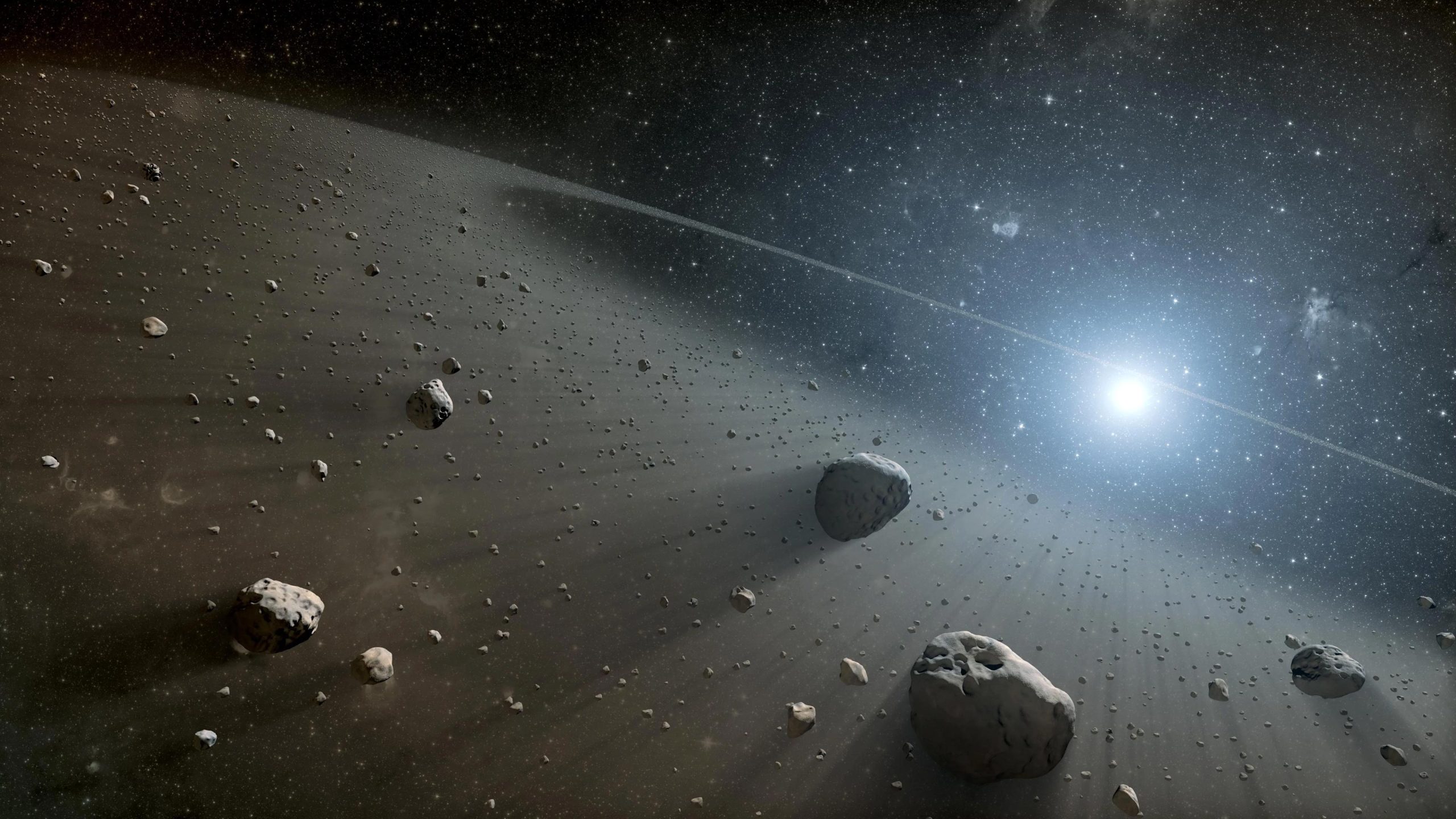
Most meteorites originate from the asteroid belt, a region between Mars and Jupiter where over a million asteroids larger than 1 kilometer circle the Sun. Those rocks originate from a small number of larger asteroids that broke in collisions, the debris fields of which litter the region. Even today, asteroids collide to create debris fields within these asteroid families, called clusters.
“We now see that 12 of the iron-rich ordinary chondrite meteorites (H chondrites) originated from a debris field called “Koronis,” which is located low in the pristine main belt,” said Jenniskens. “These meteorites arrived from low-inclined orbits with orbital periods consistent with this debris field.”
Dating Meteorites with Cosmic Rays
Astronomers can measure how long ago these rocks were dug up from below the asteroid’s surface by measuring the level of radioactive elements created by exposure to cosmic rays. This cosmic-ray exposure age of the meteorites proves to match the dynamical age of some of the asteroid debris fields. Scientists determine the dynamical age of debris fields by measuring how much asteroids of different size have spread over time.
“By measuring the cosmic ray exposure age of meteorites, we can determine that three of these twelve meteorites originated from the Karin cluster in Koronis, which has a dynamical age of 5.8 million years, and two came from the Koronis2 cluster, with a dynamical age of 10-15 million years,” said Jenniskens. “One other meteorite may well measure the age of the Koronis3 cluster: about 83 million years.”
Steep Orbits and Resonances
Jenniskens and Devillepoix also found a group of H-chondrites on steep orbits that appear to originate from the Nele asteroid family in the central main belt, which has a dynamical age of about 6 million years. The nearby 3:1 mean-motion resonance with Jupiter can pump up the inclinations to those observed. A third group of H chondrites that have an exposure age of about 35 million years originated from the inner main belt.
“In our opinion, these H chondrites originated from the Massalia asteroid family low in the inner main belt because that family has a cluster of about that same dynamical age,” said Jenniskens. “The asteroid that created that cluster, asteroid (20) Massalia, is an H chondrite type parent body.”
Violent Origins of L Chondrites
Jenniskens and Devillepoix find that low iron (L chondrite) and very low iron (LL chondrite) meteorites come to us primarily from the inner main belt. Scientists have long linked the LL chondrites to the Flora asteroid family on the inner side of the asteroid belt, and they have confirmed that connection.
“We propose that the L chondrites originated from the Hertha asteroid family, located just above the Massalia family,” said Jenniskens. “Asteroid Hertha doesn’t look anything like its debris. Hertha is covered by dark rocks that were shock-blackened, indicative of an unusually violent collision. The L chondrites experienced a very violent origin 468 million years ago when these meteorites showered Earth in such numbers that they can be found in the geologic record.”
Why Origins Matter for Planetary Defense
Knowing from what debris field in the asteroid belt our meteorites originate is important for planetary defense efforts against Near Earth Asteroids. An approaching asteroid’s orbit can provide clues to its origin in the asteroid belt in the same way as meteorite orbits.
“Near Earth Asteroids do not arrive on the same orbits as meteorites, because it takes longer for these to evolve to Earth,” said Jenniskens. “But they do come from some of the same asteroid families.”
Jenniskens and Devillepoix discuss the links of several other meteorite types to their source regions. Not all assignments are certain.
“We are proud about how far we have come, but there is a long way to go,” said Jenniskens, “Like the first cartographers who traced the outline of Australia, our map reveals a continent of discoveries still ahead when more meteorite falls are recorded.”
Looking Ahead: Future Impacts and Discoveries
What’s coming next? Asteroids directly meet meteorites when observed in space before impacting Earth and then recovered. Jenniskens guided the recovery of the first such small asteroid in 2008, called asteroid 2008 TC3, and we are about to see a lot more thanks to new astronomical facilities coming online.
Reference: “Review of asteroid, meteor, and meteorite-type links” by Peter Jenniskens and Hadrien A. R. Devillepoix, 17 March 2025, Meteoritics & Planetary Science.
DOI: 10.1111/maps.14321
Never miss a breakthrough: Join the SciTechDaily newsletter.
Follow us on Google and Google News.
1 Comment
Meteorites, the Kuiper Belt, the inner and outer belts, the rapid rotation of Jupiter, the retrograde motion of Venus, the slow rotation of Mercury, and the axial tilt of all planets are due to the passage of very small stars in the galaxy’s arms through the solar system. Over the past 4.5 billion years, the large arms of the Milky Way have passed through the solar system twenty times