
Close Menu
    Facebook X (Twitter) Instagram
    SciTechDaily
    • Biology
    • Chemistry
    • Earth
    • Health
    • Physics
    • Science
    • Space
    • Technology
    Facebook X (Twitter) Pinterest YouTube RSS
    SciTechDaily
    Home»Health»Scientists Identify Link between Inflammation and Type 2 Diabetes
    Health

    Scientists Identify Link between Inflammation and Type 2 Diabetes

    By Ziba Kashef, Yale UniversityFebruary 6, 2015No Comments3 Mins Read
    Facebook Twitter Pinterest Telegram LinkedIn WhatsApp Email Reddit
    Share
    Facebook Twitter LinkedIn Pinterest Telegram Email Reddit
    Researchers Identify Link between Inflammation and Type 2 Diabetes
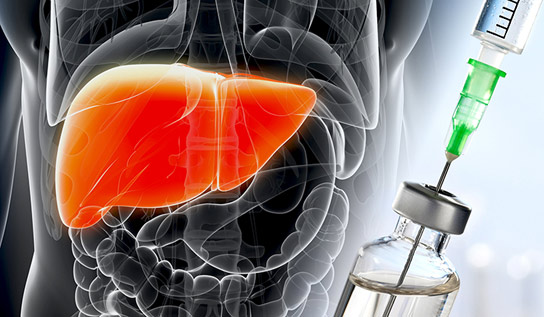
    Yale University’s study reveals the molecular mechanism of insulin’s role in inhibiting liver glucose production, which malfunctions in type 2 diabetes, causing hyperglycemia. Credit: Yale University

    A newly published study led by Yale University reveals the molecular mechanism by which insulin normally inhibits the production of glucose by the liver and why this process stops working in patients with type 2 diabetes, leading to hyperglycemia.

    The findings are published February 5 in the journal Cell.

    “In the study, we set out to examine how insulin normally works to turn off production of glucose by the liver and why this process goes awry in patients with type 2 diabetes,” said Gerald I. Shulman, the George R. Cowgill professor of physiological chemistry, professor of medicine and cellular & molecular physiology at Yale School of Medicine, and an investigator with the Howard Hughes Medical Institute.

    Experts have long debated how insulin suppresses glucose production by the liver. Many have asserted that insulin’s suppression of glucose production was due to the direct action of insulin on the liver. But the Yale-led team uncovered a different process that challenges current theories and may lead to new targets for treatment.

    Yale researchers hypothesized that insulin suppressed glucose production by the liver by inhibiting the breakdown of fat, which would result in a reduction in hepatic acetyl CoA, a key molecule that they showed was critical in regulating the conversion of amino acids and lactate to glucose. They also found that reversal of this process, due to inflammation in adipose (fatty) tissue, led to increased hepatic glucose production and hyperglycemia in high-fat-fed rodents and obese, insulin-resistant adolescents. “These studies identify hepatic acetyl CoA as a key mediator of insulin action on the liver and link it to inflammation-induced hepatic insulin resistance and type 2 diabetes,” Shulman explained.

    This new insight into insulin resistance paves the way for exploring new treatments. “None of the drugs we currently use to treat type 2 diabetes target the root cause,” said Shulman. “By understanding the molecular basis for hepatic insulin resistance we now can design better and more effective drugs for its treatment.”

    Other authors include Rachel J. Perry, Joao-Paulo G. Camporez, Romy Kursawe, Paul M. Titchenell, Dongyan Zhang, Curtis J. Perry, Michael J. Jurczak, Abudukadier Abulizi, Myoung Sook Han, Xian-Man Zhang, Hai-Bin Ruan, Xiaoyong Yang, Sonia Caprio, Susan M. Kaech, Hei Sook Sul, Morris J. Birnbaum, Roger J. Davis, Gary W. Cline, and Kitt Falk Petersen.

    The study was funded by grants from the National Institutes of Health (R01 DK-40936, R24 DK-085638, R01 AG-023686, P30 DK-45735, U24 DK-059635, T32 DK-101019, R01 DK-056886, R01 DK-093959, R01 NS-087568, R01 DK93928, UL1 TR-000142, R01-HD028016, R01-HD 04787, R01 DK085577, R24 DK-090963) and the Novo Nordisk Foundation Center for Basic Metabolic Research.

    Reference: “Hepatic Acetyl CoA Links Adipose Tissue Inflammation to Hepatic Insulin Resistance and Type 2 Diabetes” by Rachel J. Perry, João-Paulo G. Camporez, Romy Kursawe, Paul M. Titchenell, Dongyan Zhang, Curtis J. Perry, Michael J. Jurczak, Abulizi Abudukadier, Myoung Sook Han, Xian-Man Zhang, Hai-Bin Ruan, Xiaoyong Yang, Sonia Caprio, Susan M. Kaech, Hei Sook Sul, Morris J. Birnbaum, Roger J. Davis, Gary W. Cline, Kitt Falk Petersen and Gerald I. Shulman, 5 February 2015, Cell.
    DOI: 10.1016/j.cell.2015.01.012


    Never miss a breakthrough: Join the SciTechDaily newsletter.
    Follow us on Google and Google News.

    Diabetes Medicine Physiology Yale University
    Share. Facebook Twitter Pinterest LinkedIn Email Reddit

    Related Articles

    Why Some People Fail to Respond to Potentially Dangerous Drops in Their Blood Sugar

    Yale Study Identifies Apelin as a Therapeutic Target for Diabetes

    Study Shows Diabetes Drug Significantly Reduces Risk of Heart Failure

    Potential Over-Treatment of Diabetes in Older Adults

    Yale Study Shows Metformin May be Safe for Patients with Kidney Disease

    Yale Researchers Discover Glucose ‘Control Switch’ Linked to Diabetes

    Yale Researchers Discover New Cancer Cell Vulnerability

    Yale Study Shows No Link between Hospital Readmissions and Death Rates

    Intensive Glycemic Control Does Not Definitively Reduce the Risk of Impaired Kidney Function

    Leave A Reply Cancel Reply

    • Facebook
    • Twitter
    • Pinterest
    • YouTube

    Don't Miss a Discovery

    Subscribe for the Latest in Science & Tech!

    Trending News

    Scientists Call for a Complete Rethink of Alzheimer’s Treatment

    Scientists Identify Molecular Switch That Lets Exercise Reverse Muscle Aging

    Why Your Most Vivid Dreams Might Be the Key to Deep, Restful Sleep

    A Bright Star Hid a Massive Secret for 50 Years: Mystery of Gamma Cassiopeiae Finally Solved

    Scientists Identify Protein That Slows Key Effects of Aging

    Revolutionary Submarine Mysteriously Disappears Without a Trace – Scientists Are Now Preparing for a Bold Return

    Why Drinking More Water Isn’t Enough To Stop Kidney Stones

    New Study Reveals Surprising Effect of Drinking Coffee at Night

    Follow SciTechDaily
    • Facebook
    • Twitter
    • YouTube
    • Pinterest
    • Newsletter
    • RSS
    SciTech News
    • Biology News
    • Chemistry News
    • Earth News
    • Health News
    • Physics News
    • Science News
    • Space News
    • Technology News
    Recent Posts
    • Scientists Create Tiny “Nanolaser” That Could Revolutionize Future Computers
    • Mystery Deepens: Astrophysicists Say Dark Matter May Not Be One Thing
    • Life Without a Sun? Scientists Say It May Thrive on Rogue Planet Moons
    • Your BMI Might Be Wrong: Study Finds Millions Are Misclassified
    • More Than Half of U.S. College Students Are Lonely, Major Study Reveals
    Copyright © 1998 - 2026 SciTechDaily. All Rights Reserved.
    • Science News
    • About
    • Contact
    • Editorial Board
    • Privacy Policy
    • Terms of Use

    Type above and press Enter to search. Press Esc to cancel.