
Close Menu
    Facebook X (Twitter) Instagram
    SciTechDaily
    • Biology
    • Chemistry
    • Earth
    • Health
    • Physics
    • Science
    • Space
    • Technology
    Facebook X (Twitter) Pinterest YouTube RSS
    SciTechDaily
    Home»Technology»Scientists Just Found a Way to Generate Power From Tiny Beads
    Technology

    Scientists Just Found a Way to Generate Power From Tiny Beads

    By Vrije Universiteit BrusselMarch 16, 20252 Comments3 Mins Read
    Facebook Twitter Pinterest Telegram LinkedIn WhatsApp Email Reddit
    Share
    Facebook Twitter LinkedIn Pinterest Telegram Email Reddit
    Energy Orbs Electricity Art Concept
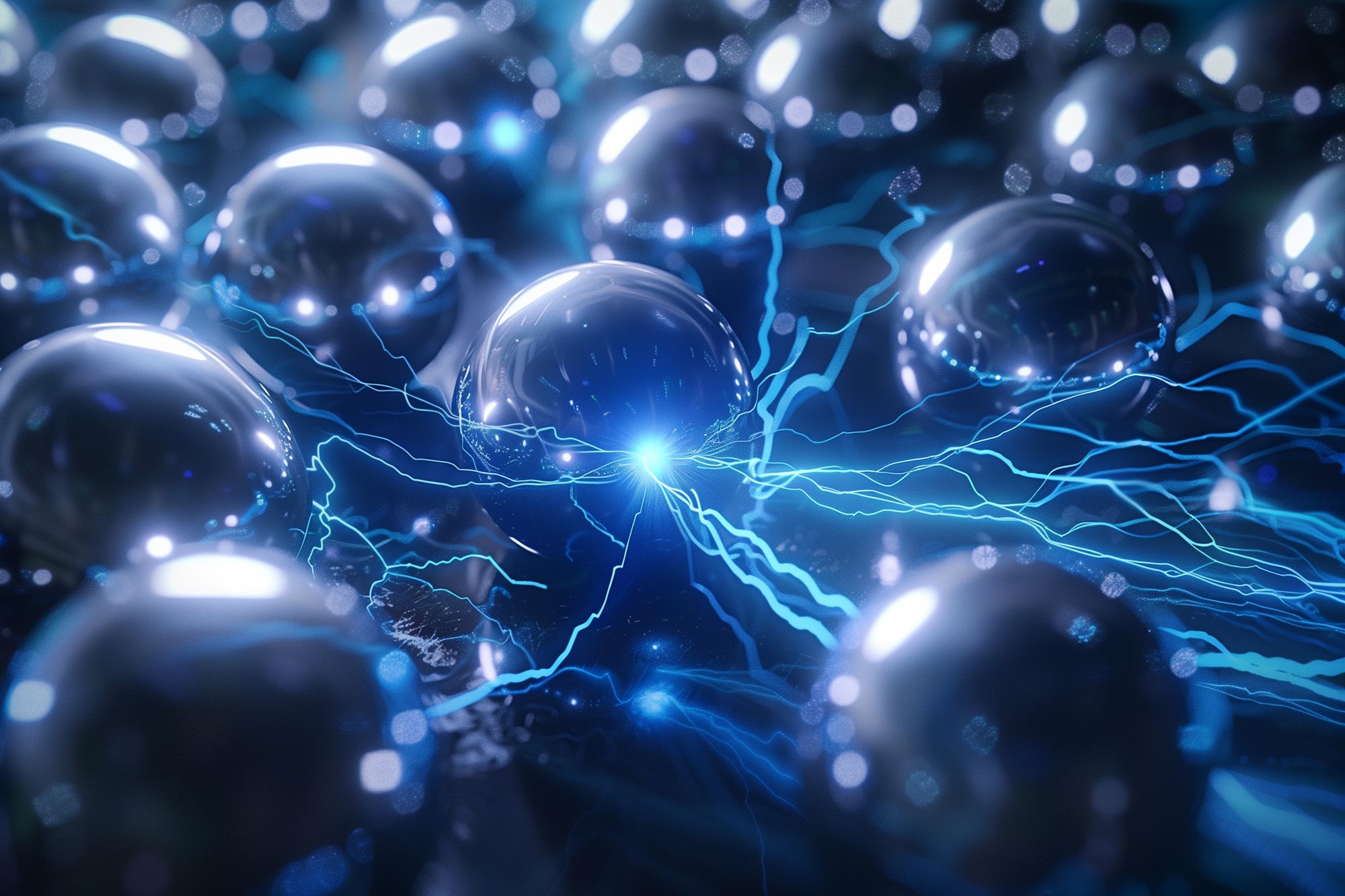
    What if everyday movement powered your devices? Researchers have discovered that tiny beads, when chosen carefully, can generate electricity through friction. This could lead to self-powered wearables and more sustainable energy solutions. Credit: SciTechDaily.com

    Imagine a world where your clothing generates electricity as you move—no batteries, no chargers, just energy from motion. Researchers have found that tiny beads rubbing together can efficiently produce electricity, opening doors for self-powered wearables and sustainable devices.

    The key lies in choosing the right materials: melamine-formaldehyde beads, for instance, transfer charge more effectively. While this discovery paves the way for revolutionary applications, challenges remain in making the technology reliable and scalable. Scientists are now working to refine materials and processes to bring friction-powered energy solutions into everyday life.

    Harnessing Electricity from Friction

    Triboelectric nanogenerators (TENGs) produce electricity by harnessing friction between different materials. This happens when two distinct surfaces move against each other. Recent research shows that when a surface covered with small, closely packed beads contacts another surface with the same beads, some beads develop a positive charge while others become negatively charged. The more efficiently these charges transfer, the more electricity is generated.

    Experiments with different bead types reveal that both size and material significantly impact charge behavior. Larger beads tend to acquire a negative charge, while smaller ones are more likely to become positively charged. Melamine-formaldehyde (MF) beads produce the most notable effect because their low elasticity helps retain and transfer electric charge more effectively. Using beads also offers a cost-efficient alternative to expensive components typically used to boost TENG performance. Additionally, the dry fabrication process makes this approach more environmentally friendly by removing the need for solvents.
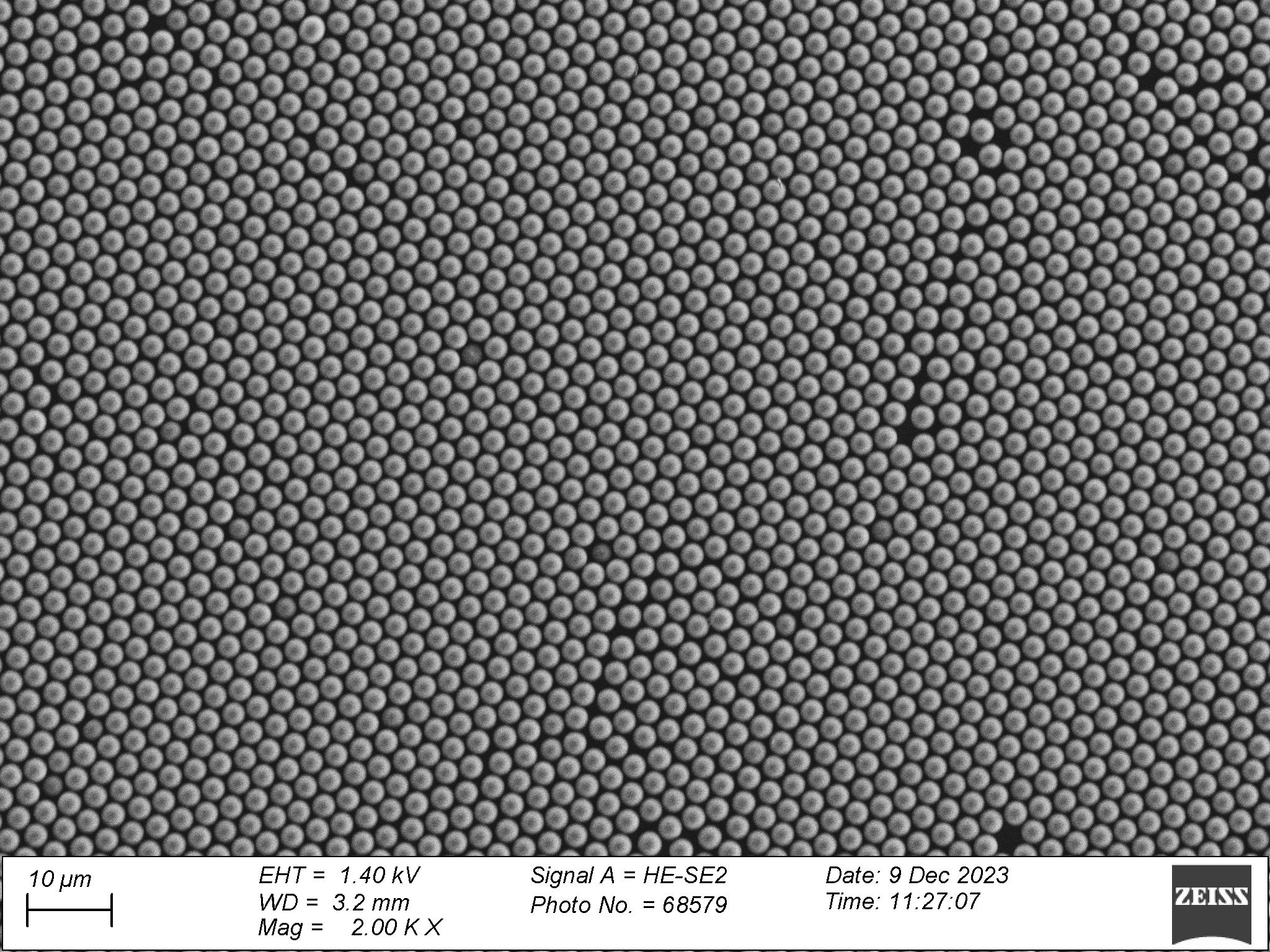
    TENG Surface With Tiny Beads
    Electron Microscope Image of a tTriboelectric Nanogenerator (TENG) Surface with Tiny Beads. Credit: Ignaas Jimidar

    A Step Toward Self-Powered Technology

    These advancements in triboelectrification could lead to new self-powered technologies that don’t rely on batteries or traditional power sources. Smart clothing that generates energy from movement and small devices that charge themselves are becoming more feasible. Wearable technology and sustainable energy solutions stand to gain the most from these innovations.

    Dr. Ignaas Jimidar of VUB and lead author of the study explains: “Our research shows that small changes in material selection can lead to significant improvements in energy generation efficiency. This opens up new possibilities for triboelectric nanogenerators in everyday life, without reliance on traditional energy sources.”
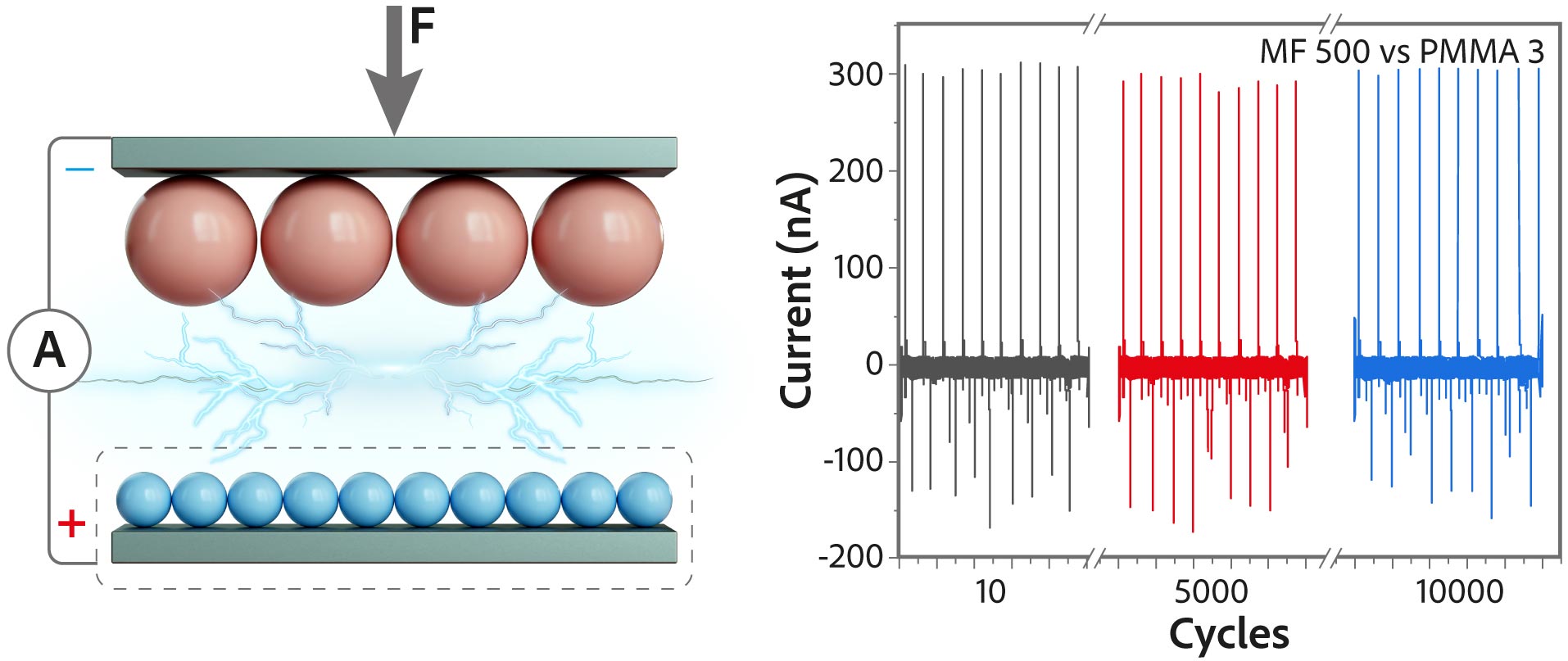
    Principle of TENG Mechanism
    Schematic representation of the working of triboelectric nanogenerator surfaces. Credit: Ignaas Jimidar

    Overcoming Challenges for Real-World Use

    Despite promising results, further steps are necessary to integrate this technology into real-world products. Improvements in efficiency and reliability will be key to enabling large-scale applications. Research into materials and structures continues to reveal new opportunities for energy generation and use.

    Reference: “Granular Interfaces in TENGs: The Role of Close-Packed Polymer Bead Monolayers for Energy Harvesters” by Ignaas S. M. Jimidar, Kaspars Mālnieks, Kai Sotthewes, Peter C. Sherrell and Andris Šutka, 5 February 2025, Small.
    DOI: 10.1002/smll.202410155

    Never miss a breakthrough: Join the SciTechDaily newsletter.
    Follow us on Google and Google News.

    Electricity Energy
    Share. Facebook Twitter Pinterest LinkedIn Email Reddit

    Related Articles

    Harnessing Heat for Clean Energy: The Future of Thermophotovoltaic Technology

    Stanford Unveils Game-Changing Liquid Fuel Technology for Grid Energy Storage

    From Near Death to High-Tech: Taming the Beast of Electricity

    Revolutionizing Wireless Power: Scientists Achieve Breakthrough in Long-Distance Charging Efficiency

    Jevons’ Paradox: AI Could Use As Much Electricity As Entire Countries

    A Smart Electric Grid Could Save Consumers $50 Billion a Year

    New Technology That Can Block Cyberattacks From Impacting the Nation’s Electric Power Grid

    PNNL Developed Small Solid Oxide Fuel Cell Achieves 57 Percent Efficiency

    Scottish Wind Turbine Explodes

    2 Comments

    1. Eric M Jones on March 17, 2025 8:07 am

      All schemes to generate power from human motion ignore the fact that the energy has to come from someplace…Ultimately the body’s motion has to generate it.
      UGG.

      Reply
      • Robert Welch on March 17, 2025 6:25 pm

        Beats fossil fuels, tho’.

        Reply
    Leave A Reply Cancel Reply

    • Facebook
    • Twitter
    • Pinterest
    • YouTube

    Don't Miss a Discovery

    Subscribe for the Latest in Science & Tech!

    Trending News

    Scientists Uncover Potential Brain Risks of Popular Fish Oil Supplements

    Scientists Discover a Surprising Way To Make Bread Healthier and More Nutritious

    After 60 Years, Scientists Uncover Unexpected Brain Effects of Popular Diabetes Drug Metformin

    New Research Uncovers Hidden Side Effects of Popular Weight-Loss Drugs

    Scientists Rethink Extreme Warming After Surprising Ocean Discovery

    Landmark Study Links Never Marrying to Significantly Higher Cancer Risk

    Researchers Discover Unknown Beetle Species Just Steps From Their Lab

    Largest-Ever Study Finds Medicinal Cannabis Ineffective for Anxiety, Depression, PTSD

    Follow SciTechDaily
    • Facebook
    • Twitter
    • YouTube
    • Pinterest
    • Newsletter
    • RSS
    SciTech News
    • Biology News
    • Chemistry News
    • Earth News
    • Health News
    • Physics News
    • Science News
    • Space News
    • Technology News
    Recent Posts
    • Scientists Discover Hidden Pathway Inside Catalysts That Defies Decades of Assumptions
    • Scientists Finally Crack Decades-Old Mystery of “Breathing” Lasers
    • “Like Liquid Metal”: Scientists Create Strange Shape-Shifting Material
    • Early Warning Signals of Esophageal Cancer May Be Hiding in Plain Sight
    • Researchers Have Discovered a THC-Free Cannabis Compound That May Replace Opioids
    Copyright © 1998 - 2026 SciTechDaily. All Rights Reserved.
    • Science News
    • About
    • Contact
    • Editorial Board
    • Privacy Policy
    • Terms of Use

    Type above and press Enter to search. Press Esc to cancel.