
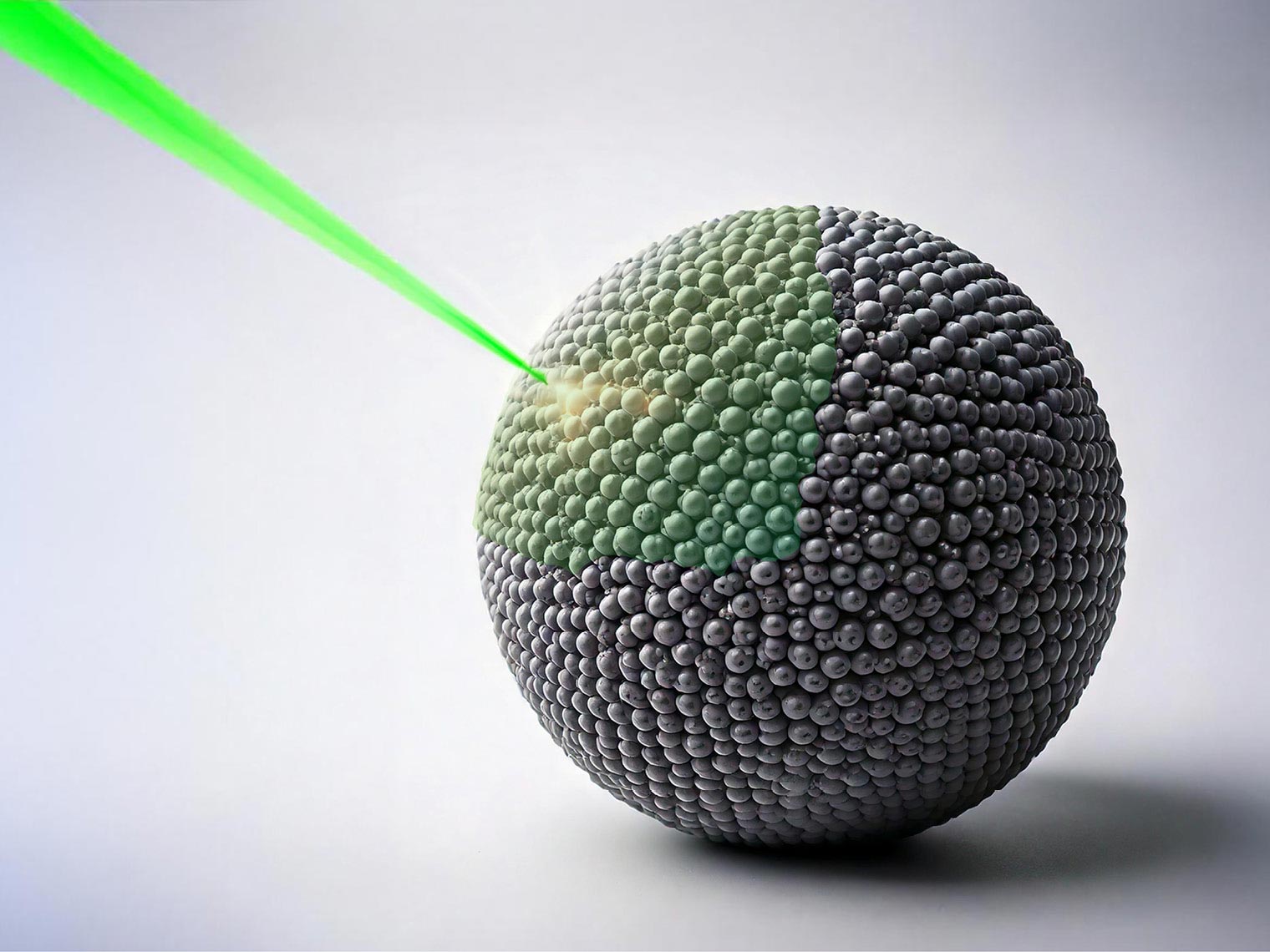
Scientists at the University of Geneva (UNIGE) have developed a tool that uses light to precisely control where and when a drug becomes active, ensuring it works exactly where it’s needed.
For medical treatments to be effective and minimize side effects, they must act at the right place and time—a challenge that remains difficult to achieve. Now, a team of biologists and chemists at UNIGE has created a system that allows a molecule to be activated with a brief pulse of light lasting just a few seconds. Tested on a protein essential for cell division, this method could be applied to other molecules, with promising applications in both research and medicine. It may even improve existing treatments, such as those for skin cancer. These findings were recently published in Nature Communications.
The Challenge of Systemic Drug Effects
When medication enters the body, it doesn’t just affect the intended organ — it spreads systemically, impacting the entire body. This lack of precision can lead to two major risks: the drug may not reach its target effectively, reducing its intended benefits, or it may cause serious side effects. In Switzerland alone, thousands of people suffer from severe drug-related side effects each year.
Scientists have now developed a system that allows them to control the activity of a molecule in a living organism using light, offering a way to activate drugs only where they are needed.
A Light-Controlled Breakthrough
The idea is simple: activate drugs precisely at their intended location. However, turning this concept into reality is highly complex. If successful, this approach could allow scientists to activate or deactivate proteins in a specific area of the body, leading to a better understanding of their function and improving targeted treatments.
“Everything started from this methodological question,” recalls Monica Gotta, Professor in the Department of Cell Physiology and Metabolism at UNIGE Faculty of Medicine, who initiated and coordinated this research with Nicolas Winssinger, Professor in the Department of Organic Chemistry at UNIGE Faculty of Science. “We were looking for a way to inhibit a protein involved in cell division, the Plk1 protein, when and where we wanted, to better understand its function in the development of an organism.”
Breaking a Biological Lock
By combining their expertise in chemistry and biology, the scientists were able to modify a Plk1 inhibitor molecule so that it would be activated by a pulse of light. “After a complex process, we were able to block the active site of our inhibitor with a coumarin derivative, a compound naturally present in certain plants. This coumarin could then be removed with a simple light pulse,” explains Victoria von Glasenapp, a postdoctoral researcher in the laboratories of Professor Gotta at the Faculty of Medicine and Professor Winssinger at the Faculty of Science, and first author of the study.
The challenge was still to find a way to anchor the inhibitor at the exact point in the body where its action was desired. “We thus modified the inhibitor so that it becomes trapped in the targeted cell by adding a molecular anchor that is released only by light,” explains Nicolas Winssinger. “This enabled us to activate and anchor the inhibitor with the same light pulse, thereby inactivating Plk1 and stopping cell division at the precise desired location.”
Countless Possible Applications
The system developed by UNIGE scientists makes it possible to spatially and temporally control the activity of a molecule in a living organism using light. It can be adapted to numerous molecules to be able to activate a drug only where it is needed. In the future, a simple laser could therefore activate a treatment exactly where it is needed while sparing the surrounding healthy tissue, thereby limiting undesirable side effects. “We hope that our tool will be widely used, leading to a better understanding of how living organisms function and, in the long term, to the development of location-specific treatments,” concludes Monica Gotta.
Reference: “Spatio-temporal control of mitosis using light via a Plk1 inhibitor caged for activity and cellular permeability” by Victoria von Glasenapp, Ana C. Almeida, Dalu Chang, Ivana Gasic, Nicolas Winssinger and Monica Gotta, 19 February 2025, Nature Communications.
DOI: 10.1038/s41467-025-56746-5
Never miss a breakthrough: Join the SciTechDaily newsletter.
Follow us on Google and Google News.