
Long before human ancestors began hunting large mammals for meat, a fatty diet provided them with the nutrition to develop bigger brains, posits a new paper in Current Anthropology.
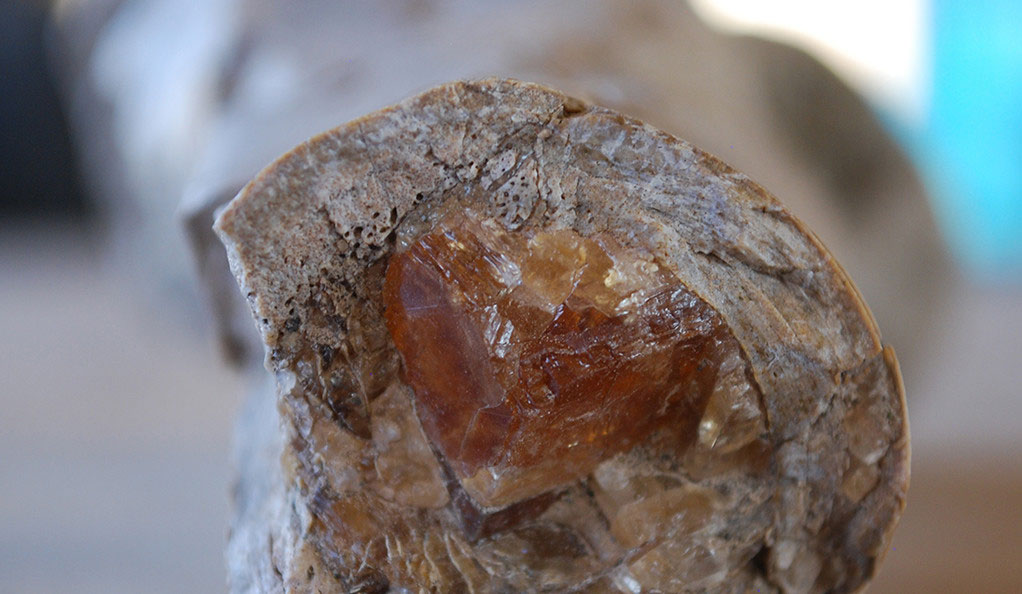
The paper argues that our early ancestors acquired a taste for fat by eating marrow scavenged from the skeletal remains of large animals that had been killed and eaten by other predators. The argument challenges the widely held view among anthropologists that eating meat was the critical factor in setting the stage for the evolution of humans.
“Our ancestors likely began acquiring a taste for fat 4 million years ago, which explains why we crave it today,” says Jessica Thompson, the paper’s lead author and an anthropologist at Yale University. “The reservoirs of fat in the long bones of carcasses were a huge calorie package on a calorie-poor landscape. That could have been what gave an ancestral population the advantage it needed to set off the chain of human evolution.”
Thompson, who recently joined Yale’s faculty, completed the paper while on the faculty at Emory University.
While focusing on fat over meat may seem like a subtle distinction, the difference is significant, Thompson says. The nutrients of meat and fat are different, as are the technologies required to access them. Meat eating is traditionally paired with the manufacture of sharp, flaked-stone tools while obtaining fat-rich marrow only required smashing bones with a rock, Thompson notes.
The authors review evidence that craving for marrow could have fueled not just a growing brain size, but the quest to go beyond smashing bones with rocks to make more sophisticated tools and to hunt large animals.
“That’s how all technology originated — taking one thing and using it to alter something else,” Thompson says. “That’s the origin of the iPhone right there.”
Co-authors of the paper include anthropologists Susana Carvalho of Oxford University, Curtis Marean of Arizona State University, and Zeresenay Alemseged of the University of Chicago.
The human brain consumes 20% of the body’s energy at rest, or twice that of the brains of other primates, which are almost exclusively vegetarian. It’s a mystery to scientists how our human ancestors met the calorie demands to develop and sustain our larger brains.
A meat-centered paradigm for human evolution hypothesizes that an ape population began more actively hunting and eating small game, which became an evolutionary stepping stone to the human behavior of hunting large animals.
The paper argues that this theory does not make nutritional sense. “The meat of wild animals is lean,” Thompson says. “It actually takes more work to metabolize lean protein than you get back.”
In fact, eating lean meat without a good source of fat can lead to protein poisoning and acute malnutrition. Early Arctic explorers, who attempted to survive on rabbit meat exclusively, described the condition as “rabbit starvation.”
This protein problem, coupled with the energy required for an upright ape with small canines to capture and eat small animals, would seem to rule out eating meat as a pathway to fueling brain growth, Thompson says.
The new paper presents a new hypothesis, going back about 4 million years, to the Pliocene. As the human ancestor began walking primarily on two legs, heavily forested regions of Africa were breaking into mosaics, creating open grasslands.
“Our human ancestors were likely awkward creatures,” Thompson says. “They weren’t good in trees like chimpanzees are, but they weren’t necessarily all that good on the ground either. So, what did the first upright-walking apes in our lineage do to make them so successful? At this stage, there was already a small increase in the size of the brains. How were they feeding that?”
Thompson and her co-authors propose that our early ancestors wielded rocks as they foraged on open grassland. After a predator had finished eating a large mammal, these upright apes explored the leftovers by smashing them and discovered the marrow hidden in the limb bones.
“The bones sealed up the marrow like a Tupperware container, preventing bacterial growth,” Thompson says. And the only things that could crack open these containers, she adds, were the bone-cracking jaws of hyenas or a clever ape wielding a rock.
The hypothesis offers an explanation for how the human ancestor may have garnered the extra calories needed to foster a larger brain, long before there is evidence for controlled fire, which could have mitigated the problem of bacteria in rotting, scavenged meat. The fat hypothesis also predates by more than 1 million years most evidence for even basic toolmaking of simple stone flakes.
Scientists ought to begin looking for evidence of bone-smashing behavior in early human ancestors, Thompson said.
“Paleoanthropologists are looking for mostly complete bones, and then concentrating on identifying the animal that died,” Thompson says. “But instead of just wondering about the bone’s creature of origin, we should be asking, ‘What broke this bone?’ We need to start collecting tiny pieces of shattered bone to help piece together this kind of behavioral information.”
Reference: “Origins of the Human Predatory Pattern: The Transition to Large-Animal Exploitation by Early Hominins” by Jessica C. Thompson, Susana Carvalho, Curtis W. Marean and Zeresenay Alemseged, February 2019, Current Anthropology.
DOI:10.1086/701477
Never miss a breakthrough: Join the SciTechDaily newsletter.
Follow us on Google and Google News.
3 Comments
Farley Mowat, Canadian writer and researcher, noted his efforts to live off the land during his wolf study nearly did him in until he began to eat the entire mouse, fat, and all, that he had formerly shunned.
And now vegitarians want to de-evoke by elimination of all meat….problem is they will not understand this science (brains already shrunk) and will continue with their insanity until they disappear into the trees with their new friends the chimpanzees ….
Which chimpanzees are hunters of small monkeys and midget antelope! They’ll love it.