
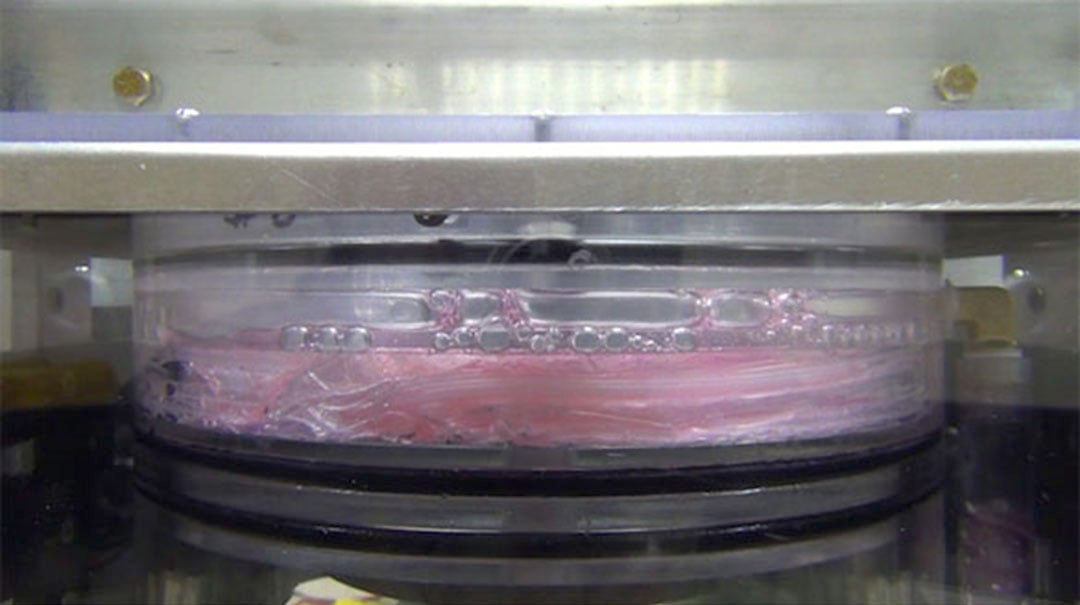
Life aboard the International Space Station requires extreme measures in efficiency to preserve resources, reduce waste, repurpose materials, and recycle water and breathable air. Regular cargo resupply missions deliver approximately 12 metric tons of supplies each year, which can lead to significant storage challenges aboard the orbiting laboratory. When trash accumulates, astronauts manually squeeze it into trash bags, temporarily storing almost two metric tons of it for relatively short durations, and then send it away in a departing commercial supply vehicle, which either returns it to Earth or incinerates it during reentry through the atmosphere.
Future spacecraft, much farther from Earth, likely will not have the regular cadence of visiting commercial ships that can remove the trash, so NASA is turning to the U.S. industry to advance concepts for trash compaction and processing systems. The agency has issued a call for prototypes, and eventually, flight demonstrations to fly on the space station. The solicitation was issued through Next Space Technologies for Exploration Partnerships (NextSTEP) Broad Agency Announcement, Appendix F: Logistics Reduction in Space by Trash Compaction and Processing System.
Storing trash inside a spacecraft not only consumes precious volume, but also can create physical and biological hazards for the crew. Storage also removes the option to extract valuable leftover resources that could be recycled or repurposed. The solicitation seeks solutions that compact trash, remove biological and physical safety concerns, and recover trapped resources for potential reuse or repurposing. Proposing companies won’t have to start from ground zero, however. NASA has been developing waste management systems since the 1980s, including recent developments such as the Heat Melt Compactor and “trash to gas” technologies.
The development will occur in two phases. In Phase A, selected companies will create a concept trash compaction and processing system, conduct design reviews with NASA, and validate concepts through prototype ground demonstrations. Throughout this phase, the companies may request use of NASA facilities to conduct subsystem tests. In Phase B, a flight unit will be developed to demonstrate a system aboard the space station as early as 2022.
Inherent with the NextSTEP partnership model, private companies must contribute their own corporate resources toward the development of their trash compaction and processing systems. In this case, responders are required to show a minimum of 20 percent contribution toward the overall development cost, or 10 percent for small businesses. Proposals are due August 22, 2018. NASA plans to host an industry day on July 24, to share details about the solicitation, describe available NASA facilities, and answer questions from potential respondents.
NASA’s Exploration Campaign will usher in a new era of human exploration, taking humans farther in space than ever before. Operations aboard the Gateway in lunar orbit, as well as on the surface of the Moon, will require innovative approaches to live and work more independently from Earth. Logistical efficiencies afforded by new innovations like trash compaction and processing systems will make human exploration safer and more sustainable.
Never miss a breakthrough: Join the SciTechDaily newsletter.
Follow us on Google and Google News.
1 Comment
Why do you say ground zero when you mean square one