

Researchers at Hiroshima University have found that stevia, when fermented with specific bacteria from banana leaves, gains a remarkable ability to kill pancreatic cancer cells while leaving healthy kidney cells unharmed.
This transformation enhances the plant’s natural properties through microbial biotransformation, creating a potent compound called chlorogenic acid methyl ester (CAME). The fermented stevia extract showed significant cancer-fighting potential in lab tests and may represent a new direction in probiotic-based cancer therapies.
Stevia’s Surprising Anti-Cancer Potential
Stevia might offer more than just a no-calorie alternative to sugar. Scientists at Hiroshima University found that when stevia extract is fermented using bacteria sourced from banana leaves, it becomes capable of killing pancreatic cancer cells without damaging healthy kidney cells.
The results of their study were published in the International Journal of Molecular Sciences.
“Globally, the incidence and mortality rates of pancreatic cancer continue to rise, with a five-year survival rate of less than 10%,” said co-author Narandalai Danshiitsoodol, associate professor in Department of Probiotic Science for Preventive Medicine, Graduate School of Biomedical and Health Sciences.
“Pancreatic cancer is highly invasive and prone to metastasis, showing significant resistance to existing treatments, such as surgery, radiotherapy, and chemotherapy. As such, there is an urgent need to identify new and effective anticancer compounds, particularly those derived from medicinal plants.”
Fermentation Unlocks Bioactive Compounds
Earlier research had suggested that stevia leaf extract could help fight cancer, but pinpointing and isolating the specific active compounds has proven difficult. Danshiitsoodol explained that fermentation can alter the structure of stevia extract, leading to the creation of new bioactive metabolites. These are compounds that can influence biological systems.
“To enhance the pharmacological efficacy of natural plant extracts, microbial biotransformation has emerged as an effective strategy,” said corresponding author Masanori Sugiyama, professor in the Department of Probiotic Science for Preventive Medicine, Graduate School of Biomedical and Health Sciences.
Sugiyama’s lab has isolated and evaluated the health benefits of more than 1,300 lactic acid bacteria (LAB) strains from fruits, vegetables, flowers, and medicinal plants. “In this study, we aimed to compare LAB-fermented and non-fermented extracts to identify key compounds that enhance bioactivity, ultimately contributing to the efficacy of herbal medicine in cancer prevention and therapy.”
Fermented Stevia Extract Targets Cancer Cells
Specifically, the team fermented stevia leaf extract with plant-derived Lactobacillus plantarum SN13T strain (FSLE) and compared its effects on pancreatic cancer (PANC-1) cells in the lab, alongside non-cancerous human embryonic kidney cells HEK-293, to the effects of non-fermented stevia extract. The cells utilized in these experiments were acquired from established commercial cell lines.
“Our findings indicate that FSLE demonstrates significantly greater cytotoxicity than the non-fermented extract at equivalent concentrations, suggesting that the fermentation process enhances the bioactivity of the extract,” Sugiyama said. “Notably, FSLE exhibited lower toxicity toward the HEK-293 cells, with minimal inhibition observed even at the highest concentration tested.”
Discovery of a Powerful Cancer-Fighting Molecule
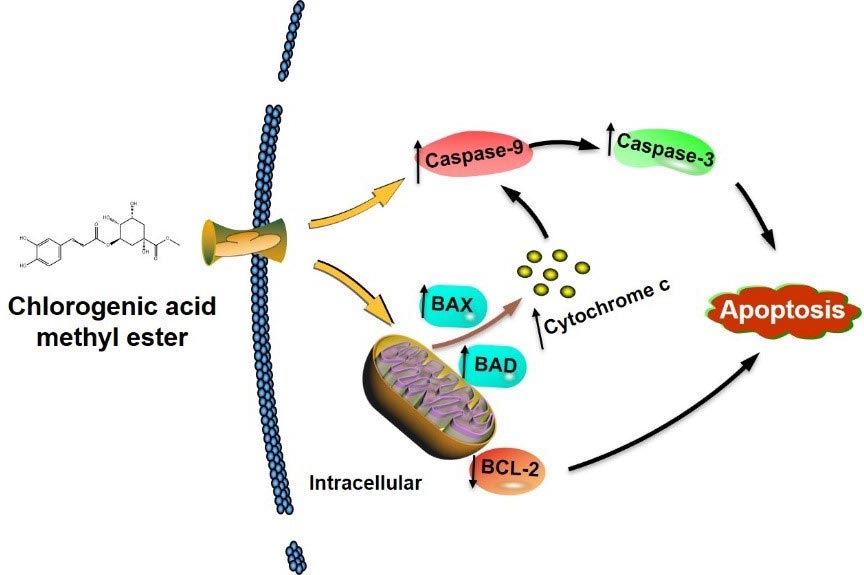
Additional analyses identified chlorogenic acid methyl ester (CAME) as the active anti-cancer compound. When fermented, the concentration of chlorogenic acid in the extract dropped six-fold, indicating a microbial transformation, according to Danshiitsoodol.
“This microbial transformation was likely due to specific enzymes in the bacteria strain used,” Danshiitsoodol said. “Our data demonstrate that CAME exhibits stronger toxicity to cells and pro-apoptotic effects — which encourage cell death — on PANC-1 cells compared to chlorogenic acid alone.”
Paving the Way for Future Animal Studies
Next, the researchers said they plan to study the effects in a mouse model to better understand the effectiveness of various dosages across a whole-body system.
“The present study has substantially enhanced our understanding of the mechanism of action of the Lactobacillus plantarum SN13T strain in the fermentation of herbal extracts, while also offering a valuable research perspective on the potential application of probiotics as natural anti-tumor agents,” Danshiitsoodol said.
Reference: “Stevia Leaf Extract Fermented with Plant-Derived Lactobacillus plantarum SN13T Displays Anticancer Activity to Pancreatic Cancer PANC-1 Cell Line” by Rentao Zhang, Narandalai Danshiitsoodol, Masafumi Noda, Sayaka Yonezawa, Keishi Kanno and Masanori Sugiyama, 27 April 2025, International Journal of Molecular Sciences.
DOI: 10.3390/ijms26094186
Other contributors include Rentao Zhang and Masafumi Noda, Department of Probiotic Science for Preventive Medicine, Graduate School of Biomedical and Health Sciences, Hiroshima University; and Sayaka Yonezawa and Keishi Kanno, Department of General Internal Medicine, Hiroshima University Hospital.
Never miss a breakthrough: Join the SciTechDaily newsletter.
Follow us on Google and Google News.
13 Comments
If/ when will these treatments be available?
Um, there seems to be a mismatch here in the intro: “… gains a remarkable ability to kill *pancreatic* cancer cells while leaving healthy *kidney* cells unharmed.”
If you read the whole article it specifies matascitity and invasiveness bro… as well as agressiveness… jeez you people astound me with your complete ignorance!
Maybe all of you should stop commenting anything at all from now on until you both fully process and define the identity of the article, as well as… I don’t know get a minimal amount of education(meaning read up on the subject just a small amount) on the general topic before you make your own uneducated jabs at it. You all should be ashamed of yourselves and should have your rights to free speech rescinded through the crime of spreading misinformation about a topic that should be reserved for people who have a working knowledge of it in the first place!
Not in my life time. In this country weeill study it to death.
Mice and animal studies are useless as a requirement that has never crossed over to humans. It provides grant money to people who use it as income as well as the studies. Clinical studies with human volunteers are the only studies that produce actual results both productive and negligible using blind studies. Doses with placebo and the actual study compound used in the tests with otherwise healthy individuals except for the actual ailment actually informs scientists accurately about the effect of the subject matter on humans. The human clinical trials go through phases. Testing the efficacy of the compound in a human trials through administration types and dosage effectiveness include observing and documenting outcomes and side effects over time. If the trial phases go well throughout the entire trial processes, and found to be successfully effective, the outcome and findings are reviewed by gov’t regulatory bodies and if approval is determined safe for human usage, eventually the drug/compound will find its way to manufacturing and marketing. No studies on animals have ever worked regarding human testing. As a result, animal testing is no longer a requirement for new drug approvals. Animal testing has never crossed over to being applicable to humans. No animals should have to endure testing and be killed for experiments that go nowhere.
Start following Dr William Davis, MD on l reuteri and other bacteria strains. He also advocates fermenting fruits and vegetables. While his are not cancer cures, his info on bacteria strains for healing is remarkable. Read his book SUPER GUT.
Thanks for info will get book
I wonder if adding stevia to natto will have the same effect?
Yes, that is the problem here in the US. Not sure where the study was done, esp if they are going to use rats in the next experiment, and we all know the FDA does not allow that here. So that leads to a lot of speculation. And for multiple reasons, no doubt!! However, it would really be awesome if the FDA did see some true potential here, and get the clinical trials fast tracked, and if the positive results continue there, then really fast track the make of the drug. IT CAN BE DONE!!!
Do testing on people dying of cancer. I know my son would have volunteered. He died from this cancer a couple of years ago.
You are so right, why aren’t they doing this, because there’s no money in it for the pharmaceutical companies
Animal studies are useless. It’s been a scientific fact that on average less than 4 % of successful animal trials work on humans. Do human trials. People dying of it will volunteer in droves.