

Close Menu
    Facebook X (Twitter) Instagram
    SciTechDaily
    • Biology
    • Chemistry
    • Earth
    • Health
    • Physics
    • Science
    • Space
    • Technology
    Facebook X (Twitter) Pinterest YouTube RSS
    SciTechDaily
    Home»Science»Scientists Uncover First Evidence of Respiratory Infection in a Dinosaur
    Science

    Scientists Uncover First Evidence of Respiratory Infection in a Dinosaur

    By Scientific ReportsFebruary 19, 2022No Comments3 Mins Read
    Facebook Twitter Pinterest Telegram LinkedIn WhatsApp Email Reddit
    Share
    Facebook Twitter LinkedIn Pinterest Telegram Email Reddit
    MOR 7029 Life Restoration
    Hypothetical life restoration of MOR 7029. Note that the pulmonary disease infecting this animal would not have been externally evident, but the probable pneumonia-like outward symptoms would have included coughing, labored breathing, nasal discharge, fever, and weight loss, among others. Credit: Woodruff, et al. (2022) and Corbin Rainbolt

    Researchers found evidence of a respiratory infection in a young diplodocid dinosaur, possibly caused by a fungal infection similar to aspergillosis, leading to flu-like symptoms and death

    The fossilized remains of a young diplodocid – a large, long-necked herbivorous sauropod – may provide the first evidence of a respiratory infection in a dinosaur, according to a study published in Scientific Reports. The findings increase our understanding of the illnesses that affected dinosaurs.
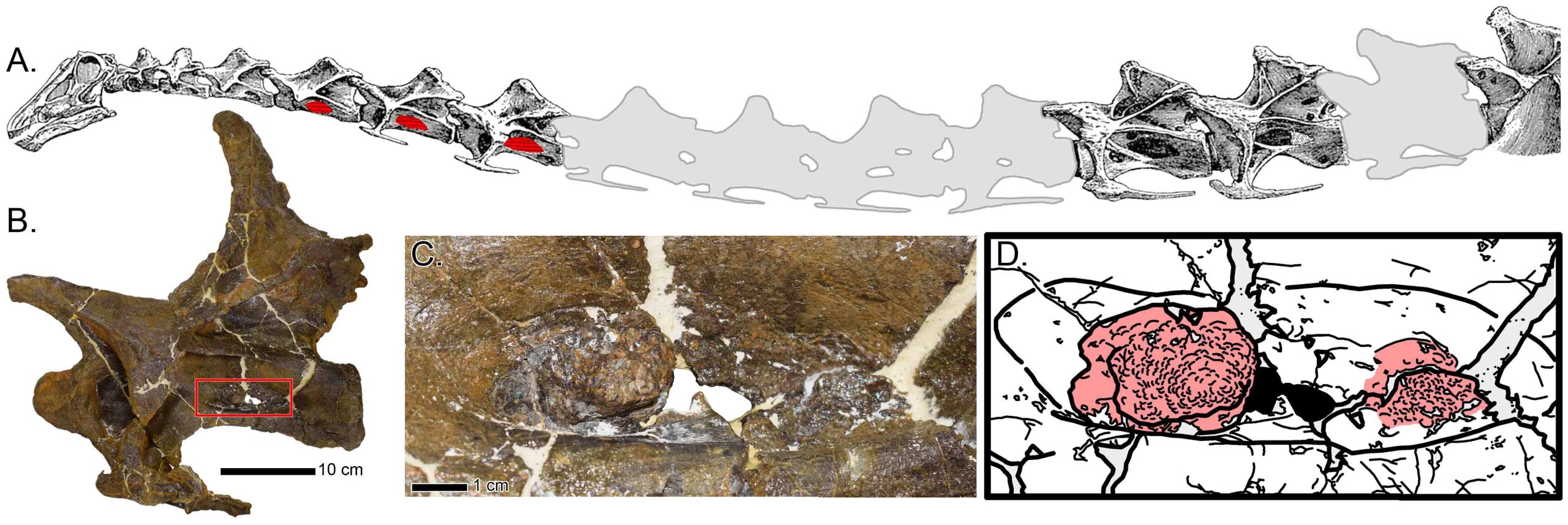
    Infected Diplodocus Vertebrae
    Abnormal bony growth in MOR 7029. (A) Schematic map of the neck of Diplodocus, with the abnormal bone growth denoted in red. (B) Neck vertebra of MOR 7029 with a red box highlighting the abnormal structure; close up in (C) with interpretative drawing in (D) (abnormal structure in red). Credit: Woodruff, et al.

    The specimen, known as MOR 7029, was discovered in 1990 in southwest Montana, USA, and dates back to the Late Jurassic Period (approximately 150 million years ago). Cary Woodruff and colleagues examined three of the bones from MOR 7029’s neck and identified bony protrusions that had an unusual and irregular shape and texture. These protrusions were located in an area of each bone where they would have been attached to air-filled structures, known as air sacs. These air sacs would have connected to MOR 7029’s lungs and formed part of the dinosaur’s respiratory system. CT imaging of the irregular protrusions revealed that they were made of abnormal bone that most likely formed in response to an infection.
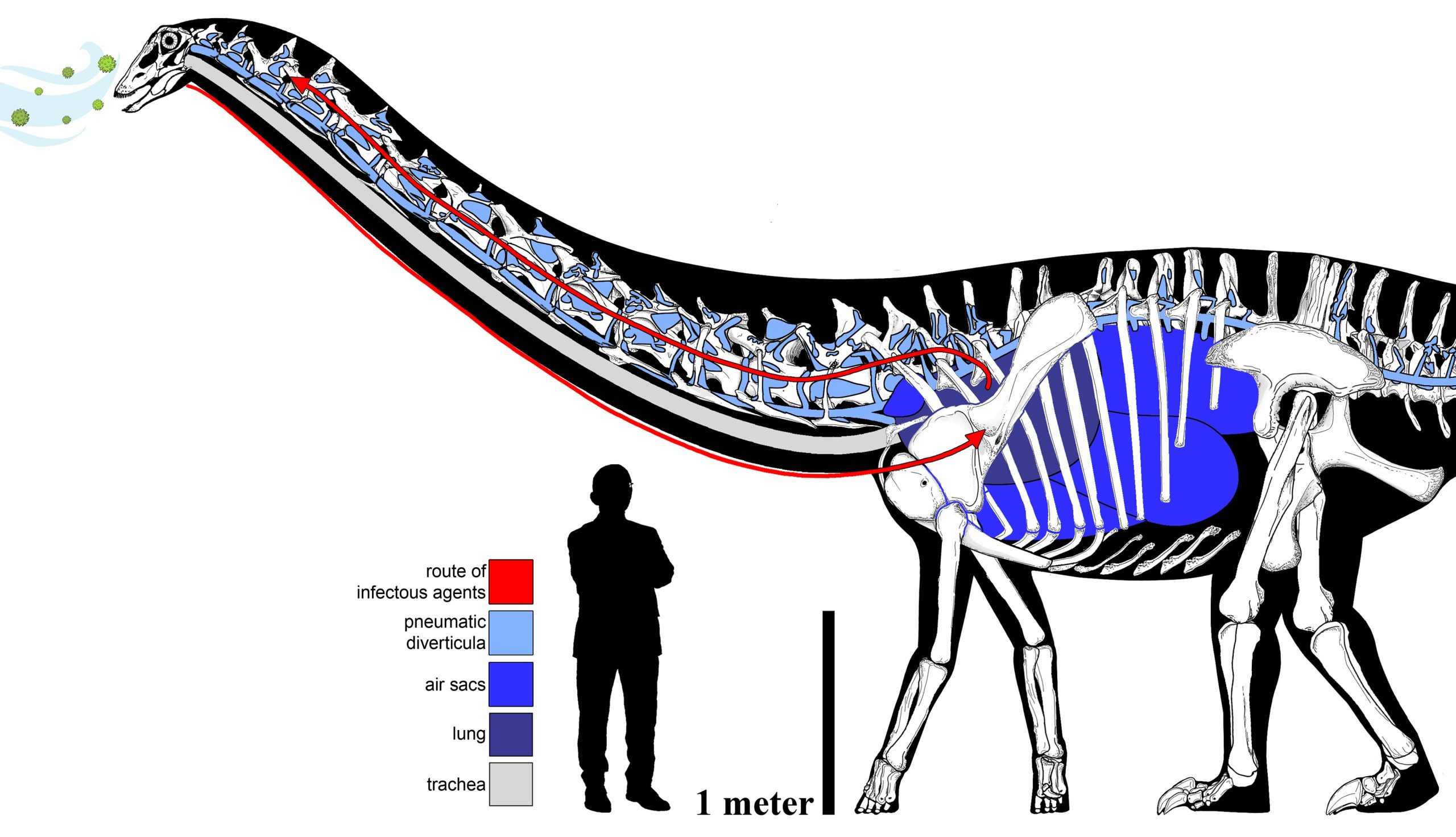
    Dinosaur Infection Route
    The elaborate and circuitous pulmonary complex of the sauropod, with the hypothetical route of infectious pathway in MOR 7029. Human scale bar is the profile of a man standing 170cm tall. Credit: Woodruff, et al., and Francisco Bruñén Alfaro

    Based on the location of the abnormal bony protrusions, the researchers suggest that they formed in response to an infection in MOR 7029’s air sacs, which then spread into its neck bones. The authors speculate that this could have been caused by a fungal infection similar to aspergillosis, a common respiratory illness that affects birds and reptiles and can lead to bone infections. They suggest that if MOR 7029 had been infected with aspergillosis, it may have experienced flu or pneumonia-like symptoms such as weight loss, coughing, fever, and breathing difficulties. As aspergillosis can be fatal in birds if untreated, MOR 7029 could have ultimately died as a result of this infection, they add.

    For more on this discovery, see Sauro-Throat! First Evidence Discovered Indicating Respiratory Infection in a Dinosaur.

    Reference: “The first occurrence of an avian-style respiratory infection in a non-avian dinosaur” by D. Cary Woodruff, Ewan D. S. Wolff, Mathew J. Wedel, Sophie Dennison and Lawrence M. Witmer, 10 February 2022, Scientific Reports.
    DOI: 10.1038/s41598-022-05761-3

    Never miss a breakthrough: Join the SciTechDaily newsletter.
    Follow us on Google and Google News.

    Dinosaurs Fossils Infectious Diseases Paleontology Scientific Reports
    Share. Facebook Twitter Pinterest LinkedIn Email Reddit

    Related Articles

    “Big John” Triceratops Specimen Has Skull Injuries That May Have Come From Combat With Another Dinosaur

    Sauro-Throat! First Evidence Discovered Indicating Respiratory Infection in a Dinosaur

    Fossil Treasure Trove: Earliest Evidence of Complex Social Behavior in Dinosaurs

    Xenoceratops, A New Species of Horned Dinosaur Discovered in Canada

    How Tyrannosaurus Rex Ate Triceratops Horridus

    Fossils Reveal Headbutts May Have Been Used as a Dinosaur Courtship Behavior

    Cretaceous Period Sankofa Pyrenaica Fossilized Eggs Are Unusually Shaped

    Microraptor Feathers Were Black With Iridescent Sheen

    Jurassic Period Super-Sized Fleas Had Armored Mouthparts to Attack the Thick Hide of Dinosaurs

    Leave A Reply Cancel Reply

    • Facebook
    • Twitter
    • Pinterest
    • YouTube

    Don't Miss a Discovery

    Subscribe for the Latest in Science & Tech!

    Trending News

    Scientists Discover Cheap, Natural Remedy for High Blood Pressure

    Earth’s Upper Atmosphere Is Cooling Fast and Scientists Finally Know Why

    32,000 Olympic Pools of Magma Nearly Erupted Beneath Atlantic Island

    Exercise Changes the Heart in a Way Researchers Never Expected

    Too Much Sleep May Age Your Body Faster, New Study Warns

    Scientists Uncover Promising New Strategy To Stop Parkinson’s in Its Tracks

    Experts Reveal the Surprising Cancer Link Behind a Common Vitamin

    This Strange “Golden Orb” Found 2 Miles Deep Stumped Scientists for Years

    Follow SciTechDaily
    • Facebook
    • Twitter
    • YouTube
    • Pinterest
    • Newsletter
    • RSS
    SciTech News
    • Biology News
    • Chemistry News
    • Earth News
    • Health News
    • Physics News
    • Science News
    • Space News
    • Technology News
    Recent Posts
    • Your Immune System Remembers Obesity for up to a Decade, Study Finds
    • Breakthrough Parkinson’s Drug Targets Disease at Its Genetic Roots
    • 10-Cent Pill Could Transform Heart Failure Treatment Worldwide
    • Just 4 Weeks of Simple Diet Changes Reversed Signs of Aging in Older Adults
    • Scientists May Have Finally Solved Why Humans Are Right-Handed
    Copyright © 1998 - 2026 SciTechDaily. All Rights Reserved.
    • Science News
    • About
    • Contact
    • Editorial Board
    • Privacy Policy
    • Terms of Use

    Type above and press Enter to search. Press Esc to cancel.