
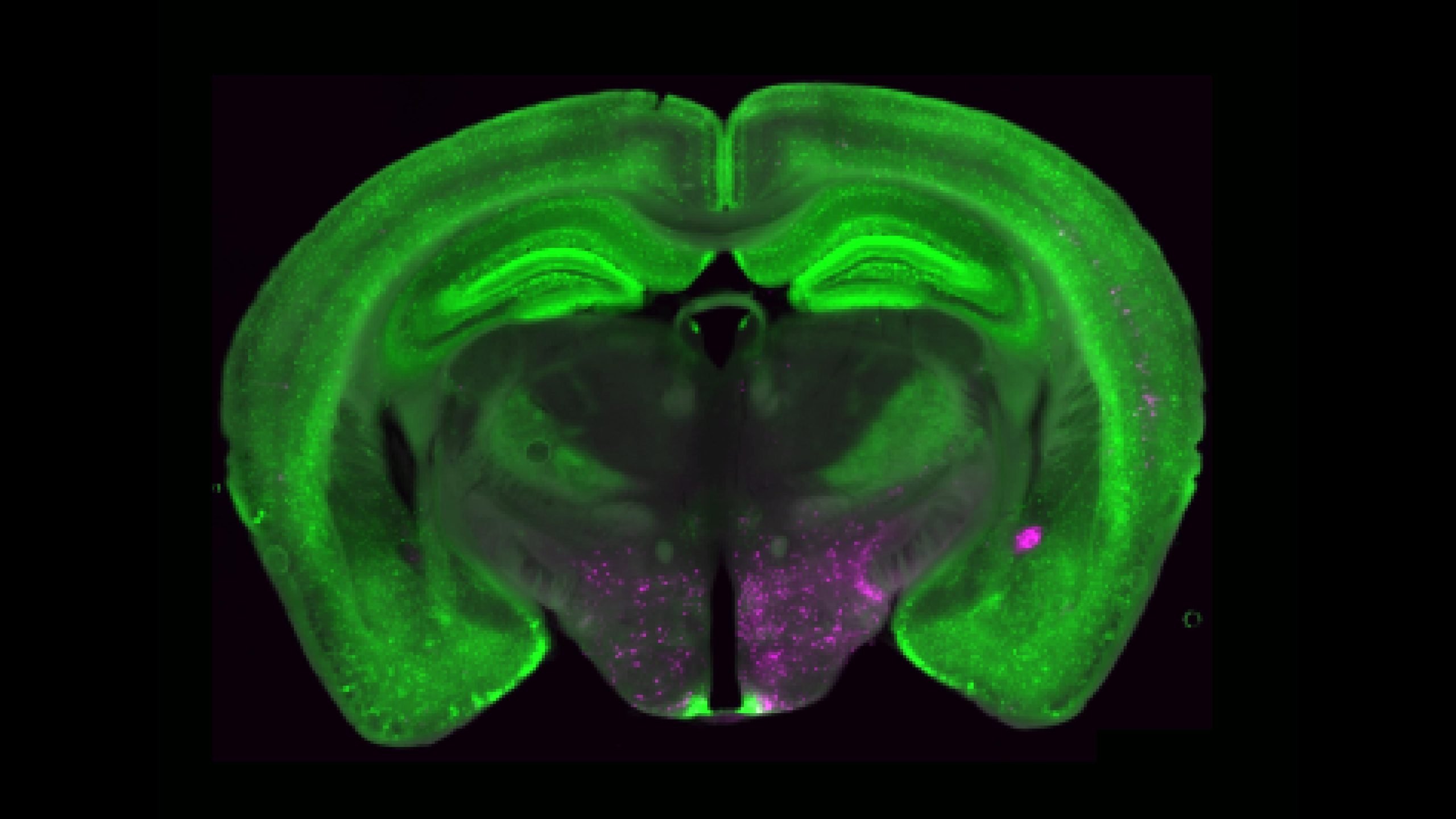
Researchers have found a set of brainstem neurons that can dial down chronic pain.
These Y1 receptor neurons balance pain with other vital needs like hunger and fear, showing that the brain can override suffering when survival is at stake. The discovery could transform how chronic pain is understood and treated by targeting the brain’s own circuits rather than damaged nerves.
Key Takeaways
- Around 50 million people in the United States experience chronic pain, a hidden and often relentless condition that can last for years or even decades.
- A new collaboration led by neuroscientist J. Nicholas Betley has revealed that a key region of the brainstem contains a built-in “off switch” that can stop ongoing pain signals before they spread through the brain.
- The discovery could transform how doctors understand and treat chronic pain. “If we can measure and eventually target these neurons, that opens up a whole new path for treatment,” says Betley.
Pain: The Body’s Early Warning System
Pain, though unpleasant, serves an essential purpose. Short-term pain acts as an immediate warning system that protects us from harm. When you touch something hot, stub your toe, or bump your head, your nervous system instantly sounds an “Ow!” alert, prompting you to react before more damage occurs. The discomfort fades, the injury heals, and the experience leaves behind an important lesson about avoiding danger.
Chronic pain, on the other hand, is a different kind of signal—one that doesn’t turn off even after the body has recovered. For nearly 50 million Americans, this persistent pain becomes a condition in itself, lasting for years and often resisting treatment.
“It’s not just an injury that won’t heal,” says neuroscientist at the University of Pennsylvania J. Nicholas Betley, “it’s a brain input that’s become sensitized and hyperactive, and determining how to quiet that input could lead to better treatments.”
Unlocking the Brain’s Pain Gatekeepers
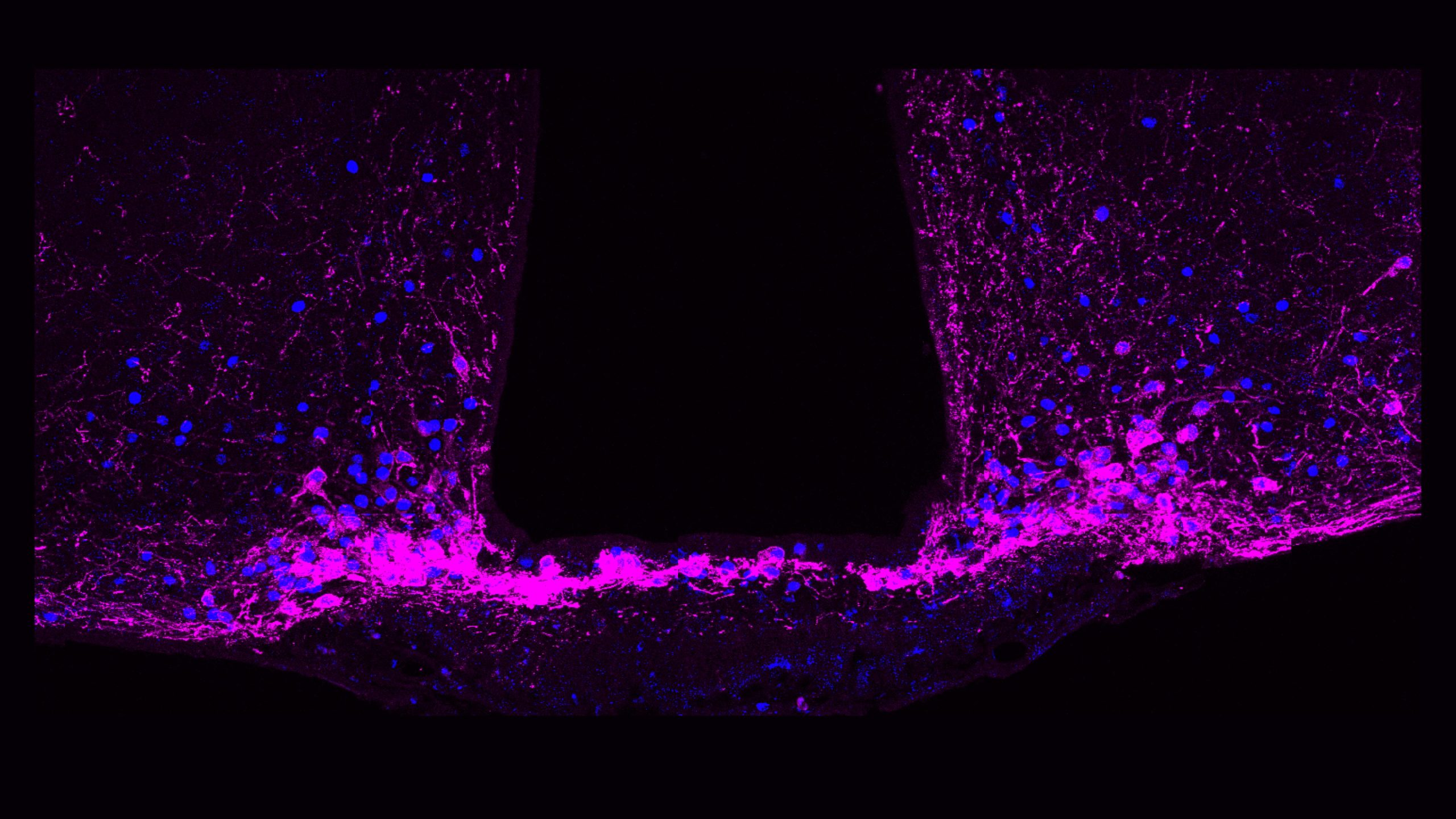
In a new study, Betley and researchers from the University of Pittsburgh and Scripps Research Institute identified a set of brain cells that play a central role in controlling chronic pain. These cells, known as Y1 receptor (Y1R)-expressing neurons, are found in a part of the brainstem called the lateral parabrachial nucleus (lPBN). They become active in long-lasting pain states but also process other signals tied to hunger, fear, and thirst. This overlap suggests that the brain can adjust pain responses when other survival needs are more pressing.
Published in Nature, the team’s findings offer new hope for people with chronic pain. As Betley notes, “there are circuits in the brain that can reduce the activity of neurons that transmit the signal of pain.”
Tracking Pain in the Brain
As part of a collaboration with the Taylor lab at Pitt, the researchers used calcium imaging to watch neurons fire in real time in preclinical models of acute and chronic pain. They found that Y1R neurons didn’t just flare briefly in response to acute pain—they also kept firing steadily during enduring pain, a state neuroscientists call “tonic activity.”
Betley likens this to an engine left idling, where signals of pain continued to rumble and tick even when outward signs of pain had faded. This persistent activity may encode the lasting pain state people feel long after an accident or surgery.
Hunger, Fear, and the Pain Override
The drive to look deeper into these neurons grew out of a simple observation Betley and his team made shortly after he joined Penn in 2015—hunger could dampen long-term pain responses.
“From my own experience, I felt that when you’re really hungry you’ll do almost anything to get food,” he says. “When it came to chronic, lingering pain, hunger seemed to be more powerful than Advil at reducing pain.”
The current work started when Nitsan Goldstein, who was a graduate student in Betley’s lab at the time, found that other urgent survival needs such as thirst and fear can also reduce enduring pain. That finding supported behavioral models developed in collaboration with the Kennedy lab at Scripps, suggest filtering of sensory input at the parabrachial nucleus can block out long-lasting pain when other more acute needs exist.
“That told us the brain must have a built-in way of prioritizing urgent survival needs over pain, and we wanted to find the neurons responsible for that switch,” says Goldstein.
Neuropeptide Y: The Brain’s Built-in Pain Switch
A key part of that switch is neuropeptide Y (NPY), a signaling molecule that helps the brain juggle competing needs. When hunger or fear takes priority, NPY acts on Y1 receptors in the parabrachial nucleus to dampen ongoing pain signals.
“It’s like the brain has this built-in override switch,” Goldstein explains. “If you’re starving or facing a predator, you can’t afford to be overwhelmed by lingering pain. Neurons activated by these other threats release NPY, and NPY quiets the pain signal so that other survival needs take precedence.”
A Scattered Signal in the Brain
The researchers also characterized the molecular and anatomical identity of the Y1R neurons in the lPBN. They found that Y1Rneurons didn’t form two tidy anatomical or molecular populations. Instead, these neurons were scattered across many other cell types.
“It’s like looking at cars in a parking lot,” Betley says. “We expected all the Y1R neurons to be a cluster of yellow cars parked together, but here the Y1R neurons are like yellow paint distributed across red cars, blue cars, and green cars. We don’t know exactly why, but we think this mosaic distribution may allow the brain to dampen different kinds of painful inputs across multiple circuits.”
Toward Smarter, More Personalized Pain Treatments
What excites Betley with this discovery is the further exploration of its potential to “use Y1 neural activity as a biomarker for chronic pain, something drug developers and clinicians have long lacked,” he says.
“Right now, patients may go to an orthopedist or a neurologist, and there is no clear injury. But they’re still in pain,” he says. “What we’re showing is that the problem may not be in the nerves at the site of injury, but in the brain circuit itself. If we can target these neurons, that opens up a whole new path for treatment.”
This research also suggests that behavioral interventions such as exercise, meditation, and cognitive behavioral therapy may influence how these brain circuits fire, just as hunger and fear did in the lab.
“We’ve shown that this circuit is flexible, it can be dialed up or down,” he says. “So, the future isn’t just about designing a pill. It’s also about asking how behavior, training, and lifestyle can change the way these neurons encode pain.”
Reference: “A parabrachial hub for need-state control of enduring pain” by Nitsan Goldstein, Amadeus Maes, Heather N. Allen, Tyler S. Nelson, Kayla A. Kruger, Morgan Kindel, Albert T. M. Yeung, Nicholas K. Smith, Jamie R. E. Carty, Lavinia Boccia, Niklas Blank, Emily Lo, Rachael E. Villari, Ella Cho, Erin L. Marble, Michelle Awh, Yasmina Dumiaty, Melissa J. Chee, Rajesh Khanna, Christoph A. Thaiss, Bradley K. Taylor, Ann Kennedy and J. Nicholas Betley, 8 October 2025, Nature.
DOI: 10.1038/s41586-025-09602-x
J Nicholas Betley is an associate professor in the Department of Biology at the University of Pennsylvania’s School of Arts & Sciences.
Nitsan Goldstein was a graduate student in the Betley Lab at Penn Arts & Sciences during this study. She is currently a postdoctoral researcher at the Massachusetts Institute of Technology.
Other authors include Michelle Awh, Lavinia Boccia, Jamie R. E. Carty, Ella Cho, Morgan Kindel, Kayla A. Kruger, Emily Lo, Erin L. Marble, Nicholas K. Smith, Rachael E. Villari, and Albert T. M. Yeung of Penn Arts & Sciences; Niklas Blank and Christoph A. Thaiss of Penn’s Perelman School of Medicine; Melissa J. Chee and Yasmina Dumiaty of Carleton University; Rajesh Khanna of University of Florida College of Medicine,; Ann Kennedy and Amadeus Maes of Scripps Research Institute; and Heather N. Allen, Tyler S. Nelson and Bradley K. Taylor of the University of Pittsburg.
This research was supported by the Klingenstein Foundation, the University of Pennsylvania School of Arts and Sciences, the National Institutes of Health (grants F31DK131870, 1P01DK119130, 1R01DK133399, 1R01DK124801, 1R01NS134976, F32NS128392, K00NS124190, F32DK135401, T32DK731442, R61NS126026, R01NS120663, R01NS134976-02, R00MH117264, 1DP1DK140021-01), the National Science Foundation Graduate Research Fellowship Program, the Blavatnik Family Foundation Fellowship, the American Neuromuscular Foundation Development Grant, the American Heart Association (25POST1362884), the Swiss National Science Foundation (206668), the Canadian Institutes of Health Research Project Grant (PJT-175156), the Simons Foundation, a McKnight Foundation Scholar Award, and a Pew Biomedical Scholar Award.
Never miss a breakthrough: Join the SciTechDaily newsletter.
Follow us on Google and Google News.