

An international team of researchers has published a groundbreaking study in Nature, revealing that early reptiles from the Triassic period had distinctive skin structures that served as an alternative to feathers.
Body coverings like hair and feathers have played a vital role throughout evolutionary history. They provided insulation that supported warm-bloodedness and served functions such as courtship, display, predator deterrence, and, in the case of feathers, flight.
These coverings are defined by their extended and intricate skin projections, which are markedly different from the simpler, flatter scales found on reptiles. Until now, such complex outgrowths had only been identified as hair in mammals and as feathers in birds, dinosaurs, and pterosaurs.
In a recent study published in the journal Nature, an international team of researchers led by paleontologists Dr. Stephan Spiekman and Prof Dr. Rainer Schoch from the State Museum of Natural History Stuttgart, Germany, describes a newly discovered tree-dwelling reptile from the early Middle Triassic.
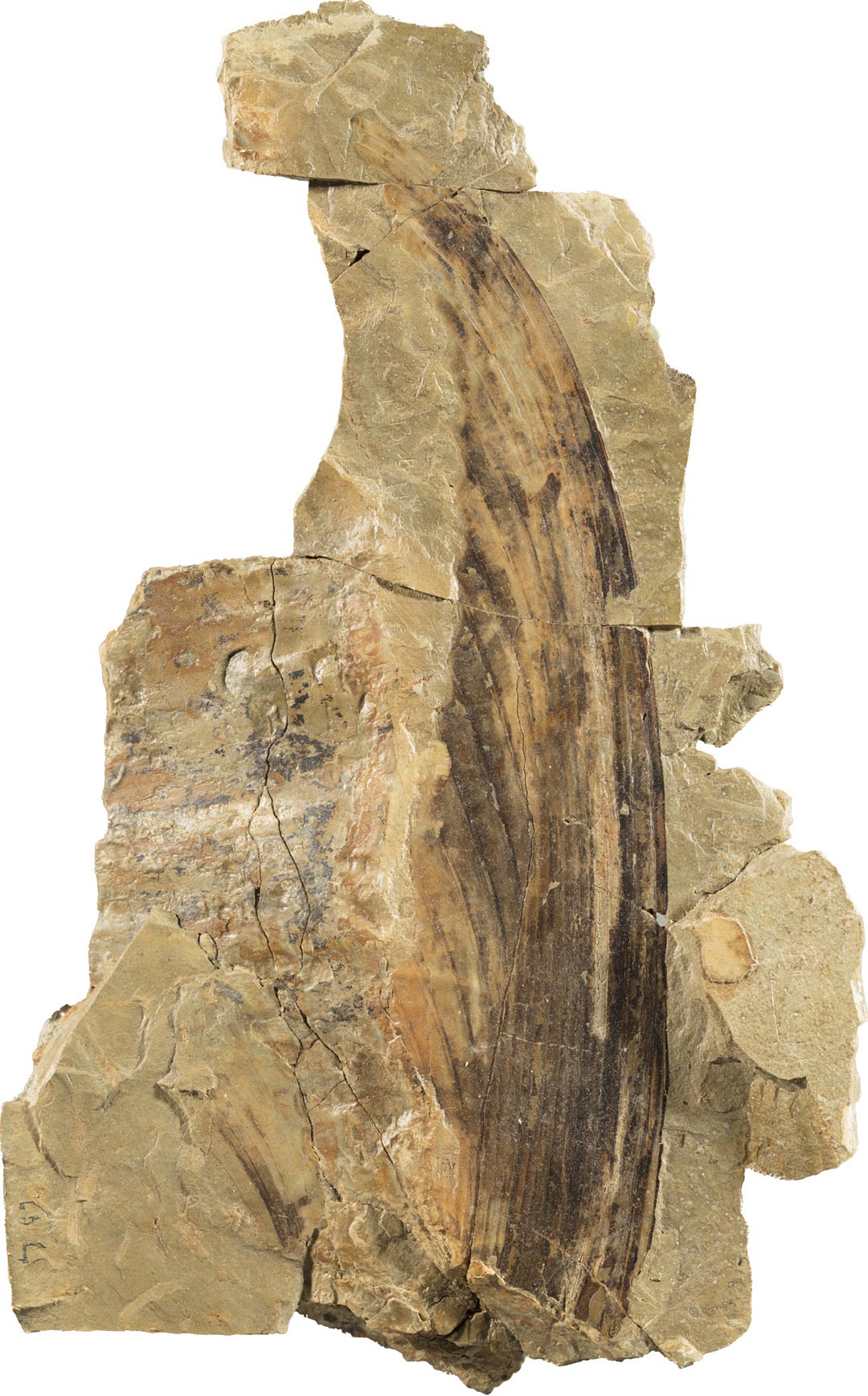
The species, named Mirasaura grauvogeli—meaning “Grauvogel’s Wonder Reptile”—lived approximately 247 million years ago. It featured a dorsal crest lined with previously unknown, structurally complex skin appendages that show some resemblance to feathers. These features were likely used for visual communication within the species.
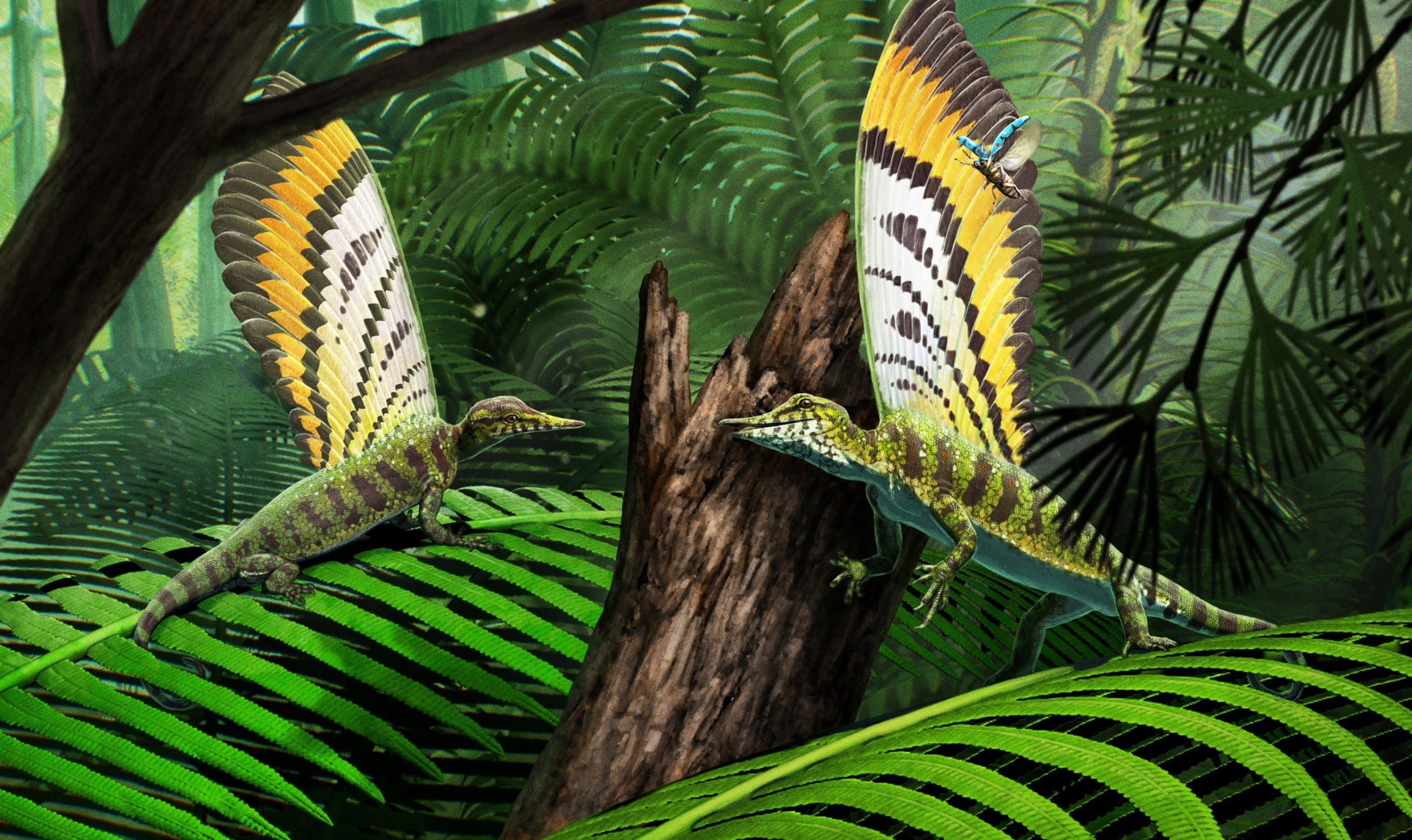
This discovery demonstrates that elaborate skin structures were not exclusive to birds and their close relatives, but may have existed earlier in reptile evolution. The find challenges existing assumptions and calls for a reassessment of how complex body coverings evolved in ancient reptiles.
Unique skin structures in early reptiles
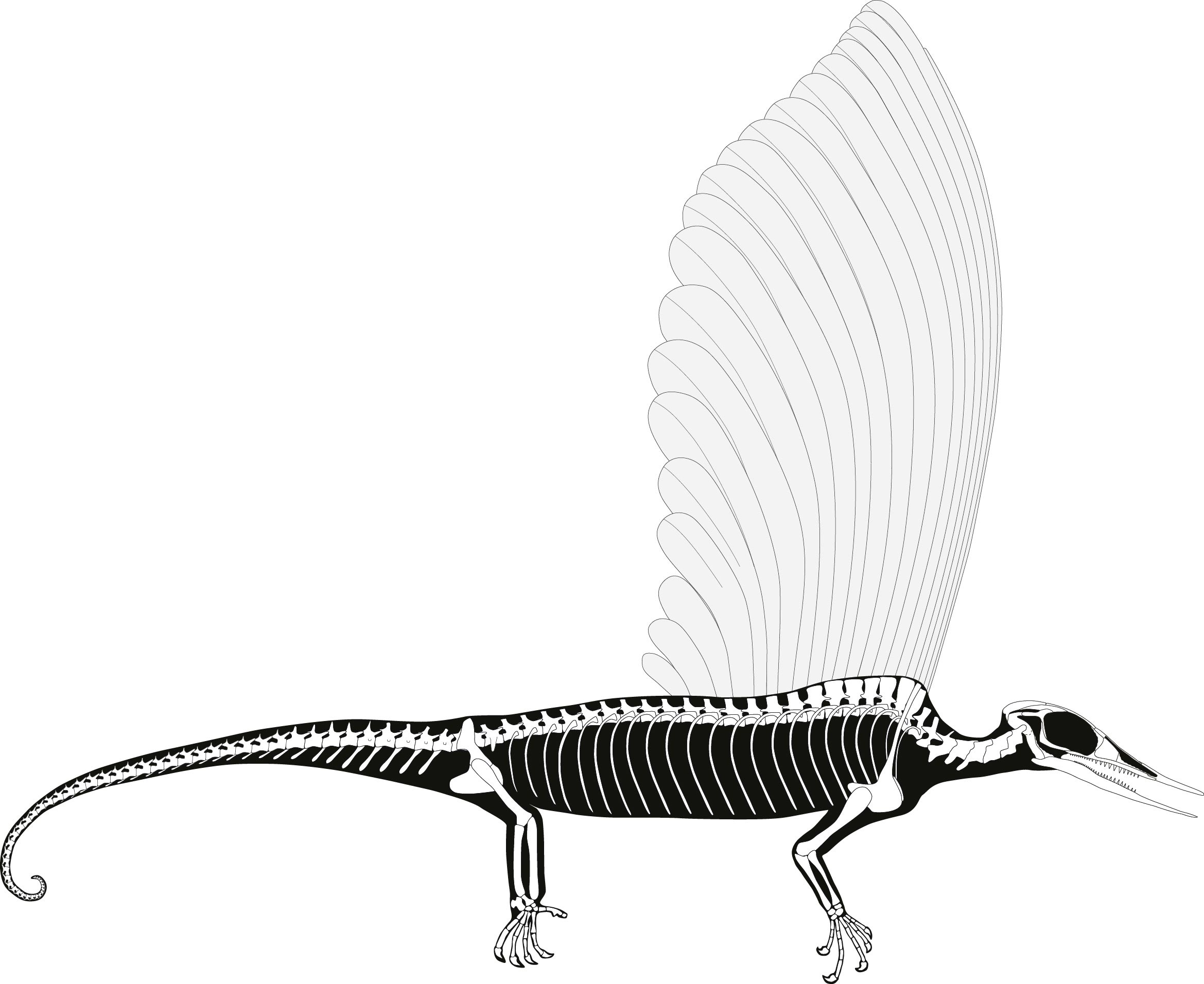
The crest of the small reptile Mirasaura is made up of numerous closely packed appendages, each displaying a feather-like outline with a thin central ridge. Unlike true feathers, which are composed of fine, branching filaments known as barbs, the appendages of Mirasaura show no signs of such branching. Based on this, the researchers conclude that these distinctive and intricate skin structures likely evolved independently from those found in birds.
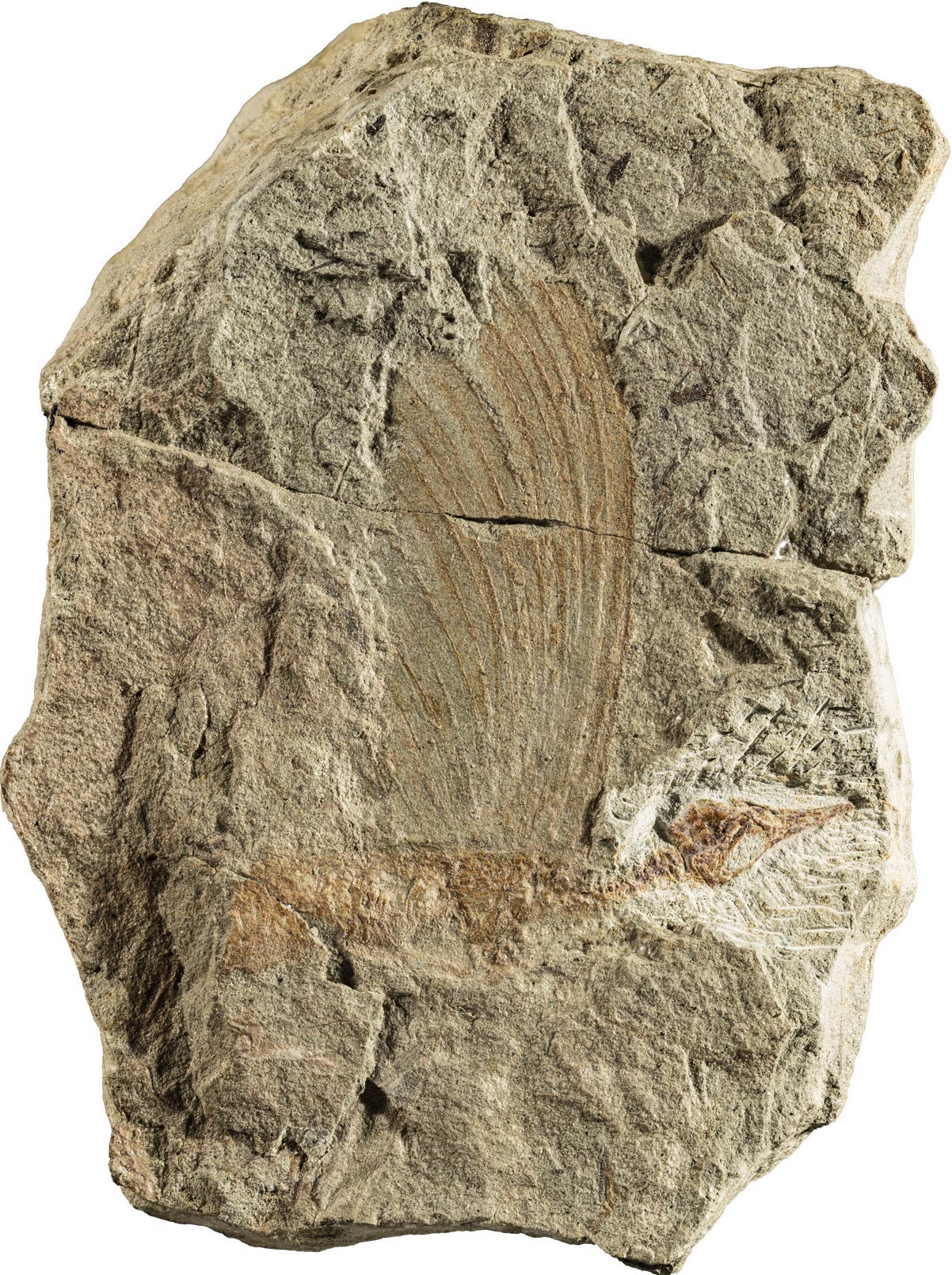
“The fact that we have discovered such complex skin appendages in such an ancient group of reptiles sheds a new light on their evolution. Mirasaura is even older than the dinosaurs and not closely related to them. Developmental biology studies show that the genetic basis for the growth of complex skin appendages such as feathers probably originated in the Carboniferous period more than 300 million years ago. Mirasaura provides the first direct evidence that such structures actually did form early on in reptile evolution, in groups not closely related to birds and extinct dinosaurs,” says Dr. Stephan Spiekman, lead author of the paper and scientist at the State Museum of Natural History in Stuttgart.
Dinosaurs and the origin of feathers
This research marks a significant development in paleontology, building on nearly three decades of discoveries that began with the identification of feathered dinosaurs in China in the late 1990s. Prior to these findings, the scientific consensus held that reptiles—including the dinosaurs that eventually evolved into birds—were entirely covered in scales, with feathers believed to be exclusive to modern birds. Consequently, dinosaurs were typically portrayed as slow and reptilian in appearance.
That perception began to shift as new evidence revealed that many dinosaurs shared unexpected similarities with birds. The discovery of feathered, non-avian dinosaurs sparked a surge of research that challenged the traditional separation between scaly, cold-blooded reptiles and feathered, warm-blooded birds. It has since become clear that the evolutionary relationship between these groups is far more intricate than once believed.
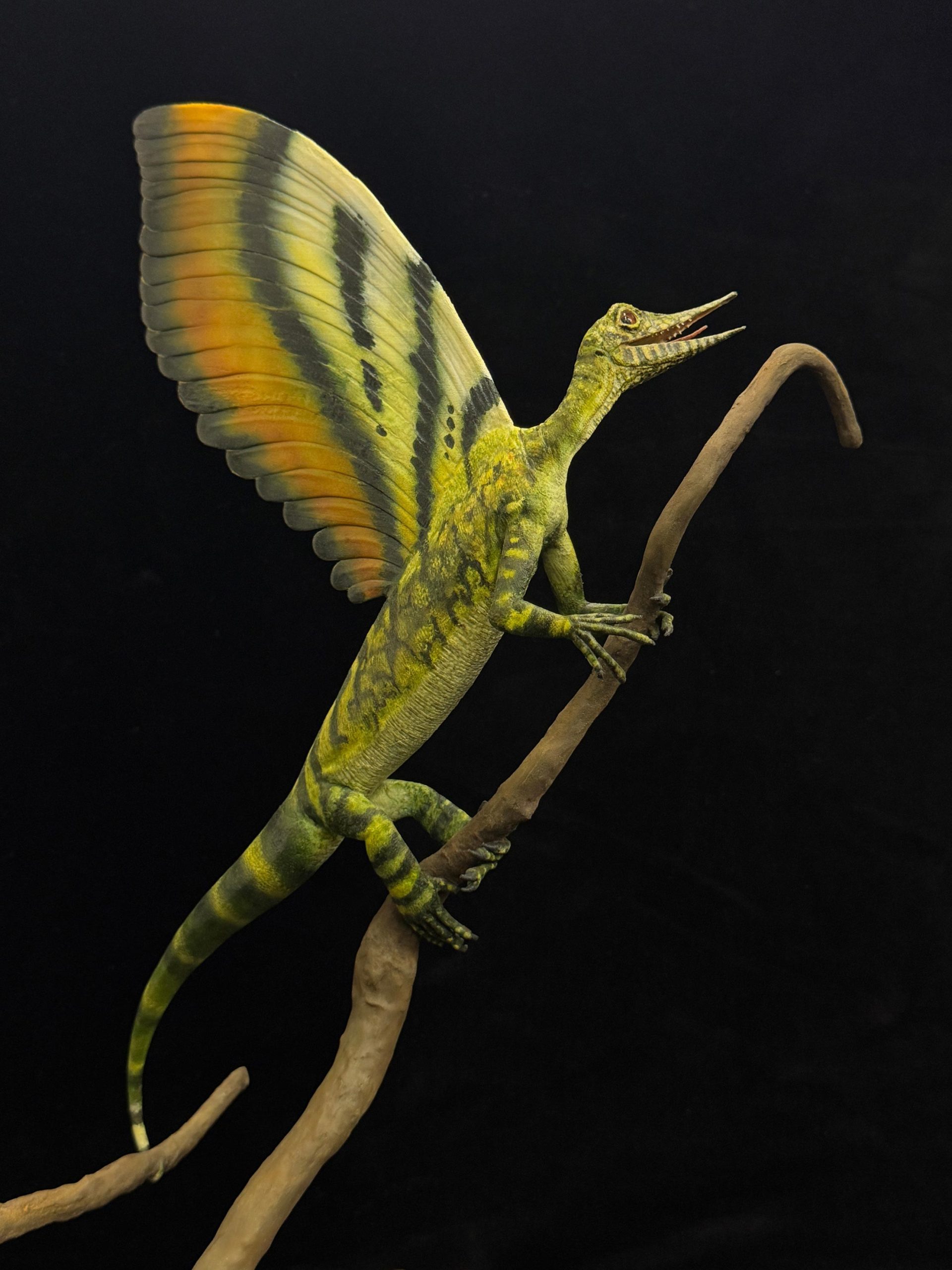
“Mirasaura grauvogeli shows us how surprising evolution can be and what potential it holds. It repeatedly produces similar structures that are completely independent of each other but also structures that are so different that they can be distinguished. Mirasaura developed an alternative to feathers very early in Earth’s history, long before the dinosaurs, which we did not expect and which will stimulate discussion and research,” says Prof. Dr. Rainer Schoch, reptile expert and head of the Palaeontology Department at the State Museum of Natural History in Stuttgart.
Bizarre tree-climbers with bird-like skulls and claws
The latest technologies have been used to study Mirasaura, including synchrotron imaging carried out at the European Synchrotron (ESRF) to reconstruct the skull. This revealed a bird-like shape with a narrow, mostly toothless snout, large forward-facing eye sockets, and a large, domed skull. The snout was probably used to extract insects from narrow tree holes.
The drepanosauromorphs, to which Mirasaura belongs, are known to paleontologists as extremely bizarre creatures of the Triassic period. They had grasping forelimbs, sometimes with a huge claw resembling that of a Velociraptor. They had long, barrel-shaped bodies, a long, prehensile tail, and hands that allowed them to grab onto branches like monkeys. Some species even had a hook-shaped claw at the tip of their tail for hanging from branches.
“Drepanosaurs have many ecological adaptations and have only been known to science for a few decades. Mirasaura lived in trees in one of the first forests that emerged after the great mass extinction at the Permian-Triassic boundary. The dorsal crest with a novel skin structure in Mirasaura adds to the range of remarkable adaptations that make this group of reptiles so unique,” says paleontologist Prof Dr. Hans Sues from the National Museum of Natural History, Washington DC, USA who participated in the new research.
Melanosomes and skin structures
A thin, brown film was partially preserved on the crest of Mirasaura. Analyses confirmed the presence of melanosomes, tiny organelles that contain melanin pigments. They are found in most animals, including humans. The researchers compared the shape of the Mirasaura melanosomes with those found in the skin of living reptiles, hair, and feathers.
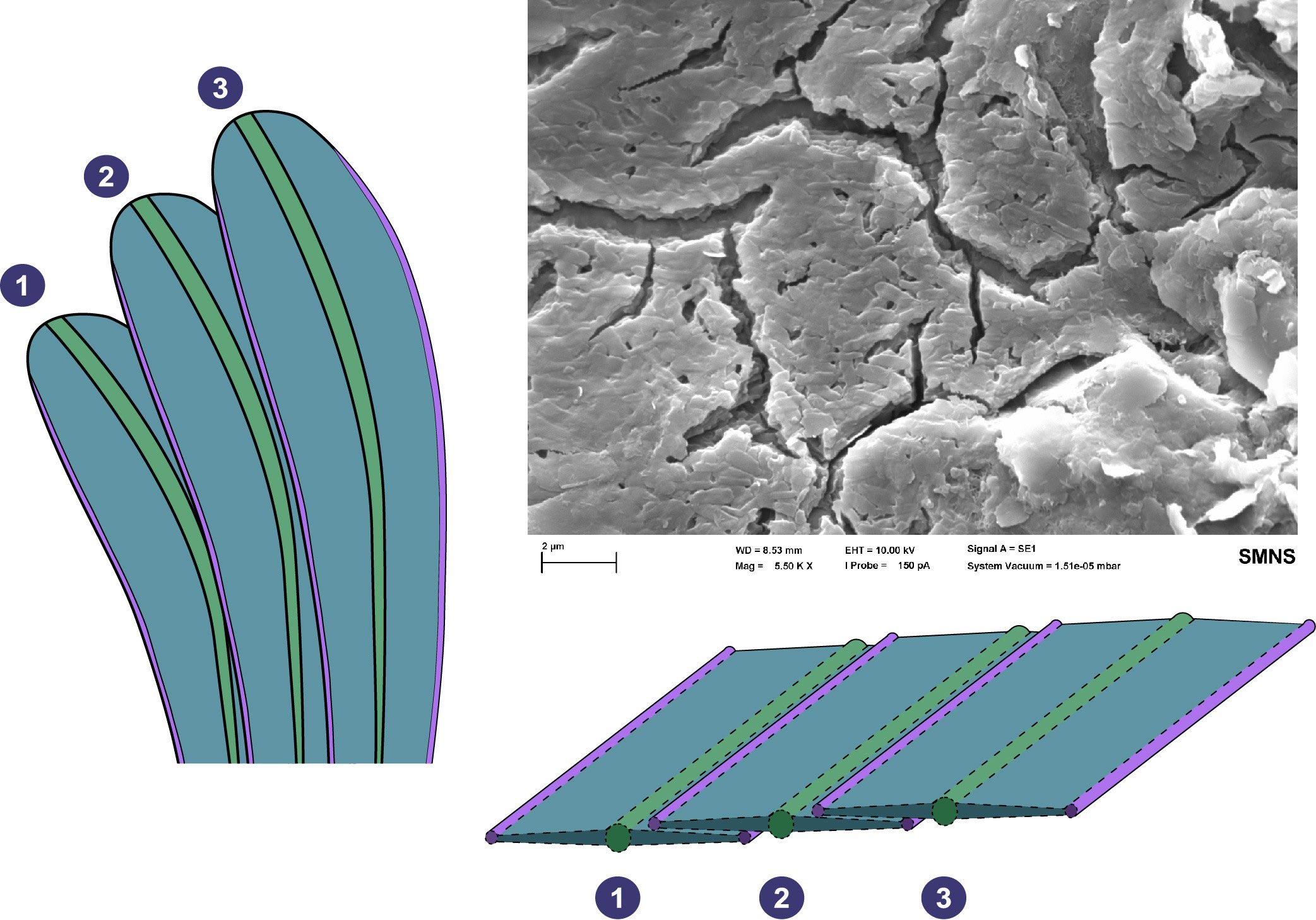
“We know that in modern animals, melanosomes have specific morphologies linked to the tissue where they are found” says Dr. Valentina Rossi, a co-author of the study from University College Cork, Ireland, and an expert on fossil melanosome research. “the melanosomes found in Mirasaura soft tissues are more similar in shape to those found in extant and fossil feathers than melanosomes found in mammalian hair and reptilian skin.”
Grauvogel’s ‘Wonder Reptile’
Fossil collector Louis Grauvogel began excavating fossils from the Middle Triassic period in Alsace in the 1930s. Among his finds were fossils of Mirasaura. Over the years, he amassed an extensive collection, which remained in the Grauvogel family for many years.
In 2019, the collection was transferred to the State Museum of Natural History in Stuttgart, where Mirasaura was discovered during further preparation. The fossils are in the paleontological collection of the State Museum of Natural History Stuttgart.
Reference: “Triassic diapsid shows early diversification of skin appendages in reptiles” by Stephan N. F. Spiekman, Christian Foth, Valentina Rossi, Cristina Gascó Martín, Tiffany S. Slater, Orla G. Bath Enright, Kathleen N. Dollman, Giovanni Serafini, Dieter Seegis, Léa Grauvogel-Stamm, Maria E. McNamara, Hans-Dieter Sues and Rainer R. Schoch, 23 July 2025, Nature.
DOI: 10.1038/s41586-025-09167-9
The research was funded by the DFG – Deutsche Forschungsgemeinschaft (German Research Foundation) and the European Research Council – Consolidator Grant. The State Museum of Natural History Stuttgart was able to acquire the Grauvogel collection several years ago with financial support from the Gesellschaft zur Förderung des Naturkundemuseums Stuttgart e.V., the Cultural Foundation of the German Federal States (Kulturstiftung der Länder) and the Ministry of Science, Research and the Arts Baden-Württemberg.
Never miss a breakthrough: Join the SciTechDaily newsletter.
Follow us on Google and Google News.
8 Comments
Undoubtedly not feathers but a system of blood flow to warm or cool. Were it feathers it would have been a huge evolutionary advantage and have transmigrated.
I am thinking more like a modern Chameleon with a extendable flap for possible temperature regulation and gender attributes .
Very Cool and outstanding discovery…👍👍😀😸😒
Thinking that anything could be discernible after 239 my sounds quite irrational.
The Bible tells me the world is not that old so this article to me is interesting but only seen through the World View and Religion of Science. God bless all of you.
Caleb, dear, you seem to be a bit confused. The Bible is not a science book. It was written by different people at different times with the knowledge and understandings they had then. Considering that some people are mentioned has being 900 years old one can assume that their measurements of time were different from the modern one. Therefore you cannot know how old the world is in the Bible’s view
I have a dinasaur head fossil I can not id need help
The Bible is wrong.