
In March 2025, wildfires swept across South Korea, scorching vast swaths of land and prompting a massive emergency response.
Fanned by dry, windy conditions, the blazes destroyed historic sites, leveled thousands of structures, and marked one of the nation’s worst fire disasters. Satellite images from Landsat 9 captured the burned landscape in stark detail, highlighting the scale of the damage.
Wildfires Ravage South Korea in March 2025
In March 2025, a series of destructive wildfires swept across parts of South Korea. Some of the largest fires, including those near Andong in the southeastern region, were brought under control by the end of the month, according to news reports. However, the blazes left a lasting impact on the landscape.
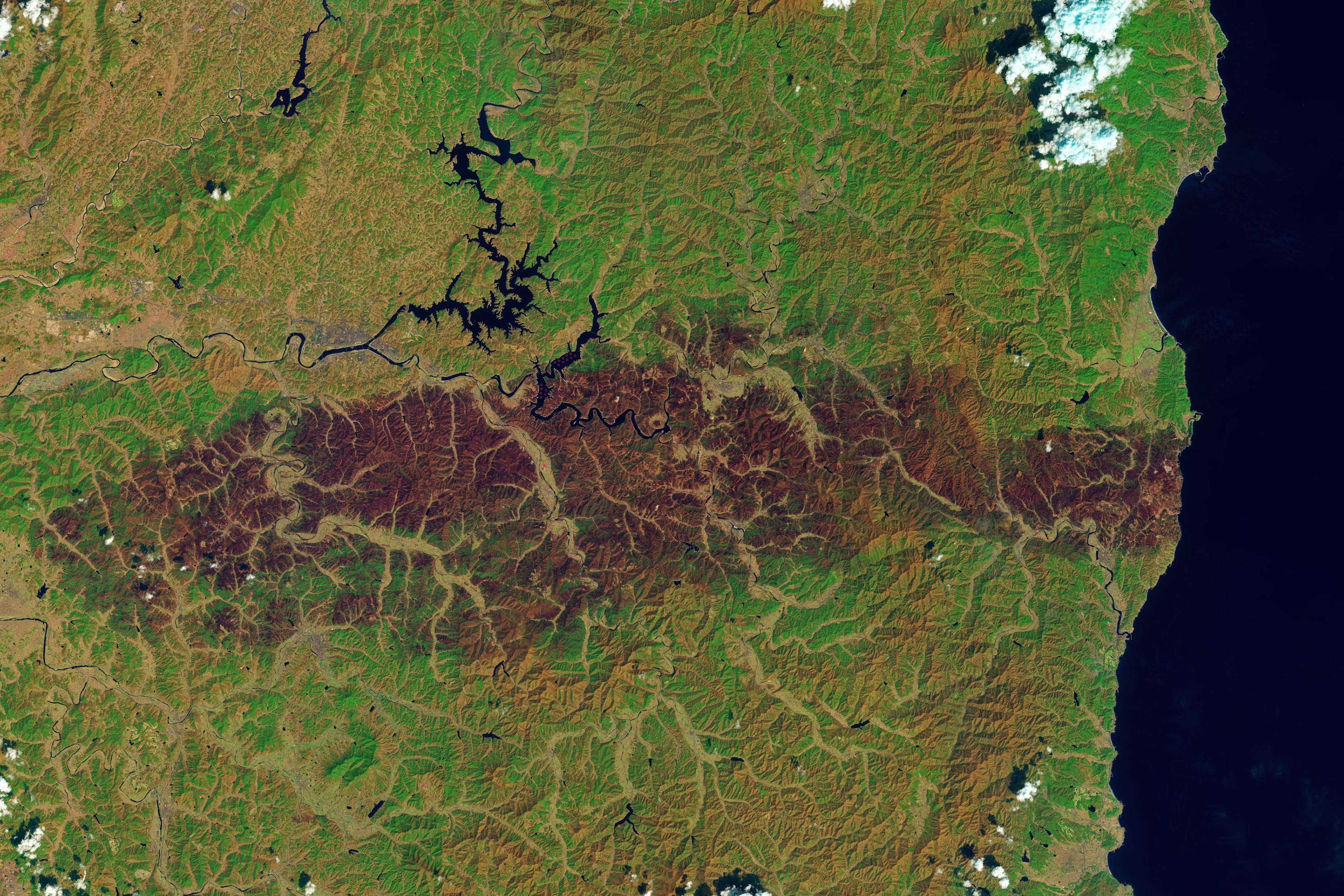
A burn scar in Gyeongsangbuk-do (North Gyeongsang) province is visible in this image, captured on April 4, 2025, by the OLI-2 (Operational Land Imager-2) on Landsat 9. The image uses false color, combining shortwave infrared, near-infrared, and visible light (bands 6-5-3), which helps highlight the contrast between unburned vegetation (shown in green) and areas recently affected by fire (shown in brown). A detailed view of the image is provided below.

Firestorms Fueled by Weather Extremes
Dozens of blazes began to ignite across the country on March 21 amid dry, windy conditions. The next day, a particularly large plume of smoke was visible near Andong. This fire continued to spread, and by March 25, satellite-derived thermal anomalies indicated that the blaze reached all the way to the coast. Light rain moved over the area and helped officials contain the blaze by March 28. Smoke and clouds ultimately cleared, allowing Landsat 9 to observe a burned area stretching more than 80 kilometers (50 miles) from the coastline.
Historic Losses Mark One of South Korea’s Worst Fire Events
According to news reports, the deadly fires burned tens of thousands of hectares and destroyed thousands of structures, some of them historic. The incident has been described as being among the country’s worst fire disasters.
NASA Earth Observatory images by Lauren Dauphin, using Landsat data from the U.S. Geological Survey. Story by Kathryn Hansen.
Never miss a breakthrough: Join the SciTechDaily newsletter.
Follow us on Google and Google News.