
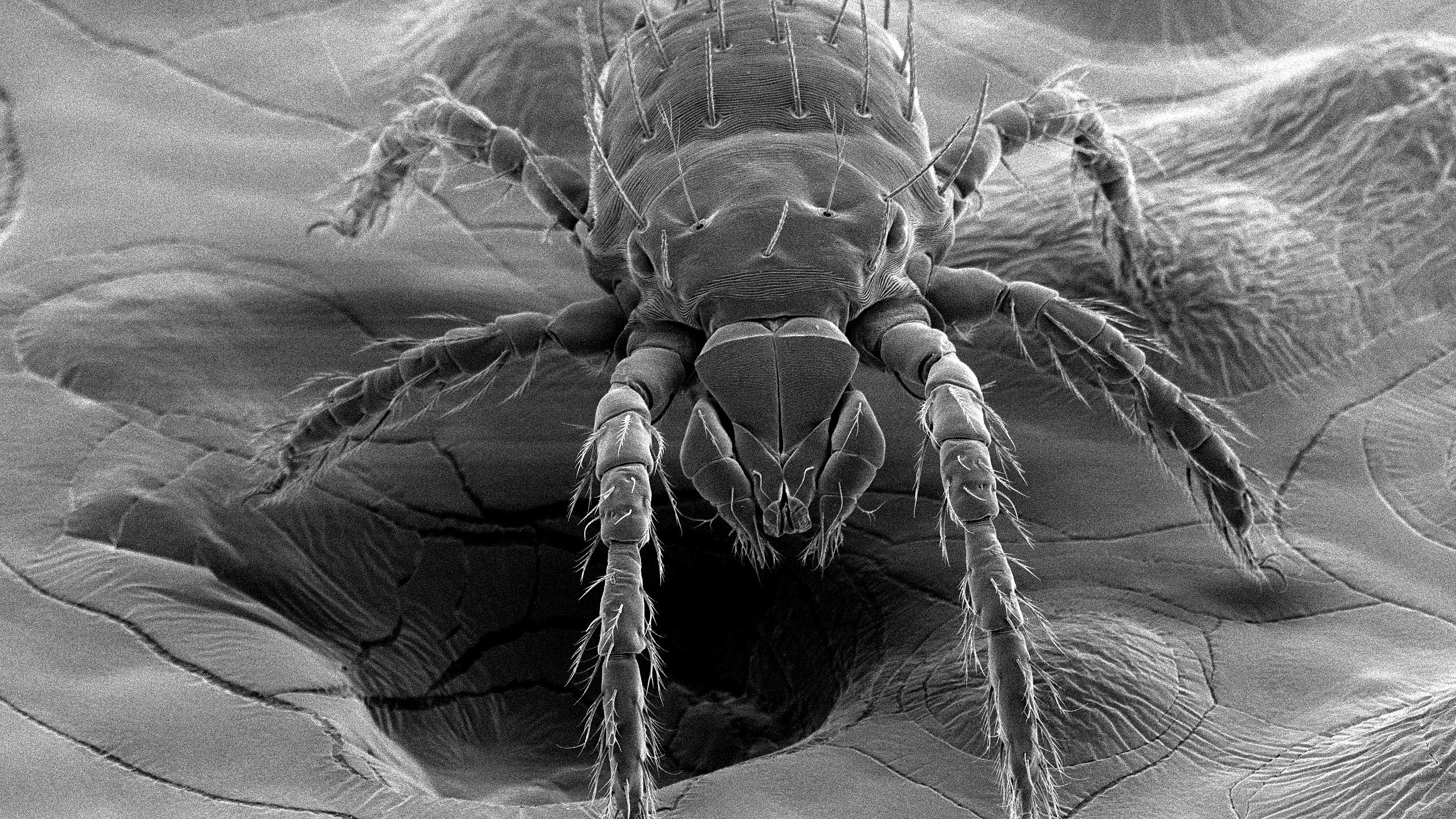
A study in North Carolina has detected the bacterium responsible for scrub typhus, a serious disease, in local chiggers. The findings prompt concerns about the disease’s origins and potential health risks, with further research underway to assess the implications.
A bacterium that causes a disease called scrub typhus – a disease not previously reported in the United States – has been detected in North Carolina, according to a new study by researchers at North Carolina State University and UNC-Greensboro.
The researchers stress that scrub typhus, which can cause fever, headache, and body aches – and can be fatal if left untreated by antibiotics – has not yet been detected in animals or people in the state.
Research Methodology and Findings
The NC State researchers detected the bacterium – the genus is Orientia in the family Rickettsiaceae – at a high frequency while testing free living, larval (ready to bite) trombiculid mites, commonly called chiggers, in several different recreational parks in North Carolina.
“We wanted to see if chiggers in the United States carried Orientia,” said Loganathan Ponnusamy, an NC State principal research scholar in entomology and co-corresponding author of a paper that describes the research. “We haven’t in the past had the diagnostic tools to test for this specific bacterium at the genus level.”
“We set a black tile on the ground in 10 different North Carolina state parks and picked up chiggers as they crossed the tile. Microbiome studies allowed us to characterize all the bacteria in the chiggers. One park showed a 90% positivity rate for the bacterium (nine out of 10 chiggers captured); another showed an 80% positivity rate (eight of 10 chiggers captured). Other parks showed positivity rates of just 10%.”
Chiggers as Vectors for Disease Transmission
Trombiculid mites are only parasitic in their larval stage. They search for vertebrate hosts – including humans – to bite, Ponnusamy says.
“Chiggers can spread bacteria to people or rodents when they bite but can also pass bacteria to future generations of mites through their eggs,” he added.
The researchers say that scrub typhus presents symptoms similar to those of Rocky Mountain spotted fever, a disease generally ascribed to tick bites.
Global Spread and Uncertainties
Scrub typhus is found more commonly in Asia and the Pacific, but in recent years has been detected in Africa and the Middle East. It is uncertain whether spread is caused by people or goods carrying chiggers from one place to another.
“We don’t know if this is a recent introduction into the state or if the bacterium has been here for years,” said R. Michael Roe, William Neal Reynolds Distinguished Professor of Entomology at NC State and co-author of the paper. “We also don’t know if the infected chiggers found in North Carolina actually will cause disease; this has to be determined in future work.”
Ongoing Research and Future Directions
“We also don’t have information about whether the chigger infection rate is decreasing or increasing,” said Kaiying Chen, a postdoctoral research scholar at NC State and lead author of the paper.
The NC State and UNC-Greensboro researchers are resampling chiggers in the recreational park sites to see if the reported findings remain consistent.
Reference: “Detection of Orientia spp. Bacteria in Field-Collected Free-Living Eutrombicula Chigger Mites, United States” by Kaiying Chen, Nicholas V. Travanty, Reuben Garshong, Dac Crossley, Gideon Wasserberg, Charles S. Apperson, R. Michael Roe, and Loganathan Ponnusamy, 12 July 2023, Emerging Infectious Diseases.
DOI: 10.3201/eid2908.230528
The paper appears in the journal Emerging Infectious Diseases. Other co-authors include Nicholas V. Travanty and Charles S. Apperson from North Carolina State University; Reuben Garshong and Gideon Wasserberg from the University of North Carolina Greensboro; and Dac Crossley from the Georgia Museum of Natural History.
Funding was provided by a grant from the National Institutes of Health, National Institute of Allergy and Infectious Diseases (grant no. 1R03AI166406-01); a grant from the Southeast Center for Agricultural Health and Injury Prevention, and from the Department of the Army, U.S. Army Contracting Command, Aberdeen Proving Ground, Natick Contracting Division, Ft Detrick MD. Any opinions, findings, and conclusions or recommendations expressed in this material are those of the author(s) and do not necessarily reflect the position or the policy of the Government and no official endorsement should be inferred.
Never miss a breakthrough: Join the SciTechDaily newsletter.
Follow us on Google and Google News.
2 Comments
Chiggers from Africa, who would have thunk it!
Typhus bacteria brought into the U.S. by? economic immigrants?