
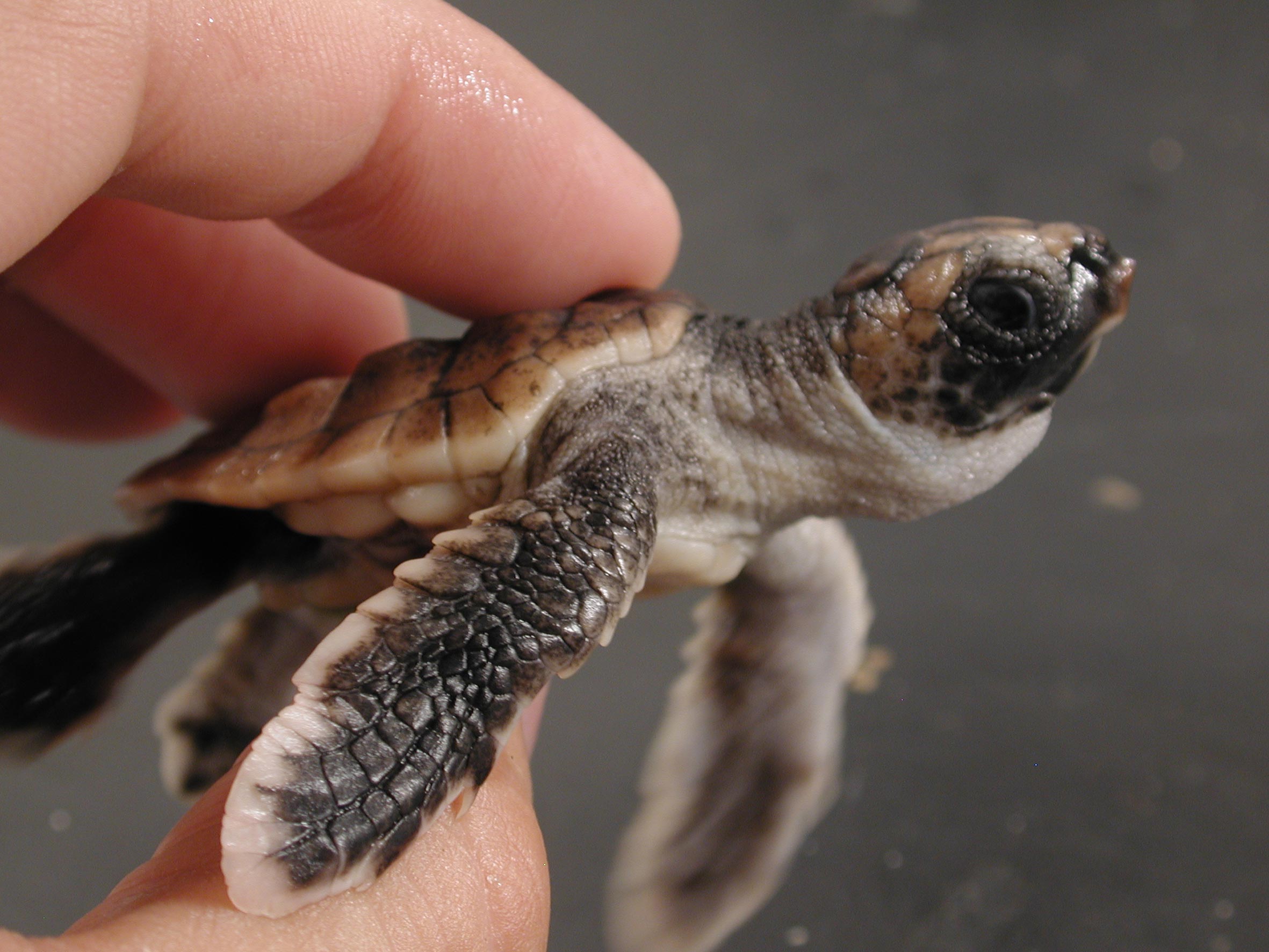
Scientists have discovered that loggerhead sea turtles can learn and remember the unique magnetic signatures of different geographic regions.
This breakthrough provides the first empirical evidence supporting the idea that turtles use learned magnetic cues to navigate vast distances with remarkable accuracy. The study also reveals that turtles possess two distinct magnetic senses, deepening our understanding of how migratory animals perceive and utilize Earth’s magnetic field.
Loggerhead Turtles and Magnetic Navigation
Researchers at the University of North Carolina at Chapel Hill have provided the first concrete evidence that loggerhead sea turtles can learn and remember the unique magnetic signatures of different geographic regions. This discovery sheds new light on how turtles and other migratory animals navigate vast distances to reach feeding and breeding sites. Published on February 12 in Nature, the study also suggests that sea turtles have two distinct magnetic senses, each playing a different role in detecting Earth’s magnetic field.
Loggerhead turtles are known for their remarkable long-distance migrations, relying on an internal magnetic map to determine their location based on variations in Earth’s magnetic field. While scientists have long suspected that turtles could also learn and recognize specific magnetic fields tied to important locations, there was no direct evidence to support this—until now.
A Breakthrough in Animal Navigation Research
“Our study investigated for the first time whether a migratory animal can learn to recognize the magnetic signatures of different geographic areas,” said Kayla Goforth, first author of the study. “Researchers have speculated for decades that animals can learn magnetic signatures, but this is the first empirical demonstration of that ability, so it fills in an important gap in our knowledge.”
Through controlled experiments, the research team demonstrated that loggerhead turtles can indeed learn and remember the magnetic fields of areas where they receive food. This ability suggests that turtles use learned magnetic information to navigate back to foraging areas, helping explain their remarkable navigational accuracy over long distances. More broadly, these findings could apply to a wide range of migratory animals that rely on magnetic cues for navigation.
“The ability to distinguish among magnetic fields of different geographic areas likely explains how many animals – not just sea turtles – can navigate long distances to specific locations,” said Ken Lohmann, a professor of biology at UNC-Chapel Hill.

Two Distinct Magnetic Senses
The research also delves into the underlying mechanisms of magnetic sensing. The results indicate that turtles’ magnetic map sense and magnetic compass sense rely on different ways of detecting magnetic fields, suggesting the presence of two distinct magnetic senses in these animals. This discovery provides a major advancement in the broader scientific understanding of how animals perceive and use the Earth’s magnetic field.
In addition to its implications for science, the study holds promise for conservation efforts and human technological advancements. Understanding how turtles detect and interpret magnetic fields could help conservationists mitigate disruptions caused by human-made structures, such as power lines and offshore wind farms, which can interfere with natural magnetic cues. Additionally, insights from this research may contribute to the development of novel navigation technologies inspired by nature.
Unraveling the Mysteries of Turtle Navigation
“We’ve known for 20 years that sea turtles have magnetic maps and now, by showing that they can learn new locations, we have learned how the maps might be built and modified,” said Catherine Lohmann, a biology professor at UNC-Chapel Hill. “It is amazing that sea turtles have access to a wealth of invisible information that they use to navigate in ways that are hard for us to even imagine.”
The study’s interdisciplinary nature highlights the importance of collaboration across scientific fields. Notably, the specialized antenna system built for this research closely resembles technology used for separate research, demonstrating the broad applications of electromagnetic principles.
“Remarkably, the antenna system we built for the turtle study is nearly identical to that of an unrelated dark matter search we had worked on,” said Reyco Henning, a professor in UNC-Chapel Hill’s Department of Physics and Astronomy. “It’s a great example of the broad application of the laws of electromagnetism.”
Future Research Directions
The researchers plan to further explore the extent of turtles’ learning capabilities, their sensitivity to magnetic fields, and how they integrate learned information into real-world navigation. The findings open the door to exciting new research avenues and reinforce the vital role of interdisciplinary collaboration in advancing scientific knowledge.
Reference: “Learned magnetic map cues and two mechanisms of magnetoreception in turtles” by Kayla M. Goforth, Catherine M. F. Lohmann, Andrew Gavin, Reyco Henning, Andrew Harvey, Tara L. Hinton, Dana S. Lim and Kenneth J. Lohmann, 12 February 2025, Nature.
DOI: 10.1038/s41586-024-08554-y
Never miss a breakthrough: Join the SciTechDaily newsletter.
Follow us on Google and Google News.