
Close Menu
    Facebook X (Twitter) Instagram
    SciTechDaily
    • Biology
    • Chemistry
    • Earth
    • Health
    • Physics
    • Science
    • Space
    • Technology
    Facebook X (Twitter) Pinterest YouTube RSS
    SciTechDaily
    Home»Biology»See the New Primate Species – Popa Langur – Discovered in Myanmar
    Biology

    See the New Primate Species – Popa Langur – Discovered in Myanmar

    By Deutsches Primatenzentrum (DPZ)/German Primate CenterNovember 29, 2020No Comments3 Mins Read
    Facebook Twitter Pinterest Telegram LinkedIn WhatsApp Email Reddit
    Share
    Facebook Twitter LinkedIn Pinterest Telegram Email Reddit
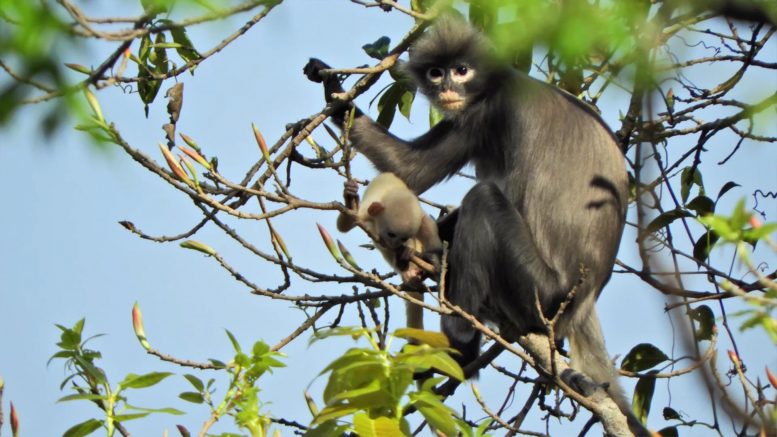
    Popa langur
    Adult female and juvenile Popa langur (Trachypithecus popa) in the crater of Mount Popa, Myanmar. Credit: Thaung Win

    A new primate species dubbed the Popa langur has been discovered in Myanmar after years of extensive study, including analysis of a 100-year-old specimen kept in the London Natural History Museum. The Popa langur (Trachypithecus popa) is described in a new scientific paper released today that documents the extensive genetic and morphological studies and field surveys undertaken by the German Primate Center (DPZ) – Leibniz Institute for Primate Research in Göttingen and conservation NGO Fauna & Flora International.
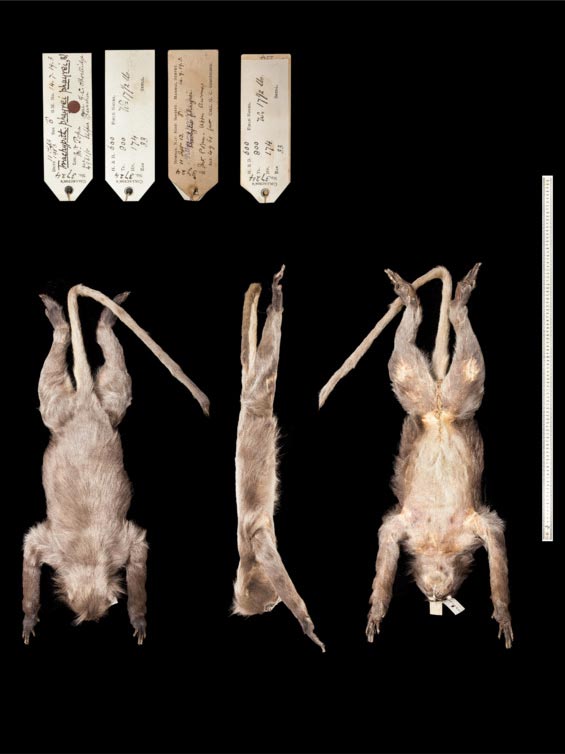
    Popa langur Stuffed Holotype
    Stuffed holotype (NHMUK ZD.1914.7.19.3) of the newly described Popa langur (Trachypithecus popa) in the Natural History Museum, London, UK. Photo: Courtesy of the Trustees of the Natural History Museum, London

    The Popa langur only occurs in central Myanmar and is named after the sacred Mount Popa, which holds the largest population of the species with about 100 animals. Mount Popa is an extinct volcano, which features an important wildlife sanctuary, as well as a sacred pilgrimage site, home to Myanmar’s most venerated spirits, known as ‘Nats’. Altogether there are only 200 to 250 animals of the new species, which live in four isolated populations. Throughout its range, the langur is threatened by habitat loss and hunting, and the new species can be considered critically endangered. “Just described, the Popa langur is already facing extinction,” says Frank Momberg at FFI.

    Researchers of the DPZ and FFI in collaboration with partners from other non-government organizations, universities, and natural history museums, investigated the evolutionary history and species diversity of langurs in Myanmar. Their study resulted in the description of the new langur species, the Popa langur.

    The Popa langur differs from known species in fur coloration, tail length, and skull measurements. Genetic studies revealed that the new langur species separated from known species around one million years ago. The DNA for genetic analyses was obtained from fecal samples collected by FFI staff in the wild, as well as from tissue samples of historical specimens from the natural history museums in London, Leiden, New York, and Singapore.

    Christian Roos, scientist in the Primate Genetics Laboratory at DPZ says, ”The DNA analysis of a museum specimen collected for the London Natural History Museum more than 100 years ago has finally led to the description of this new species, confirmed also by samples collected from the field by FFI’s research team.” “Additional field surveys and protection measures are urgently required and will be conducted by FFI and others to save the langurs from extinction,” says Ngwe Lwin, a primatologist with FFI’s Myanmar program.

    Reference: “Mitogenomic phylogeny of the Asian colobine genus Trachypithecus with special focus on Trachypithecus phayrei (Blyth, 1847) and description of a new species” by Christian Roos, Kristofer M. Helgen, Roberto Portela Miguez, Naw May Lay Thant, Ngwe Lwin, Aung Ko Lin, Aung Lin, Khin Mar Yi, Paing Soe, Zin Mar Hein, Margaret Nyein Nyein Myint, Tanvir Ahmed, Dilip Chetry, Melina Urh, E. Grace Veatch, Neil Duncan, Pepijn Kamminga, Marcus A. H. Chua, Lu Yao, Christian Matauschek, Dirk Meyer, Zhi-Jin Liu, Ming Li, Tilo Nadler, Peng-Fei Fan, Le Khac Quyet, Michael Hofreiter, Dietmar Zinner and Frank Momberg, November 2020, Zoological Research.
    DOI: 10.24272/j.issn.2095-8137.2020.254

    Never miss a breakthrough: Join the SciTechDaily newsletter.
    Follow us on Google and Google News.

    Evolution Genetics New Species Primates
    Share. Facebook Twitter Pinterest LinkedIn Email Reddit

    Related Articles

    Unlocking Primate Evolution: How a Complete Timetree Changes Everything

    Scientists Uncover Surprising Genetic Differences Between Human and Other Primate Hearts

    Great Ape Research Reveals Y Chromosome Is Evolving Faster Than the X

    Surprising Evolutionary Insights Revealed by First Complete Chromosome Sequences From Great Apes

    Three New Species of Hand-Standing Spotted Skunks Discovered

    Pioneering Pollinator Research Reveals Genetic Clues to Darwin’s “Abominable Mystery”

    DNA Study Reveals Clues about Primate Evolution

    Human Y-Chromosome Has Enough Genes to Stay for Millions of Years

    Researchers Discover that Prions Play Role in Yeast Survival and Evolution

    Leave A Reply Cancel Reply

    • Facebook
    • Twitter
    • Pinterest
    • YouTube

    Don't Miss a Discovery

    Subscribe for the Latest in Science & Tech!

    Trending News

    Your Blood Pressure Reading Could Be Wrong Because of One Simple Mistake

    Astronomers Stunned by Ancient Galaxy With No Spin

    Physicists May Be on the Verge of Discovering “New Physics” at CERN

    Scientists Solve 320-Million-Year Mystery of Reptile Skin Armor

    Scientists Say This Daily Walking Habit May Be the Secret to Keeping Weight Off After Dieting

    New Therapy Rewires the Brain To Restore Joy in Depression Patients

    Giant Squid Detected off Western Australia in Stunning Deep-Sea Discovery

    Popular Sugar-Free Sweetener Linked to Liver Disease, Study Warns

    Follow SciTechDaily
    • Facebook
    • Twitter
    • YouTube
    • Pinterest
    • Newsletter
    • RSS
    SciTech News
    • Biology News
    • Chemistry News
    • Earth News
    • Health News
    • Physics News
    • Science News
    • Space News
    • Technology News
    Recent Posts
    • Common Blood Pressure Drug Supercharges Cancer Treatment in Surprising New Study
    • Key Magic Mushroom Ingredient Increases Laziness and Reduces Aggression
    • Researchers Solve 15-Year Mystery Behind Cancer-Causing Gut Toxin
    • One of the World’s Most Popular Weedkillers May Be Fueling Deadly Superbugs
    • Scientists Create Laser “Whirlpools” That Spin Tiny Cells Without Touching Them
    Copyright © 1998 - 2026 SciTechDaily. All Rights Reserved.
    • Science News
    • About
    • Contact
    • Editorial Board
    • Privacy Policy
    • Terms of Use

    Type above and press Enter to search. Press Esc to cancel.