
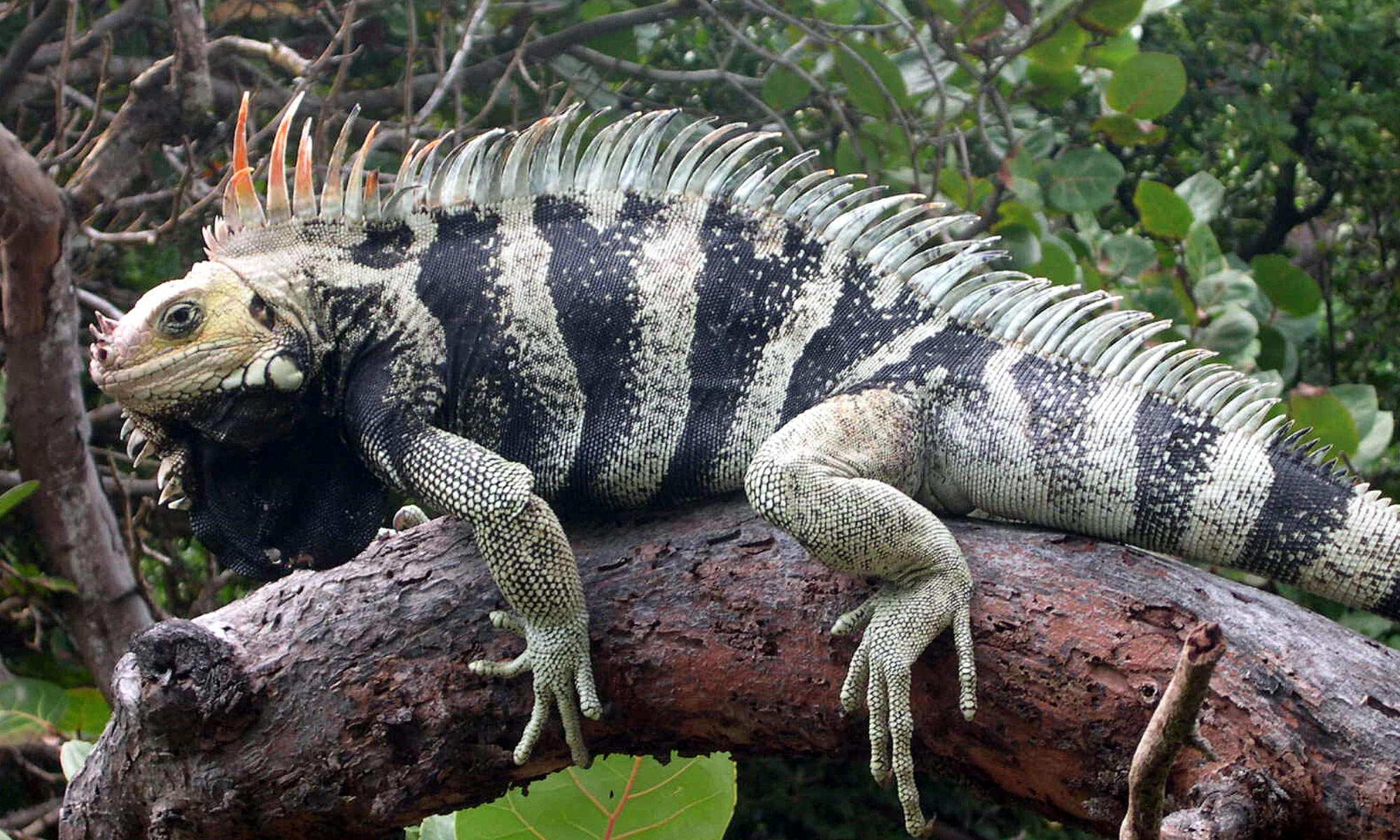
This is the tale of two iguanas. Or five iguanas and counting, if you prefer. Bear with us, because this isn’t straightforward.
For a long time, it was thought that the Eastern Caribbean had just two iguana species – the critically endangered Lesser Antillean iguana and the highly variable common green iguana – but recent investigative work has revealed that there are several new kids on the block. In truth, ‘new’ is something of a misnomer, because these two-meter lizards have been lounging in plain sight for as long as anyone can remember.
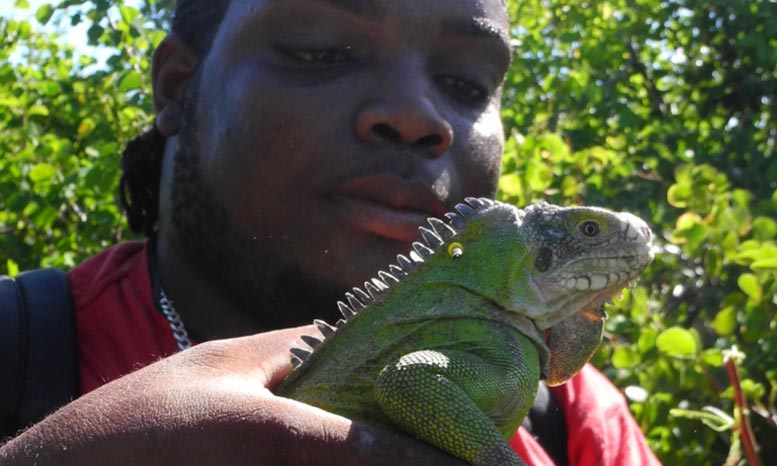
Those in the know – unscrupulous wildlife traders among them, regrettably – have long regarded a number of these lizards as distinctive island varieties. The Saint Lucia iguana, for example, sports broad black bands, while another, the evocatively named Grenadines pink rhino iguana, often turns pinkish white in old age.
Fauna & Flora International (FFI), Durrell Wildlife Conservation Trust, and the forestry departments on both Saint Vincent and the Grenadines (SVG) and Saint Lucia were unconvinced that the islands’ strikingly marked resident lizards were merely aberrant forms of the green iguana, and they joined forces with French taxonomists to investigate this further.
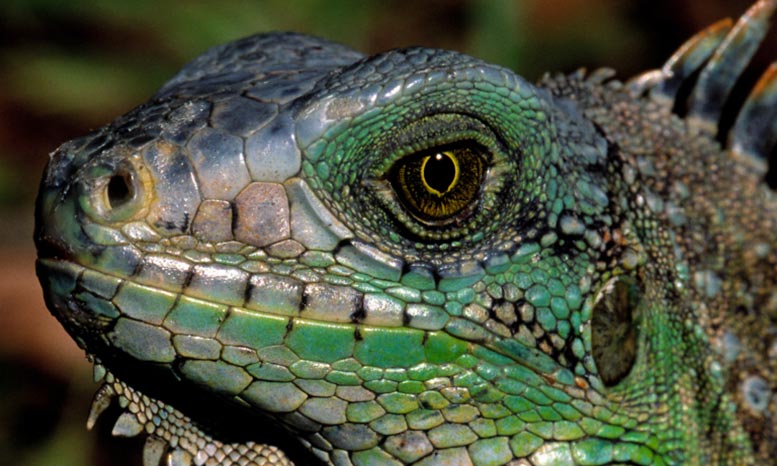
Last year, thanks to DNA sampling that spawned a scientific paper to which FFI and our partners contributed, the Grenadines pink rhino iguana and Saint Lucia iguana were formally recognized as endemic subspecies in their own right. Both are threatened with extinction – with numbers down to just a few hundred in the case of the strictly protected Saint Lucia iguana – and it is illegal to trade either of them internationally without CITES permits from their country of origin.
We are working to conserve these two lizards in light of the threats posed not only by illegal trade, but also by the common green iguana and Central American horned iguana, which are now known to be invasive alien species on many islands in the region. Discarded as unwanted pets, transported as stowaways on cargo boats or swept ashore by hurricanes, the newcomers breed rapidly, outcompeting or hybridizing with the native lizards.
But the story doesn’t end there.
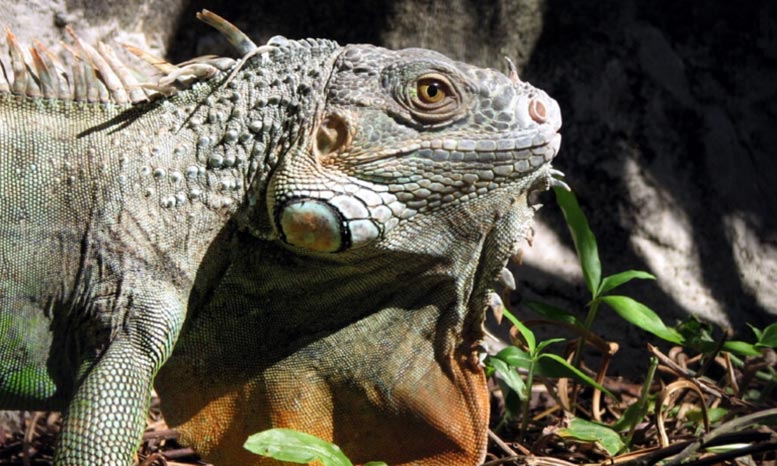
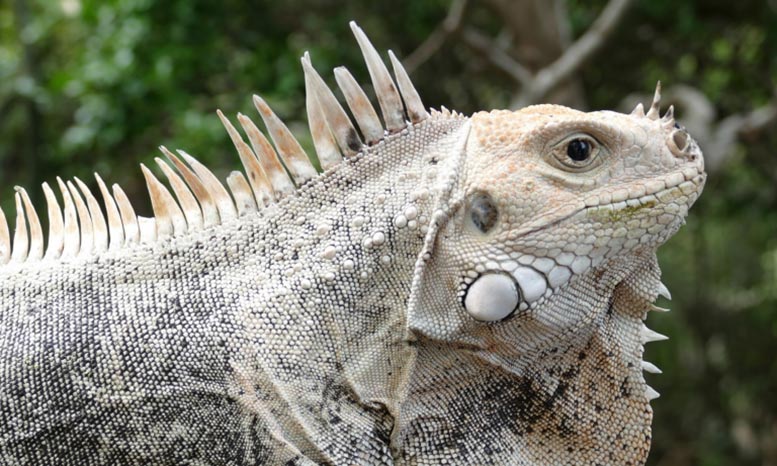
FFI and the SVG Forestry Department photographed and collected DNA samples from a much larger number of wild iguanas across St Vincent and the Grenadines. Further detailed analysis by the same French scientists who had carried out genetic tests on the previous year’s samples showed conclusively that we were actually dealing with an entirely new species, which we have named the Southern Antilles iguana. Among its many distinguishing features are a cluster of horns on the nose, a high crest, and dark-brown eyes.
FFI is already involved in conserving this newly recognized species by virtue of our ongoing efforts to safeguard two of its subspecies, the very rare Saint Lucia iguana and Grenadines pink rhino iguana, since 2000 and 2016 respectively.
Are you still with us?
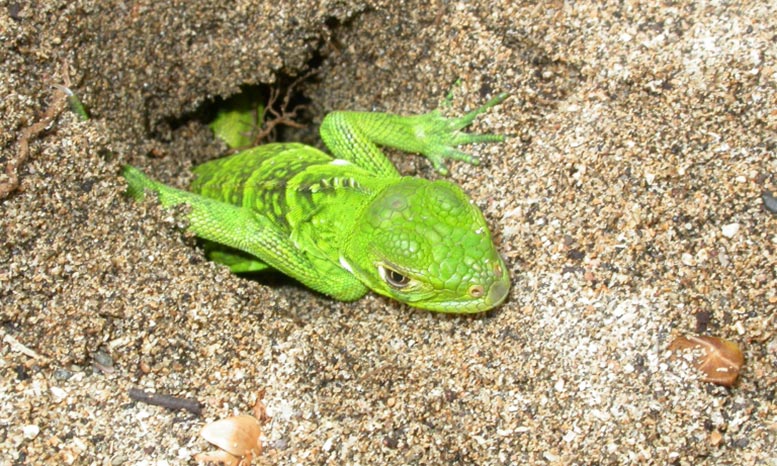
To add to the complications, juveniles of the invasive iguanas – and any hybrid offspring – are virtually indistinguishable from those of the native pure-bred Southern Antilles iguanas. All of the juvenile iguanas in the Eastern Caribbean are bright green. This can make it difficult for conservationists and law enforcers to tell which species is which.
“Saint Lucia used to be called ‘Iyanola’, meaning ‘Land of the Iguanas’,” revealed Pius Haynes, Head of Wildlife at the Saint Lucia Forestry Department and a co-author of one of the papers. “Aside from their great cultural importance, our iguanas have a crucial role in forest regeneration through dispersing seeds.”
The Director of the SVG Forestry Department, Fitzgerald Providence, whose staff participated in the survey, remarked on the importance of discovering that his country has a new iguana species, rather than common green iguanas as previously believed. He emphasized the need to “work with conservation organizations such as FFI and the island communities, along with establishing legislation and policies in the protection of our islands’ biological diversity.”
“Caribbean iguanas are in grave danger because of invasive alien species, habitat loss, and over-hunting for bushmeat and the pet trade,” said Dr. Jenny Daltry, FFI Senior Conservation Biologist and a fellow co-author. “We know what needs to be done, and I am thankful to Darwin Initiative, Global Wildlife Conservation, National Geographic, Species Fund, SVG Environmental Fund, and US Fish & Wildlife Service for supporting FFI and our partners thus far.”
Meanwhile, the very dark iguanas native to Montserrat and Saba – and, probably, Redonda – have also been confirmed as an entirely separate species, now known as the melanistic or Saban black iguana. This raises the question of whether to reintroduce this endangered species to the recently restored island of Redonda, where it is also thought to have once occurred, but that’s another story.
So, there you have it. At least until the next installment in the tale.
Never miss a breakthrough: Join the SciTechDaily newsletter.
Follow us on Google and Google News.
1 Comment
The problem here is the ambiguous definition of the term ‘Species’. These iguanas are in the process of evolving into new species, but because they can still interbreed or hybridize, they are only different subspecies. It’s a stretch to call them different species. That’s like calling different breeds of dogs different species. Imagine an article with the headline: “Scientists have discovered 339 different species of dogs hiding right under our noses”. Nope!