
Close Menu
    Facebook X (Twitter) Instagram
    SciTechDaily
    • Biology
    • Chemistry
    • Earth
    • Health
    • Physics
    • Science
    • Space
    • Technology
    Facebook X (Twitter) Pinterest YouTube RSS
    SciTechDaily
    Home»Technology»Sharper and Smarter: “Robotic Cat Eyes” Give Drones Super Sight
    Technology

    Sharper and Smarter: “Robotic Cat Eyes” Give Drones Super Sight

    By GIST (Gwangju Institute of Science and Technology)October 31, 2024No Comments3 Mins Read
    Facebook Twitter Pinterest Telegram LinkedIn WhatsApp Email Reddit
    Share
    Facebook Twitter LinkedIn Pinterest Telegram Email Reddit
    Cats Eye Close Up
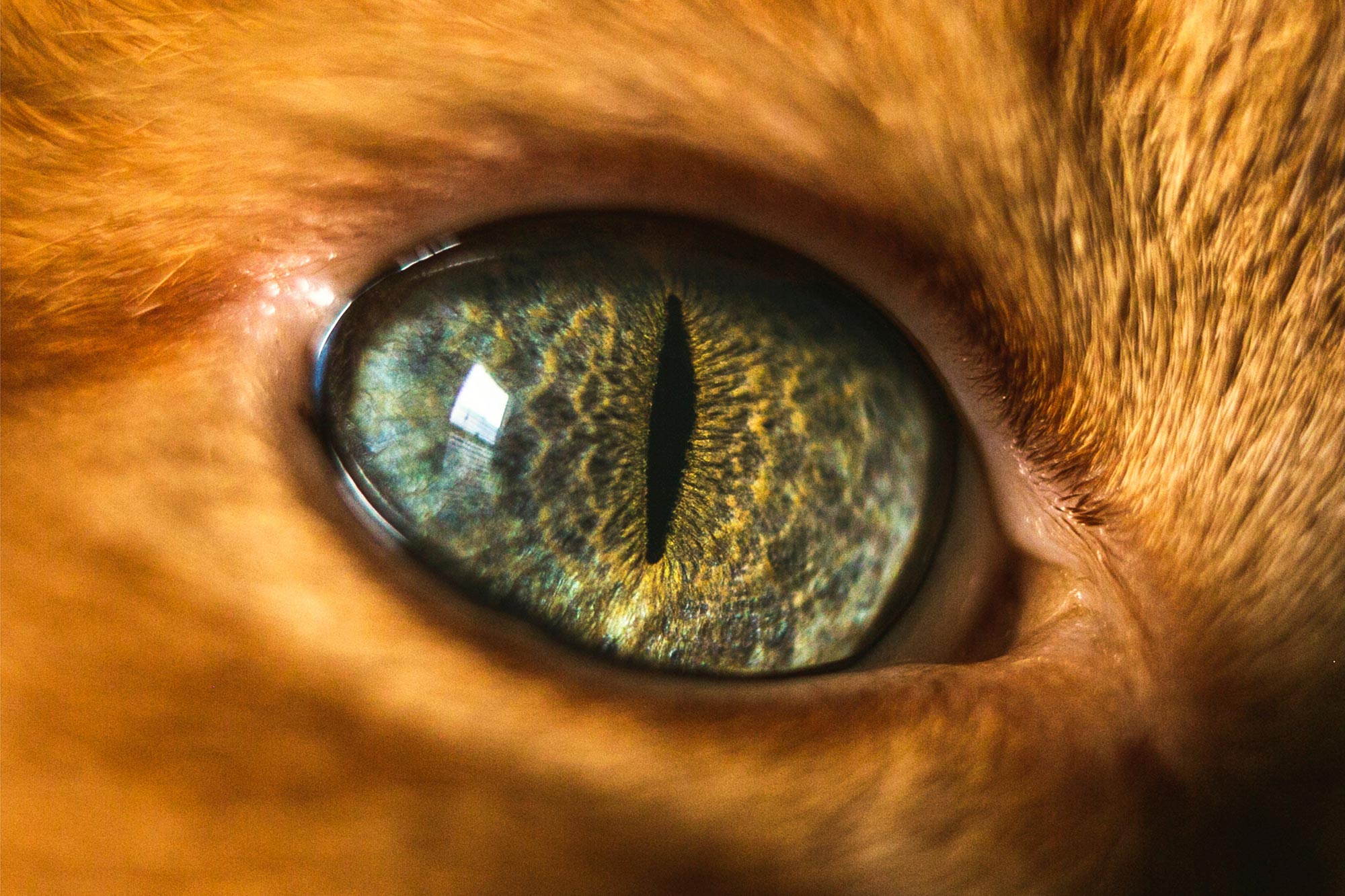
    A new vision system modeled after cat eyes enhances robotic vision, allowing autonomous systems to better navigate and recognize objects in challenging environments.

    Feline-inspired vision technology enhances accuracy in challenging environments, paving the way for smarter, more efficient autonomous systems.

    Korean researchers have developed an advanced vision system for autonomous drones and robots, inspired by the unique eye structure of cats. This new technology, using a slit-like aperture and reflective layer, enhances visibility in various lighting conditions, promoting more efficient object detection and recognition.

    Inspired by Nature: The Cat’s Eye

    Autonomous systems like drones, self-driving cars, and robots are becoming more integrated into daily life, yet they often struggle to “see” clearly in varied conditions—whether it’s bright sunlight, low light, or busy, complex backgrounds. Remarkably, nature may hold the solution.

    Cats are renowned for their impressive vision in both daylight and darkness. Their eyes are specially adapted: during the day, vertical slit-shaped pupils help them focus sharply and reduce glare. At night, these pupils widen to allow in more light, while a reflective layer called the tapetum lucidum enhances their night vision, giving their eyes that distinct glow.

    Revolutionizing Robotic Sight With Feline Vision
    This novel system features a slit-like elliptical aperture and a patterned metal reflector to improve object detection and recognition in various lighting conditions. The design effectively reduces light interference and enhances photosensitivity, enabling the detection of camouflaged objects in varying lightning. Credit: Young Min Song from GIST, Korea

    Technological Leap: Feline-Inspired Vision Systems

    A group of Korean researchers led by Professor Young Min Song from Gwangju Institute of Science and Technology (GIST) designed a new vision system that uses an advanced lens and sensors inspired by feline eyes. The system includes a slit-like aperture that, like a cat’s vertical pupil, helps filter unnecessary light and focus on key objects. It also uses a special reflective layer similar to the one found in cat eyes that improves visibility in low-light conditions.

    This research was published recently in the journal Science Advances and represents a significant advancement in artificial vision systems, demonstrating enhanced object detection and recognition capabilities and positioning it at the forefront of technological breakthroughs in autonomous robotics.

    Applications and Impacts of Advanced Robotic Vision

    “Robotic cameras often struggle to spot objects in busy or camouflaged backgrounds, especially when lighting conditions change. Our design solves this by letting robots blur out unnecessary details and focus on important objects,” explains Prof. Song. This approach has the additional benefit of being energy-efficient, as it relies on the design of the lens rather than on heavy computer processing.

    This groundbreaking technology unlocks exciting possibilities for real-world applications, transforming the landscape of robotic vision. The advanced vision system promises to elevate the precision of drones, security robots, and self-driving vehicles, enabling them to adeptly navigate intricate environments and execute tasks with unparalleled accuracy. “From search-and-rescue operations to industrial monitoring, these cutting-edge robotic eyes stand ready to complement or even replace human efforts in a variety of critical scenarios,” emphasizes Prof. Song.

    Reference: “Feline eye–inspired artificial vision for enhanced camouflage breaking under diverse light conditions” by Min Su Kim, Min Seok Kim, Mincheol Lee, Hyuk Jae Jang, Do Hyeon Kim, Sehui Chang, Minsung Kim, Hyojin Cho, Jiwon Kang, Changsoon Choi, Jung Pyo Hong, Do Kyung Hwang, Gil Ju Lee, Dae-Hyeong Kim and Young Min Song, 18 September 2024, Science Advances.
    DOI: 10.1126/sciadv.adp2809

    Never miss a breakthrough: Join the SciTechDaily newsletter.
    Follow us on Google and Google News.

    Drones Robotics Vision
    Share. Facebook Twitter Pinterest LinkedIn Email Reddit

    Related Articles

    Giving Bug-Like Bots a Boost: New Artificial Muscles Improve the Performance of Flying Microrobots

    New Algorithm Trains Drones To Fly Around Obstacles at High Speeds

    Secrets of Highly Efficient Swimming Uncovered for Design of Next-Generation Underwater Drones

    New Algorithm Flies Drones Faster Than World-Class Human Racing Pilots

    New MIT Algorithm Helps Robots Collaborate to Get the Job Done

    Insect-Inspired Flying Robots: Researchers Introduce a New Generation of Tiny, Agile Drones

    Raptor-Inspired Drone With Morphing Wing and Tail for Unprecedented Flight Agility

    New Low-Power Chip Will Help Miniature Drones Navigate

    New Chip Design Method May Result in Miniature Smart Drones

    Leave A Reply Cancel Reply

    • Facebook
    • Twitter
    • Pinterest
    • YouTube

    Don't Miss a Discovery

    Subscribe for the Latest in Science & Tech!

    Trending News

    Artificial Sweeteners May Harm Future Generations, Study Suggests

    Splashdown! NASA Artemis II Returns From Record-Breaking Moon Mission

    What If Consciousness Exists Beyond Your Brain

    Scientists Finally Crack the 100-Million-Year Evolutionary Mystery of Squid and Cuttlefish

    Beyond “Safe Levels”: Study Challenges What We Know About Pesticides and Cancer

    Researchers Have Found a Dietary Compound That Increases Longevity

    Scientists Baffled by Bizarre “Living Fossil” From 275 Million Years Ago

    Your IQ at 23 Could Predict Your Wealth at 27, Study Finds

    Follow SciTechDaily
    • Facebook
    • Twitter
    • YouTube
    • Pinterest
    • Newsletter
    • RSS
    SciTech News
    • Biology News
    • Chemistry News
    • Earth News
    • Health News
    • Physics News
    • Science News
    • Space News
    • Technology News
    Recent Posts
    • What if Dark Matter Has Two Forms? Bold New Hypothesis Could Explain a Cosmic Mystery
    • Researchers Expose Hidden Chemistry of “Ore-Forming” Elements in Biology
    • Geologists Reveal the Americas Collided Earlier Than We Thought
    • 20x Difference: Study Reveals True Source of Airborne Microplastics
    • Scientists Uncover Hidden Force Powering Yellowstone’s Supervolcano
    Copyright © 1998 - 2026 SciTechDaily. All Rights Reserved.
    • Science News
    • About
    • Contact
    • Editorial Board
    • Privacy Policy
    • Terms of Use

    Type above and press Enter to search. Press Esc to cancel.