

Researchers have found that a previously underestimated aspect of our cells has a significant impact by completing a gap in electrochemical processes.
Historically, biological chemistry research has primarily concentrated on the most apparent components driving life’s processes. Proteins folding, genetic activity, and electrical signaling pathways have been the main areas of focus, as they offer the clearest targets for identifying abnormalities that cause disease.
Recent research, however, has pointed to a different type of cellular structure that may play an equally important role. Called biological condensates, these structures exist because of differences in density, like oil droplets floating in water, and form compartments inside of cells without needing the physical boundary of a membrane.
Previous studies have shown that these blobs can separate or trap together certain proteins and molecules, either hindering or promoting their activity. They have also revealed that these structures provide an alternative energy source that might power some aspects of biological chemistry.
Beyond Local Impacts
These results, however, have focused on impacts created in the immediate vicinity of the condensates themselves. Researchers had not yet identified ways in which they might affect biochemistry far from their physical structures.
Now, in a new study published on September 10 in the journal Cell, researchers from Duke University and the Washington University in St. Louis have shown that the formation of biological condensates affects cellular activity far beyond their immediate vicinity. The results show that they may be a previously missing mechanism by which cells modulate their internal electrochemistry. And those internal controls, in turn, affect the cellular membrane, which allows these unassuming blobs to affect global traits and outcomes such as resistance to antibiotics.
“Our research shows that condensates influence cells well beyond direct physical contact, almost like they have a wireless connection to how cells interact with the environment,” said Lingchong You, the James L. Meriam Distinguished Professor of Biomedical Engineering at Duke. “Beyond demonstrating the electrical mechanisms behind this connection, we’ve proven that condensate formation can make cells more tolerant to certain types of antibiotics and more susceptible to others.”
“This is likely just the tip of the iceberg,” added Ashutosh Chilkoti, the Alan L. Kaganov Distinguished Professor of Biomedical Engineering at Duke. “We expect that these electric potential effects express themselves in a wide variety of ways through cellular behaviors.”
Electrostatic Mechanism of Condensates
Condensates act sort of like a sponge, soaking up various proteins, enzymes, ions, and other biomolecules when they form, while excluding others. And if they trap enough ions in their compartment to become positively or negatively charged, that imbalance must be reflected in the cellular environment around them.
This electrostatic activity provides a handle for the formation of biological condensates to affect the electrical potential of the cellular membrane and the electrochemical environment within the cell. And because these environmental factors are crucial to many biological processes, it provides a mechanism for these unassuming blobs to directly affect how cells interact with the world around them.
Widespread Impact of Condensates
“Even a tiny number of these condensates centrally distributed well away from the cell membrane can create a chain reaction that can change this global property,” explained Yifan Dai, an assistant professor of biomedical engineering and a member of the Center for Biomolecular Condensates at Washington University in St. Louis, who conducted the research as a postdoctoral researcher at Duke. “This paper shows there is no escape from these effects. As long as these tiny blobs form, many things are influenced, even gene regulation in a global scale. When I saw that, it was quite shocking to me.”
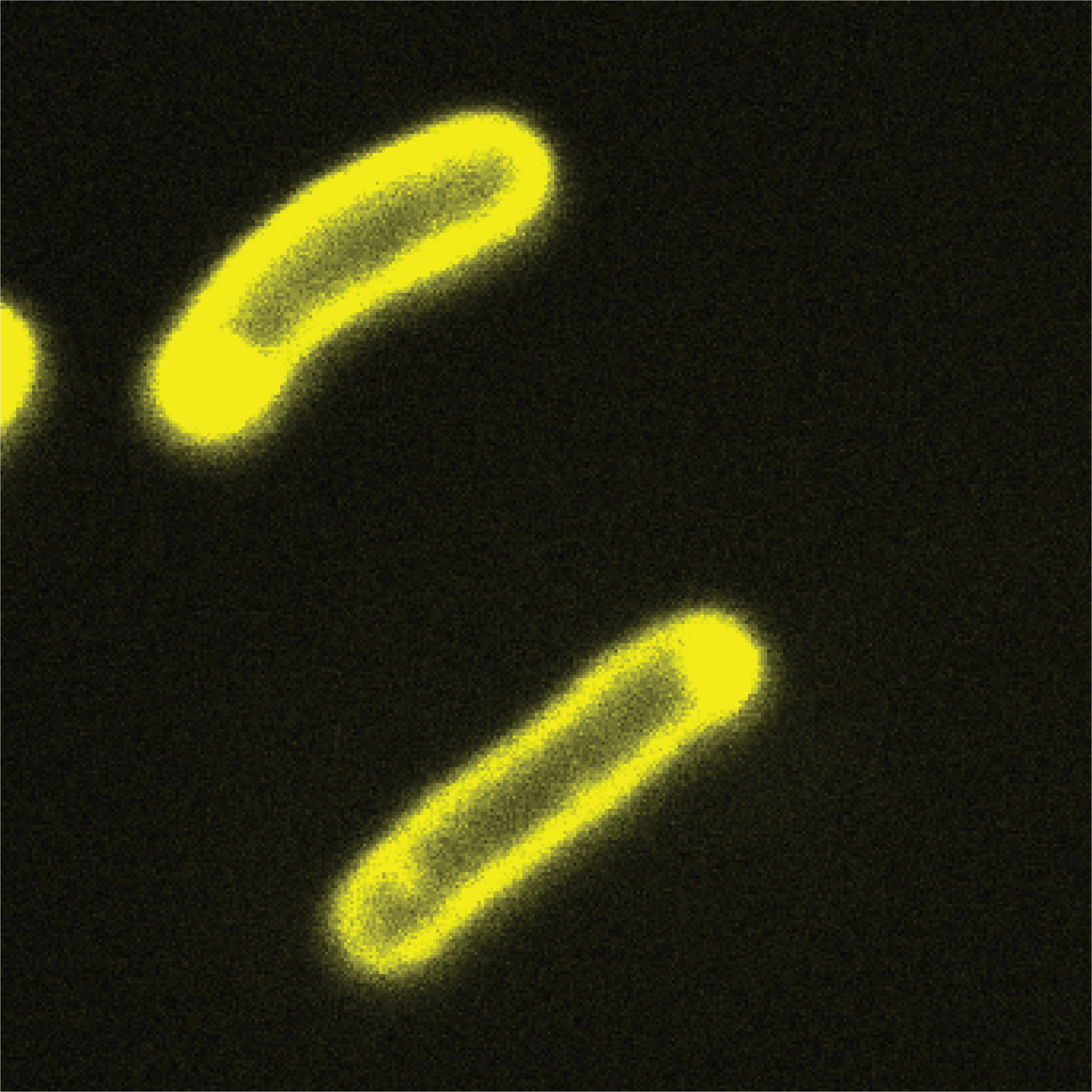
To prove this point, the researchers worked to show that this phenomenon can affect how well bacteria survive interactions with certain antibiotics. The researchers caused colonies of E. coli bacteria to form internal condensates either by stressing them in just the right way or by manipulating the gene expression of the condensate-forming proteins. They then tested the resulting electrical charge in their cellular membranes and exposed them to antibiotics.
The results showed that condensate formation caused some cellular membranes to become more negatively charged, which directly affected whether or not the cells reacted to the antibiotics, since they are also charged particles. But this is just the beginning of this line of research, the researchers say, as many biochemical processes depend on the electric potential held within the cellular membrane.
“Our work uncovers a role of condensates in regulating global cellular physiology,” You said. “While we don’t yet have a concrete mechanistic understanding of how cells are deploying this activity to regulate their functionality, it’s a major discovery that it’s happening at all.”
Reference: “Biomolecular condensates regulate cellular electrochemical equilibria” by Yifan Dai, Zhengqing Zhou, Wen Yu, Yuefeng Ma, Kyeri Kim, Nelson Rivera, Javid Mohammed, Erica Lantelme, Heileen Hsu-Kim, Ashutosh Chilkoti and Lingchong You, 10 September 2024, Cell.
DOI: 10.1016/j.cell.2024.08.018
This work was supported by the Air Force Office of Scientific Research (FA9550-20-1-0241) and the National Institutes of Health (R35-GM127042).
Never miss a breakthrough: Join the SciTechDaily newsletter.
Follow us on Google and Google News.
1 Comment
Gene expression modifications, an action of epigenetics, are the means of bacteria achieving antibiotic resistance. There are no ASSUMED evolving of DNA mutations, This takes on an intelligent design signature, not a Godless evolution one.
This article is the first I have seen that epigenetics gives a negative charge to the bacteria thus a/the mechanism for antibiotic resistance,
There’s your science. There’s your facts.