
Close Menu
    Facebook X (Twitter) Instagram
    SciTechDaily
    • Biology
    • Chemistry
    • Earth
    • Health
    • Physics
    • Science
    • Space
    • Technology
    Facebook X (Twitter) Pinterest YouTube RSS
    SciTechDaily
    Home»Health»Simple Blood Test Developed for Early Detection of Alzheimer’s Disease
    Health

    Simple Blood Test Developed for Early Detection of Alzheimer’s Disease

    By Hong Kong University of Science and TechnologyOctober 2, 2021No Comments4 Mins Read
    Facebook Twitter Pinterest Telegram LinkedIn WhatsApp Email Reddit
    Share
    Facebook Twitter LinkedIn Pinterest Telegram Email Reddit
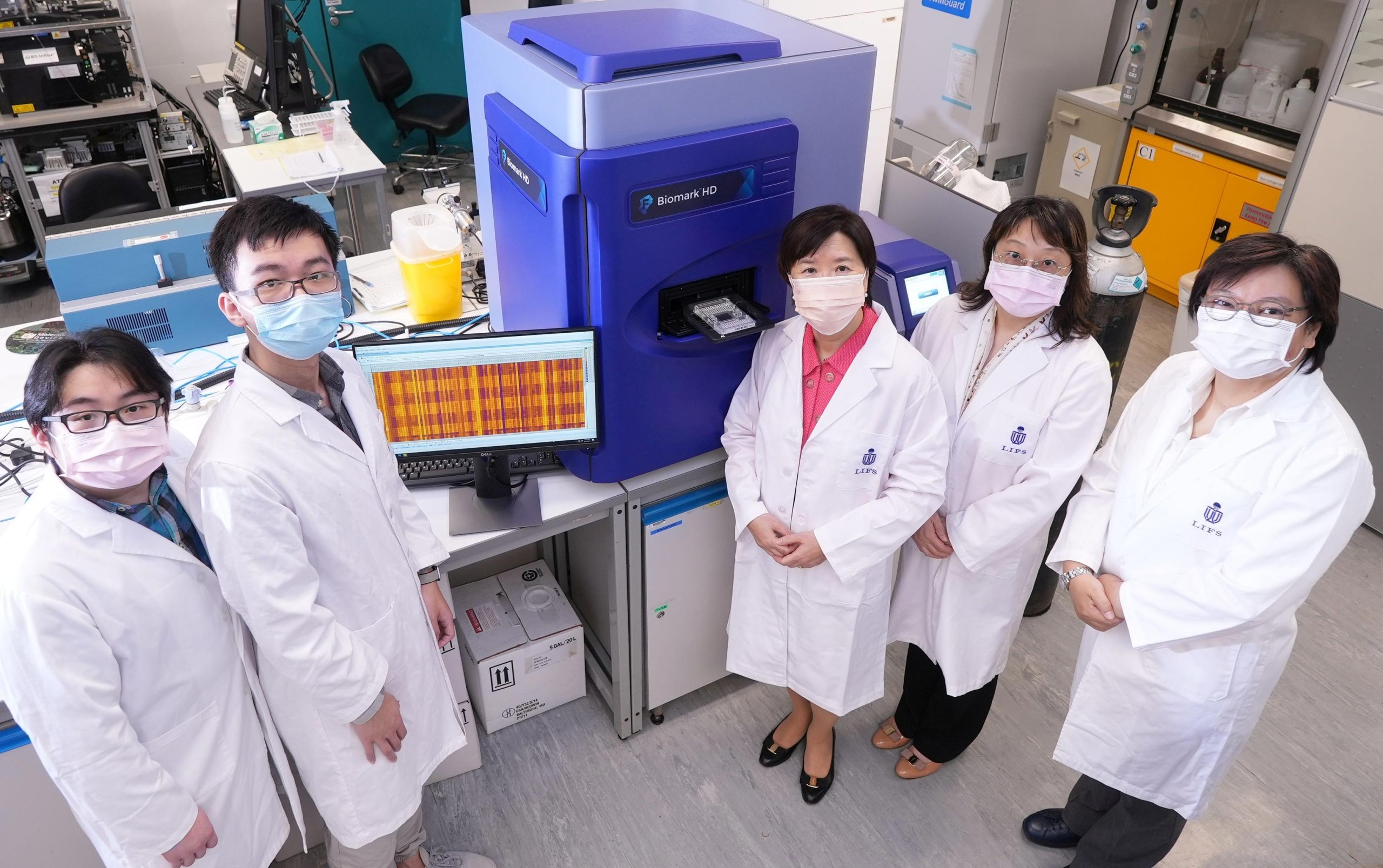
    Alzheimer's Blood Test Research Group
    HKUST’s Vice-President (Research and Development) Prof. Nancy IP (Middle) and her research team members – including doctoral student Mr. Jason JIANG Yuanbing (second left) who is the first author of this research paper. Credit: HKUST

    Breakthrough Blood Test for Early Alzheimer’s Detection

    An international research team led by HKUST has developed a simple but robust blood test from Chinese patient data for early detection and screening of Alzheimer’s disease (AD) for the first time, with an accuracy level of over 96%.

    Currently, doctors mainly rely on cognitive tests to diagnose a person with AD. Besides clinical assessment, brain imaging and lumbar puncture are the two most commonly used medical procedures to detect changes in the brain caused by AD. However, these methods are expensive, invasive, and frequently unavailable in many countries.

    19 Plasma Hub Proteins
    The research team identified 19 plasma hub proteins (indicated as yellow dots in the figure) in AD patients, which are irregular compared to healthy people. Credit: HKUST

    Discovery of 19 Key Blood Biomarkers

    Now, a team led by Prof. Nancy IP, Vice-President for Research and Development at HKUST, has identified 19 out of the 429 plasma proteins associated with AD to form a biomarker panel representative of an “AD signature” in the blood. Based on this panel, the team has developed a scoring system that distinguishes AD patients from healthy people with more than 96% accuracy. This system can also differentiate among the early, intermediate, and late stages of AD, and can be used to monitor the progression of the disease over time. These exciting findings have led to the development of a high-performance, blood-based test for AD, and may also pave the way to novel therapeutic treatments for the disease.

    “With the advancement of ultrasensitive blood-based protein detection technology, we have developed a simple, noninvasive, and accurate diagnostic solution for AD, which will greatly facilitate population-scale screening and staging of the disease,” said Prof. Nancy Ip, Morningside Professor of Life Science and the Director of the State Key Laboratory of Molecular Neuroscience at HKUST.

    Proximity Extension Assay Technology

    The work was conducted in collaboration with researchers at University College London and clinicians in local hospitals including the Prince of Wales Hospital and Queen Elizabeth Hospital. The discovery was made using the proximity extension assay (PEA) – a cutting-edge ultrasensitive and high-throughput protein measurement technology, to examine the levels of over 1,000 proteins in the plasma of AD patients in Hong Kong.
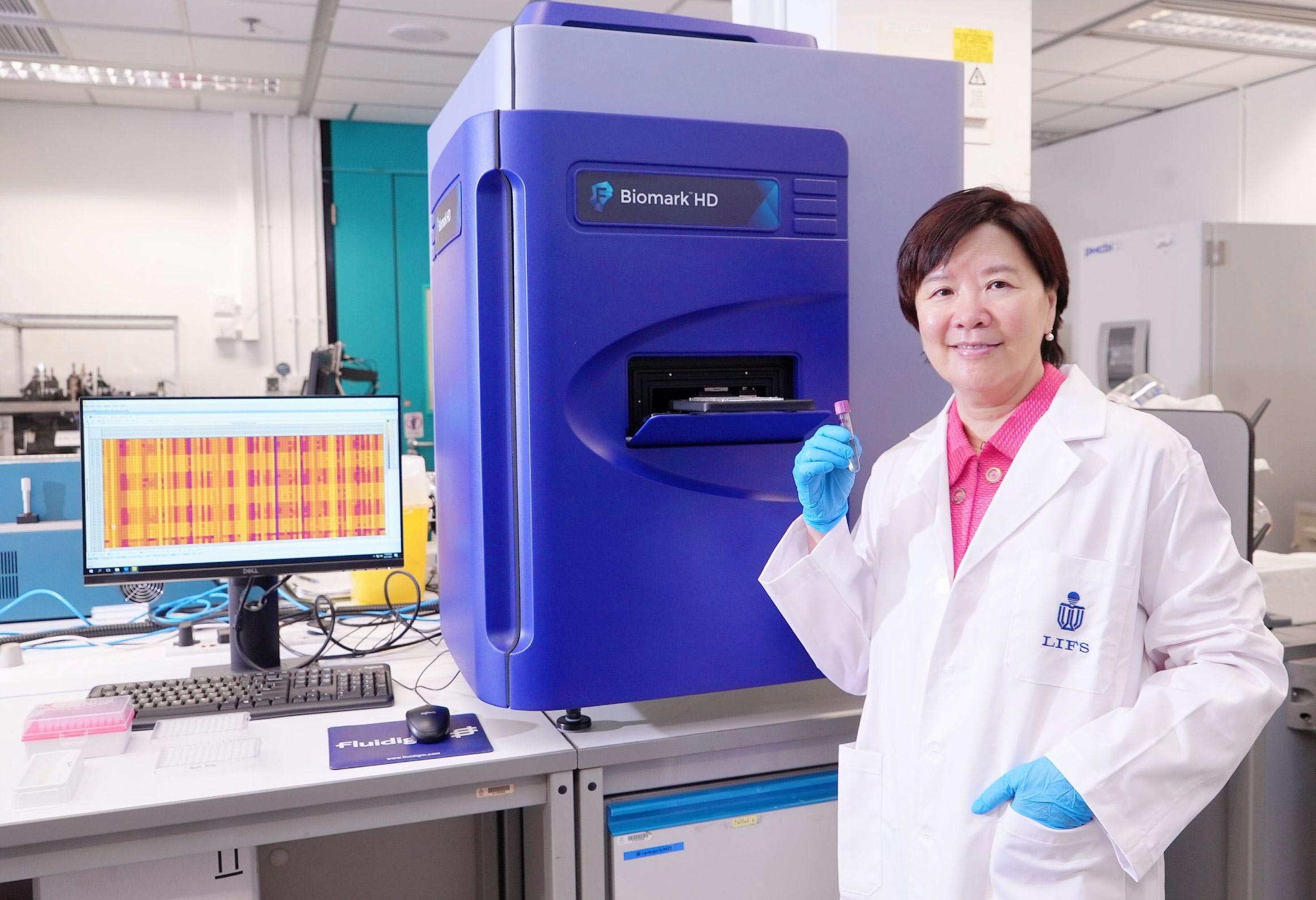
    Nancy Ip
    Using the blue device (pictured) that performs the ultrasensitive proximity extension assay technology, Prof. Ip and her team developed a blood test for early detection and screening of Alzheimer’s disease from Chinese patient data, with an accuracy level of over 96%. Credit: HKUST

    As the most comprehensive study of blood proteins in AD patients to date, the work has recently been published in Alzheimer’s & Dementia: The Journal of the Alzheimer’s Association, and has also been featured and actively discussed on different scholarly exchange platforms on AD research such as Alzforum.

    AD, which affects over 50 million people worldwide, involves the dysfunction and loss of brain cells. Its symptoms include progressive memory loss as well as impaired movement, reasoning, and judgment. While patients often only seek medical attention and are diagnosed when they have memory problems, AD affects the brain at least 10-20 years before symptoms appear.

    Reference: “Large-scale plasma proteomic profiling identifies a high-performance biomarker panel for Alzheimer’s disease screening and staging” by Yuanbing Jiang, Xiaopu Zhou, Fanny C. Ip, Philip Chan, Yu Chen, Nicole C.H. Lai, Kit Cheung, Ronnie M.N. Lo, Estella P.S. Tong, Bonnie W.Y. Wong, Andrew L.T. Chan, Vincent C.T. Mok, Timothy C.Y. Kwok, Kin Y. Mok, John Hardy, Henrik Zetterberg, Amy K.Y. Fu and Nancy Y. Ip, 25 May 2021, Alzheimer’s & Dementia.
    DOI: 10.1002/alz.12369

    Never miss a breakthrough: Join the SciTechDaily newsletter.
    Follow us on Google and Google News.

    Alzheimer's Disease Blood Dementia Hong Kong University of Science and Technology
    Share. Facebook Twitter Pinterest LinkedIn Email Reddit

    Related Articles

    Young Blood Shows Powerful Protective Effects Against Alzheimer’s

    This Simple Blood Test Might Catch Alzheimer’s Before It Steals Your Memory

    Alzheimer’s Breakthrough: New Blood Biomarker Discovered

    A Sweet Clue to Alzheimer’s: Sugar Molecule Predicts Disease Risk

    Stopping Memory Loss: Blood Vessel Breakthrough Major Step Towards Alzheimer’s Treatment

    Signs of Dementia Are Written in the Blood: 33 Metabolic Compounds May Be Key to New Treatments

    Advances in Simple Blood Tests for Alzheimer’s

    An Aspirin a Day Does Not Keep Dementia at Bay – No Difference Than Placebo

    Promising Dementia Vaccine Draws Closer

    Leave A Reply Cancel Reply

    • Facebook
    • Twitter
    • Pinterest
    • YouTube

    Don't Miss a Discovery

    Subscribe for the Latest in Science & Tech!

    Trending News

    Breakthrough Bowel Cancer Trial Leaves Patients Cancer-Free for Nearly 3 Years

    Natural Compound Shows Powerful Potential Against Rheumatoid Arthritis

    100,000-Year-Old Neanderthal Fossils in Poland Reveal Unexpected Genetic Connections

    Simple “Gut Reset” May Prevent Weight Gain After Ozempic or Wegovy

    2.8 Days to Disaster: Scientists Warn Low Earth Orbit Could Suddenly Collapse

    Common Food Compound Shows Surprising Power Against Superbugs

    5 Simple Ways To Remember More and Forget Less

    The Atomic Gap That Could Cost the Semiconductor Industry Billions

    Follow SciTechDaily
    • Facebook
    • Twitter
    • YouTube
    • Pinterest
    • Newsletter
    • RSS
    SciTech News
    • Biology News
    • Chemistry News
    • Earth News
    • Health News
    • Physics News
    • Science News
    • Space News
    • Technology News
    Recent Posts
    • Scientists Discover Stem Cells That Could Regrow Teeth and Bone
    • Scientists Discover Natural Molecule That Stops Alzheimer’s Protein Clumps From Forming
    • Early Cannabis Use May Stall Key Brain Skills in Teens
    • Popular Vitamin D Supplement Has “Previously Unknown” Negative Effect, Study Finds
    • Powerful Antioxidant Found To Play a Key Role in Proper Protein Folding
    Copyright © 1998 - 2026 SciTechDaily. All Rights Reserved.
    • Science News
    • About
    • Contact
    • Editorial Board
    • Privacy Policy
    • Terms of Use

    Type above and press Enter to search. Press Esc to cancel.