
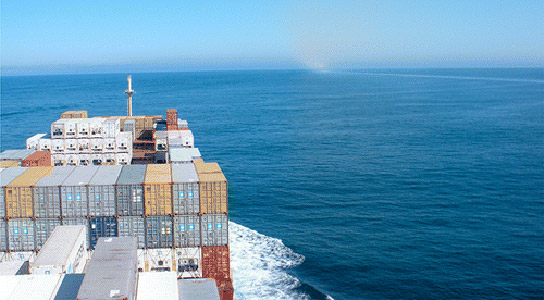
A new study indicates that slowing down vessels near coastlines by 10 to 15 miles (16 to 24 kilometers) per hour can dramatically reduce air pollution from the ships. However, only a few US ports have initiated efforts to apply this.
The scientists published their findings in the journal Environmental Science and Technology. A speed limit of 14 mph (22.5 kph), down from the current speeds of 25 to 29 mph (40 to 47 kph) would cut nitrogen oxides by 55% and soot by 70%. It would also reduce carbon dioxide by 60%.
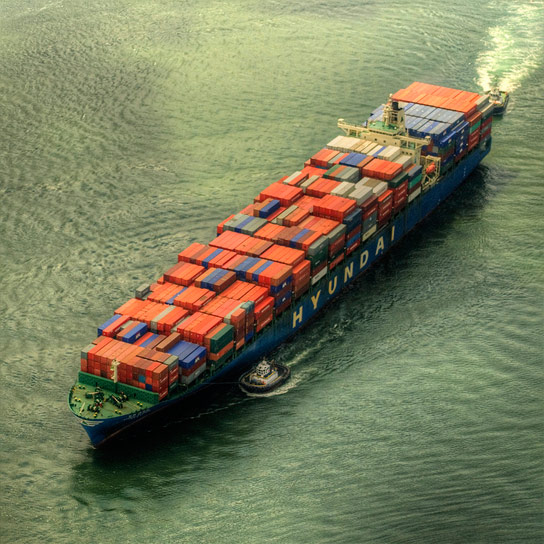
There are 100,000 ships carrying 90% of the world’s cargo, and the resulting air pollution is problematic for people living near ports. The ports of Los Angeles/Long Beach and New York/New Jersey are already part of a voluntary monitoring program and this has already cut down emissions significantly in those areas. They’ve been in place for a number of years. Setting a speed limit is an elusive goal for port cities because shipping traffic is regulated by international treaties.
All vessels, when they are within 10 nautical miles of a US port, must slow down to 14 mph. Ports that are part of the volunteer programs slow ships out further out, up to 40 miles (64 kilometers) offshore.
A ship’s fuel consumption and emissions increase drastically when they go faster. In order to increase air quality, speed reductions would need to be maintained long-term. The shipping industry is responsible for 3% of the world’s carbon dioxide emissions and shipping emissions are expected to grow 2 to 3 percent every year over the next three decades as shipping traffic grows, according to the International Maritime Organization.
Some states, like California, have banned ships from burning dirty kinds of fuel and are rolling out other clean port initiatives. As a result, smog-causing nitrogen oxides from the Los Angeles port have declined by 30% between 2005 and 2011, while particulate matter has decreased by about 70%.
Reference: “Greenhouse Gas and Criteria Emission Benefits through Reduction of Vessel Speed at Sea” by M. Yusuf Khan, Harshit Agrawal, Sindhuja Ranganathan, William A. Welch, J. Wayne Miller and David R. Cocker, III, 13 September 2012, Environmental Science and Technology.
DOI: 10.1021/es302371f
Never miss a breakthrough: Join the SciTechDaily newsletter.
Follow us on Google and Google News.
4 Comments
This is a very strange article. The absolute maximum speed of these cargo ships is around 15 knots. Slowing them down “10-15 MPH” would almost bring them to a complete stop in the water. what they suggest is completely erroneous and unfeasible. Makes me doubt everything produced by SciTechDaily.
It is my understanding that typical container ships can do around 25 knots, or almost 30 MPH. This can be confirmed by multiple sources online. Super fast cargo ships, such as the Fast Sealift Ships operated by the U.S. military, do 33 knots. On the other hand, the giant tanker ships are slower (around 14 knots), so maybe that is what you are thinking of.
As the article states, when ships run slower they release less pollution because they are consuming less fuel. This efficiency difference is something shippers consider when optimizing their business. When fuel is expensive and there is excess shipping capacity (something that has been true over the last few years because of the recession), many shippers switch to “slow steaming” whereby they reduce their speed to save fuel/money. Therefore many cargo ships have been operating at around 15knots (at least at times) over the last few years even though they are capable of higher speeds.
What are the clean port initiatives being introduced by California and how likely are other ports around the USA to follow suit?
To save the environment everything that is needed, should be done and if this little effort can cut down the emissions so significantly then it should be made mandatory for everywhere and to all cargo companies. I know a cargo company Wake Marine that follows all the rules for environment safety.