
Close Menu
    Facebook X (Twitter) Instagram
    SciTechDaily
    • Biology
    • Chemistry
    • Earth
    • Health
    • Physics
    • Science
    • Space
    • Technology
    Facebook X (Twitter) Pinterest YouTube RSS
    SciTechDaily
    Home»Technology»Smartphones Are Great for Sharing Bacteria
    Technology

    Smartphones Are Great for Sharing Bacteria

    By SciTechDailyOctober 31, 2012No Comments2 Mins Read
    Facebook Twitter Pinterest Telegram LinkedIn WhatsApp Email Reddit
    Share
    Facebook Twitter LinkedIn Pinterest Telegram Email Reddit
    iphone-microbe
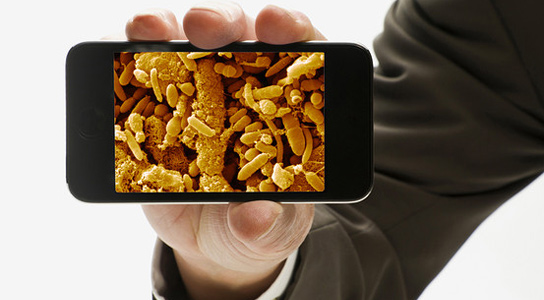
    Lab tests show that most phones have abnormally high levels of coliforms, a bacteria stemming from fecal contamination.

    Smartphones’ proximity to people’s ears, nose, and mouth make them a good vector for transferring microbes. Bacteria and other infectious agents on smartphones can cause the flu, pinkeye, or diarrhea. Lab tests show that most phones have abnormally high levels of coliforms, a bacteria stemming from fecal contamination.

    For people who want to keep a clean phone, it can get confusing since there is a lot of disconnect between medical research and what device makers suggest for cleaning and sanitizing. Many of the products made for mobile phone cleaning can sometimes damage the phone’s coating or fail to remove all of the germs.

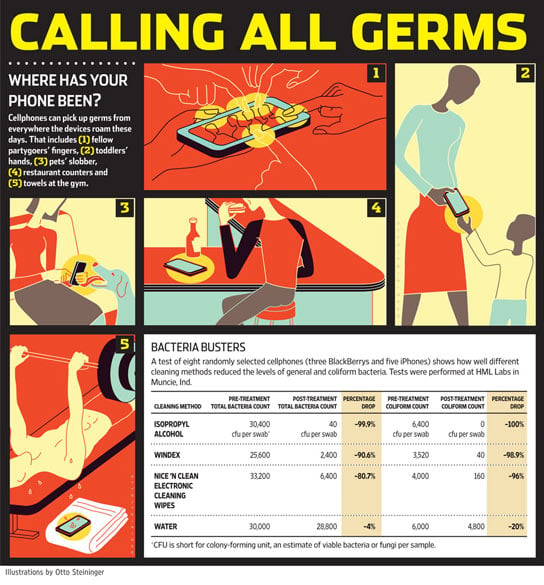
    The HML lab tested for different cleaning methods, including water, alcohol, Windex, and Nice ‘N Clean electronic cleaning wipes. Of those four, alcohol performed best, removing 100% of the bacteria. Water was the least effective.
    germs-on-phones
    Germs on phones infographic, via Wall Street Journal

    People are just as likely to get sick from their phones as from handles in bathrooms, states Dr. Cain of the American Academy of Family Physicians. Most phones’ coating will be damaged by the use of window cleaners, household cleaners, aerosol sprays, solvents, alcohol, ammonia, or abrasives.

    Corning Gorilla Glass can be cleaned with standard off-the-shelf cleaning products like alcohol wipes, and the performance of the glass won’t be damaged, but it could affect the smartphone’s performance. Microfiber cloths clean most organisms as well as oil and dirt, but it’s not enough, as for some bacteria, humans need to ingest as few as 10 organisms to be affected adversely.

    A 2011 study from the University of Cape Coast in Ghana that sampled 100 college student cell phones, noted high concentrations of bacteria and diversity of bacteria on the on phones. Another published study found that 20 to 30% of viruses can be easily transferred from fingertips to a glass surface, like that on a touch screen.

    UV disinfectant wands may be the best cleaning solution because the UV light kills germs without any need to touch the phone. A new product called PhoneSoap, which uses UV-C light to clean the phone while charging it, will begin shipping to consumers in January 2013.

    Never miss a breakthrough: Join the SciTechDaily newsletter.
    Follow us on Google and Google News.

    Bacteria Epidemiology Microbes Popular Smartphone
    Share. Facebook Twitter Pinterest LinkedIn Email Reddit

    Related Articles

    Microbes in Your Gut May Affect Personality – Could Be Associated With Mental and Physical Fatigue

    Laser Treatment Turns Metal Surfaces Into Instant Bacteria Killers

    MIT Aims to Turn Wi-Fi Signals Into Usable Power With Energy-Harvesting Design

    Apple Maps – 3 Times More Likely To Get You Lost Than Google

    Bacteria-Resistant Hospital Fabrics That Actively Fight Microbes

    Antibiotic Resistance Genes Found in a Colorado River System

    Bacteria May be the Key to New Biofuel Technology

    Engineered Nanoparticles Deliver Antibiotics Directly to Bacteria

    UCLA Engineers Develop Cell Phone Attachment for Detection of E. coli

    Leave A Reply Cancel Reply

    • Facebook
    • Twitter
    • Pinterest
    • YouTube

    Don't Miss a Discovery

    Subscribe for the Latest in Science & Tech!

    Trending News

    Popular Sugar-Free Sweetener Linked to Liver Disease, Study Warns

    What Is Hantavirus? The Deadly Disease Raising Alarm Worldwide

    Scientists Just Discovered How the Universe Builds Monster Black Holes

    Scientists Unveil New Treatment Strategy That Could Outsmart Cancer

    A Simple Vitamin May Hold the Key to Treating Rare Genetic Diseases

    Scientists Think the Real Fountain of Youth May Be Hiding in Your Gut

    Ravens Don’t Follow Wolves, They Predict Them

    This Common Knee Surgery May Be Doing More Harm Than Good

    Follow SciTechDaily
    • Facebook
    • Twitter
    • YouTube
    • Pinterest
    • Newsletter
    • RSS
    SciTech News
    • Biology News
    • Chemistry News
    • Earth News
    • Health News
    • Physics News
    • Science News
    • Space News
    • Technology News
    Recent Posts
    • Why Are So Many New Fathers Dying? Scientists Say the U.S. Has a Dangerous Blind Spot
    • Scientists Identify Simple Supplement That Greatly Reduces Alzheimer’s Damage
    • You May Have a Dangerous Type of Cholesterol Even if Your Tests Look Normal
    • Study Reveals Dangerous Flaw in AI Symptom Checkers
    • New MRI Breakthrough Captures Stunningly Clear Images of the Eye and Brain
    Copyright © 1998 - 2026 SciTechDaily. All Rights Reserved.
    • Science News
    • About
    • Contact
    • Editorial Board
    • Privacy Policy
    • Terms of Use

    Type above and press Enter to search. Press Esc to cancel.