
Salk researchers pinpoint a sound-sensitive mammalian protein that lets them activate brain, heart or other cells with ultrasound.
Salk scientists have engineered mammalian cells to be activated using ultrasound. The method, which the team used to activate human cells in a dish and brain cells inside living mice, paves the way toward non-invasive versions of deep brain stimulation, pacemakers and insulin pumps. The findings will be published in Nature Communications today (February 9, 2022).
“Going wireless is the future for just about everything,” says senior author Sreekanth Chalasani, an associate professor in Salk’s Molecular Neurobiology Laboratory. “We already know that ultrasound is safe, and that it can go through bone, muscle, and other tissues, making it the ultimate tool for manipulating cells deep in the body.”
Challenges and Discoveries in Protein Screening
About a decade ago, Chalasani pioneered the idea of using ultrasonic waves to stimulate specific groups of genetically marked cells, and coined the term “sonogenetics” to describe it. In 2015, his group showed that, in the roundworm Caenorhabditis elegans, a protein called TRP-4 makes cells sensitive to low-frequency ultrasound. When the researchers added TRP-4 to C. elegans neurons that didn’t usually have it, they could activate these cells with a burst of ultrasound—the same sound waves used in medical sonograms.
When the researchers tried adding TRP-4 to mammalian cells, however, the protein was not able to make the cells respond to ultrasound. A few mammalian proteins were reported to be ultrasound-sensitive, but none seemed ideal for clinical use. So Chalasani and his colleagues set out to search for a new mammalian protein that made cells highly ultrasound sensitive at 7 MHz, considered an optimal and safe frequency.
“Our approach was different than previous screens because we set out to look for ultrasound-sensitive channels in a comprehensive way,” says Yusuf Tufail, a former project scientist at Salk and a co-first author of the new paper.
TRPA1 Protein
The researchers added hundreds of different proteins, one at a time, to a common human research cell line (HEK), which does not usually respond to ultrasound. Then, they put each cell culture under a setup that let them monitor changes to the cells upon ultrasound stimulation.

After screening proteins for more than a year, and working their way through nearly 300 candidates, the scientists finally found one that made the HEK cells sensitive to the 7 MHz ultrasound frequency. TRPA1, a channel protein, was known to let cells respond to the presence of noxious compounds and to activate a range of cells in the human body, including brain and heart cells.
But Chalasani’s team discovered that the channel also opened in response to ultrasound in HEK cells.
“We were really surprised,” says co-first author of the paper Marc Duque, a Salk exchange student. “TRPA1 has been well-studied in the literature but hasn’t been described as a classical mechanosensitive protein that you’d expect to respond to ultrasound.”
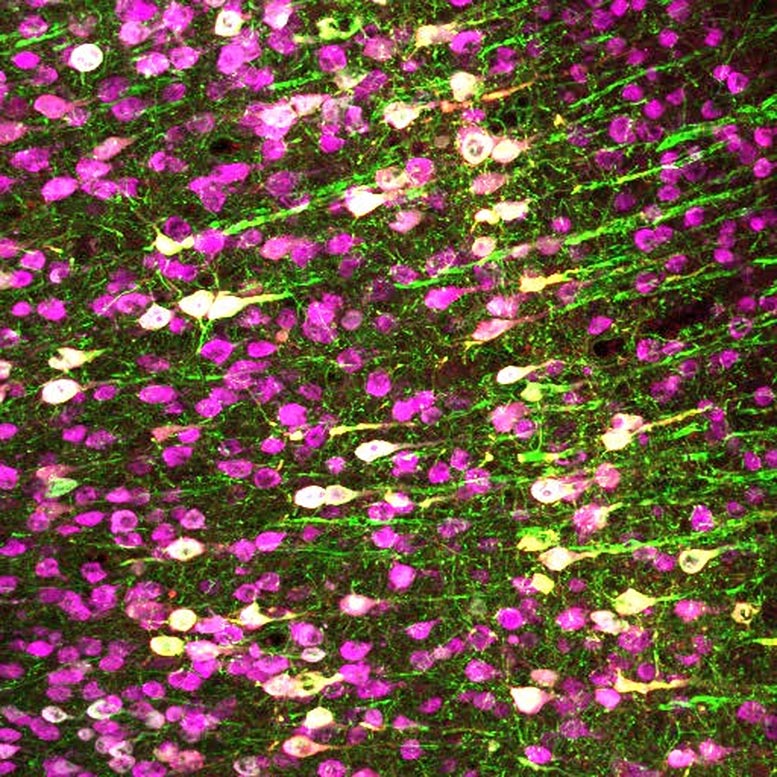
To test whether the channel could activate other cell types in response to ultrasound, the team used a gene therapy approach to add the genes for human TRPA1 to a specific group of neurons in the brains of living mice. When they then administered ultrasound to the mice, only the neurons with the TRPA1 genes were activated.
Expanding Sonogenetics Applications Beyond the Lab
Clinicians treating conditions including Parkinson’s disease and epilepsy currently use deep brain stimulation, which involves surgically implanting electrodes in the brain, to activate certain subsets of neurons. Chalasani says that sonogenetics could one day replace this approach—the next step would be developing a gene therapy delivery method that can cross the blood-brain barrier, something that is already being studied.
Perhaps sooner, he says, sonogenetics could be used to activate cells in the heart, as a kind of pacemaker that requires no implantation. “Gene delivery techniques already exist for getting a new gene—such as TRPA1—into the human heart,” Chalasani says. “If we can then use an external ultrasound device to activate those cells, that could really revolutionize pacemakers.”
For now, his team is carrying out more basic work on exactly how TRPA1 senses ultrasound. “In order to make this finding more useful for future research and clinical applications, we hope to determine exactly what parts of TRPA1 contribute to its ultrasound sensitivity and tweak them to enhance this sensitivity,” says Corinne Lee-Kubli, a co-first author of the paper and former postdoctoral fellow at Salk.
They also plan to carry out another screen for ultrasound sensitive proteins—this time looking for proteins that can inhibit, or shut off, a cell’s activity in response to ultrasound.
Reference: “Sonogenetic control of mammalian cells using exogenous Transient Receptor Potential A1 channels” by Marc Duque, Corinne A. Lee-Kubli, Yusuf Tufail, Uri Magaram, Janki Patel, Ahana Chakraborty, Jose Mendoza Lopez, Eric Edsinger, Aditya Vasan, Rani Shiao, Connor Weiss, James Friend and Sreekanth H. Chalasani, 9 February 2022, Nature Communications.
DOI: 10.1038/s41467-022-28205-y
The other authors of the paper were Uri Magaram, Janki Patel, Ahana Chakraborty, Jose Mendoza Lopez, Eric Edsinger, Rani Shiao and Connor Weiss of Salk; and Aditya Vasan and James Friend of UC San Diego.
The work was supported by the National Institutes of Health (R01MH111534, R01NS115591), Brain Research Foundation, Kavli Institute of Brain and Mind, Life Sciences Research Foundation, W.M. Keck Foundation (SERF), and the Waitt Advanced Biophotonics and GT3 Cores (which receive funding through NCI CCSG P30014195 and NINDSR24).
Never miss a breakthrough: Join the SciTechDaily newsletter.
Follow us on Google and Google News.
8 Comments
Good
Getting paid every month online from home extra than $18k with the aid of doing an easy paintings like replica and paste on-line from home. I actually have made $18745 final wsqa month from this home primarily based online paintings in my element time most effective. Awesome paintings and clean to earn like by no means earlier than. Want to sign up for this and makes extra bucks from home then comply with information on the given website……….
TRSP1 though has a stidy as literature,is active to cells related to various sense organs and memory in internal level connected to ultrasound; this is bearing effects on genetics under certain sharp conditions.
TRSP1 though has a stidy as literature,is active to cells related to various sense organs and memory in internal level connected to ultrasound; this is bearing effects on genetics under certain sharp conditions.
Thus sonogenetics has a solid base for trestment of of genetic diseases as a latersl branch to lookover.
TRPA1 genes in brin cells is related to heart and can be linked to all senses by a medium generated from ultrasound.This in nature often seen in some disease.This is as artificial works in a closed system.The process of treatment of diseases from ultrasound has a genetic disorder rectification.So,sonogenetics has great impotance in human life.
TRSP1 though has a stidy as literature,is active to cells related to various sense organs and memory in internal level connected to ultrasound; this is bearing effects on genetics under certain sharp conditions.
Thus sonogenetics has a solid base for trestment of of genetic diseases as a latersl branch to lookover.
S
A typical case is cited where humen from two opposite groups,distsnt relatives are affected by such war like condition by ultrasound.
TRPA1 gene comes from deceased cells of heart and brain.
TRPA1 gene comes from deceased cells of heart and brain.
Though it affects the sound system of brain,has effects on internal systam of eyes and some important neurons.