
Close Menu
    Facebook X (Twitter) Instagram
    SciTechDaily
    • Biology
    • Chemistry
    • Earth
    • Health
    • Physics
    • Science
    • Space
    • Technology
    Facebook X (Twitter) Pinterest YouTube RSS
    SciTechDaily
    Home»Technology»Sorting Out Viruses With Machine Learning: AI-Powered Nanotechnology May Lead to New Rapid COVID-19 Tests
    Technology

    Sorting Out Viruses With Machine Learning: AI-Powered Nanotechnology May Lead to New Rapid COVID-19 Tests

    By Osaka UniversityNovember 27, 2020No Comments3 Mins Read
    Facebook Twitter Pinterest Telegram LinkedIn WhatsApp Email Reddit
    Share
    Facebook Twitter LinkedIn Pinterest Telegram Email Reddit
    Single Virus Particle Detection
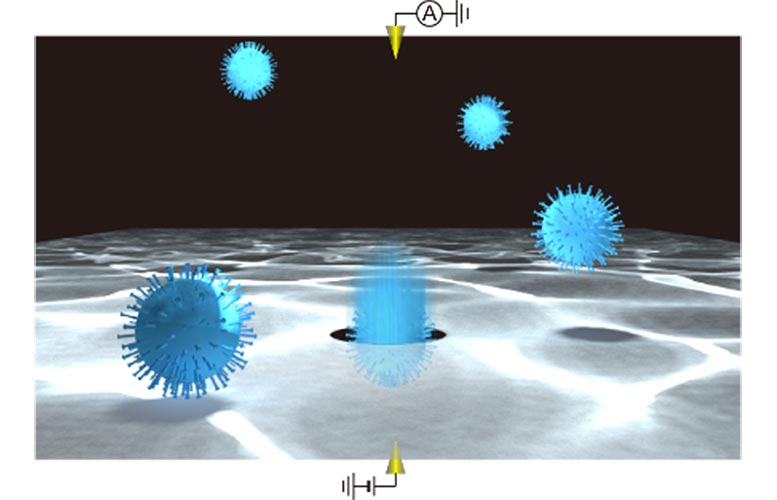
    Single virus particle detections using a solid-state nanopore. Credit: Osaka University

    Scientists at Osaka University develop a label-free method for identifying respiratory viruses based on changes in electrical current when they pass through silicon nanopores, which may lead to new rapid COVID-19 tests.

    The ongoing global pandemic has created an urgent need for rapid tests that can diagnose the presence of the SARS-CoV-2 virus, the pathogen that causes COVID-19, and distinguish it from other respiratory viruses. Now, researchers from Japan have demonstrated a new system for single-virion identification of common respiratory pathogens using a machine learning algorithm trained on changes in current across silicon nanopores. This work may lead to fast and accurate screening tests for diseases like COVID-19 and influenza.

    In a study published this month in ACS Sensors scientists at Osaka University have introduced a new system using silicon nanopores sensitive enough to detect even a single virus particle when coupled with a machine learning algorithm.

    In this method, a silicon nitride layer just 50 nm thick suspended on a silicon wafer has tiny nanopores added, which are themselves only 300 nm in diameter. When a voltage difference is applied to the solution on either side of the wafer, ions travel through the nanopores in a process called electrophoresis.

    The motion of the ions can be monitored by the current they generate, and when a viral particle enters a nanopore, it blocks some of the ions from passing through, leading to a transient dip in current. Each dip reflects the physical properties of the particle, such as volume, surface charge, and shape, so they can be used to identify the kind of virus.

    The natural variation in the physical properties of virus particles had previously hindered implementation of this approach, however, using machine learning, the team built a classification algorithm trained with signals from known viruses to determine the identity of new samples. “By combining single-particle nanopore sensing with artificial intelligence, we were able to achieve highly accurate identification of multiple viral species,” explains senior author Makusu Tsutsui.

    The computer can discriminate the differences in electrical current waveforms that cannot be identified by human eyes, which enables highly accurate virus classification. In addition to coronavirus, the system was tested with similar pathogens — respiratory syncytial virus, adenovirus, influenza A, and influenza B.

    The team believes that coronaviruses are especially well suited for this technique since their spiky outer proteins may even allow different strains to be classified separately. “This work will help with the development of a virus test kit that outperforms conventional viral inspection methods,” says last author Tomoji Kawai.

    Compared with other rapid viral tests like polymerase chain reaction or antibody-based screens, the new method is much faster and does not require costly reagents, which may lead to improved diagnostic tests for emerging viral particles that cause infectious diseases such as COVID-19.

    Reference: “Digital Pathology Platform for Respiratory Tract Infection Diagnosis via Multiplex Single-Particle Detections” by Akihide Arima, Makusu Tsutsui, Takeshi Yoshida, Kenji Tatematsu, Tomoko Yamazaki, Kazumichi Yokota, Shun’ichi Kuroda, Takashi Washio, Yoshinobu Baba and Tomoji Kawai, 16 September 2020, ACS Sensors.
    DOI: 10.1021/acssensors.0c01564

    Never miss a breakthrough: Join the SciTechDaily newsletter.
    Follow us on Google and Google News.

    Biochemistry Biophysics COVID-19 Machine Learning Nanotechnology University of Osaka Virology
    Share. Facebook Twitter Pinterest LinkedIn Email Reddit

    Related Articles

    AI-Driven Dynamic Face Mask Adapts To Exercise and Pollution Levels

    Fusion of Artificial Intelligence and Nanopore Technology: Passing the COVID Test in Just Five Minutes

    Shutting the Nano-Gate: Breakthrough May Lead to Single-Molecule Sensors and Cheaper Genomic Sequencing

    Tool Encoded in Coronaviruses Provides a Potential Drug Target for COVID-19

    Nanodiamond Sensors Created That Can Act As Both Heat Sources and Thermometers

    Detecting COVID-19 Antibodies in 10–12 Seconds With a 3D Printed Test Chip

    COVID-19 Coronavirus Breathalyzer Test Developed

    Titanate Nanowire Mask Filter Can Kill Bacteria and Viruses Including SARS-CoV-2/COVID-19

    Unexpected Scientific Insights into COVID-19 From AI Machine Learning Tool

    Leave A Reply Cancel Reply

    • Facebook
    • Twitter
    • Pinterest
    • YouTube

    Don't Miss a Discovery

    Subscribe for the Latest in Science & Tech!

    Trending News

    The Universe Is Expanding Too Fast and Scientists Can’t Explain Why

    “Like Liquid Metal”: Scientists Create Strange Shape-Shifting Material

    Early Warning Signals of Esophageal Cancer May Be Hiding in Plain Sight

    Common Blood Pressure Drug Shows Surprising Power Against Deadly Antibiotic-Resistant Superbug

    Scientists Uncover Dangerous Connection Between Serotonin and Heart Valve Disease

    Scientists Discover a “Protector” Protein That Could Help Reverse Hair Loss

    Bone-Strengthening Discovery Could Reverse Osteoporosis

    Scientists Uncover Hidden Trigger Behind Stem Cell Aging

    Follow SciTechDaily
    • Facebook
    • Twitter
    • YouTube
    • Pinterest
    • Newsletter
    • RSS
    SciTech News
    • Biology News
    • Chemistry News
    • Earth News
    • Health News
    • Physics News
    • Science News
    • Space News
    • Technology News
    Recent Posts
    • A Common Diabetes Drug May Hold the Key to Stopping HIV From Coming Back
    • Ancient “Syphilis-Like” Disease in Vietnam Challenges Key Scientific Assumptions
    • Drinking Alcohol To Cope in Your 20s Could Damage Your Brain for Life
    • Scientists Crack Alfalfa’s Chromosome Mystery After Decades of Debate
    • Ancient Ant-Plant Alliance Collapses As Predatory Wasps Move In
    Copyright © 1998 - 2026 SciTechDaily. All Rights Reserved.
    • Science News
    • About
    • Contact
    • Editorial Board
    • Privacy Policy
    • Terms of Use

    Type above and press Enter to search. Press Esc to cancel.