
Close Menu
    Facebook X (Twitter) Instagram
    SciTechDaily
    • Biology
    • Chemistry
    • Earth
    • Health
    • Physics
    • Science
    • Space
    • Technology
    Facebook X (Twitter) Pinterest YouTube RSS
    SciTechDaily
    Home»Science»Southern African Dinosaur Had Extremely Irregular Growth
    Science

    Southern African Dinosaur Had Extremely Irregular Growth

    By University of the WitwatersrandMay 29, 2021No Comments3 Mins Read
    Facebook Twitter Pinterest Telegram LinkedIn WhatsApp Email Reddit
    Share
    Facebook Twitter LinkedIn Pinterest Telegram Email Reddit
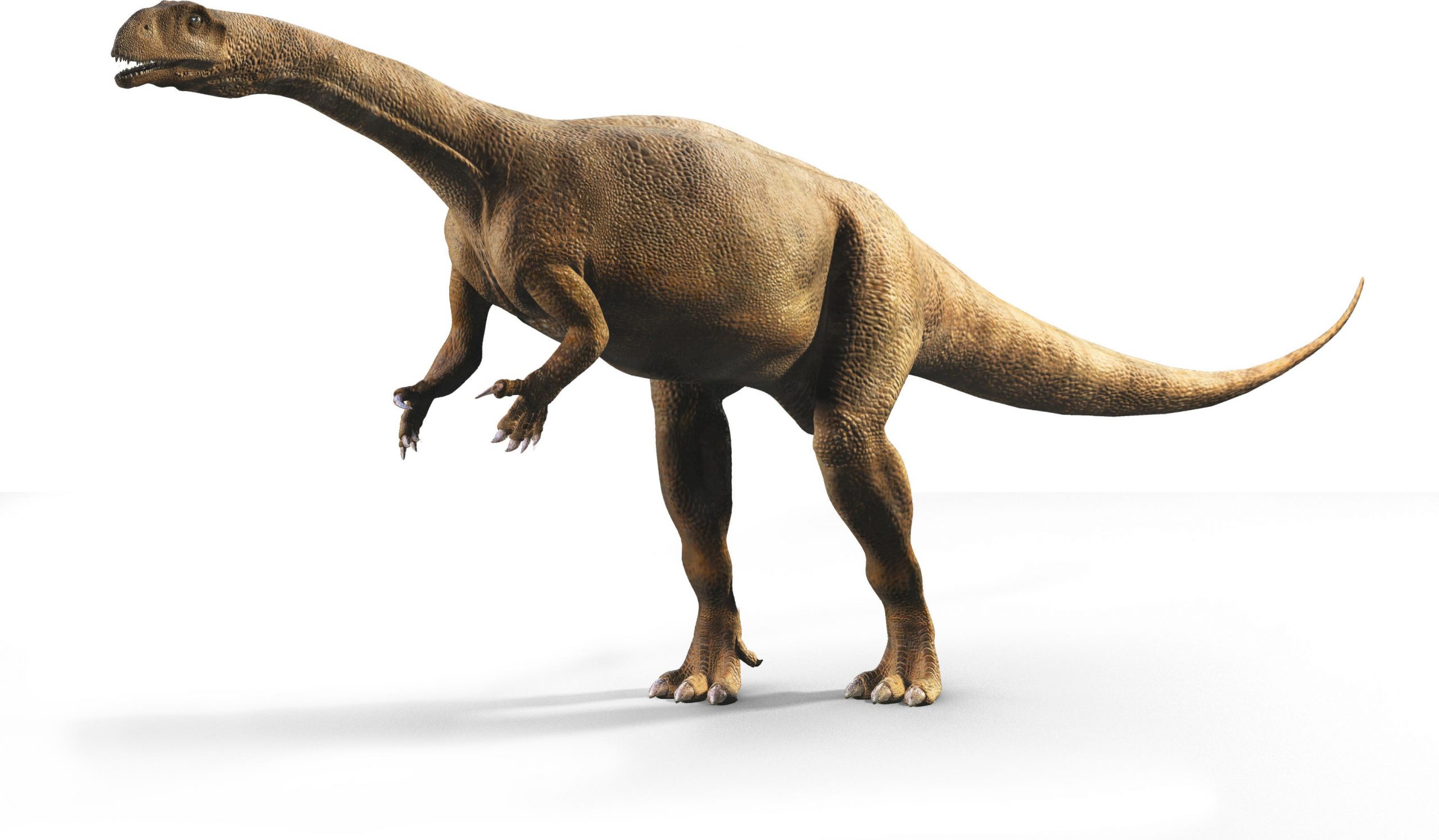
    Massospondylus carinatus
    Reconstruction of Massospondylus carinatus. Credit: Dorling Kindersley

    Unlike steady-growing mammals, Massospondylus dinosaurs grew irregularly, responding to environmental changes. Their survival strategy reveals a dynamic adaptation to post-extinction conditions.

    Anyone who’s raised a child or a pet will know just how fast and how steady their growth seems to be. You leave for a few days on a work trip and when you come home the child seems to have grown 10cm! That’s all well and good for the modern household, but how did dinosaurs grow up? Did they, too, surprise their parents with their non-stop growth?

    A new study lead by Dr. Kimberley Chapelle of the American Museum of Natural History in New York City and Honorary Research Fellow at the University of the Witwatersrand suggests NOT, at least for one iconic southern African dinosaur species. By looking at the fossil thigh bones under a microscope, researchers can count growth lines, like those of a tree. This allows them to study how much the individuals grew each year. By looking at growth rings in the bones of Massospondylus carinatus, Dr. Chapelle was able to show that its growth varied season-to-season, more like a tree than a puppy or a baby human.

    “These things were just all over the show,” said Chapelle, “one year they might gain 100kg of body weight and the next year they’d only grow by 10kg!”
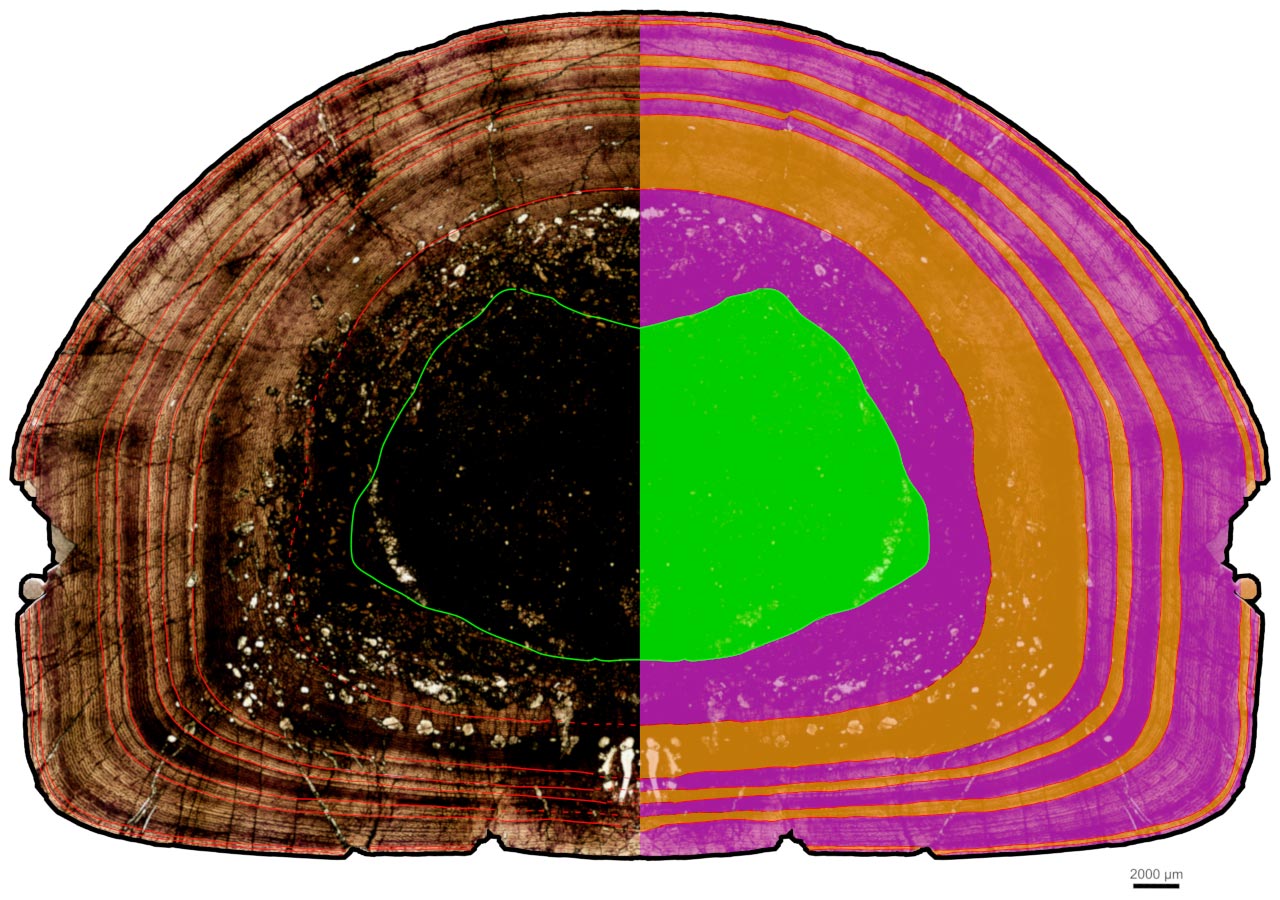
    Massospondylus carinatus Thigh Bone Cross Section
    Cross section of a Massospondylus carinatus thigh bone, showing the growth rings, similar to those of a tree. Credit: Kimi Chapelle

    Massospondylus was a medium sized dinosaur, up to 500kg in body weight, that lived in the Early Jurassic, so 200 million years ago. It fed on plants like ferns. The study suggests that Massospondylus’ growth directly responded to its environmental conditions. In a good year with lots of rain and food, the species might race ahead, almost doubling their size. In a bad year where nutrients were scarce, it might hardly grow at all.

    Evolutionary Survival Post-Extinction

    Chapelle and her colleagues suggest that such a growth strategy might have helped Massospondylus cope with the harsh environmental conditions following the end-Triassic Mass Extinction 200 million years ago, when more than 50% of species were wiped out.

    “Massospondylus was one of the first Southern African dinosaurs named back in 1854, and we are still learning so much from it. It teaches us so much about our past environments and what southern Africa was like 200 million years ago,” said Chapelle.

    “This study shows the power of big sample sizes,” said Jonah Choiniere, Professor at Wits University and co-author of the study, “when we can study a dinosaur from embryo to adult, like Massospondylus, we can begin to understand them as living animals.”

    “It is exciting to see such varied growth patterns in a dinosaur, showing us there is still so much to learn about these unique creatures!” said Dr. Jennifer Botha from the National Museum, Bloemfontein, a co-author on the study.

    Reference: “Extreme growth plasticity in the early branching sauropodomorph Massospondylus carinatus” by Kimberley E. J. Chapelle, Jennifer Botha and Jonah N. Choiniere, 12 May 2021, Biology Letters.
    DOI: 10.1098/rsbl.2020.0843

    Never miss a breakthrough: Join the SciTechDaily newsletter.
    Follow us on Google and Google News.

    Archaeology Dinosaurs Evolution Paleontology University of The Witwatersrand
    Share. Facebook Twitter Pinterest LinkedIn Email Reddit

    Related Articles

    Surprising Diversity of Cretaceous Reptiles at Argentina Fossil Site – Revealed by Discovery of Ancient Teeth

    Tiny Ancient Bird Discovered in China Shares Skull Features With Tyrannosaurus rex

    Meet the Massive Australotitan, the “Southern Titan” – Australia’s Largest Dinosaur!

    Shuvuuia: Extraordinary Dinosaurs That Hunted in the Dark

    260-Million-Year-Old Killing Machine Exposed

    Paleontologists Surprising Discovery: Fossil Shark Turns Into Mystery Pterosaur

    Naked Prehistoric Monsters! Pterosaurs, Ancient Flying Reptiles, May Not Have Had Feathers at All

    Evidence T. Rex’s Long Legs Evolved for Distance, Not Speed Like Previously Thought

    New Species of Giant Predatory Dinosaur Discovered in Thailand Provides a New Glimpse at Dinosaur Evolution

    Leave A Reply Cancel Reply

    • Facebook
    • Twitter
    • Pinterest
    • YouTube

    Don't Miss a Discovery

    Subscribe for the Latest in Science & Tech!

    Trending News

    Scientists Uncover Potential Brain Risks of Popular Fish Oil Supplements

    Scientists Discover a Surprising Way To Make Bread Healthier and More Nutritious

    After 60 Years, Scientists Uncover Unexpected Brain Effects of Popular Diabetes Drug Metformin

    New Research Uncovers Hidden Side Effects of Popular Weight-Loss Drugs

    Scientists Rethink Extreme Warming After Surprising Ocean Discovery

    Landmark Study Links Never Marrying to Significantly Higher Cancer Risk

    Researchers Discover Unknown Beetle Species Just Steps From Their Lab

    Largest-Ever Study Finds Medicinal Cannabis Ineffective for Anxiety, Depression, PTSD

    Follow SciTechDaily
    • Facebook
    • Twitter
    • YouTube
    • Pinterest
    • Newsletter
    • RSS
    SciTech News
    • Biology News
    • Chemistry News
    • Earth News
    • Health News
    • Physics News
    • Science News
    • Space News
    • Technology News
    Recent Posts
    • Strange 65-Foot Dinosaur Discovered in Argentina
    • Researchers Uncover Source of Strange Deformation in Earth’s Largest Continental Rift
    • Scientists Solve Mystery of Where the Colorado River Vanished Millions of Years Ago
    • Not Just Alzheimer’s: Scientists Uncover Clues to a Second, Overlooked Disorder
    • Scientists Uncover Dangerous Connection Between Serotonin and Heart Valve Disease
    Copyright © 1998 - 2026 SciTechDaily. All Rights Reserved.
    • Science News
    • About
    • Contact
    • Editorial Board
    • Privacy Policy
    • Terms of Use

    Type above and press Enter to search. Press Esc to cancel.