
Close Menu
    Facebook X (Twitter) Instagram
    SciTechDaily
    • Biology
    • Chemistry
    • Earth
    • Health
    • Physics
    • Science
    • Space
    • Technology
    Facebook X (Twitter) Pinterest YouTube RSS
    SciTechDaily
    Home»Space»Spectacular Imagery of Solar Eclipses Caused by Phobos and Deimos
    Space

    Spectacular Imagery of Solar Eclipses Caused by Phobos and Deimos

    By Andrew Good, Jet Propulsion LaboratoryApril 4, 2019No Comments3 Mins Read
    Facebook Twitter Pinterest Telegram LinkedIn WhatsApp Email Reddit
    Share
    Facebook Twitter LinkedIn Pinterest Telegram Email Reddit
    Curiosity Captured Two Solar Eclipses on Mars
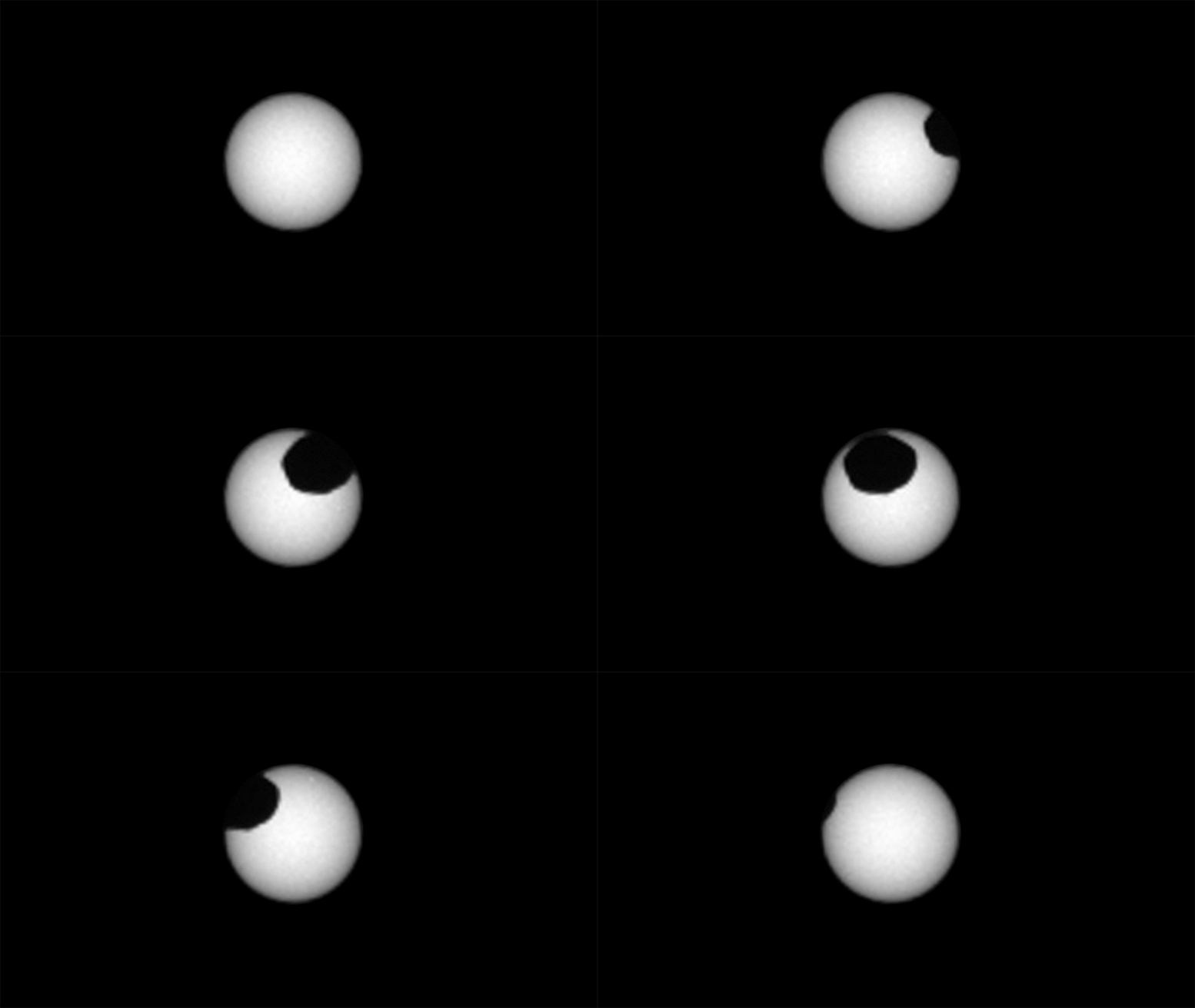
    This series of images shows the Martian moon Phobos as it crossed in front of the Sun, as seen by NASA’s Curiosity Mars rover on Tuesday, March 26, 2019 (Sol 2359). Credit: NASA/JPL-Caltech/MSSS

    When NASA’s Curiosity Mars rover landed in 2012, it brought along eclipse glasses. The solar filters on its Mast Camera (Mastcam) allow it to stare directly at the Sun. Over the past few weeks, Curiosity has been putting them to good use by sending back some spectacular imagery of solar eclipses caused by Phobos and Deimos, Mars’ two moons.

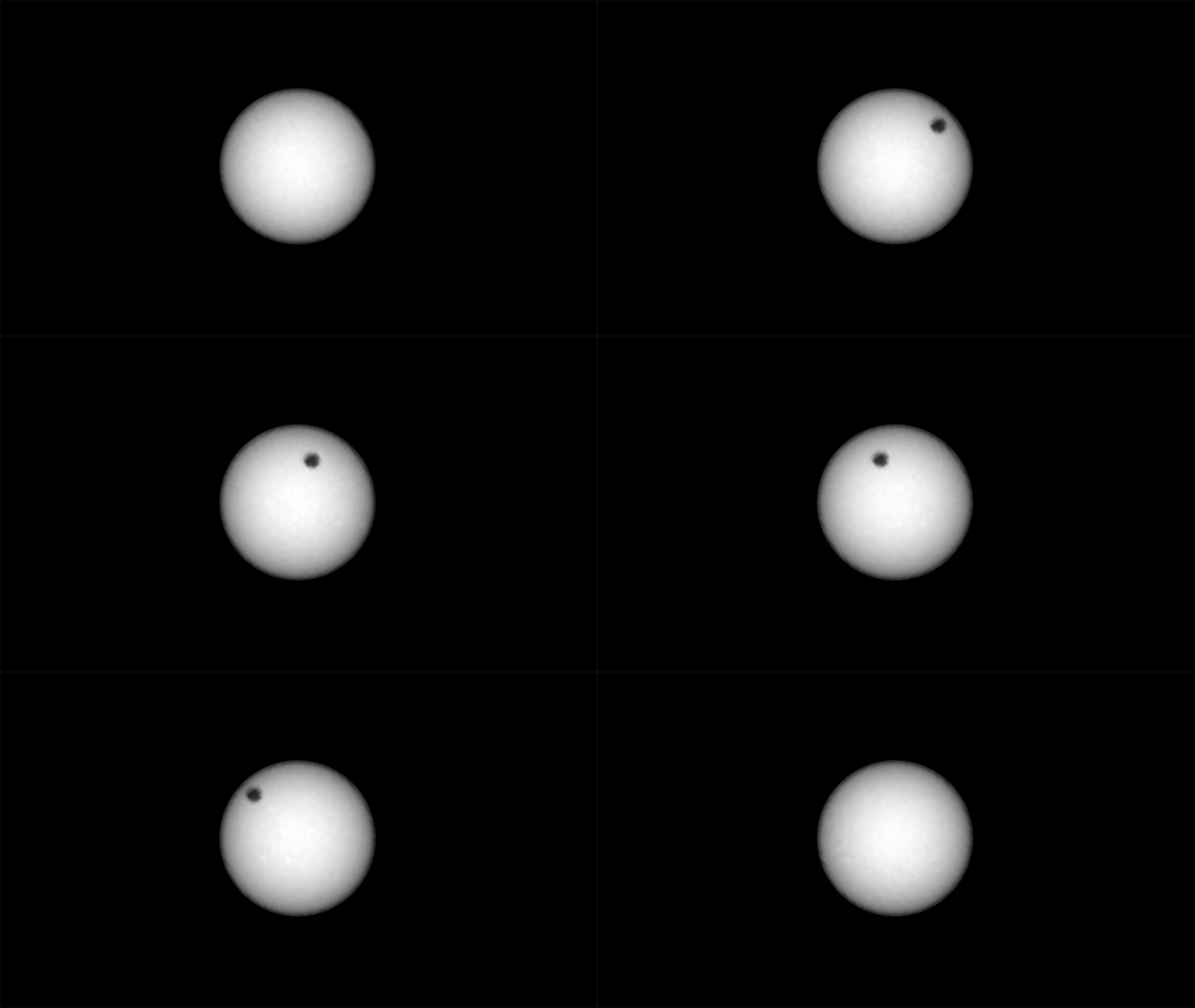
    Phobos, which is about 7 miles (11.5 kilometers) across, was imaged on March 26, 2019 (the 2,359th sol, or Martian day, of Curiosity’s mission); Deimos, which is about 1.5 miles (2.3 kilometers) across, was photographed on March 17, 2019 (Sol 2350). Phobos doesn’t completely cover the Sun, so it would be considered an annular eclipse. Because Deimos is so small compared to the disk of the Sun, scientists would say it’s transiting the Sun.
    Watch a Solar Eclipses on Mars
    This series of images shows the Martian moon Deimos as it crossed in front of the Sun, as seen by NASA’s Curiosity Mars rover on Sunday, March 17, 2019 (the 2,350th Martian day, or sol, of the mission). Credit: NASA/JPL-Caltech/MSSS

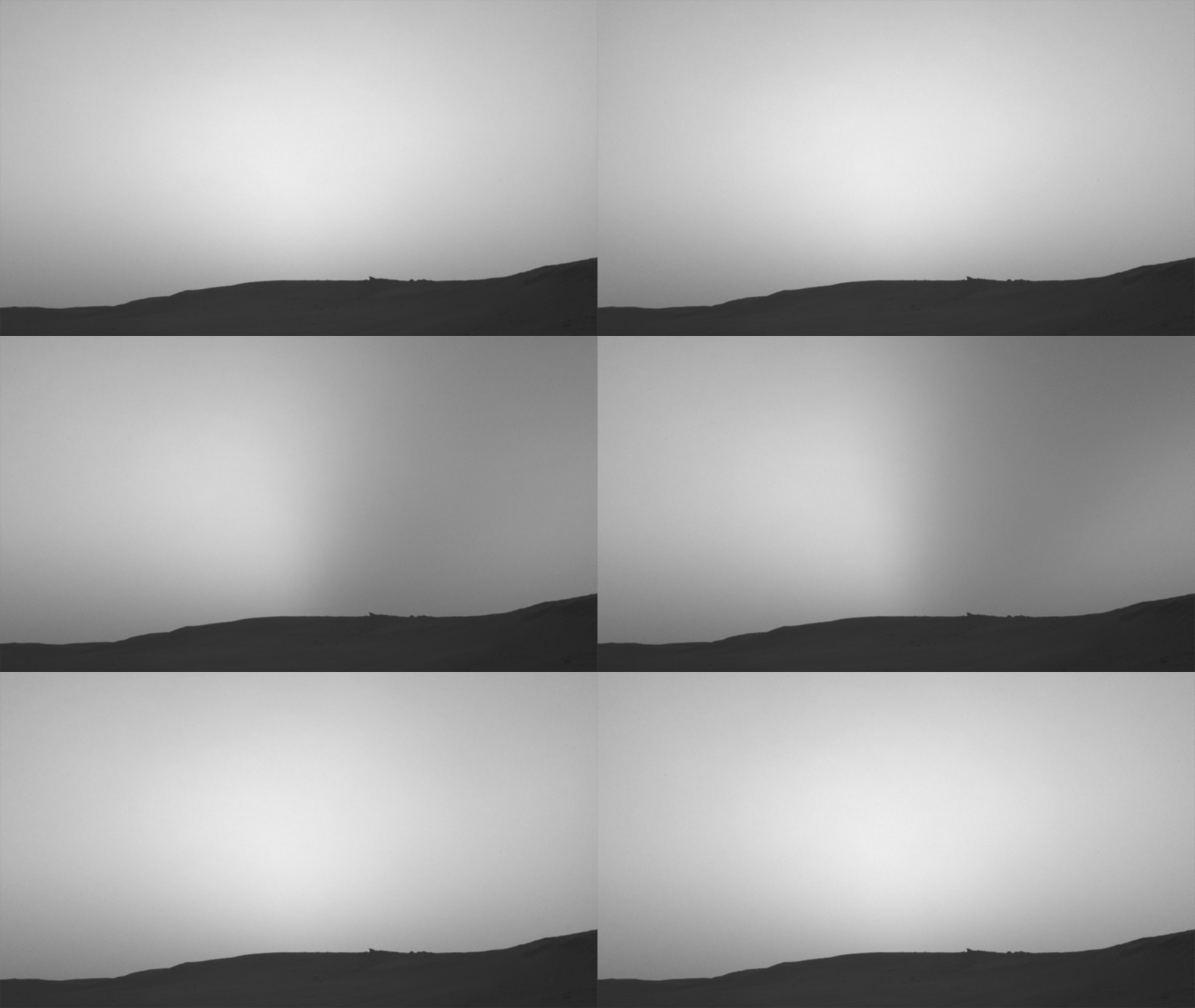
    In addition to capturing each moon crossing in front of the Sun, one of Curiosity’s Navigation Cameras (Navcams) observed the shadow of Phobos on March 25, 2019 (Sol 2358). As the moon’s shadow passed over the rover during sunset, it momentarily darkened the light.

    Solar eclipses have been seen many times by Curiosity and other rovers in the past. Besides being cool — who doesn’t love an eclipse? — these events also serve a scientific purpose, helping researchers fine-tune their understanding of each moon’s orbit around Mars.

    Before the Spirit and Opportunity rovers landed in 2004, there was much higher uncertainty in the orbit of each moon, said Mark Lemmon of Texas A&M University, College Station, a co-investigator with Curiosity’s Mastcam. The first time one of the rovers tried to image Deimos eclipsing the Sun, they found the moon was 25 miles (40 kilometers) away from where they expected.

    “More observations over time help pin down the details of each orbit,” Lemmon said. “Those orbits change all the time in response to the gravitational pull of Mars, Jupiter, or even each Martian moon pulling on the other.”
    Curiosity Views Two Solar Eclipses on Mars
    This series of images shows the shadow of Phobos as it sweeps over NASA’s Curiosity Mars rover and darkens the sunlight on Monday, March 25, 2019 (Sol 2358). Credit: NASA/JPL-Caltech

    These events also help make Mars relatable, Lemmon said: “Eclipses, sunrises and sunsets and weather phenomena all make Mars real to people, as a world both like and unlike what they see outside, not just a subject in a book.”

    To date, there have been eight observations of Deimos eclipsing the Sun from either Spirit, Opportunity, or Curiosity; there have been about 40 observations of Phobos. There’s still a margin of uncertainty in the orbits of both Martian moons, but that shrinks with every eclipse that’s viewed from the Red Planet’s surface.

    Never miss a breakthrough: Join the SciTechDaily newsletter.
    Follow us on Google and Google News.

    Astronomy Curiosity Rover Deimos Phobos Planetary Science
    Share. Facebook Twitter Pinterest LinkedIn Email Reddit

    Related Articles

    New Mars Model Details the Violent Birth of Phobos and Deimos

    Mars Odyssey Observes Martian Moons Phobos and Deimos

    Curiosity Finds Ancient Streambed on Mars

    NASA’s Curiosity Prepares for Use of Its Arm and Tools

    Curiosity Sends Back Radioed Words and New Telephoto View of Mars

    Curiosity’s ChemCam Laser Yields Good Results

    NASA’s Curiosity Readies for First Drive on Mars

    Color HiRISE Image of Curiosity Rover on Mars

    First 360-Degree Color Panorama From NASA’s Curiosity Mars Rover

    Leave A Reply Cancel Reply

    • Facebook
    • Twitter
    • Pinterest
    • YouTube

    Don't Miss a Discovery

    Subscribe for the Latest in Science & Tech!

    Trending News

    Wasp Colonies Explode Into Violence After Losing Their Queen

    Scientists Create “Living Plastic” That Self-Destructs in Just Six Days

    Your Blood May Carry a 700-Million-Year-Old Secret

    Scientists Discover Some “Zombie Cells” May Actually Help You Live Longer

    Earth May Be Seeding Venus With Life, According to New Research

    What Scientists Found Inside a 117-Year-Old Woman Reveals New Clues to Long Life

    Scientists Discover Mysterious Creature Living in the Great Salt Lake – and It Exists Nowhere Else on Earth

    It’s Alive? Surprising Discovery Changes What We Know About Fog

    Follow SciTechDaily
    • Facebook
    • Twitter
    • YouTube
    • Pinterest
    • Newsletter
    • RSS
    SciTech News
    • Biology News
    • Chemistry News
    • Earth News
    • Health News
    • Physics News
    • Science News
    • Space News
    • Technology News
    Recent Posts
    • Scientists Discover a Bizarre Crocodile Cousin That Walked Like a Dinosaur
    • How Pigeons Find Their Way Home May Finally Be Solved
    • This Dinosaur Had the Claws of a Raptor but Hunted Like a Heron
    • Doctors May Need To Rethink Calcium and Vitamin D Recommendations After Major Review
    • Researchers Suspected Brain Inflammation in Long COVID but Found Something Else
    Copyright © 1998 - 2026 SciTechDaily. All Rights Reserved.
    • Science News
    • About
    • Contact
    • Editorial Board
    • Privacy Policy
    • Terms of Use

    Type above and press Enter to search. Press Esc to cancel.