
Close Menu
    Facebook X (Twitter) Instagram
    SciTechDaily
    • Biology
    • Chemistry
    • Earth
    • Health
    • Physics
    • Science
    • Space
    • Technology
    Facebook X (Twitter) Pinterest YouTube RSS
    SciTechDaily
    Home»Space»ESO’s SPECULOOS Planet-Hunting Machine Views NGC 6902
    Space

    ESO’s SPECULOOS Planet-Hunting Machine Views NGC 6902

    By European Southern ObservatoryMarch 2, 2019No Comments2 Mins Read
    Facebook Twitter Pinterest Telegram LinkedIn WhatsApp Email Reddit
    Share
    Facebook Twitter LinkedIn Pinterest Telegram Email Reddit
    SPECULOOS Views NGC 6902
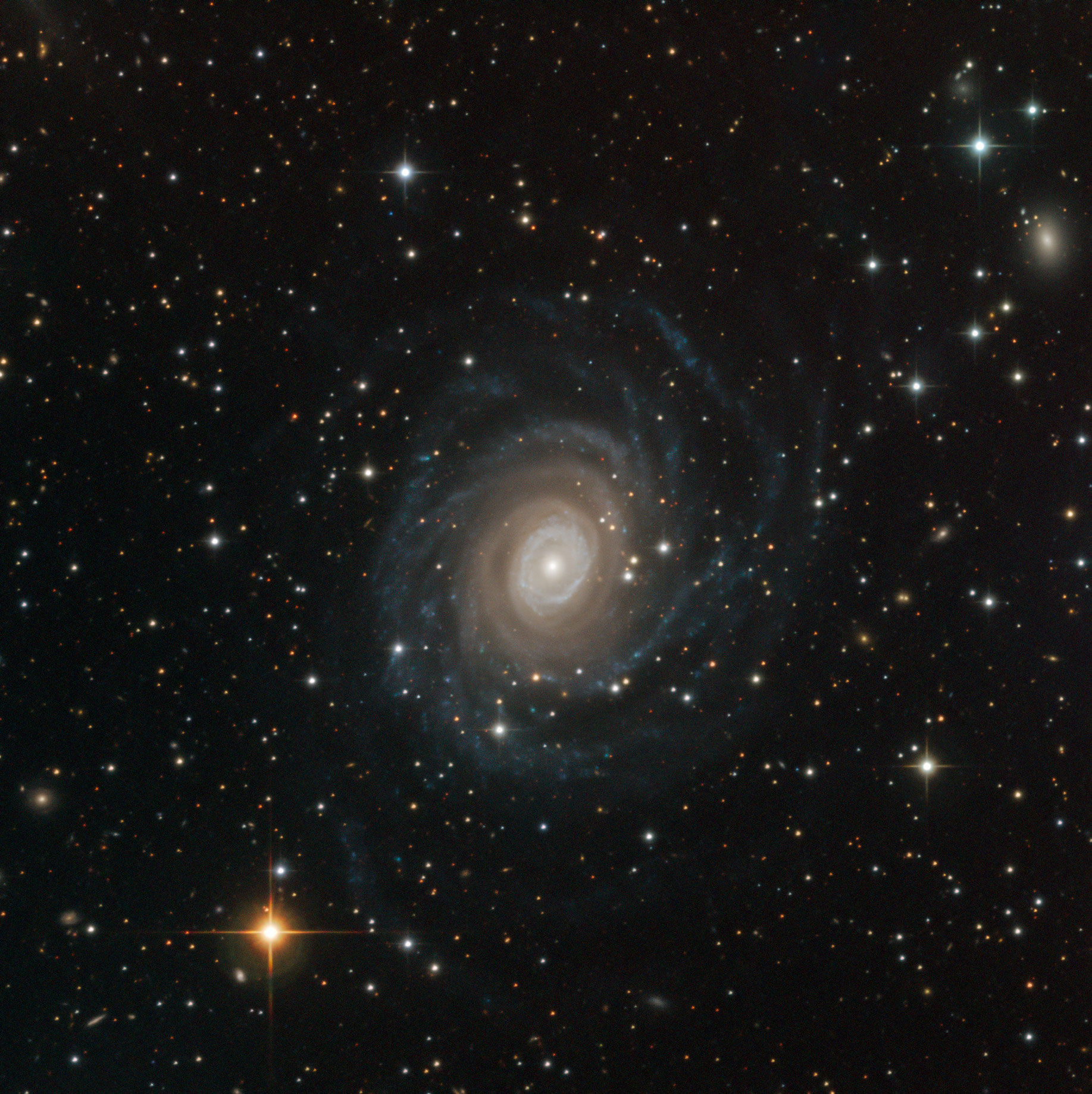
    The first-light image from the newest resident of ESO’s Paranal Observatory is a galaxy called NGC 6902, which is found about 120 million light-years from Earth in the constellation of Sagittarius (The Archer). The galaxy’s spiral arms swirl outwards from a bright center until they dissolve into streams of blue haze at the galaxy’s edge. Credit: ESO

    This Picture of the Week is a special treat: a first-light image from the newest resident of ESO’s Paranal Observatory, the SPECULOOS Southern Observatory. This planet-hunting machine aims to observe nearby but dim stars to locate exoplanets for other telescopes — such as ESO’s forthcoming Extremely Large Telescope (ELT) — to study in detail. Comprising four one-meter telescopes, each named after one of Jupiter’s Galilean moons, SPECULOOS promises to open up new frontiers in exoplanet research.

    This image, however, is obviously not of a faint star, but of a galaxy called NGC 6902. Before a telescope starts its primary mission it must successfully undertake an event called “first light”: the first time it is used for a scientific observation. Astronomers typically pick well-known objects for this initial test of a telescope’s capabilities, which is half demonstration and half celebration. In this case, the team settled on NGC 6902 as the first-light target for the Ganymede telescope.

    The result was this stunning image of the spiral galaxy, which is found about 120 million light-years from Earth in the constellation of Sagittarius (The Archer). The galaxy’s spiral arms swirl outwards from a bright center until they dissolve into streams of blue haze at the galaxy’s edge. If this is what Ganymede can produce as its first observation of something it wasn’t even designed to image, we have a lot to look forward to. Watch this space!

    Never miss a breakthrough: Join the SciTechDaily newsletter.
    Follow us on Google and Google News.

    Astronomy European Southern Observatory
    Share. Facebook Twitter Pinterest LinkedIn Email Reddit

    Related Articles

    Supermassive Black Holes on a Collision Course: Closest Pair of Supermassive Black Holes to Earth Ever Discovered

    Black Hole Discovered Lurking in Star Cluster Outside Our Galaxy

    Discovery in a Galaxy Over 12 Billion Light-Years Away – Reveals How Element Found in Our Bones Is Forged in the Universe

    Strange 160 Mile-Long “Dog-Bone” Asteroid Kleopatra Captured in Detailed Images

    Astronomers Find Small Rocky Planet – Just Half the Mass of Venus

    First Clear Detection of a Moon-Forming Disc Around a Planet Outside Our Solar System

    Mystery Solved: Astronomers Unravel the Puzzle of Betelgeuse’s “Great Dimming”

    Stunning Galactic Fireworks: New ESO Images Reveal Spectacular Features of Nearby Galaxies

    Astronomers Were Puzzled by “Great Dimming” of Betelgeuse – Now the Mystery Is Solved

    Leave A Reply Cancel Reply

    • Facebook
    • Twitter
    • Pinterest
    • YouTube

    Don't Miss a Discovery

    Subscribe for the Latest in Science & Tech!

    Trending News

    Scientists Uncover Promising New Strategy To Stop Parkinson’s in Its Tracks

    Experts Reveal the Surprising Cancer Link Behind a Common Vitamin

    This Strange “Golden Orb” Found 2 Miles Deep Stumped Scientists for Years

    Giant “Last Titan” Dinosaur Discovered in Thailand Was Bigger Than 9 Elephants

    This “Longevity Gene” May Protect the Brain From Aging and Dementia

    Common Cleaning Chemical Could Triple Your Risk of a Dangerous Liver Disease

    Scientists Discover Bizarre 100-Million-Year-Old Insect With Giant Claws

    Scientists Discover “Good” Gut Microbes That Could Protect Against Autism and ADHD

    Follow SciTechDaily
    • Facebook
    • Twitter
    • YouTube
    • Pinterest
    • Newsletter
    • RSS
    SciTech News
    • Biology News
    • Chemistry News
    • Earth News
    • Health News
    • Physics News
    • Science News
    • Space News
    • Technology News
    Recent Posts
    • Vitamin C May Fight Cancer in a Surprising Way
    • Light-Matter Particles Could Revolutionize AI Computing
    • Scientists Warn Many Insects May Not Survive a Warming World
    • Hektoria Glacier Collapse Reveals How Fast Antarctica Can Fall Apart
    • Hidden Earthquake Threat: Oregon’s Fault May Be Closer to the Surface Than Scientists Thought
    Copyright © 1998 - 2026 SciTechDaily. All Rights Reserved.
    • Science News
    • About
    • Contact
    • Editorial Board
    • Privacy Policy
    • Terms of Use

    Type above and press Enter to search. Press Esc to cancel.