
Close Menu
    Facebook X (Twitter) Instagram
    SciTechDaily
    • Biology
    • Chemistry
    • Earth
    • Health
    • Physics
    • Science
    • Space
    • Technology
    Facebook X (Twitter) Pinterest YouTube RSS
    SciTechDaily
    Home»Biology»Spicing Up Pathogen Defense: Scientists Transform Cinnamon Into Nanotech Antimicrobials
    Biology

    Spicing Up Pathogen Defense: Scientists Transform Cinnamon Into Nanotech Antimicrobials

    By Universitat Politècnica De ValènciaJune 7, 20241 Comment3 Mins Read
    Facebook Twitter Pinterest Telegram LinkedIn WhatsApp Email Reddit
    Share
    Facebook Twitter LinkedIn Pinterest Telegram Email Reddit
    Hepatitis B Virus Destruction
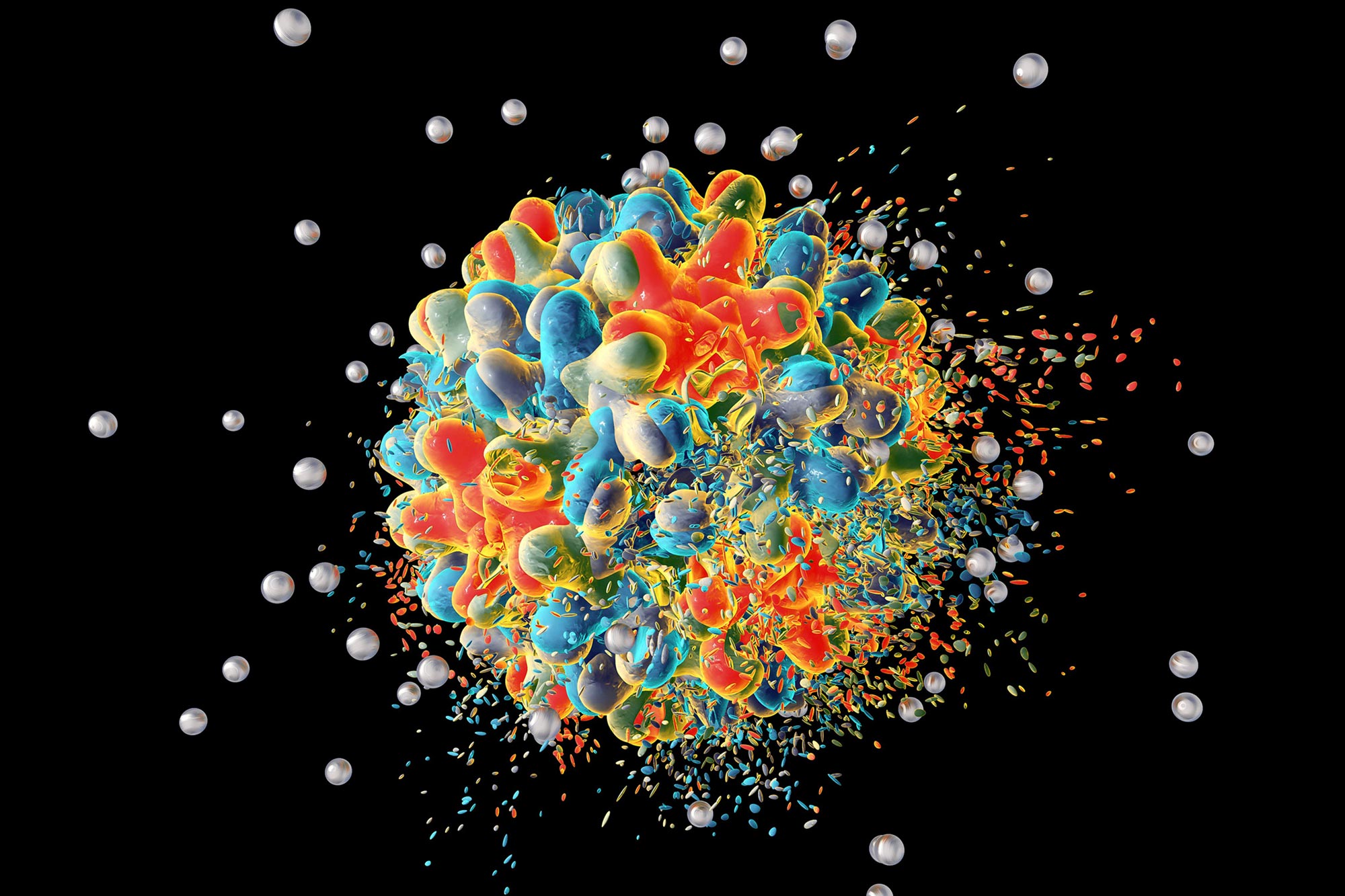
    Researchers at the Universitat Politècnica de València and CIBER-BBN have developed an innovative nanodevice using the antimicrobial properties of cinnamaldehyde from cinnamon oil, effective against pathogens like Escherichia coli and Staphylococcus aureus, with potential applications in food safety, healthcare, and more. Credit: SciTechDaily

    Cinnamon oil-based nanodevice effectively targets key pathogens, with potential uses in healthcare and food safety

    A team of researchers from the Universitat Politècnica de València (UPV) and the CIBER de Bioingeniería, Biomaterials y Nanomedicine (CIBER-BBN) has created an innovative antimicrobial nanodevice utilizing cinnamaldehyde, an essential oil component from cinnamon.

    This “nano killer” has demonstrated considerable effectiveness in combating pathogenic microorganisms such as Escherichia coli, Staphylococcus aureus, and Candida albicans. The potential applications of this technology include pathogen elimination in food products, wastewater treatment, and the management of hospital-acquired infections.

    Pathogen Impact and Application Methods

    The pathogens targeted by this nanodevice can cause severe health issues. Escherichia coli strains, for example, are typically harmless but some can lead to significant abdominal pain, diarrhea, and vomiting. Staphylococcus aureus may cause skin and bloodstream infections, osteomyelitis, or pneumonia. Candida albicans, a fungus found in biological fluids, is known for causing diseases like candidemia and invasive candidiasis.

    UPV "Nanokiller" Research Team
    UPV Team. Credit: UPV

    The researchers say this application of this “nanokiller” would be very simple: “For example, we could create a spray, make a formulation based on water and other compounds, and apply it directly. We could make a water-based formulation in the field and spray it directly, like any pesticide today. And in hospitals, it could be applied on bandages, and we could even try to make a capsule that could be taken orally,” explains Andrea Bernardos, a researcher in the NanoSens group at the Inter-University Institute for Molecular Recognition Research and Technological Development (IDM).

    Enhanced Efficacy and Potential

    The new nanodevice improves the efficacy of encapsulated cinnamaldehyde compared to the free compound: about 52-fold for Escherichia coli, about 60-fold for Staphylococcus aureus, and about 7-fold for Candida albicans.

    “The increase in the antimicrobial activity of the essential oil component is possible thanks to the decrease in its volatility due to its encapsulation in a porous silica matrix and the increase in its local concentration when released due to the presence of the microorganisms,” said Bernardos.

    The device stands out for its high antimicrobial activity at very low doses. In addition, it enhances the antimicrobial properties of free cinnamaldehyde with a reduction of the biocidal dose of around 98% for bacterial strains (Escherichia coli and Staphylococcus aureus) and 72% for the yeast strain (Candida albicans) when the nanodevice is applied.

    “Moreover, this type of device containing natural biocides (such as essential oil components) whose release is controlled by the presence of pathogens could also be applied in fields such as biomedicine, food technology, agriculture, and many others,” concludes Ángela Morellá-Aucejo, also an IDM researcher at the Universitat Politècnica de València.

    The results of this study have been published in the journal Biomaterials Advances.

    Reference: “Remarkable enhancement of cinnamaldehyde antimicrobial activity encapsulated in capped mesoporous nanoparticles: A new “nanokiller” approach in the era of antimicrobial resistance” by Ángela Morellá-Aucejo, Serena Medaglia, María Ruiz-Rico, Ramón Martínez-Máñez, María Dolores Marcos and Andrea Bernardos, 26 March 2024, Biomaterials Advances.
    DOI: 10.1016/j.bioadv.2024.213840

    Never miss a breakthrough: Join the SciTechDaily newsletter.
    Follow us on Google and Google News.

    Bacteria Biomaterials Hospitals Infection Pathogens
    Share. Facebook Twitter Pinterest LinkedIn Email Reddit

    Related Articles

    Permafrost Pandora’s Box: Unleashing “Time-Traveling” Pathogens From the Icy Past

    Gut Bugs: The Microbes Responsible for Controlling Your Body’s Temperature

    Unintended Consequences: Medical Interventions Can Awaken Dormant, Hidden Bacteria

    Scientists Have Created a Method To Prevent Deadly Infections Without Antibiotics

    How Pathogens Learn To Be Pathogens: Partnerships Between Microbes Lead to Human Disease

    Surprising Discovery Proves That Deadly Gene Has Jumped From a Harmless Organism to a Deadly Pathogen

    Bacteria-Resistant Hospital Fabrics That Actively Fight Microbes

    Antibiotic-Free Meat Might Still Be Contaminated with Drug Resistant Bacteria

    NDM-1 Super Bacteria Scares Medical Community in India

    1 Comment

    1. Eric M. Jones on June 8, 2024 8:42 am

      nanodevice?? Really?

      Reply
    Leave A Reply Cancel Reply

    • Facebook
    • Twitter
    • Pinterest
    • YouTube

    Don't Miss a Discovery

    Subscribe for the Latest in Science & Tech!

    Trending News

    Scientists Just Found a Smiling “Happy-Face” Spider in the Himalayas

    A Colossal Moon Impact May Have Left Ancient Secrets Near Future Artemis Landing Sites

    Earthquake Researchers Discover Dangerous Stress Levels Building Beneath Southern California

    NASA Satellites Spot Rare Underwater Volcano Eruption That Could Create Earth’s Newest Island

    520-Million-Year-Old Fossils Solve One of Evolution’s Biggest Mysteries

    This Popular Workout Supplement May Give Cancer Immunotherapy a Big Boost

    Scientists Discover Quantum Entanglement in a Crystal You Can Hold

    New Nonsurgical Knee Treatment Delivers Lasting Pain Relief

    Follow SciTechDaily
    • Facebook
    • Twitter
    • YouTube
    • Pinterest
    • Newsletter
    • RSS
    SciTech News
    • Biology News
    • Chemistry News
    • Earth News
    • Health News
    • Physics News
    • Science News
    • Space News
    • Technology News
    Recent Posts
    • Scientists Unravel a Century-Old Mystery About Hybrid Male Sterility
    • These 567-Million-Year-Old Fossils Are Rewriting the Story of Life on Earth
    • Scientists Discover 250+ Genes That Could Lead to New Ways To Prevent Melanoma
    • This Gut Microbe Could Be the Secret to Staying Strong as You Age
    • The Spider-Like Creatures Helping Scientists Decode the Origins of Fatherhood
    Copyright © 1998 - 2026 SciTechDaily. All Rights Reserved.
    • Science News
    • About
    • Contact
    • Editorial Board
    • Privacy Policy
    • Terms of Use

    Type above and press Enter to search. Press Esc to cancel.