
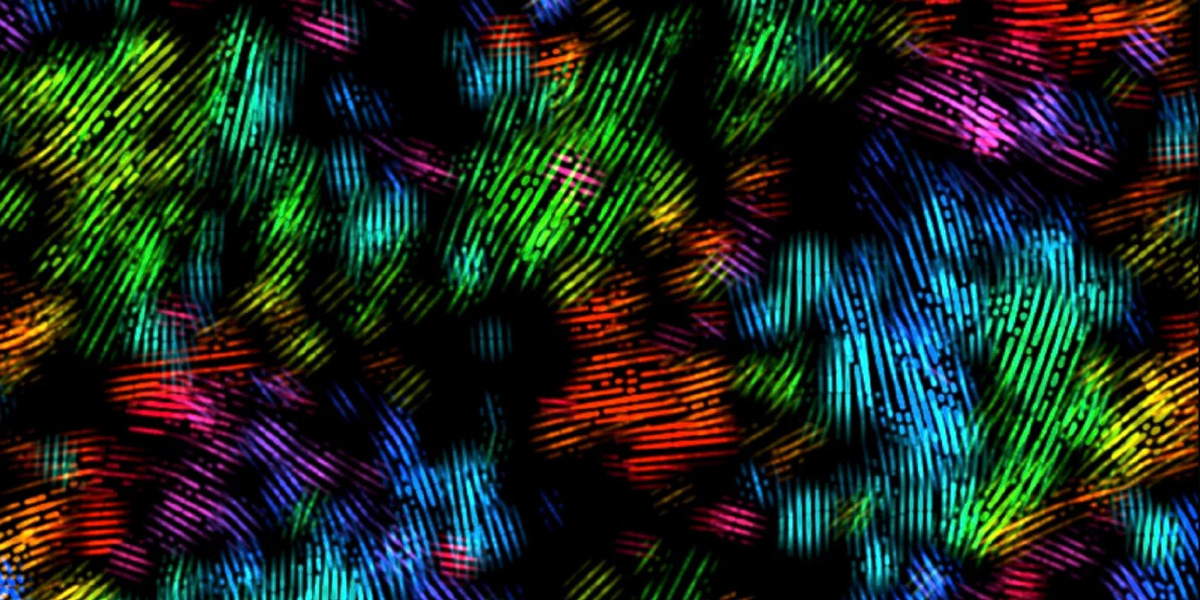
OMIECs hold potential for future electronics, and Stanford scientists used cryo-electron microscopy to study their structural integrity when expanded with liquid electrolyte, explaining their resilience and electrochemical performance.
Organic mixed ionic-electronic conductors (OMIECs) are among the most promising materials for next-generation batteries and electronic devices. These flexible, soft polymer semiconductors exhibit excellent electrochemical properties. However, their molecular microstructure and the mechanisms by which electrons move through them remain poorly understood—an important knowledge gap that must be filled before OMIECs can be commercialized.
To fill that void, materials scientists at Stanford recently employed a special electron microscopic technique that works with soft, so-called “beam-sensitive,” materials, such as biomolecules, to gain a clearer picture of the structural inner workings of OMIECs and why they enjoy such favorable electrochemical properties.
Like water in a car battery, a liquid electrolyte is infused between layers of OMIEC polymer. The electrolyte is the medium through which ions move between positive and negative poles creating an electrical current.
“When OMIEC polymers are immersed in a liquid electrolyte, they swell, like an accordion, yet maintain electronic functionality. We’ve learned that the long molecular chains of the polymer material are able to stretch and gently curve, creating a continuous path, even as the material swells by 300% with the electrolyte,” said Alberto Salleo, the Hong Seh and Vivian W. M. Lim Professor in the School of Engineering and senior author on the paper that appears in the journal Nature Materials.
“The research represents a conceptual breakthrough in visualizing the microstructure of these materials. Where previously we could only theorize, now we can see what is happening that makes the OMIECs work so well,” said Yael Tsarfati, a postdoctoral scholar in Salleo’s lab and first author of the paper who conducted most of the electron microscopy observations. “Learning how a material works at a structural level is key to designing ever-better materials.”
Elusive process
Salleo and Tsarfati have been working for three years on this study. They are the first to use cryo-electron microscopy (Cryo 4D-STEM) to image an OMIEC polymer soaked in an aqueous electrolyte while it hosts electrical charges. This type of microscope uses powerful beams of electrons – rather than light – to image and requires the sample to be extremely cold in order to prevent damage to the material from the electrons.
The dual stress of being soaked and charged electrically causes the polymer structure to change in complex but important ways, Salleo says. Visualizing how the performance of the polymer is maintained despite these stresses is a mystery that has intrigued the community. But it has been a challenge to image these polymers with traditional electron microscopes.
If OMIECs were solid semiconductors, researchers would quickly turn to electron microscopy to study their crystalline structure. But OMIECs are so soft that the powerful electron beams used to illuminate their inner structures damage them during observation.
Using this novel microscopy technique, Salleo and Tsarfati can now see how the soft, malleable polymer maintains its structural integrity as it expands. The team now believes that the soft liquid crystal polymer structure of OMIECs stretches and bends to form a continuous electronic path around bubbles of electrolyte that form between the folded ribbons of polymer.
Soft touch
Cryo 4D-STEM, in essence, freezes the material as it is being studied. The electrolyte does not turn solid, as water would turn to ice. Instead, it enters a different, vitrified state that allows Salleo and team to see into the microstructure in operation.
“The polymer forms a sort of gel that can bend and stretch,” Salleo explains. “It can swell a lot, sometimes 300 percent, which would completely destroy the electronic properties of most materials. But in OMIECs the electronic properties are still preserved.”
Tsarfati notes that once swollen, the polymer chains experience minimal structural change, even during charging and discharging. This leads to more efficient ion exchange with minimal strain on the material itself, making the OMIECs appealing from an electronic standpoint.
“The polymers exhibit impressive resilience to the physical changes and ion insertion compared to other materials we’ve studied and that’s a desirable trait for future electronics,” Tsarfati added, pointing to new directions for the team’s research.
Reference: “The hierarchical structure of organic mixed ionic–electronic conductors and its evolution in water” by Yael Tsarfati, Karen C. Bustillo, Benjamin H. Savitzky, Luke Balhorn, Tyler J. Quill, Adam Marks, Jennifer Donohue, Steven E. Zeltmann, Christopher J. Takacs, Alexander Giovannitti, Iain McCulloch, Colin Ophus, Andrew M. Minor and Alberto Salleo, 27 September 2024, Nature Materials.
DOI: 10.1038/s41563-024-02016-6
This research was supported by funding from the U.S. Department of Energy, the National Science Foundation, the Toyota Research Institute, the Zuckerman-CHE STEM Leadership Program.
Part of this work was performed at the Stanford Synchrotron Radiation Lightsource at SLAC National Accelerator Laboratory, the Stanford Nano Shared Facilities, and the Donner Cryo-EM facility at LBNL.
Never miss a breakthrough: Join the SciTechDaily newsletter.
Follow us on Google and Google News.