
Close Menu
    Facebook X (Twitter) Instagram
    SciTechDaily
    • Biology
    • Chemistry
    • Earth
    • Health
    • Physics
    • Science
    • Space
    • Technology
    Facebook X (Twitter) Pinterest YouTube RSS
    SciTechDaily
    Home»Biology»Stem Cells Help Lizard Regenerate a Perfect Tail for First Time in More Than 250 Million Years
    Biology

    Stem Cells Help Lizard Regenerate a Perfect Tail for First Time in More Than 250 Million Years

    By University of Southern CaliforniaOctober 25, 2021No Comments4 Mins Read
    Facebook Twitter Pinterest Telegram LinkedIn WhatsApp Email Reddit
    Share
    Facebook Twitter LinkedIn Pinterest Telegram Email Reddit
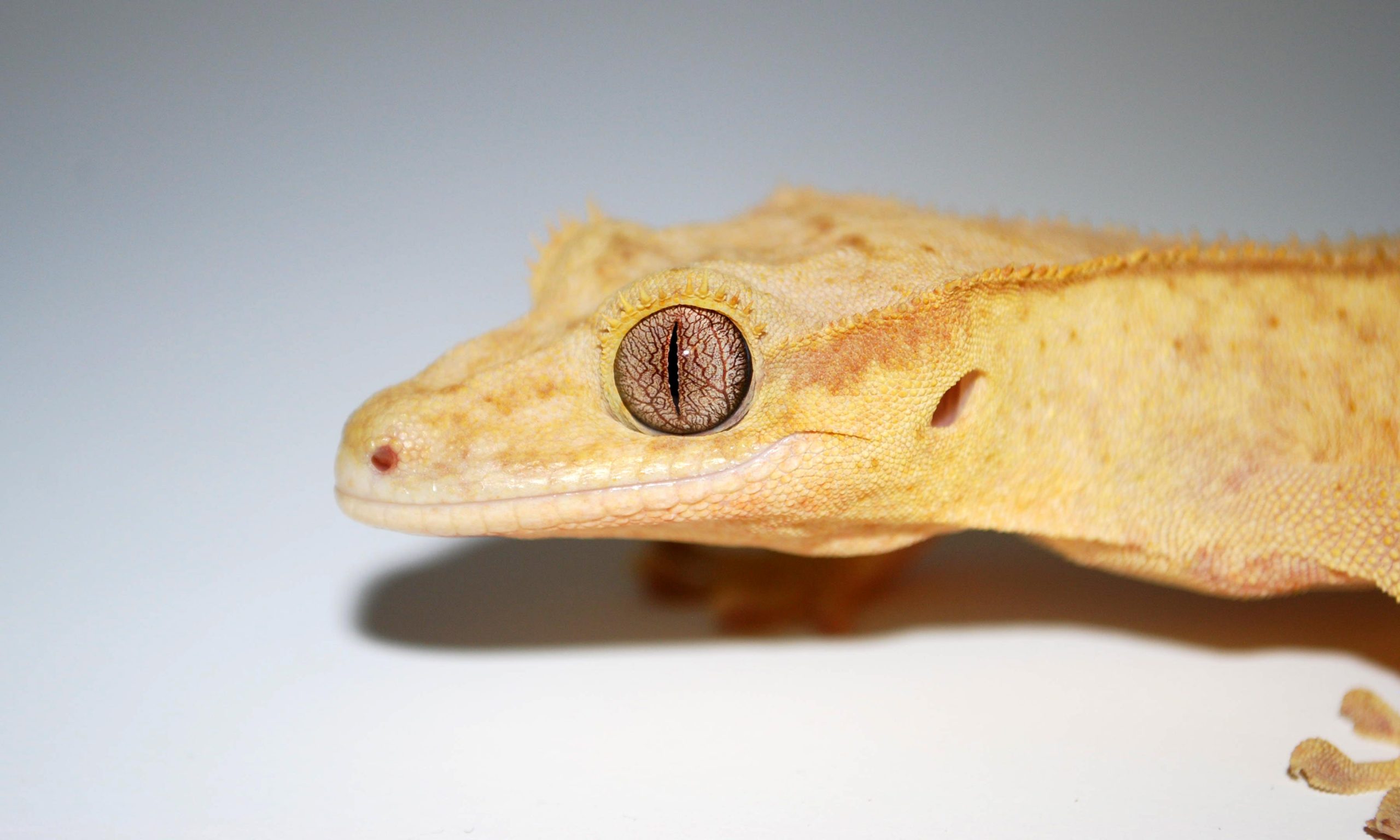
    Mourning Gecko
    A lizard species known as a mourning gecko can regenerate its tail, but the replacement is an imperfect copy of the original. Credit: USC/Lozito Lab

    USC researchers’ experiment helps inform efforts to improve wound-healing in humans.

    Lizards can regrow severed tails, making them the closest relative to humans that can regenerate a lost appendage. But in lieu of the original tail that includes a spinal column and nerves, the replacement structure is an imperfect cartilage tube. Now, for the first time, a USC-led study in Nature Communications describes how stem cells can help lizards regenerate better tails.

    “This is one of the only cases where the regeneration of an appendage has been significantly improved through stem cell-based therapy in any reptile, bird or mammal, and it informs efforts to improve wound healing in humans,” said the study’s corresponding author Thomas Lozito, an assistant professor of orthopedic surgery and stem cell biology and regenerative medicine at the Keck School of Medicine of USC.

    These new and improved lizard tails exhibit what is known as “dorsoventral patterning”—meaning they have skeletal and nerve tissue on the upper or dorsal side, and cartilage tissue on the lower or ventral side.

    “Lizards have been around for more than 250 million years, and in all that time no lizard has ever regrown a tail with dorsoventral patterning, until now,” said Lozito. “My lab has created the first regenerated lizard tails with patterned skeletons.”

    To achieve this, the team of scientists from the medical schools at USC and the University of Pittsburgh analyzed how lizard tails form during adult regeneration, compared to embryonic development. In both cases, neural stem cells or NSCs—the stem cells that build the nervous system—play a central role.

    Adult NSCs produce a molecular signal that blocks skeletal and nerve formation and encourages cartilage growth, effectively “ventralizing” both sides of the tail. This results in the cartilage tube typical of regenerated tails.
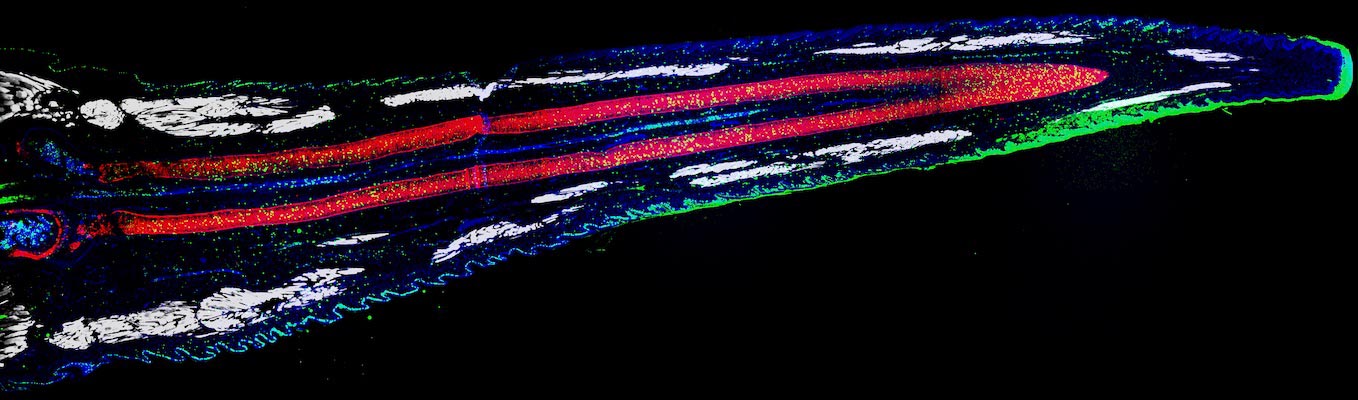
    New Lizard Tail
    Histology of a fully regenerated mourning gecko tail. Muscle is colored in white, cartilage in red, proliferating cells in green, and cell nuclei in blue. Credit: USC/Lozito Lab

    Even in the absence of this ventralizing signal, adult NSCs are incapable of generating new nerve tissue for the dorsal side of the tail.

    Embryonic vs. Adult Regeneration

    In contrast, embryonic NSCs produce this “ventralizing” signal only in the cartilage region that becomes the lower or ventral side of the tail. Meanwhile, in the absence of this signal, the upper or dorsal side develops skeletal and nerve tissue. Thus, the tail acquires the intricate dorsoventral patterning characteristic of original embryonic appendages.

    However, if embryonic NSCs are implanted into adult tail stumps, they respond to the ventralizing signal, and fail to develop into dorsal structures.

    To overcome these obstacles, Lozito’s team used gene-editing tools to make embryonic NSCs unresponsive to the ventralizing signal, and surgically implanted these cells into adult tail stumps—leading to the regeneration of perfect tails.
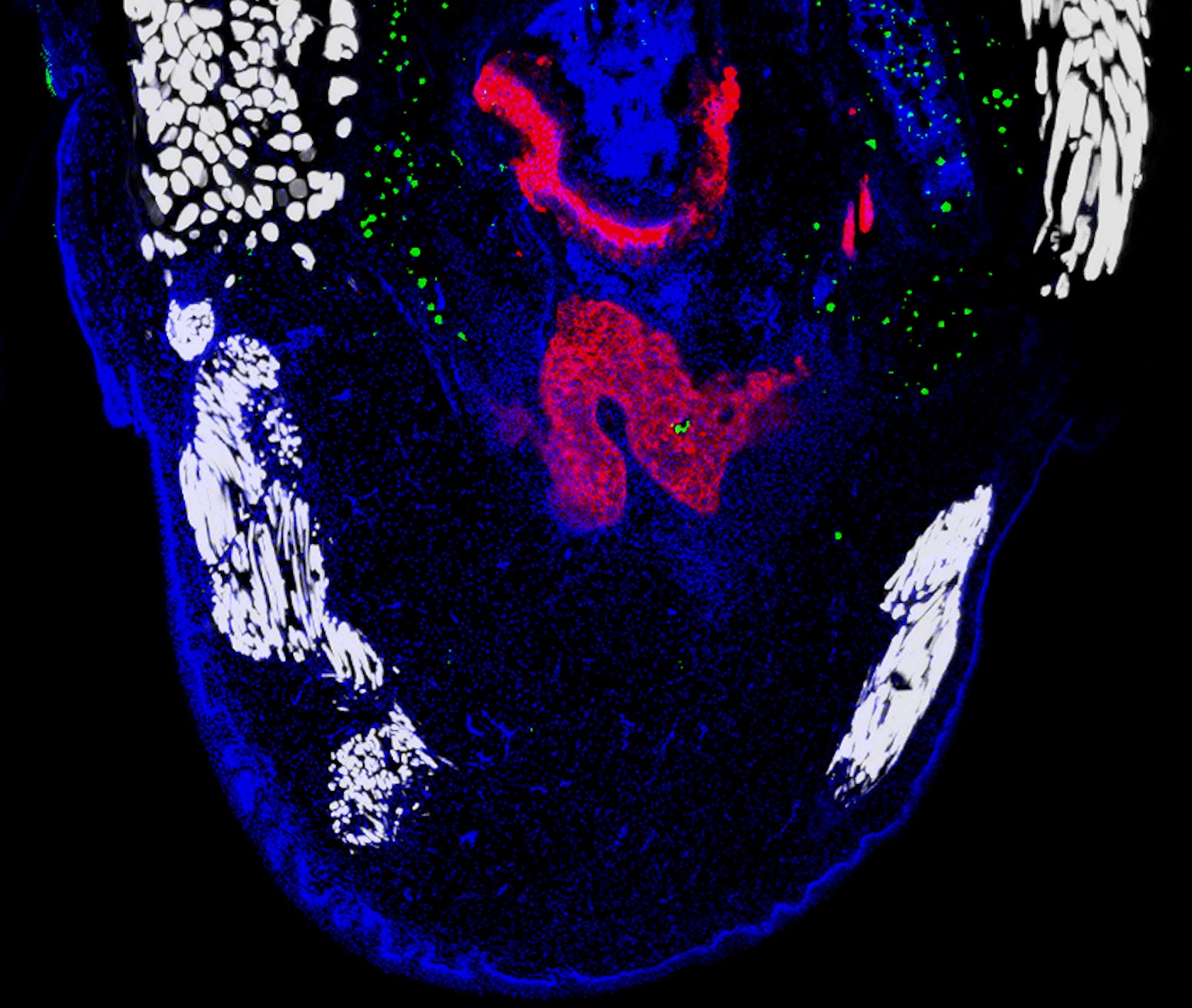
    Histology of Mourning Gecko Blastema
    Histology of mourning gecko blastema. Muscle is colored in white, cartilage in red, proliferating cells in green, and cell nuclei in blue. Credit: USC/Lozito Lab

    “This study has provided us with essential practice on how to improve an organism’s regenerative potential,” said Lozito. “Perfecting the imperfect regenerated lizard tail provides us with a blueprint for improving healing in wounds that don’t naturally regenerate, such as severed human limbs and spinal cords. In this way, we hope our lizard research will lead to medical breakthroughs for treating hard-to-heal injuries.”

    Reference: “Introducing dorsoventral patterning in adult regenerating lizard tails with gene-edited embryonic neural stem cells” by Thomas P. Lozito, Ricardo Londono, Aaron X. Sun and Megan L. Hudnall, 14 October 2021, Nature Communications.
    DOI: 10.1038/s41467-021-26321-9

    Additional co-authors include Ricardo Londono and Aaron X. Sun from the University of Pittsburgh School of Medicine, and Megan L. Hudnall from USC.

    The work was made possible by grant R01GM115444 from the National Institute of General Medical Sciences, one of the National Institutes of Health.

    Never miss a breakthrough: Join the SciTechDaily newsletter.
    Follow us on Google and Google News.

    Popular Regeneration Regenerative Biology Stem Cells University of Southern California
    Share. Facebook Twitter Pinterest LinkedIn Email Reddit

    Related Articles

    Blindness Breakthrough? This Snail Regrows Eyes in 30 Days

    Researchers Link New Neuron Growth to Enhanced Memory and Learning in Adults

    Could This Protein Hold the Key to Reversing Brain Aging and Repairing Damage?

    Is Immortality in Our Reach? Unveiling Sea Anemone Secrets

    Unlocking the Lizard’s Secret: A Breakthrough in Cartilage Regeneration

    From Aging to Regeneration: The Unexpected Benefits of Senescent “Zombie” Cells

    Nanoparticle Shows Promise for Treating Breast Cancer

    Working To Save Infants, Researchers Transform Stem Cells Into Cells That Form Blood Vessels

    Scientists Create Stem-Cell-Derived Neurons from Alzheimer’s Disease

    Leave A Reply Cancel Reply

    • Facebook
    • Twitter
    • Pinterest
    • YouTube

    Don't Miss a Discovery

    Subscribe for the Latest in Science & Tech!

    Trending News

    Scientists Uncover Potential Brain Risks of Popular Fish Oil Supplements

    Scientists Discover a Surprising Way To Make Bread Healthier and More Nutritious

    After 60 Years, Scientists Uncover Unexpected Brain Effects of Popular Diabetes Drug Metformin

    New Research Uncovers Hidden Side Effects of Popular Weight-Loss Drugs

    Scientists Rethink Extreme Warming After Surprising Ocean Discovery

    Landmark Study Links Never Marrying to Significantly Higher Cancer Risk

    Researchers Discover Unknown Beetle Species Just Steps From Their Lab

    Largest-Ever Study Finds Medicinal Cannabis Ineffective for Anxiety, Depression, PTSD

    Follow SciTechDaily
    • Facebook
    • Twitter
    • YouTube
    • Pinterest
    • Newsletter
    • RSS
    SciTech News
    • Biology News
    • Chemistry News
    • Earth News
    • Health News
    • Physics News
    • Science News
    • Space News
    • Technology News
    Recent Posts
    • Powerful Lasers Reveal How Matter Becomes Plasma in Trillionths of a Second
    • A Simpler Path to Super-Resolution: Scientists Reinvent Microscopy
    • Scientists Uncover Hidden Genetic Cause of Diabetes in Babies
    • Amazonian Chocolate Could Become the Next Superfood, Scientists Say
    • Challenging the Narrative: New Study Shows U.S. Life Expectancy Is Rising Across All States
    Copyright © 1998 - 2026 SciTechDaily. All Rights Reserved.
    • Science News
    • About
    • Contact
    • Editorial Board
    • Privacy Policy
    • Terms of Use

    Type above and press Enter to search. Press Esc to cancel.