

Scheduled to launch in the late 2020s, NASA’s DAVINCI mission will investigate the origin, evolution, and present state of DAVINCI mission to Venus’ atmosphere that will be designed, fabricated, tested, operated, and analyzed by undergraduate and graduate students as the mission’s Student Collaboration Experiment.
Planned for launch in 2029, the DAVINCI mission (Deep Atmosphere Venus Investigation of Noble gases, Chemistry, and Imaging) will send a spacecraft and a probe to Venus to investigate numerous unsolved mysteries of the planet. Prior to dropping its descent probe into the Venus atmosphere, the spacecraft will perform two flybys of the planet, taking measurements of clouds and ultraviolet absorption on the Venusian day side, and taking measurements of heat emanating from the planet’s surface on the night side. Two years after launch, the mission’s probe, called the Descent Sphere, will enter the Venus atmosphere, ingesting and analyzing atmospheric gases and collecting images as it descends to the surface of the planet at the Alpha Regio region.
The surface of Venus is completely inhospitable for life: barren, dry, crushed under an atmosphere about 90 times the pressure of Earth’s and roasted by temperatures two times hotter than an oven. But was it always that way? Could Venus once have been a twin of Earth — a habitable world with liquid water oceans? This is one of the many mysteries associated with our shrouded sister world. 27 years have passed since NASA’s Magellan mission last orbited Venus. That was NASA’s most recent mission to Earth’s sister planet, and while we have gained significant knowledge of Venus since then, there are still numerous mysteries about the planet that remain unsolved. NASA’s DAVINCI (Deep Atmosphere Venus Investigation of Noble gases, Chemistry, and Imaging) mission hopes to change that. Credit: NASA’s Goddard Space Flight Center
VfOx will be mounted on the outside of the Descent Sphere, where it will measure the oxygen fugacity – the partial pressure of the oxygen – in the deep atmosphere beneath Venus’ clouds, including the near-surface environment.
By analyzing these ground-breaking VfOx measurements, scientists will, for the first time, seek to identify what minerals are most stable at the surface of Venus in the highlands and link the formation of rocks to their recent modification histories. VfOx will measure the amount of oxygen present near the surface of Venus as a “fingerprint” of the rock-atmosphere reactions that are going on today. The balance of how much oxygen is present in the atmosphere, compared to the amount of oxygen captured in the rocks of Venus, will provide information towards a new understanding of the surface minerals in a mountainous region of Venus (known as “tessera”) that has never been visited by a spacecraft.
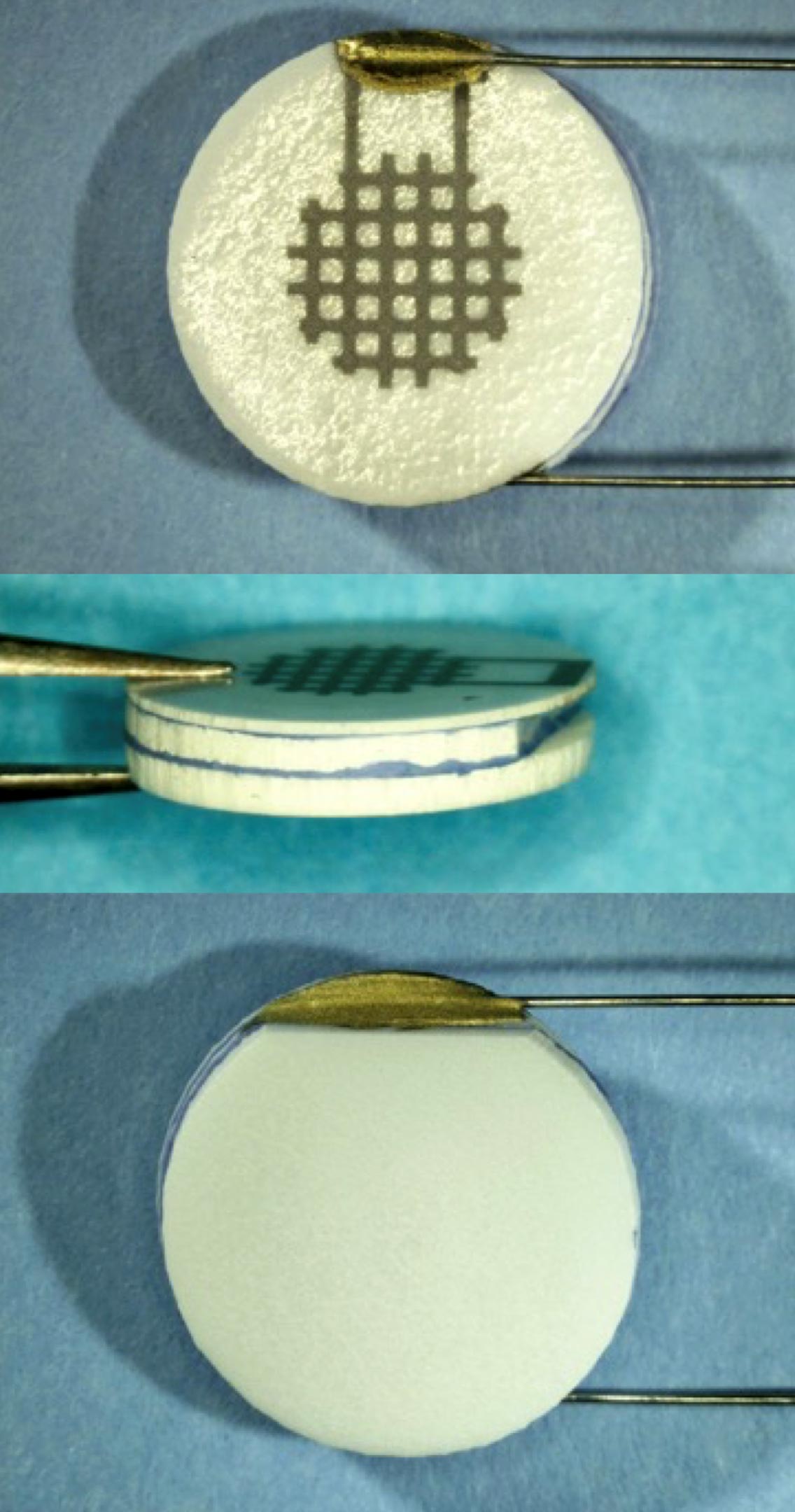
Understanding how much oxygen is contained in Venus’ atmosphere will be important in preparation for characterizing Venus-like worlds beyond our solar system with the JWST and future observatories. How much oxygen Venus has in its deepest atmosphere will help scientists studying these remote worlds distinguish between oxygen produced by life, such as what happens on Earth, from oxygen produced solely by abiotic chemical planetary processes, such as what happens on Venus.
The instrument will operate similarly to the oxygen sensor in many automobile engines, which measures the amount of oxygen in the fuel system relative to other components of the fuel. Like all instruments aboard the DAVINCI Descent Sphere, VfOx must be adapted to survive Venus’ inhospitable atmosphere. Even though temperatures at the surface of the planet are hot enough to melt lead, the temperatures in internal combustion car engines are even hotter, so VfOx will operate in a comparatively cooler environment on Venus. Additionally, VfOx will be built out of ceramic, a material that is resistant to temperature changes.
The motivating goal for DAVINCI’s Student Collaboration Experiment is educating and training young scientists and engineers in planetary science and engineering skills and providing a real-world application for those skills. “We are trying to engage and encourage the next generation of planetary scientists and engineers,” says Dr. Noam Izenberg, principal research staff at the Johns Hopkins University Applied Physics Laboratory in Laurel, Maryland, and student collaboration lead for VfOx on DAVINCI.
Students will build the VfOx instrument, analyze the data it returns from Venus, and participate in science activities with the DAVINCI science team. Students involved will be advised by faculty at Johns Hopkins University in Baltimore.
The excitement of being actively involved with a real space-flight mission as an undergraduate may be one of the best incentives to attract a diverse group of students to this project. “We want to attract more students from all backgrounds, including the less-advantaged and the less-represented,” says Dr. Izenberg. “There will be lots of mentors across the board – on the mission and science side, and the engineering side – where students can find not just mentors of the professions that they might be looking for, but also mentors who look like them, because the DAVINCI team itself is fairly good in its own diversity.”
Johns Hopkins will be working in collaboration with the Applied Physics Lab to plan and implement the student experiment. Johns Hopkins will also work in collaboration with the Maryland Institute College of Arts in Baltimore, which has an extreme arts institute that will be involved with an intersection between science and art. The Hopkins Extreme Materials Institute in Baltimore will help coordinate this project, and Morgan State University in Baltimore is an intended partner.
NASA’s Goddard Space Flight Center in Greenbelt, Maryland, is the principal investigator institution for DAVINCI and will perform project management and scientific leadership for the mission, as well as project systems engineering to develop the probe flight system. Goddard also leads the project science support team and provides two key instruments on the probe.
Never miss a breakthrough: Join the SciTechDaily newsletter.
Follow us on Google and Google News.