
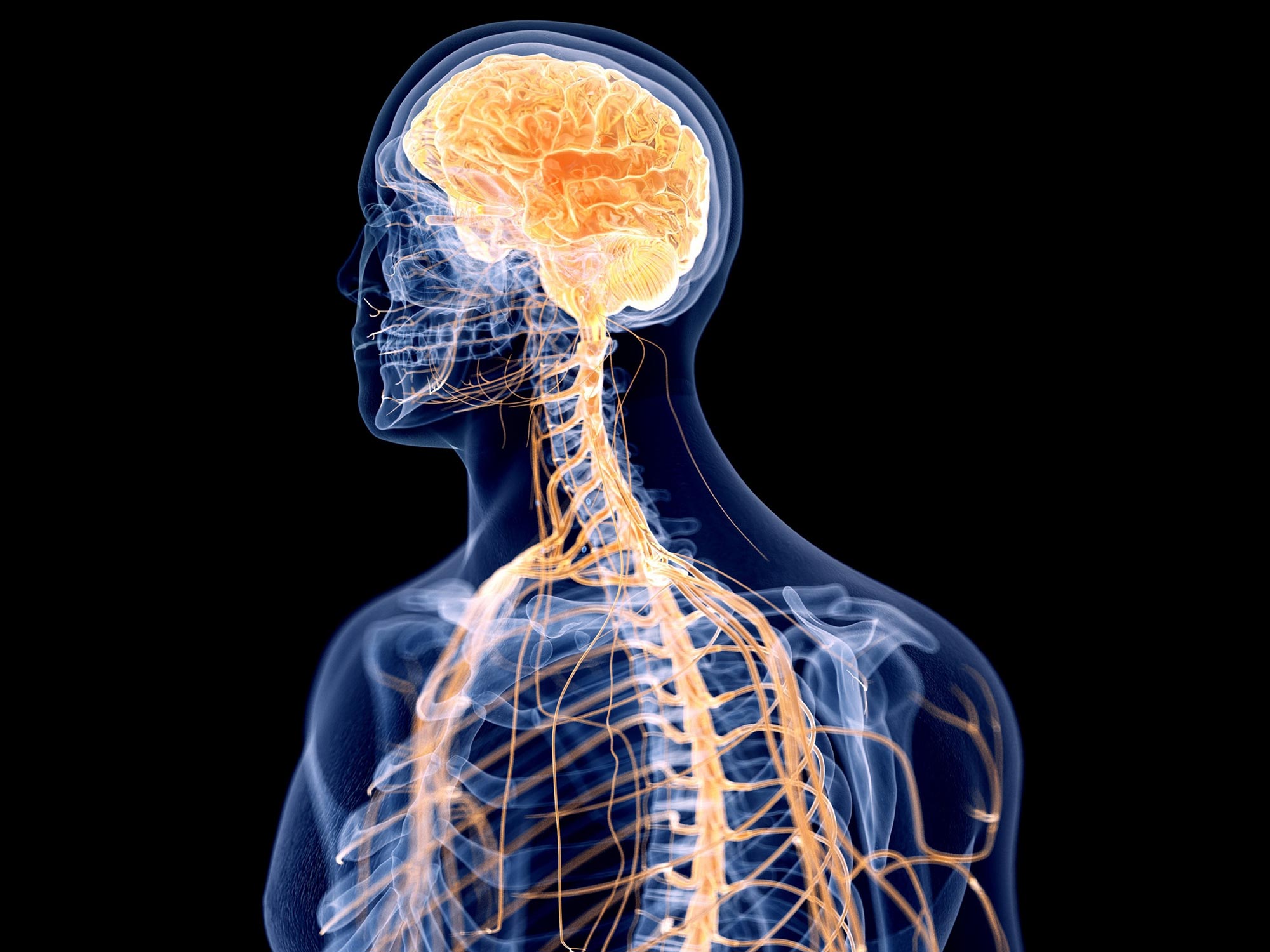
A new study reveals that certain ion channels existed before the earliest common ancestor of animals.
A recent study has rewritten the conventionally understood evolutionary history of key proteins essential for electrical signaling in the nervous system. Conducted by researchers at Penn State, the study reveals that the well-known family of proteins—potassium ion channels in the Shaker family—existed in microscopic single-celled organisms long before the common ancestor of all animals.
This suggests that, rather than evolving alongside the nervous system as previously thought, these ion channels were present before the origin of the nervous system.
The study appeared in the Proceedings of the National Academy of Sciences.
“We tend to think of evolution as a one-way march toward greater and greater complexity, but that often isn’t what occurs in the natural world,” said Timothy Jegla, associate professor of biology in the Penn State Eberly College of Science and leader of the research team. “For example, it was thought that as different kinds of animals evolved and the nervous system became more complex, ion channels arose and diversified to match that complexity. But our research suggests that this is not the case. We have previously shown that the oldest living animals, those with simple nerve nets, have the highest ion channel diversity. This new finding adds to growing evidence that many of the building blocks for the nervous system were already in place in our protozoan ancestors — before the nervous system even existed.”
Understanding Ion Channels
Ion channels are located in the membranes of cells and regulate how charged particles called ions move in and out of the cell, a process that results in the electrical signals that are the foundation of communication in the nervous system. The Shaker family of ion channels is found in a large range of animals, from humans to mice and fruit flies, and specifically regulates how potassium ions flow out of the cell to terminate electrical signals called action potentials. These channels can open or close based on changes in the electric field, much like transistors in computer chips.
“Much of what we know about how ion channels work on a molecular level comes from mechanistic studies of the Shaker family of ion channels,” Jegla said. “We previously thought that the Shaker family of voltage-gated potassium channels were only found in animals, but now we see that the genes that code for this family of ion channels were present in several species of the closest living relatives of animals, a group of single-cell organisms called choanoflagellates.”
The researchers had previously looked for these genes in two species of choanoflagellates but failed to find them. In the current study, they expanded their search to 21 choanoflagellate species and found evidence of Shaker family genes in three of these species.
Evolution of Ion Channel Types
Several subfamilies, or types, of ion channels within the Shaker family, are present across the animal kingdom. The research team previously found that comb jellies — animals with a comparatively simple “nerve nets” (that are) thought to be similar to the very first animal nervous systems— have only one of these types, called Kv1. This led the team to believe that the common ancestor of animals likely had only Kv1, with other types evolving later. However, Jegla and colleagues found that the Shaker family genes in choanoflagellates were more closely related to types Kv2, Kv3, and Kv4.
“We thought types 2 through 4 were thought to have evolved on a more recent timeline, but our new work suggests that the Kv2-4–like channels found in choanoflagellates are actually the oldest subtype,” Jegla said.
Additionally, this finding indicates that multiple subtypes were present at the base of the animal family tree, including Kv1, which are found in comb jellies, and the Kv2-4–like channels, which are found in choanoflagellates.
“The genes for Kv2-4–like were lost in the living descendants of the earliest animal groups like comb jellies and sponges, so the only reason we know that they were present in the earliest animals is thanks to the choanoflagellates,” Jegla added. “Gene loss is really common in evolution — about as common as the evolution of new genes — though it can be hard to detect. Now that genetic sequencing is cheap enough that scientists can broadly sample species, rather than looking at just a few representative species, we can detect a lot more of these gene losses and that will change our views of how many of our own gene families first evolved.”
This work also adds to growing evidence that many elements of the nervous system were present before the nervous system as a whole evolved, Jegla noted.
“Most of the functionally important proteins that we use in electrical signaling, which underlie neuronal communication and neuromuscular movement, are all based on proteins that existed before animals,” Jegla said. “It seems that animals were able to cobble together a functioning nervous system very early in their evolution simply because most of the necessary proteins were already there.”
Jegla added that understanding how these ion channels evolved helps us understand how they function and that in turn may have implications for the treatment of disorders related to ion channel dysfunction, such as heart arrhythmias and epilepsy.
Reference: “A broad survey of choanoflagellates revises the evolutionary history of the Shaker family of voltage-gated K+ channels in animals” by Timothy Jegla, Benjamin T. Simonson and J. David Spafford, 17 July 2024, Proceedings of the National Academy of Sciences.
DOI: 10.1073/pnas.2407461121
In addition to Jegla, the research team includes Benjamin Simonson, graduate student in the molecular, cellular and integrative biosciences program in the Huck Institutes of the Life Sciences and the Eberly College of Science at Penn State who recently defended his dissertation, and David Spafford, associate professor of biology at the University of Waterloo who specializes in choanoflagellate physiology. Funding from the Penn State Department of Biology and the Huck Institutes of the Life Sciences supported this work.
Never miss a breakthrough: Join the SciTechDaily newsletter.
Follow us on Google and Google News.
1 Comment
Evolution. Kiss of death.
Value A observed..not replicable.
Value B not found.
Goal Value C unattainable.
Evolution has never been observed. It is not replicable.