
Close Menu
    Facebook X (Twitter) Instagram
    SciTechDaily
    • Biology
    • Chemistry
    • Earth
    • Health
    • Physics
    • Science
    • Space
    • Technology
    Facebook X (Twitter) Pinterest YouTube RSS
    SciTechDaily
    Home»Biology»Study Shows Muscle Contraction May Contribute to Stroke Damage
    Biology

    Study Shows Muscle Contraction May Contribute to Stroke Damage

    By Bill Hathaway, Yale UniversityJune 29, 2015No Comments2 Mins Read
    Facebook Twitter Pinterest Telegram LinkedIn WhatsApp Email Reddit
    Share
    Facebook Twitter LinkedIn Pinterest Telegram Email Reddit
    New Research Shows Muscle Contraction May Contribute to Stroke Damage
    New research shows muscle contraction may contribute to stroke damage.

    The precise regulation of cerebral blood flow is critical for normal brain function, and its disruption underlies many neuropathologies. Using optical imaging, researchers from Yale University found that capillary pericytes in mice and humans do not express smooth muscle actin and are morphologically and functionally distinct from adjacent precapillary smooth muscle cells (SMCs).

    An investigation of blood flow network in the brain has revealed some surprising behavior of vessels during stroke, according to Yale researchers.

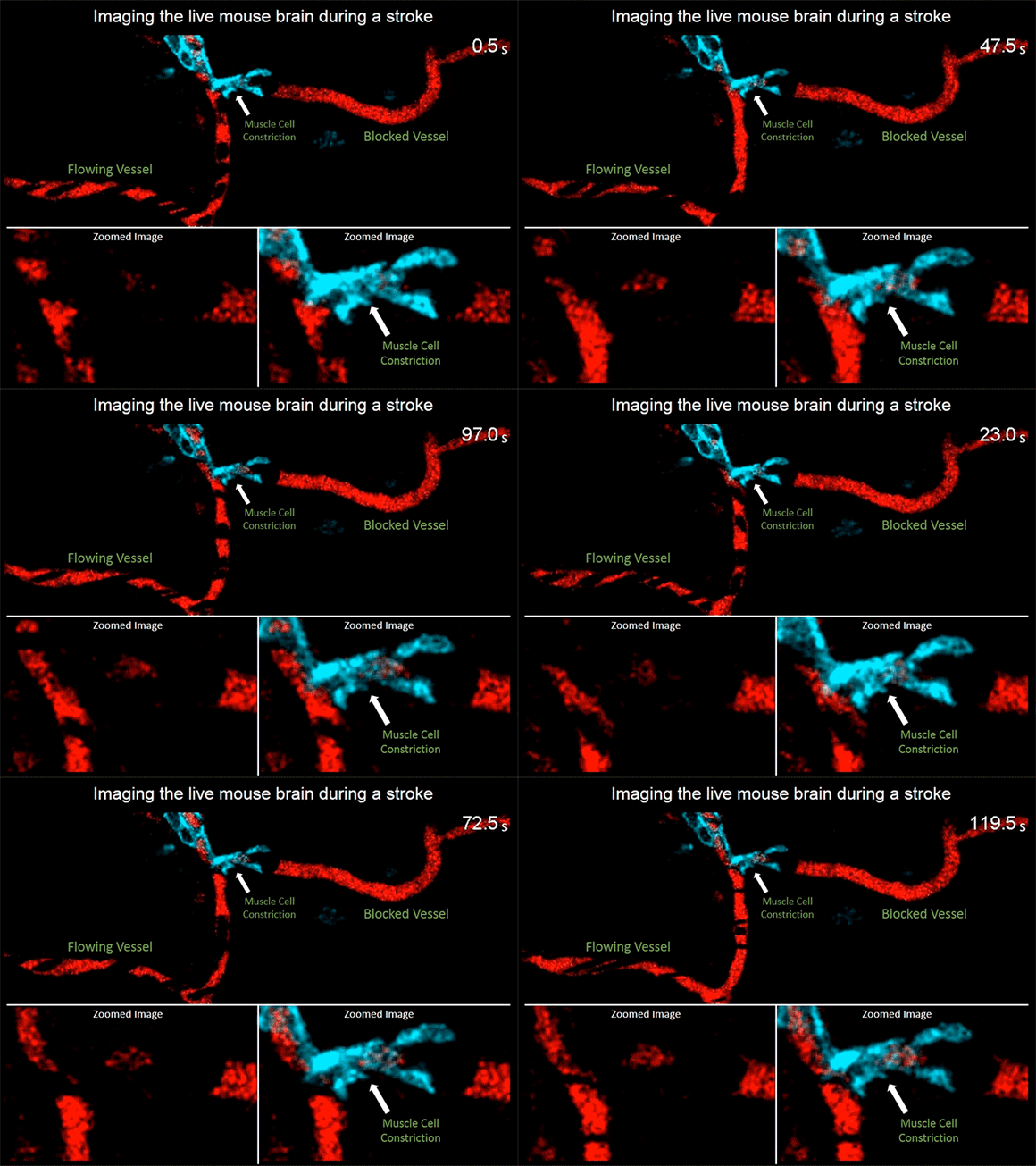
    In the accompanying movie of a mouse brain taken by specialized microscope, researchers at the Yale School of Medicine found that smooth muscle (in cyan) actually constricts during a stroke instead of expanding, as would be expected to minimize damage during a stroke. This muscle contraction appears to contribute to permanent brain damage.

    The findings provide a new target for potential drugs to improve stroke outcome, said Jaime Grutzendler, associate professor of neurology and of neurobiology, and senior author of the study, which appeared online June 25 in the journal Neuron.

    Reference: “Regional Blood Flow in the Normal and Ischemic Brain Is Controlled by Arteriolar Smooth Muscle Cell Contractility and Not by Capillary Pericytes” by Robert A. Hill, Lei Tong, Peng Yuan, Sasidhar Murikinati, Shobhana Gupta and Jaime Grutzendler, 25 June 2015, Neuron.
    DOI: 10.1016/j.neuron.2015.06.001

    Never miss a breakthrough: Join the SciTechDaily newsletter.
    Follow us on Google and Google News.

    Neurology Neuroscience Stroke Yale University
    Share. Facebook Twitter Pinterest LinkedIn Email Reddit

    Related Articles

    Yale Research Shows Immune Cells Are an Ally, Not Enemy, in Battle Against Alzheimer’s

    New Research Identifies Enzyme Crucial to the Shaping and Division of Brain Cells

    Neurobiologists Block the Effects of Stress

    Study Shows Human Brain Development is Divided into Three Major Phases

    Suppressing NgR1 Returns Brain to Adolescent Levels of Plasticity

    Neurologists Repair Neurons Associated With Traumatic Nerve Injury Pain

    A Better Understanding of “Muscle Synergies” Could Lead to Improved Stroke Rehabilitation

    GATA1 Plays a Role in the Loss of Connections Between Neurons and in Symptoms of Depression

    Blocking Ephrin-A5 May Improve Stroke Recovery

    Leave A Reply Cancel Reply

    • Facebook
    • Twitter
    • Pinterest
    • YouTube

    Don't Miss a Discovery

    Subscribe for the Latest in Science & Tech!

    Trending News

    Long COVID Brain Scans Reveal Damage to Dopamine Neurons

    Scientists Warn a Silent Oxygen Crisis Is Spreading Through Earth’s Waters

    James Webb Telescope Discovers Hidden Giant Planet in Famous Star System

    Scientists Build the First 3D Cloak That Makes Objects Invisible To Heat

    Common Food Additive Linked To Gut Inflammation

    Black Hole Collisions May Follow a Surprisingly Simple Rule

    The Eye Has a Hidden Cleanup System and Scientists Just Discovered It

    The Truth About Vikings Is More Complicated Than Museums Admit

    Follow SciTechDaily
    • Facebook
    • Twitter
    • YouTube
    • Pinterest
    • Newsletter
    • RSS
    SciTech News
    • Biology News
    • Chemistry News
    • Earth News
    • Health News
    • Physics News
    • Science News
    • Space News
    • Technology News
    Recent Posts
    • The Surprising Brain Chemistry That Turns Ants Into Caregivers
    • “Zombie Cells” Reveal a Hidden Weakness That Could Help Fight Aging
    • A Fiber Frozen at -196°C Unlocks a New Way To Store Light
    • Scientists Solve a Decades-Old Mystery Inside Atomic Nuclei
    • Alien Signals May Be Hiding in a Radio Band SETI Has Barely Explored
    Copyright © 1998 - 2026 SciTechDaily. All Rights Reserved.
    • Science News
    • About
    • Contact
    • Editorial Board
    • Privacy Policy
    • Terms of Use

    Type above and press Enter to search. Press Esc to cancel.