
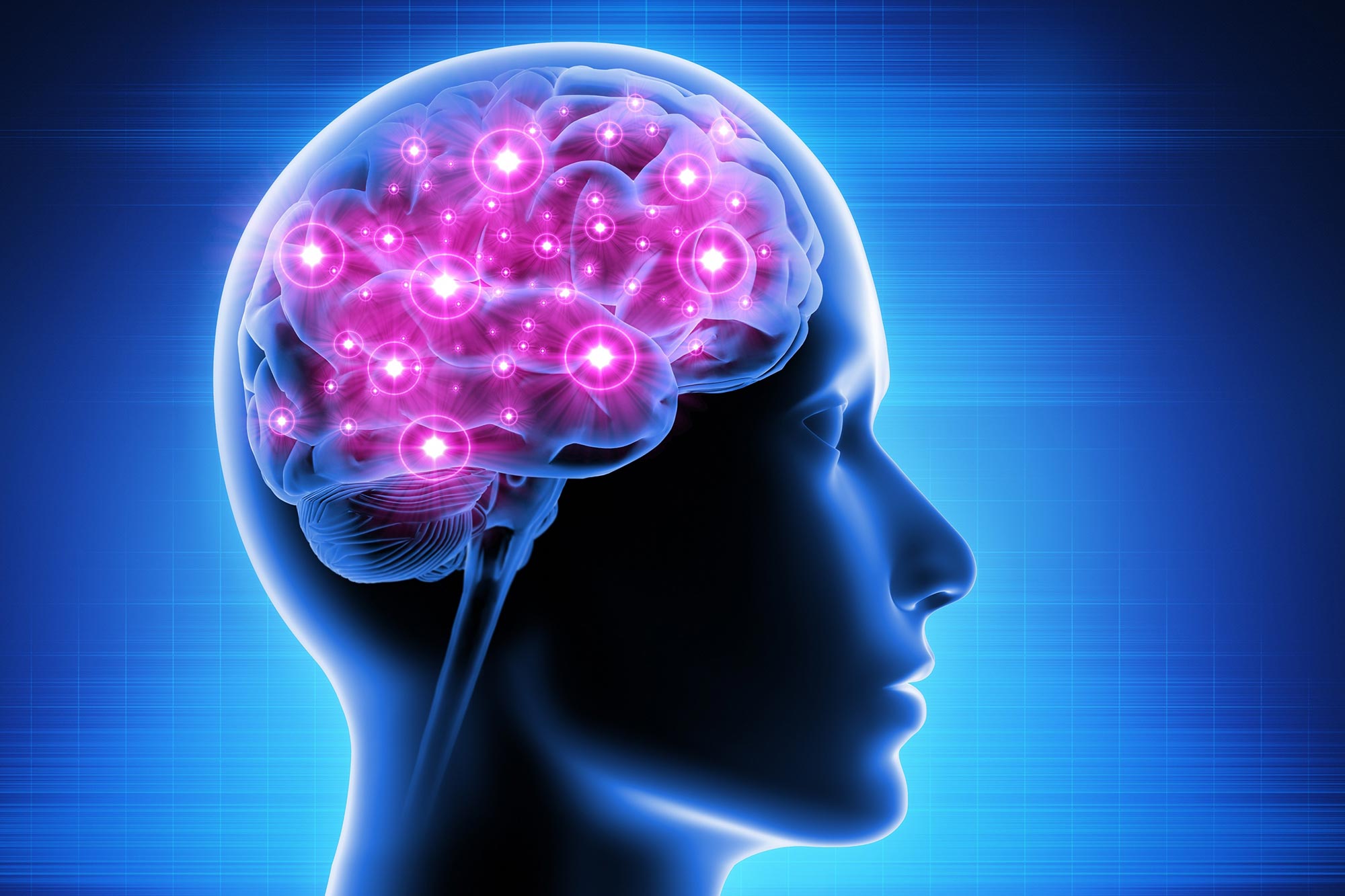
Scientists have uncovered a surprisingly large reserve of “silent synapses” in the adult brain—unused neural connections that can be rapidly activated to store new memories.
Learning something new without erasing what you already know is one of the brain’s hardest balancing acts. Now, MIT neuroscientists have uncovered a hidden feature that may make this possible: a vast reserve of “silent synapses” in the adult brain that can be switched on to store new memories.
These synapses are real physical connections between neurons, but they remain inactive until they are needed. In adult mice, the researchers found that about 30 percent of synapses in the brain’s cortex fall into this silent category, far more than scientists once expected.
For years, silent synapses were thought to exist only in infancy, when the brain is rapidly wiring itself in response to new experiences. They were believed to largely disappear early in life. The new findings challenge that view and suggest the adult brain keeps a large number of these unused connections on standby.
“This lets the brain create new memories without overwriting the important memories stored in mature synapses, which are harder to change,” says Dimitra Vardalaki, an MIT graduate student and lead author of the study.
A built-in workaround for memory overload
The human brain is estimated to contain hundreds of trillions of synapses, forming a dense and constantly shifting network. Every new memory depends on adjusting this network. But constantly modifying existing connections risks corrupting older, important information.

The new research points to a different strategy. Instead of reshaping established circuits, the brain can recruit silent synapses and convert them into active ones. This preserves older memories while still allowing new learning.
This idea aligns with long-standing theories that the brain must strike a balance between stability and flexibility. Some connections need to remain stable to protect long-term knowledge, while others must stay adaptable to encode new experiences.
An accidental discovery
The MIT team did not set out to find silent synapses in adults. They were studying how dendrites, the branching extensions of neurons, process incoming signals. To do this, they used a technique called eMAP (epitope-preserving Magnified Analysis of the Proteome), which physically expands brain tissue so proteins can be mapped with extremely high resolution.
What they saw surprised them.
“The first thing we saw, which was super bizarre and we didn’t expect, was that there were filopodia everywhere,” says senior author Mark Harnett.
Filopodia are tiny, finger-like protrusions extending from dendrites. Because they are so small, they have been difficult to study and their function has remained unclear. Using eMAP, the researchers found them spread widely across the adult mouse brain, including the visual cortex, at levels about 10 times higher than previously reported.
When the team examined these structures more closely, they found a key clue. The synapses on filopodia had NMDA receptors but lacked AMPA receptors.
In normal synapses, both receptor types are needed to pass electrical signals triggered by the neurotransmitter glutamate. Without AMPA receptors, NMDA receptors remain blocked under typical conditions, leaving the synapse functionally silent.
Switching them on
To confirm that these structures were truly silent synapses, the researchers measured their electrical activity using a refined patch clamp technique. They delivered controlled bursts of glutamate to individual filopodia.
Nothing happened, at least at first.
Only when the researchers experimentally removed the block on NMDA receptors did the synapses respond, confirming that they were inactive under normal conditions.
The next question was whether these silent connections could be activated in a realistic way. The answer was yes.
When glutamate release was paired with a brief electrical signal inside the neuron, AMPA receptors quickly accumulated at the synapse. Within minutes, the once silent connection became fully functional.
This process did not work on mature synapses.
“If you start with an already functional synapse, that plasticity protocol doesn’t work,” Harnett says. “The synapses in the adult brain have a much higher threshold, presumably because you want those memories to be pretty resilient.”
Filopodia, by contrast, act like ready-to-use slots for new information.
Why this matters for learning and aging
The discovery suggests the adult brain maintains a large pool of flexible connections that can be recruited on demand. This could help explain how people continue learning throughout life without constantly disrupting older memories.
It also raises new questions about what happens as the brain ages.
“It’s entirely possible that by changing the amount of flexibility you’ve got in a memory system, it could become much harder to change your behaviors and habits or incorporate new information,” Harnett says.
If silent synapses decline with age or disease, that could help explain why learning new skills or adapting to change becomes more difficult over time.
The findings also hint at future possibilities. If scientists can identify the molecular mechanisms that control filopodia and silent synapses, they may be able to develop ways to restore learning capacity in aging brains or in conditions that affect memory.
Reference: “Filopodia are a structural substrate for silent synapses in adult neocortex” by Dimitra Vardalaki, Kwanghun Chung and Mark T. Harnett, 30 November 2022, Nature.
DOI: 10.1038/s41586-022-05483-6
The study was funded by the Boehringer Ingelheim Fonds, the National Institutes of Health, the James W. and Patricia T. Poitras Fund at MIT, a Klingenstein-Simons Fellowship, and Vallee Foundation Scholarship, and a McKnight Scholarship.
Never miss a breakthrough: Join the SciTechDaily newsletter.
Follow us on Google and Google News.
2 Comments
Ibrahim
Paper was 4 years ago