

Toba supereruption may have facilitated the dispersal of modern humans out of Africa and across the rest of the world.
Modern humans dispersed from Africa multiple times, but the event that led to global expansion occurred less than 100,000 years ago. Some researchers hypothesize that dispersals were restricted to “green corridors” formed during humid intervals when food was abundant and human populations expanded in lockstep with their environments. But a new study in Nature, including ASU researchers Curtis Marean, Christopher Campisano, and Jayde Hirniak, suggests that humans also may have dispersed during arid intervals along “blue highways” created by seasonal rivers. Researchers also found evidence of cooking and stone tools that represent the oldest evidence of archery.
Working in the Horn of Africa, researchers have uncovered evidence showing how early modern humans survived in the wake of the eruption of Toba, one of the largest supervolcanoes in history, some 74,000 years ago. The behavioral flexibility of these people not only helped them live through the supereruption but may have facilitated the later dispersal of modern humans out of Africa and across the rest of the world.
“This study confirms the results from Pinnacle Point in South Africa – the eruption of Toba may have changed the environment in Africa, but people adapted and survived that eruption-caused environmental change,” said Marean, research scientist with the Institute of Human Origins and Foundation Professor with the School of Human Evolution and Social Change.
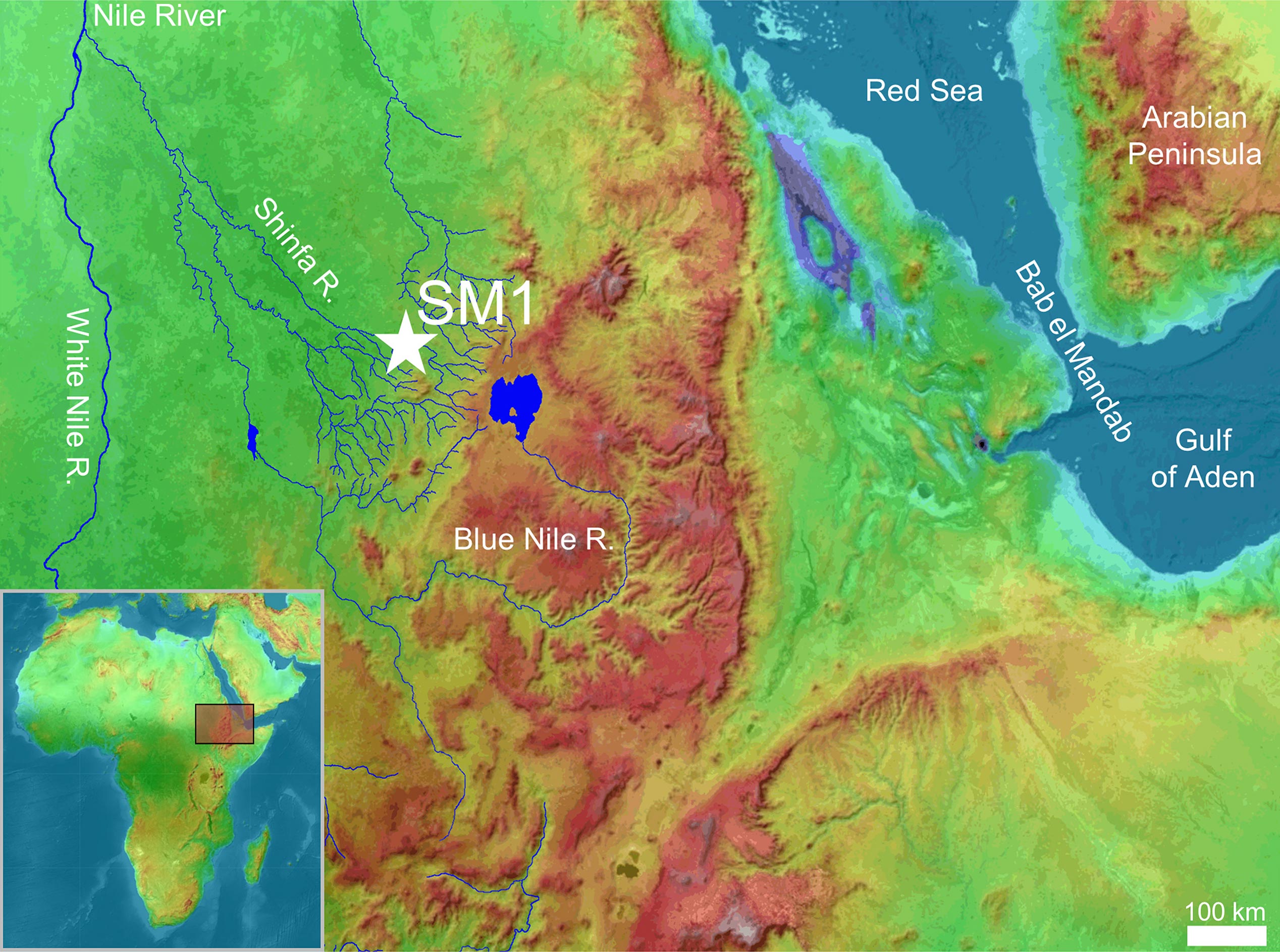
The team investigated the Shinfa-Metema 1 site in the lowlands of present-day northwestern Ethiopia along the Shinfa River, a tributary of the Blue Nile River.
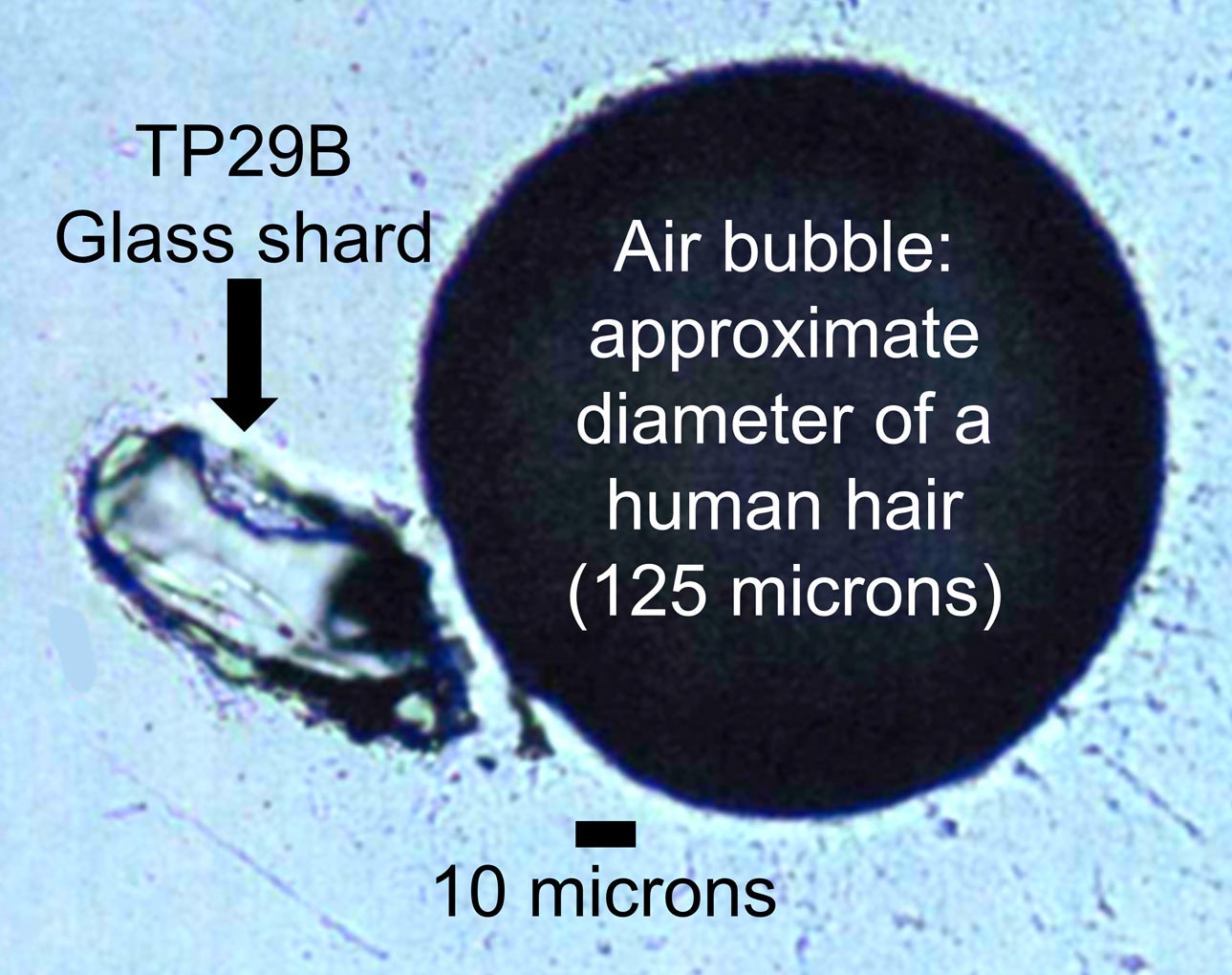
The supereruption occurred during the middle of the time when the site was occupied and is documented by tiny glass shards whose chemistry matches that of Toba.
Pinpoint Timing Through Cryptotephra
“One of the ground-breaking implications of this study,” said Marean, “is that with the new cryptotephra methods developed for our prior study in South Africa, and now applied here to Ethiopia, we can correlate sites across Africa, and perhaps the world, at a resolution of several weeks of time.”
Cryptotephra are signature volcanic glass shards that can range from 80–20 microns in size, which is smaller than the diameter of a human hair. To extract these microscopic shards from archaeological sediment requires patience and great attention to detail.
“Searching for cryptotephra at these archaeological sites is like looking for a needle in a haystack, but not knowing if there is even a needle. However, having the ability to correlate sites 5,000 miles apart, and potentially further, to within weeks instead of thousands of years makes it all worth it,” said Christopher Campisano, research scientist with the Institute of Human Origins and professor with the School of Human Evolution and Social Change.
“This study, once again,” said Campisano, “highlights the importance of the University of Nevada-Las Vegas/Arizona State University team pushing the limits for successfully analyzing extremely low abundance cryptotephra to date and correlate archaeological sites across Africa.”
The methods for identifying low abundance cryptotephra at Pinnacle Point were first developed at University of Nevada Las Vegas led by the late Gene Smith and Racheal Johnsen and now carried on at Arizona State University’s Sediment and TEphra Preparation (STEP) Lab.
School of Human Evolution and Social Change graduate student Jayde Hirniak led ASU’s effort to create its own cryptotephra lab—the STEP Lab—working with Campisano and building on methods developed at UNLV. Hirniak also collaborated with cryptotephra labs in the United Kingdom that work with sediment samples preserving hundreds or thousands of glass shards. Now Hirniak’s primary expertise is in tephrochronology, which involves the use of volcanic ash to link archaeological and paleoenvironmental records and place them on the same timeline, which was her contribution to this research.
“Our lab at ASU was built to process extremely low abundance cryptotephra horizons (<10 shards per gram) using a highly specialized technique. There are only a few labs in the world with these capabilities,” said Hirniak.
Migrations Along “Blue Highways”
Based on isotope geochemistry of the teeth of fossil mammals and ostrich eggshells, they concluded that the site was occupied by humans during a time with long dry seasons on a par with some of the most seasonally arid habitats in East Africa today. Additional findings suggest that when river flows stopped during dry periods, people adapted by hunting animals that came to the remaining waterholes to drink. As waterholes continued to shrink, it became easier to capture fish without any special equipment, and diets shifted more heavily to fish.
Its climatic effects appear to have produced a longer dry season, causing people in the area to rely even more on fish. The shrinking of the waterholes may also have pushed humans to migrate outward in search of more food.
“As people depleted food in and around a given dry season waterhole, they were likely forced to move to new waterholes,” said John Kappelman, a UT anthropology and earth and planetary sciences professor and lead author of the study. “Seasonal rivers thus functioned as ‘pumps’ that siphoned populations out along the channels from one waterhole to another, potentially driving the most recent out-of-Africa dispersal.
The humans who lived at Shinfa-Metema 1 are unlikely to have been members of the group that left Africa. However, the behavioral flexibility that helped them adapt to challenging climatic conditions such as the Toba supereruption was probably a key trait of Middle Stone Age humans that allowed our species to ultimately disperse from Africa and expand across the globe.
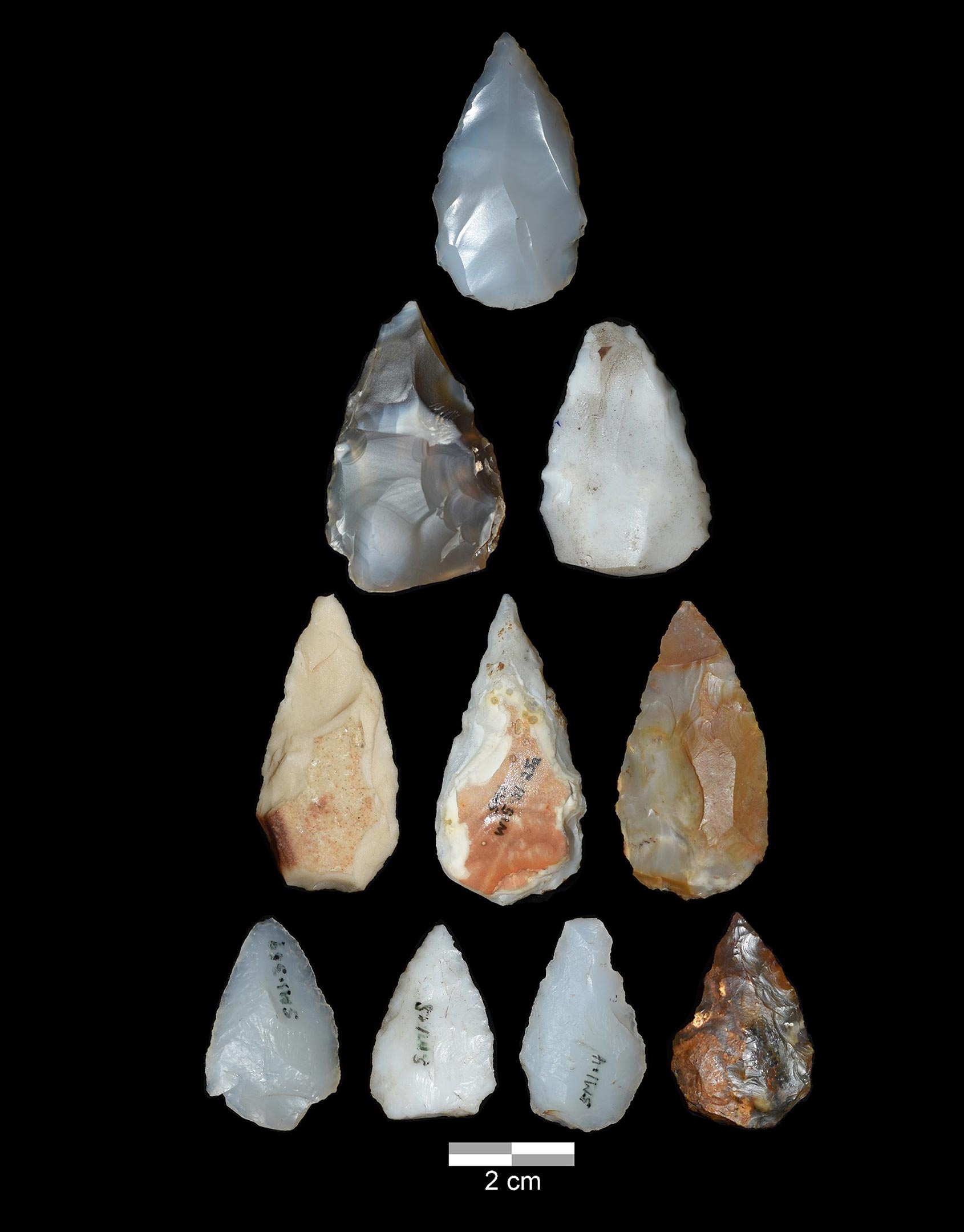
The people living in the Shinfa-Metema 1 site hunted a variety of terrestrial animals, from antelope to monkey, as attested to by cut marks on the bones, and apparently cooked their meals as shown by evidence of controlled fire at the site. The most distinctive stone tools are small, symmetrical triangular points. Analyses show that the points are most likely arrowheads that, at 74,000 years in age, represent the oldest evidence of archery.
Reference: “Adaptive foraging behaviours in the Horn of Africa during Toba supereruption” by John Kappelman, Lawrence C. Todd, Christopher A. Davis, Thure E. Cerling, Mulugeta Feseha, Abebe Getahun, Racheal Johnsen, Marvin Kay, Gary A. Kocurek, Brett A. Nachman, Agazi Negash, Tewabe Negash, Kaedan O’Brien, Michael Pante, Minghua Ren, Eugene I. Smith, Neil J. Tabor, Dereje Tewabe, Hong Wang, Deming Yang, Solomon Yirga, Jordan W. Crowell, Matthew F. Fanuka, Teshager Habtie, Jayde N. Hirniak, Carla Klehm, Natalia D. Loewen, Sahleselasie Melaku, Sierra M. Melton, Timothy S. Myers, Sarah Millonig, Megan C. Plummer, Keenan J. Riordan, Nicholas A. Rosenau, Anne Skinner, Abraham K. Thompson, Lindsey M. Trombetta, Adrienne Witzel, Ephrem Assefa, Maria Bodansky, Ayenachew A. Desta, Christopher J. Campisano, Daniel Dalmas, Connor Elliott, Metasebia Endalamaw, Nicholas J. Ford, Frederick Foster, Tomas Getachew, Yibai Li Haney, Brittney H. Ingram, Jonayah Jackson, Curtis W. Marean, Sissi Mattox, Karla de la Cruz Medina, Gebretsadkan Mulubrhan, Keri Porter, Alexis Roberts, Perla Santillan, Alaric Sollenberger, Julia Sponholtz, Jessica Valdes, Lani Wyman, Meklit Yadeta and Sierra Yanny, 20 March 2024, Nature.
DOI: 10.1038/s41586-024-07208-3
ASU’s cryptotephra research was funded by the Hyde Family Foundations, the National Science Foundation, the Institute of Human Origins, and Arizona State University.
Never miss a breakthrough: Join the SciTechDaily newsletter.
Follow us on Google and Google News.