
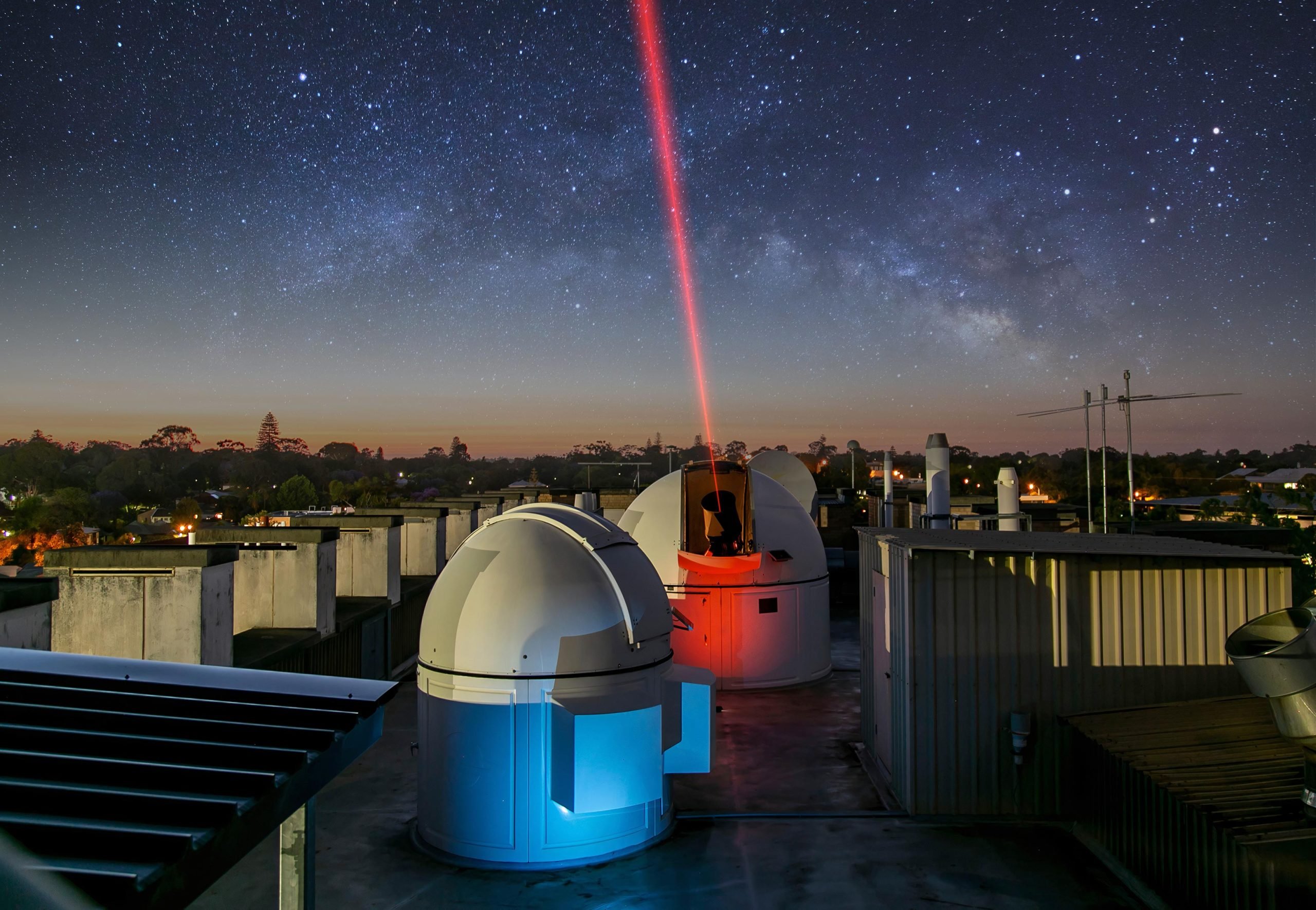
The University of Western Australia’s ‘TeraNet’, a network of optical ground stations specializing in high-speed space communications, has successfully received laser signals from a German satellite in low Earth orbit. This breakthrough paves the way for a 1,000-fold increase in communication bandwidth between space and Earth.
TeraNet’s laser communication test with OSIRISv1 marks a step towards replacing outdated radio systems with high-speed lasers for space communications in Western Australia. With funding from Australian governments, the network aims to support diverse missions, enhancing data transfer capabilities across multiple sectors.
Groundbreaking Laser Communications Test
The TeraNet team, led by Associate Professor Sascha Schediwy from the UWA node at the International Centre for Radio Astronomy Research (ICRAR), received laser signals from OSIRISv1, a laser communication payload from the Institute of Communications and Navigation of the German Aerospace Center (DLR). OSIRISv1 is installed on University of Stuttgart’s Flying Laptop satellite. The signals were detected using two of the TeraNet optical ground stations during flybys of the satellite last Thursday.
“This demonstration is the critical first step in establishing a next-generation space communications network across Western Australia. The next steps include joining this network to other optical ground stations currently being developed in Australia and across the world,” Associate Professor Schediwy said.
Advantages of Laser Over Radio in Space Communication
The TeraNet ground stations use lasers, instead of traditional wireless radio signals, to transfer data between satellites in space and users on Earth. Lasers can potentially transfer data at 1000s of gigabits per second, because lasers operate at much higher frequencies than radio, so much more data can be packed into every second.

Wireless radio technology has been used to communicate from space since the launch of the first satellite, Sputnik 1, nearly 70 years ago, and the technology has remained relatively unchanged since then. As the number of satellites in space has grown, with each new satellite capable of generating more data, there is now a critical space bottleneck in getting data back to Earth.
Overcoming Weather Challenges in Laser Communication
Laser communication is perfectly suited to solving this problem, but the downside is that laser signals can be interrupted by clouds and rain. The TeraNet team is mitigating this downside, by establishing a network of three ground stations spread across Western Australia. This means that if it’s cloudy at one ground station site, the satellite can download its data to another site with clear skies.
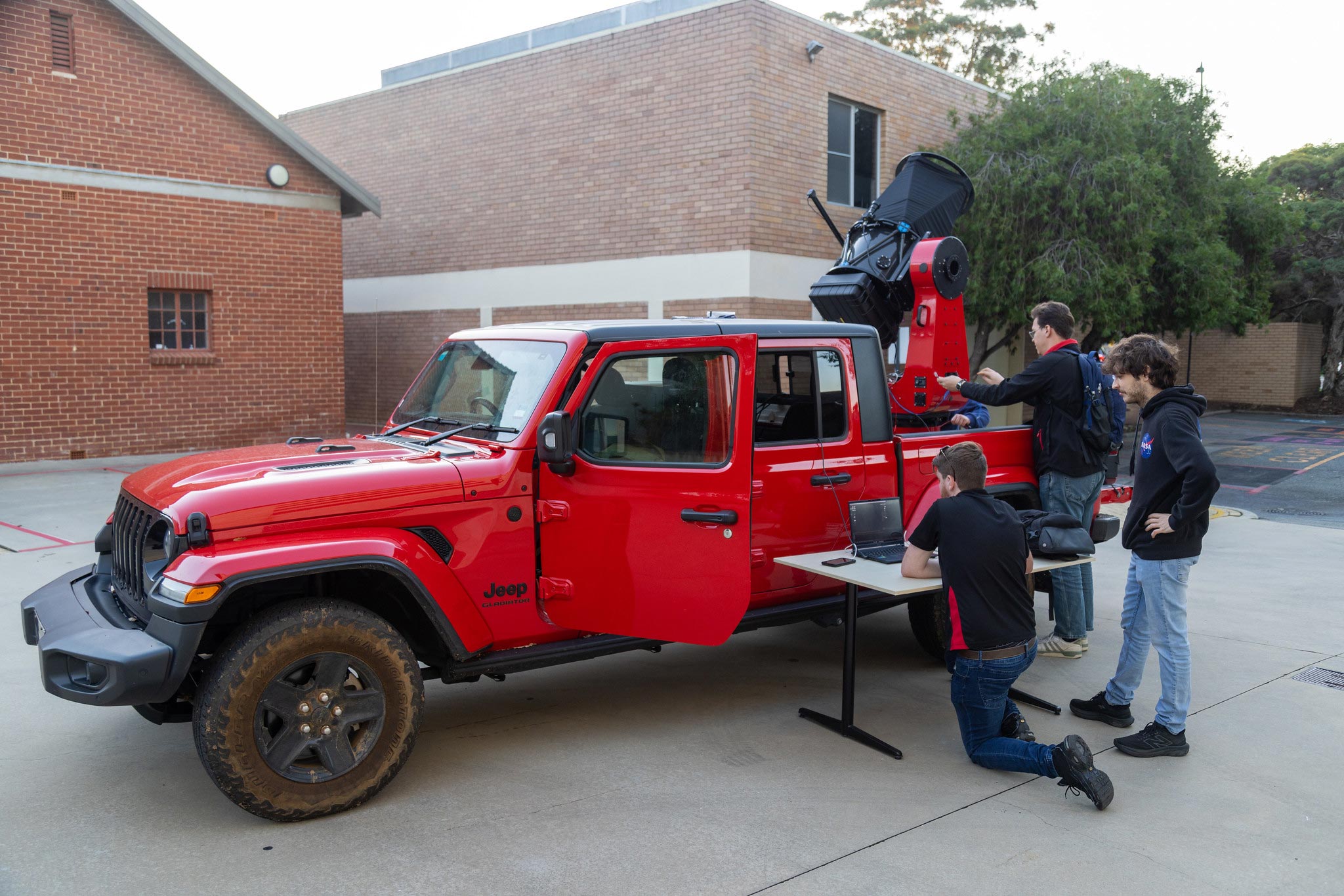
In addition, one of the two TeraNet ground stations that received the satellite laser signal is built on the back of a custom-built Jeep truck. This means it can be rapidly deployed to sites that need ultra- fast space communications, such as remote communities where traditional communications links have been cut off due to natural disasters.
Impact on Earth and Space Operations
High-speed laser communication from space will revolutionize data transfer for Earth observation satellites, significantly enhance and secure military communication networks, and bolster secure remote operations for sectors such as autonomous mining operations, as well as national disaster planning and responses.
The ICRAR-based TeraNet team received funding from the Australian Government, the Western Australian Government, and UWA in 2023 as part of the Australian Space Agency’s Moon to Mars Demonstrator Mission grant program. The $6.3m project supports the construction of the three TeraNet optical ground stations in Western Australia, with the German Aerospace Center (DLR) providing in-kind access to their laser communications-equipped on-orbit satellites.
TeraNet’s Expanding Network and Future Goals
TeraNet will support multiple international space missions operating between low Earth orbit and the Moon, using both proven conventional optical communications standards, and more advanced optical technologies including deep-space communication, ultra-high-speed coherent communications, quantum-secured communications, and optical positioning and timing.
The network comprises a ground station at UWA, a second ground station at the Mingenew Space Precinct 300km north of Perth, and a mobile ground station that is being commissioned at the European Space Agency’s New Norcia facility.
Never miss a breakthrough: Join the SciTechDaily newsletter.
Follow us on Google and Google News.